
A group of brain cells becomes active just as you wake up. Did those cells wake you, or did waking up put them to work?
Share this analysis
Send this article to readers who follow biotech, company strategy, and capital-market signals.
That apparently circular question has held neuroscience back for years. Observing activity does not tell us who is giving the orders.
The 2026 Nobel Prize in Physiology or Medicine, announced on October5, goes to Karl Deisseroth, Peter Hegemann and Georg Nagel for discoveries concerning light-gated ion channels and optogenetics. Their work gave researchers a missing capability: making selected cells respond to light, then observing what happens when their activity is changed.
The protagonist is not an approved new medicine. It is a set of tools that lets scientists ask new questions. The story begins not with the human brain, but with a green alga that swims toward light.
An alga looking for sunlight offers a switch
A single-celled green alga has no eyes, yet it senses light and changes its swimming direction. An organism that relies on light needs to find a suitable place to stay.
While studying this behavior, Hegemann noticed that the light-triggered electrical response was exceptionally fast. The question shifted from how algae detect light to whether a light-sensitive protein could directly change a cell's electrical signals.
Nagel and collaborators put the relevant genes into other cells and tested their function using electrophysiology. Their2003 research showed that channelrhodopsin-2, or ChR2, is itself a cation channel that opens in response to light.
Think of the cell membrane as a wall containing a door. Blue light opens the ChR2 door, allowing charged ions to pass according to their electrochemical gradient and change membrane potential. It is not a pump that uses light to force ions inward. Light controls when the door opens.
That distinction matters. Neurons already transmit signals through changes in membrane potential. Put the appropriate protein into suitable neurons, and light can connect to their electrical circuitry.
In2005, Deisseroth, Boyden and colleagues demonstrated millisecond-scale control of spiking in cultured mammalian neurons. Milliseconds are not merely an impressive specification: neural signals are fast. A method that changes activity only slowly cannot readily isolate what a particular instant of signaling accomplishes.
Both halves of optogenetics are essential. Genetic tools make specific cells express light-sensitive proteins; optical tools set the timing of stimulation. Without first installing the appropriate protein, shining an ordinary flashlight at someone's head does not produce the same effect.
The deeper change is experimental precision. Researchers can use cell-type-related genetic strategies to narrow their target, then use light to time the intervention. Selecting the right cells and delivering light to the target remain parts of experimental design.
The brain is no longer only a scene being filmed. Researchers can intervene in one component and observe how the whole machine changes.
There is more than one kind of switch. Later light-sensitive protein tools can be designed to promote or suppress activity, using different ion mechanisms. The ChR2 example here concerns promotion of spiking; this diagram cannot simply stand in for every inhibitory tool.
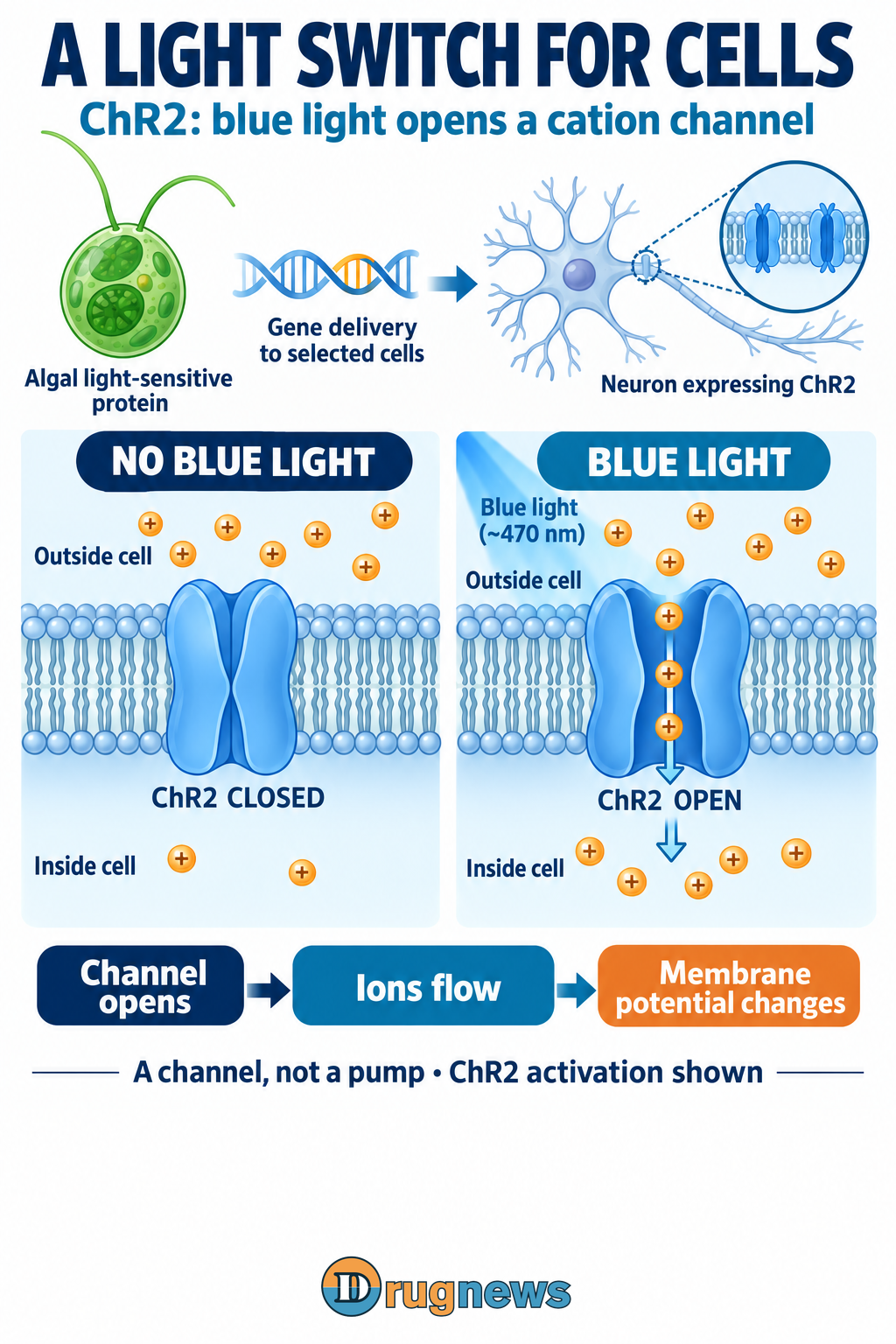
Figure1|ChR2 light-gated cation flow changes membrane potential; not pumping.
From where activity appears to whose intervention changes events
Return to the waking-up question to understand why these tools matter.
A group of hypothalamic neurons produces hypocretin, also called orexin, and is associated with wakefulness. Observations could tell researchers when these cells were active. But two events occurring together does not necessarily mean one drives the other.
A mouse study published in Nature in2007 introduced ChR2 into those neurons and stimulated them with light. Researchers measured sleep-to-wake transition latency against control conditions and found that specific stimulation frequencies promoted the transition.
The question moved forward: it was not merely that the cells were active when mice woke. Actively stimulating them also changed the probability and timing of awakening. That is a testable causal intervention.
The tool did not solve every brain question. Cells are interconnected, and stimulating one group can influence other pathways, so controls and additional measurements are still needed. A link previously open to speculation could now be arranged into an experiment.
Showing that stimulation can produce a result answers whether the intervention can bring that result about. To ask whether the result still occurs without those cells requires a different blocking experiment. These questions establish different kinds of causal evidence and can point target selection in different directions.
For drug development, this value appears before a new medicine. Researchers first need to distinguish whether a neural pathway causes symptoms, compensates for them, or merely changes alongside them. Choose the wrong role, and impressive efficacy numbers may concern a repair to the wrong component.
Optogenetics helps identify those roles. It also separates whether a cell population is worth intervening in from which intervention would be best. A good answer to the first question gives the second a clearer development direction.
For example, an experiment may show that a pathway is important without requiring the eventual treatment to use light. Medicines, electrical stimulation or other approaches may follow. The tool narrows mistaken hypotheses; it does not demand that every successful experiment become an optogenetic therapy.
This is why foundational tools are easily underestimated. They need not become the final product themselves to change which products are worth financing.
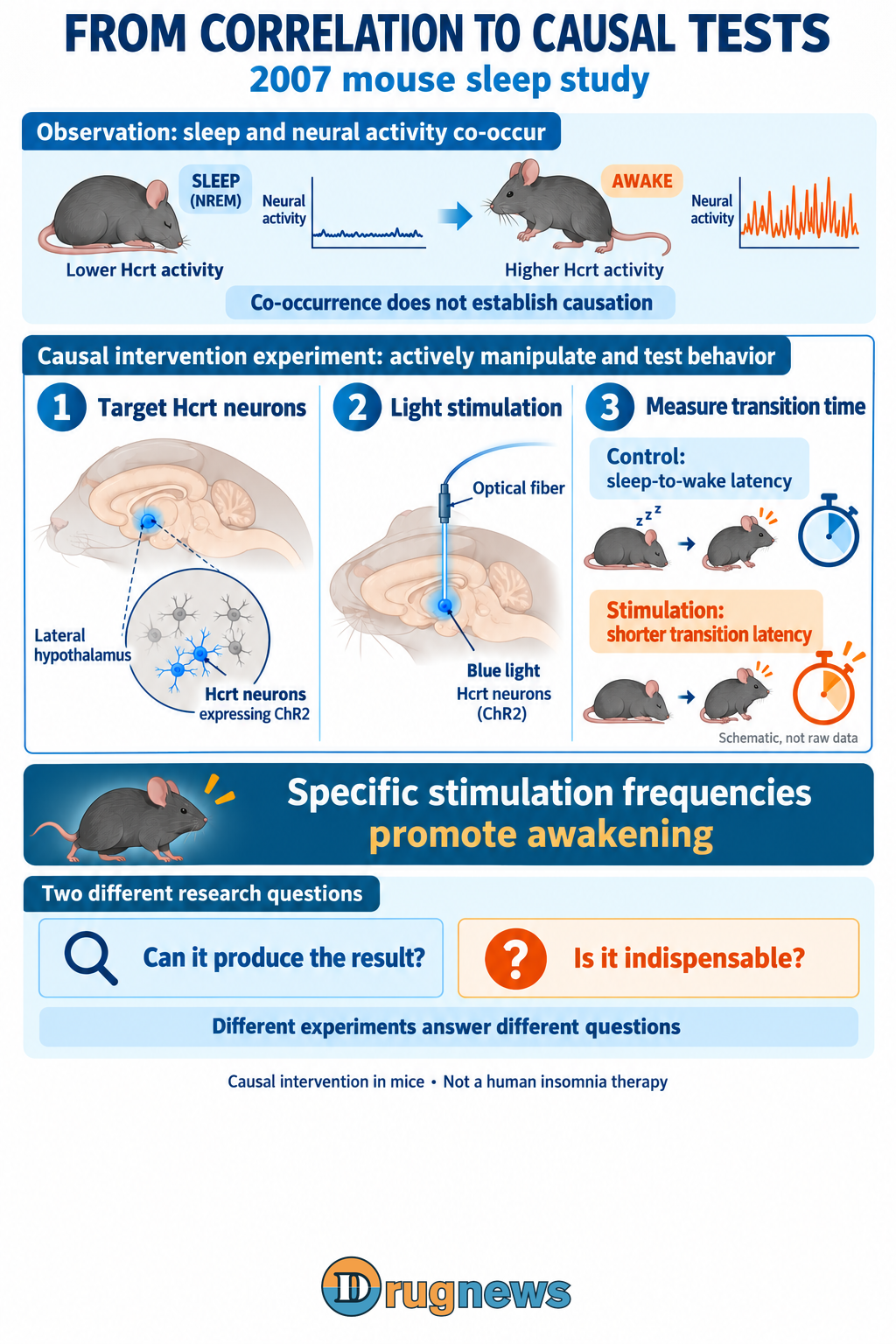
Figure2|2007 mouse Hcrt intervention compares sleep-to-wake latency; traces/clocks schematic, not raw data.
A blind patient brings the tool into the clinic
A visual-restoration case reported in Nature Medicine in2021 makes this translational route tangible. It is historical clinical evidence, not a new trial conducted this year.
The patient had retinitis pigmentosa. The original light-sensing cells had severely degenerated, but usable retinal neurons remained. Rather than repair each disease-causing gene, researchers tried to give remaining cells a new light-sensing function.
They used an AAV vector to deliver the gene encoding another light-sensitive protein, ChrimsonR, into retinal ganglion cells. Special goggles then converted images of the outside world into light signals suitable for stimulating those cells.
This was not the blue-light ChR2 example transferred unchanged. The protein and illumination system were selected for the visual application. The patient also needed training to use the new signals.
With the goggles, the patient could perceive, locate and touch some objects in testing. That was neither normal sight restored nor proof that all blindness can be treated. It showed that this combined intervention could produce measurable function where appropriate surviving cells and usable visual pathways remained.
The scientific ingenuity lies in a change of repair strategy. A failed light-sensing entry point need not leave repairing the original entry as the only option. Giving still-functional cells a new entry point can also be explored.
That makes repairing a particular mutation no longer the only starting point, while making patient selection more important. How many cells remain, whether signals can reach the brain and whether a patient can effectively use the device all affect suitability.
“Seeing” also needs to be separated into measurable abilities. Distinguishing light from dark, locating an object on a table, recognizing a face and independently crossing a street are different functions. The tasks chosen for an early trial shape how its effects are understood. Later research needs to define the actual use it aims to improve.
Between a spike in a culture dish and a patient's reaching for an object lies more than years of research. There is an entire delivery system.
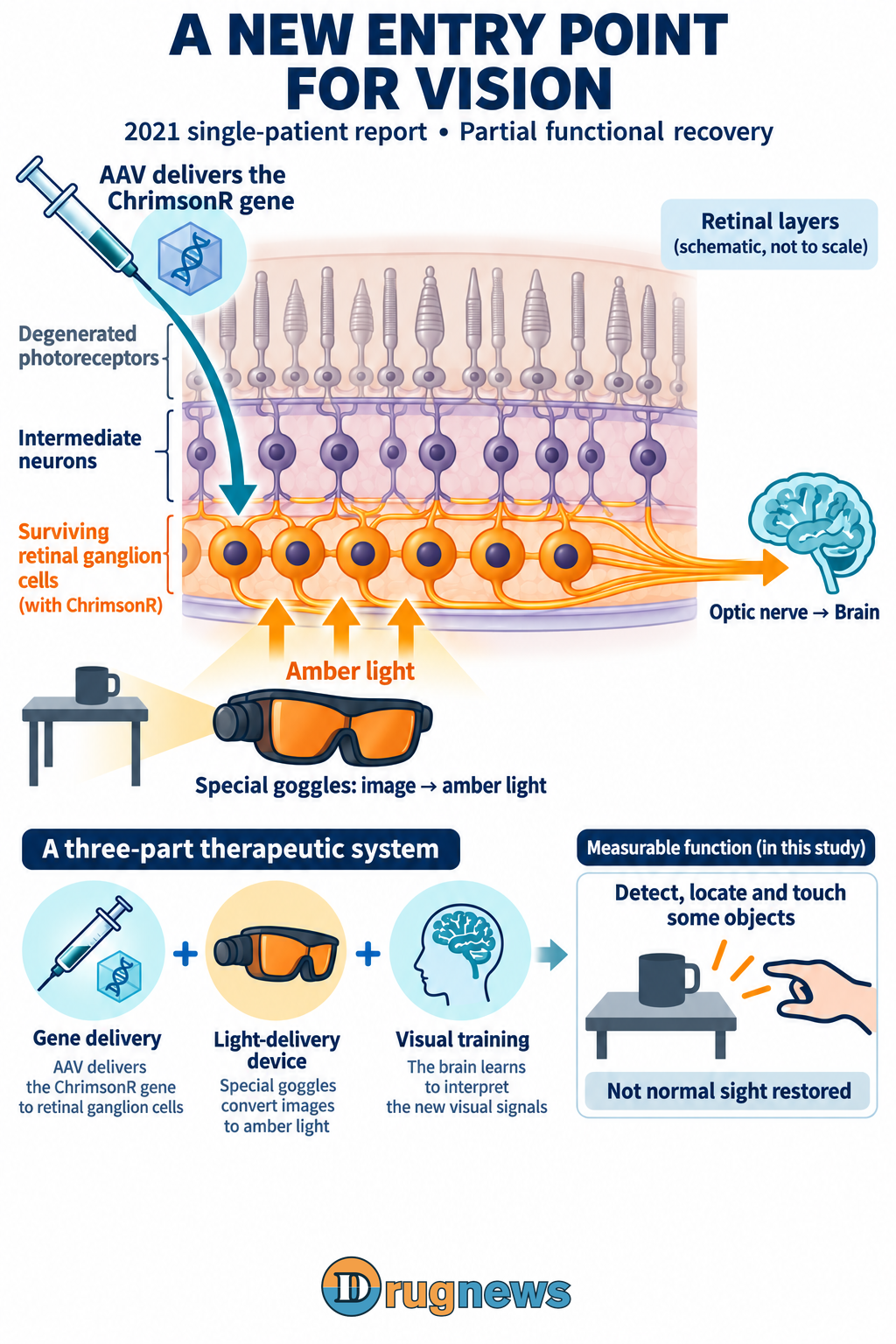
Figure3|2021 one-patient RP report: AAV/ChrimsonR, amber-light goggles and training; partial functional vision.
The prize illuminates value; a product still has to complete the journey
Investors can easily overlook the costs and responsibilities of that system.
A light-sensitive protein is crucial, but a patient cannot buy one good protein and thereby complete treatment. In visual restoration, the system also includes a gene product, injection, light-delivery equipment, training and follow-up to establish whether the patient can actually navigate the visual environment better.
Manufacturing must deliver acceptable quality and potency from batch to batch. The device must reliably deliver appropriate light to the target. Clinical development must establish whether improvements in testing translate into capabilities with value in daily life. These parts depend on one another: a failure in one can prevent the scientific advantage from reaching the patient intact.
GenSight's GS030 combines a gene intervention with a wearable light-delivery device, illustrating this product logic. Its2025 annual report, published in2026, still describes PIONEER as a PhaseI/II study. It also discloses that extension-cohort recruitment had paused because of clinical-batch shelf-life constraints.
That detail tells investors more than “the technology is advanced.” If another batch is not available, the next human dataset may be delayed as well. At this article's source check, a definite announcement confirming resumed recruitment had not been verified; progress cannot be filled in on the company's behalf.
Nor should all income at the same company be assigned to this technology. Paid early-access cash receipts disclosed in GenSight's September29 update came from a different candidate therapy, GS010/LUMEVOQ, not sales of the GS030 optogenetic therapy. The technology story and the company's cash flows require separate readings.
Investable possibilities in optogenetics have two distinct destinations: research tools improve experimental capability, while therapeutic products turn that capability into patient benefit. Customers for the former care about answering questions. The latter also has to address clinical development, manufacturing, devices and payment. These are not the same business ledger.
That distinction also determines whether a collaboration deserves attention. Research adoption may indicate that a tool is useful. Taking on a therapy requires examining manufacturability, subsequent trial investment and responsibility for equipment and service costs. A transaction value disconnected from those obligations merely turns an idea into another, larger number.
With the next announcement, ask which part is advancing: a better light-sensitive protein, more reliable gene-product supply, or visual function that more patients can actually use?
Each may be valuable, but the capital needed, the waiting time and the people bearing the risk differ. The next human dataset needs to answer what additional door this light opens in daily life after patients leave the testing table.
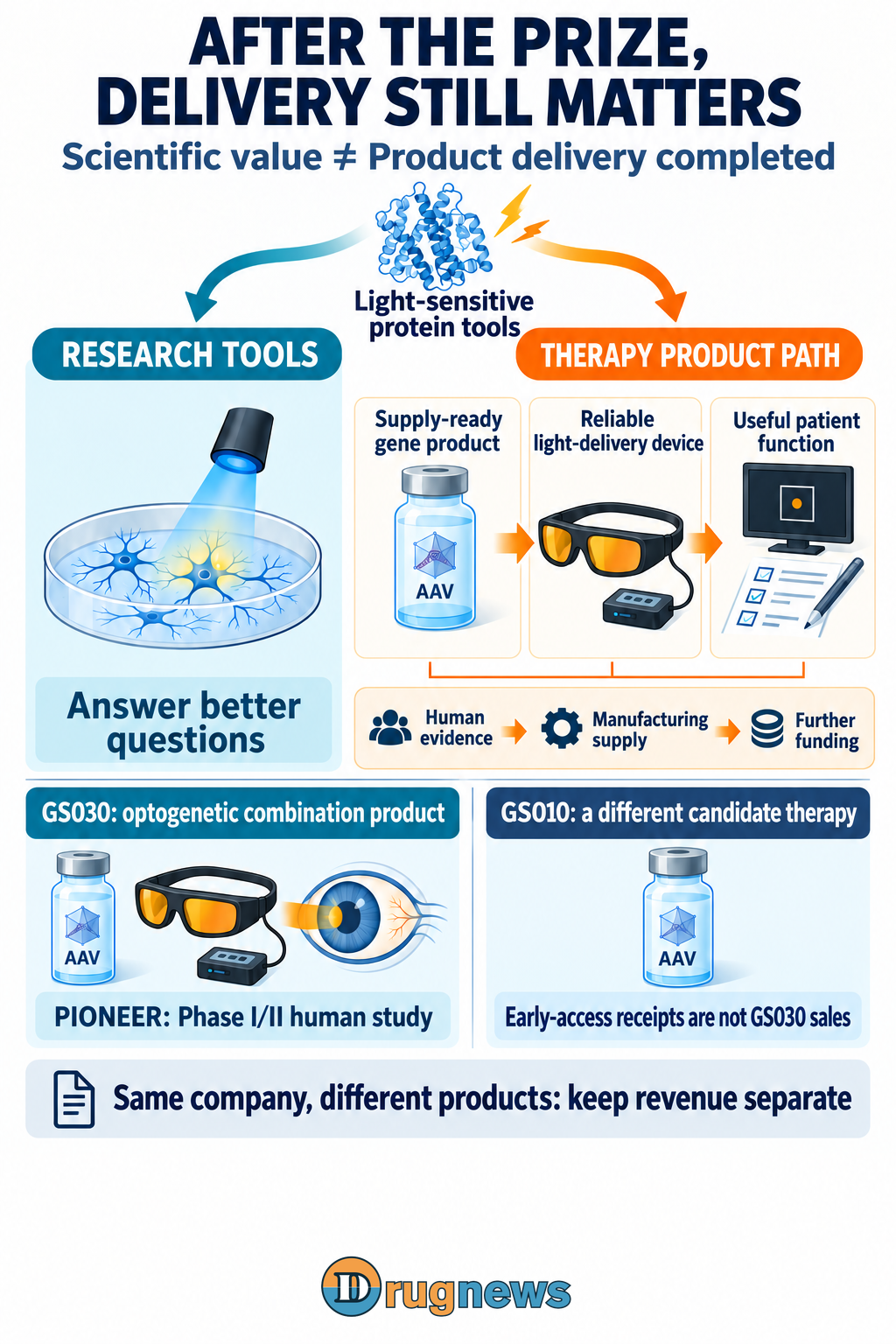
Figure4|Research and therapy delivery have different dependencies; GS030 human research is separate from GS010 receipts.
This article provides industry information and business analysis and does not constitute individualized medical or investment advice.
Sources
- 2026 Nobel Medicine official announcement and background
- Nagel et al., ChR2 cation channel, PNAS (2003)
- Boyden et al., millisecond neuronal control, Nature Neuroscience (2005)
- Adamantidis et al., mouse sleep-to-wake intervention, Nature (2007)
- Sahel et al., partial vision case, Nature Medicine (2021)
- GenSight2025 annual report, published2026 (GS030 sections)
- GenSight business update, September29,2026
Cite this article
For decks, research notes, or media references, cite Drugnews with the canonical article URL.
Drugnews Editorial Team. "A light switch for cells wins the Nobel Prize." Drugnews, Oct 06, 2026. https://drugnews.com.tw/articles/2026-10-06-nobel-optogenetics-light-gated-channels-en.html