
The next contest in eczema treatment may play out on patients' calendars.
Share this analysis
Send this article to readers who follow biotech, company strategy, and capital-market signals.
On October 1, Sanofi and Regeneron announced an expanded collaboration. Sanofi agreed to a $1 billion upfront payment to join four next-generation, long-acting immune antibodies, with up to another $7 billion in milestone payments. This is a joint development and commercialization agreement, not an acquisition of Regeneron.
The most advanced candidate, an anti-IL-13 antibody, is designed for dosing every three to six months and is in a Phase 1 trial in atopic dermatitis. One injection every six months is the destination it hopes to reach, not a treatment patients can choose today.
The intriguing part is that neither company lacks a successful drug. Their jointly developed Dupixent generated €5.2 billion in sales in the second quarter of this year, up 37.6% from a year earlier at constant exchange rates. Their golden goose is still laying faster, yet they have already committed substantial money to the next generation.
Why move so early? A competitor may not need a more powerful drug to win patients. If disease control holds up while injection frequency falls sharply, treatment choices could change.
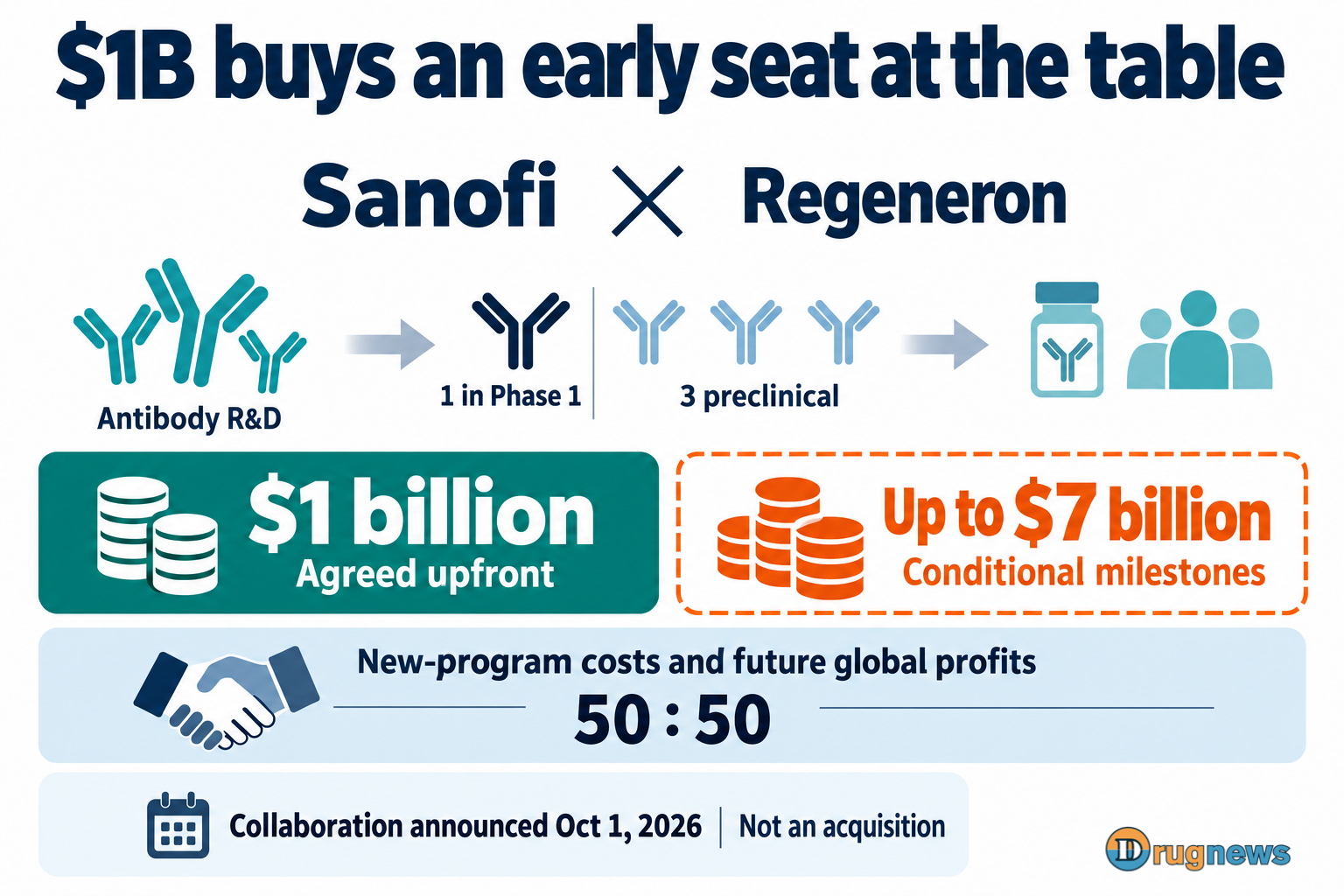
Figure 1 | The October 1 collaboration: stages and financial terms. Upfront and conditional payments are separate; 50:50 applies to the new programs.
How did an eczema medicine become a major business?
Atopic dermatitis is not simply dry skin that a little moisturizer will fix. For people with moderate-to-severe disease, recurring inflammation and itching can interfere with sleep, work and everyday life.
IL-4 and IL-13 are two important inflammatory signals. Think of them as instructions repeatedly transmitted within the immune system. When those signals become dysregulated, the skin barrier and inflammatory response interact: itching leads to scratching, which worsens inflammation, making the cycle difficult to escape.
Dupixent binds the alpha subunit of the IL-4 receptor and inhibits IL-4 and IL-13 signaling. It does not shut down the entire immune system; it intervenes in this important pathway.
Human data support that choice. SOLO 1 and SOLO 2, published in the New England Journal of Medicine in 2016, enrolled a combined 1,379 adults with moderate-to-severe disease.
At week 16, approximately 38% and 36% of patients receiving the drug every two weeks, respectively, achieved clear or almost clear skin with at least a two-grade improvement from baseline. The corresponding placebo rates were approximately 10% and 8%. This assesses skin lesions. It is not the proportion whose every symptom disappeared, nor a permanent cure rate.
The numbers tell us two things: blocking this pathway produces meaningful improvement, but not every patient reaches that standard. There is still room for next-generation products; the existing market should not be treated as a pie already fully divided.
Convenience may be the strongest appeal for patients whose disease is already well controlled. For those who still itch and cannot sleep comfortably, the more pressing question is whether control can improve further. These groups have different reasons to switch.
The larger commercial value comes from the fact that IL-4 and IL-13 participate in diseases beyond the skin. The same biology connects to certain forms of asthma and other type 2 inflammatory diseases, allowing Dupixent to move from one indication into several medical specialties.
That explains what Sanofi is protecting: it has built a business across diseases around one immune pathway. Successful next-generation candidates could draw on existing disease-development experience and market networks, rather than finding physicians and patients from scratch in every new market.
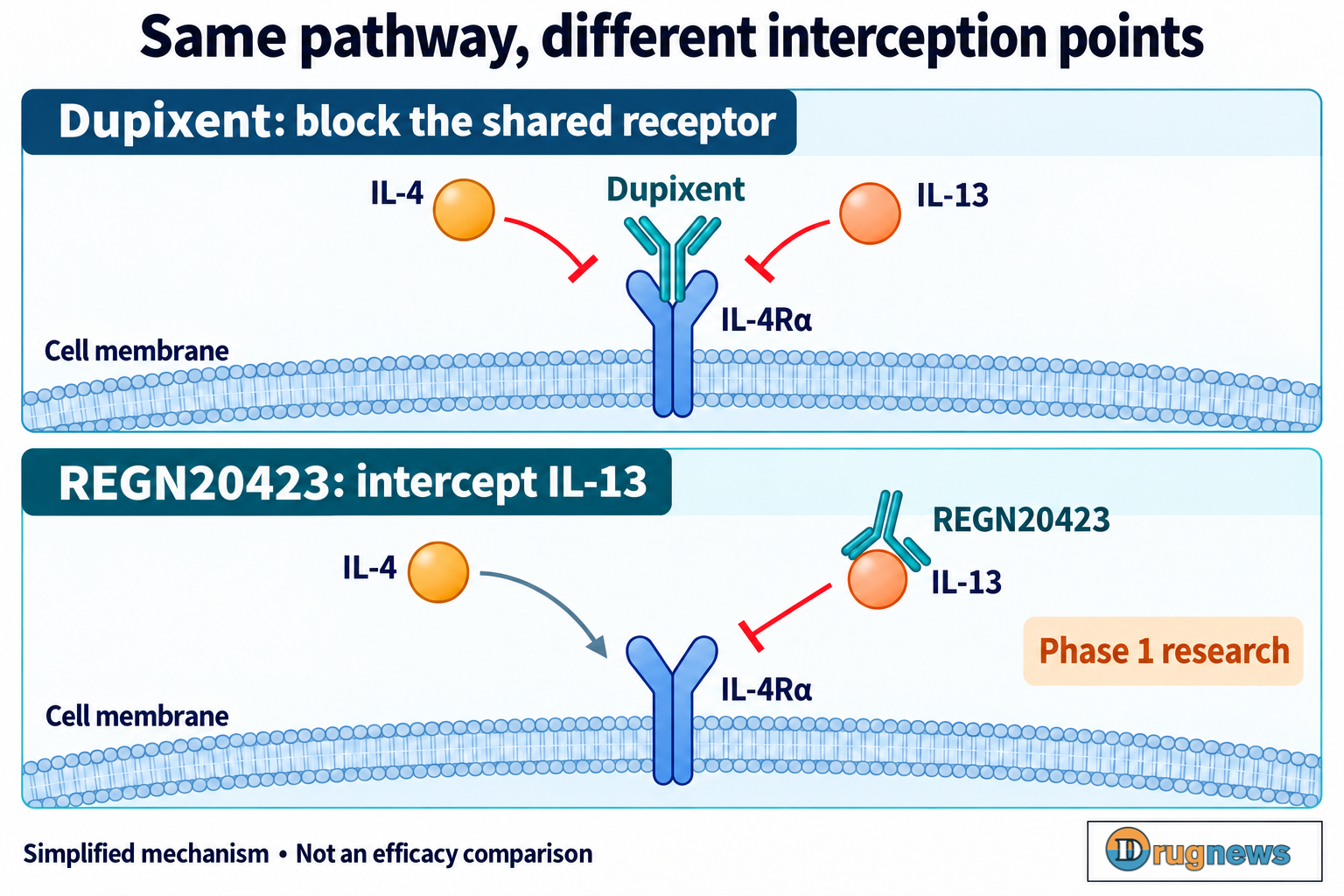
Figure 2 | Different interception points: Dupixent targets IL-4Rα; REGN20423 targets IL-13. This is a simplified signaling illustration, not an efficacy comparison.
Fewer injections require more than a more concentrated drug
For adults with atopic dermatitis, Dupixent's standard maintenance regimen is once every two weeks. Schedules differ by age, weight and indication; this frequency does not apply to every patient.
Two weeks comes around quickly during long-term treatment. Travel, work, childcare, drug storage and transport all need to accommodate the next dose. Longer intervals could deliver convenience in daily life, not just in a trial table.
The scientific challenge is to maintain sufficient activity throughout the interval. If control is good for the first few weeks but symptoms return before the next injection, the promise of convenience becomes difficult to deliver.
Detecting antibody in the blood tells us how long it remains. Sustained disease control tells us what patients receive in return. Long-acting design must balance exposure, potency and safety; it is not simply a matter of increasing the dose and postponing the next appointment.
Nor are these four candidates one medicine in four different packages. They include direct IL-13 blockade, an IL-4/IL-13 bispecific antibody, and approaches targeting IL-4 or IL-4Rα. They intervene at different points in the signaling pathway.
Directly intercepting IL-13 may be valuable in a disease where it is a key driver. A different design may be better suited when both pathways need to be controlled. Calling all of them “the next Dupixent” obscures the distinct problems they aim to solve.
Trial design therefore matters. Skin improvement early in treatment cannot establish a three-to-six-month interval. Researchers need to follow patients to the end of that interval, including itching, disease recurrence and safety. Rescue medication during the interval also affects the interpretation of how long one injection actually lasted.
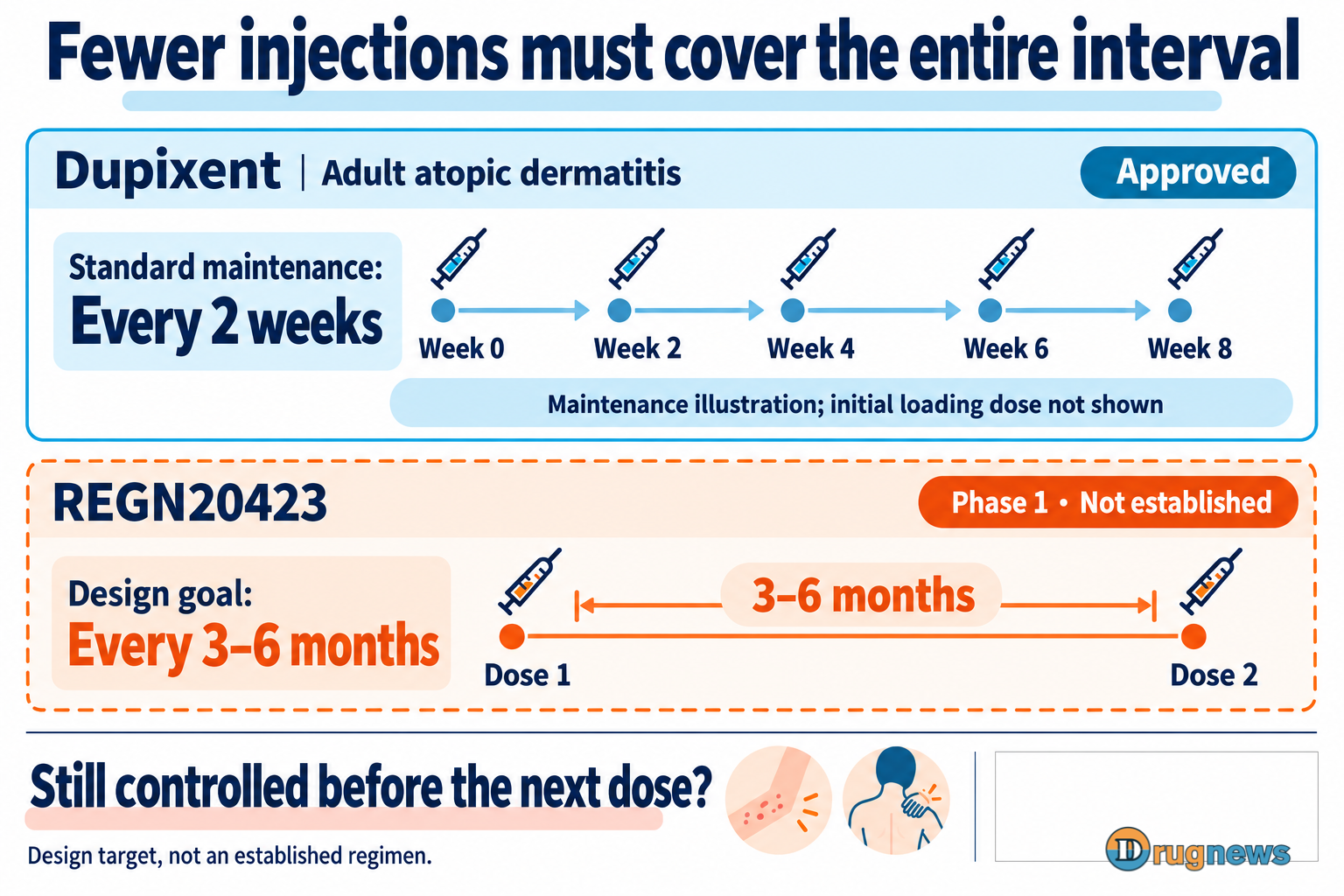
Figure 3 | Current adult AD maintenance compared with an investigational design target. The three-to-six-month interval is not established and is not advice to adjust treatment.
The $1 billion buys an early seat at the table
The most striking contrast is between the large payment and the early-stage products.
Only REGN20423 is currently in Phase 1. The other three candidates are preclinical, with human trials anticipated in 2027. Sanofi did not wait for successful Phase 3 results before negotiating a partnership.
From a business perspective, the upfront payment secures early participation in next-generation products. Once a long-acting treatment has demonstrated efficacy and competing buyers arrive at the table, today's terms may no longer be available.
In its July financial report, Sanofi reported positive Phase 3 maintenance-treatment results in atopic dermatitis for another immune drug, amlitelimab, while announcing that it would not advance a global regulatory submission.
A positive trial announcement can still fail to reach a marketing application. These four early antibodies should not be viewed merely as a larger pipeline count. They need differentiation strong enough to support a next-generation product before they can deliver a return on the upfront payment. The July decision provides context for product selection; it is not an established cause of the October deal.
The money belongs in two separate buckets. The $1 billion is the agreed upfront payment. Up to another $7 billion depends on development, regulatory and commercial milestones. Treating the full ceiling as cash paid today overstates the investment at the time of the transaction.
The companies will share development and commercialization costs and future global profits for the new programs equally. Existing Dupixent profit-sharing arrangements remain unchanged.
Even if the new drugs succeed, Sanofi will not own a product whose profits it can keep entirely. It is investing and sharing development with a familiar partner in exchange for an earlier start.
Regeneron connects early research to global commercialization capabilities while retaining half of the new products' profits. The research organization does not have to wait until it has built an entire market-facing operation to participate in long-term product growth.
Another important detail is who has the final say. Regeneron holds final development decision rights for the new programs; Sanofi holds final commercialization decision rights, including pricing.
The research side chooses how to demonstrate the product, and the commercial side determines how to bring it to market. A 50:50 arrangement does not mean endless joint negotiation over every decision. Assigning final authority clearly could reduce friction in cross-company development, although the result depends on execution.
A new drug can compete with its own predecessor
If the long-acting antibodies succeed, Dupixent itself could be among the products that feel the pressure first.
A new product with comparable control and greater convenience could attract patients already receiving treatment. At the individual-product level, that looks like self-competition. Across the portfolio, keeping patients within the same alliance's products may be better than waiting for them to switch to a competitor.
Replacing an old drug does not automatically create new revenue. If an existing patient moves from medicine A to medicine B, prices, profit-sharing and service costs matter. Patients who have not started a biologic because they are reluctant to inject regularly could represent new demand if they decide to begin treatment.
Those two forms of growth should not be added together indiscriminately.
Payers will also ask how much treatment burden falls, and whether disease control is maintained. If a drug is somewhat more convenient but much more expensive per year, the words “next generation” will not settle the price negotiation.
One fewer injection does not necessarily mean one fewer payment for the manufacturer. A long-acting product can be priced for a longer treatment period. If it improves persistence and reduces discontinuation, its revenue structure could improve. That commercial path depends on actual use and reimbursement; injection counts alone cannot forecast revenue.
Convenience also carries different value in different circumstances. Someone comfortable with self-injection and an orderly routine may not pay more for a longer interval. Someone whose treatment is repeatedly disrupted by work or caregiving may value it more. Market development needs to identify which patients would change their choices, rather than applying the same “fewer injections” label to everyone.
The competition therefore has two gates: establish a clinically credible long interval, then give physicians, patients and payers a reason to switch. Passing only the first could leave a scientifically elegant product with limited use.
The task grows harder for later entrants as well. They face an alliance with disease-development experience, specialist relationships and market-access capabilities. To gain ground, they need a more distinctive efficacy, convenience or cost advantage.
Regeneron currently plans registration-enabling studies for REGN20423 in late 2027 to early 2028. Actual progress depends on results and regulatory discussions.
When fuller human data arrive, the most consequential picture will emerge just before the next dose: are the skin lesions still controlled, and has itching returned to disrupt daily life? That is where “one injection every six months” becomes something with saleable value rather than an attractive promise.
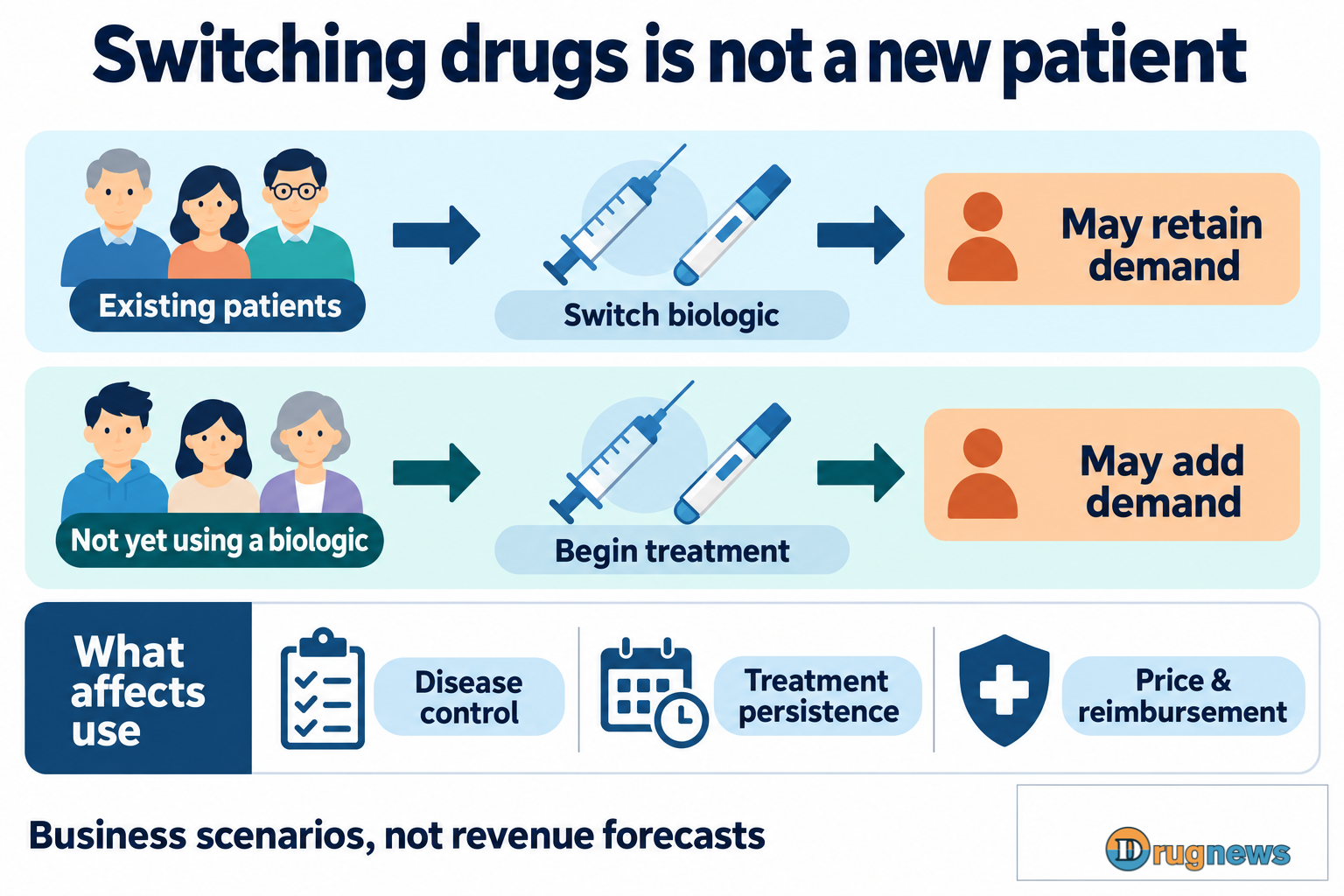
Figure 4 | Retaining demand and adding demand are different business scenarios. Disease control, persistence and price/reimbursement affect actual adoption.
This article provides industry information and commercial analysis. It does not constitute individualized medical or investment advice.
Research and official sources
Regeneron/Sanofi, October 1, 2026 collaboration announcement — scope, stages, financial terms and responsibilities https://investor.regeneron.com/news-releases/news-release-details/regeneron-and-sanofi-expand-global-alliance-multiple-next/
October 1 investor presentation — long-acting design goals, study plans and decision rights https://investor.regeneron.com/static-files/f6a38fa3-d7ca-4c1b-be1c-8b61b391c50e
Sanofi Q2 2026 results — Dupixent sales and pipeline choices https://www.sanofi.com/en/media-room/press-releases/2026/2026-07-30-05-30-00-3335767
SOLO 1/SOLO 2, NEJM 2016 — original Phase 3 studies in adults with atopic dermatitis https://pubmed.ncbi.nlm.nih.gov/27690741/
EMA Dupixent product information — mechanism and current dosing schedules https://www.ema.europa.eu/en/documents/product-information/dupixent-epar-product-information_en.pdf
Cite this article
For decks, research notes, or media references, cite Drugnews with the canonical article URL.
Drugnews Editorial Team. "An injection every six months? Sanofi puts $1 billion on the table." Drugnews, Oct 09, 2026. https://drugnews.com.tw/articles/2026-10-09-sanofi-regeneron-long-acting-alliance-en.html