
A drug able to take over after another BTK inhibitor can now compete for a place when a patient first needs treatment.
Share this analysis
Send this article to readers who follow biotech, company strategy, and capital-market signals.
On October 2, the US FDA expanded the indication for Lilly’s Jaypirca, or pirtobrutinib, to adults with previously untreated chronic lymphocytic leukemia or small lymphocytic lymphoma—CLL/SLL—with no known deletion of chromosome 17p.
BRUIN CLL-313, the trial supporting this approval, reduced the relative hazard of disease progression or death to approximately one-fifth of the comparator’s. That is a strong number. The opponent, however, was chemoimmunotherapy with bendamustine and rituximab, not every modern targeted therapy together.
What has moved is the treatment sequence. For patients, the first choice may shape years of daily life. For Lilly, a later-line drug has gained a frontline entry ticket, with a different patient population and different competition.
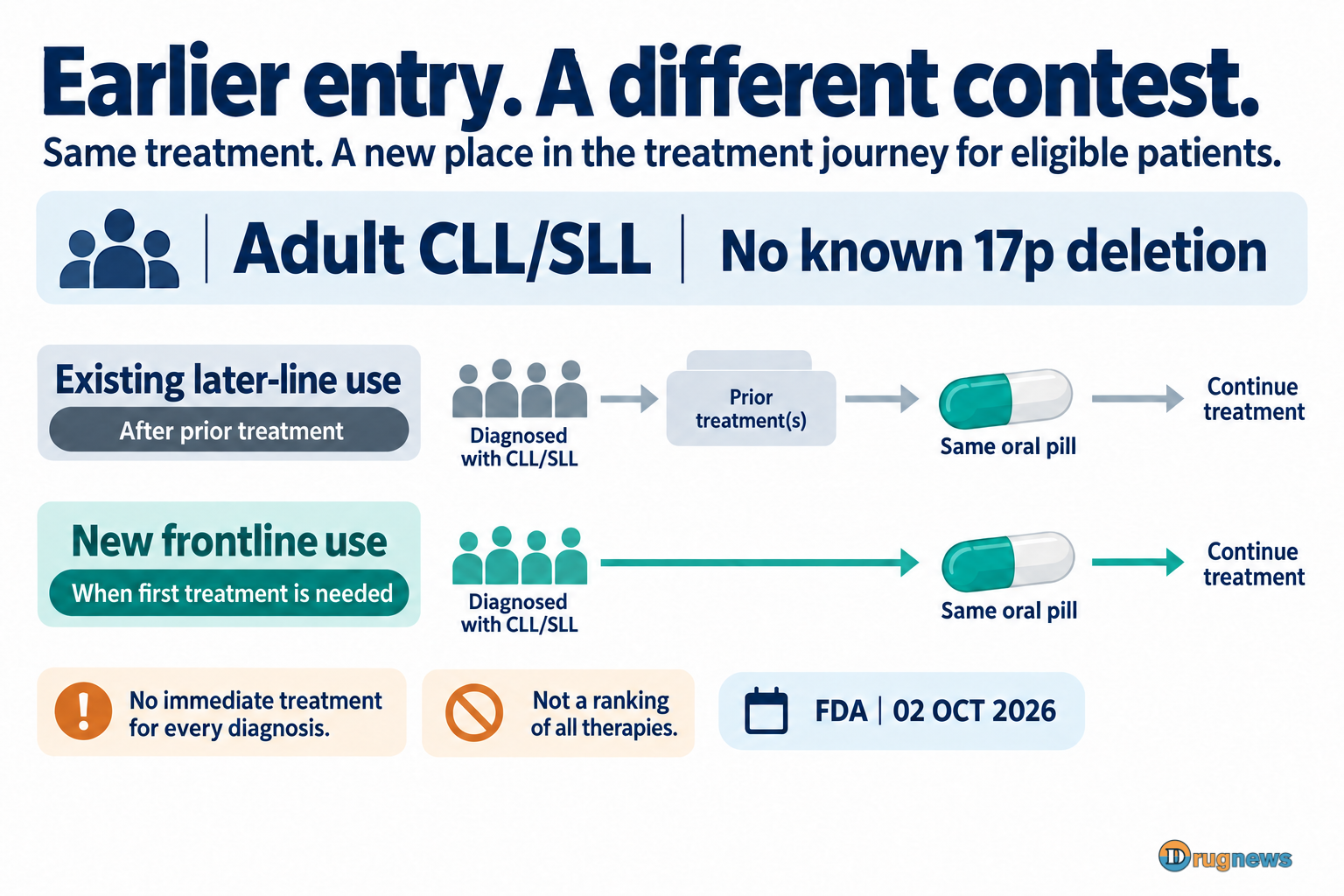
Figure 1 | The added frontline indication covers previously untreated adults with CLL/SLL and no known 17p deletion. This illustrates treatment position, not a mandatory sequence for every patient.
1 | A different way of holding BTK—not merely a new drug name
CLL and SLL arise from the same type of abnormal lymphocyte; the main difference is where the cancer cells are found, commonly blood in CLL and lymph nodes in SLL. Treatment addresses survival signals on which those cells depend.
BTK is an intracellular signaling relay. Inhibiting it does not mean using an antibody to pull a tumor cell toward an immune cell for killing; it interferes with B-cell-related signaling. Jaypirca is a daily oral small molecule, not an injected antibody.
Many covalent BTK inhibitors form a covalent bond at BTK’s C481 position. That strong attachment has advantages, but certain changes at the site can prevent binding in the original way, contributing to resistance.
Pirtobrutinib uses a different binding approach. Original research published in Blood in 2023 showed noncovalent interactions in the ATP-binding region without directly depending on C481. In enzyme and cell assays, it inhibited both wild-type BTK and C481 substitution mutants.
Think of it as avoiding dependence on a single attachment point. This molecular distinction explains why the drug was developed to follow covalent BTK inhibitors; it does not establish that cancer cells can never find another resistance pathway.
Moving into initial treatment changes the question. Previously it was, “What option remains after an existing drug?” Now it is, “With several options available from the start, why choose this one first?” Circumventing one resistance mechanism does not automatically answer the second question. Evidence in the relevant patients is needed.
That is the role of this phase 3 trial: taking a distinctive binding mechanism into previously untreated patients to test whether it provides longer disease control.
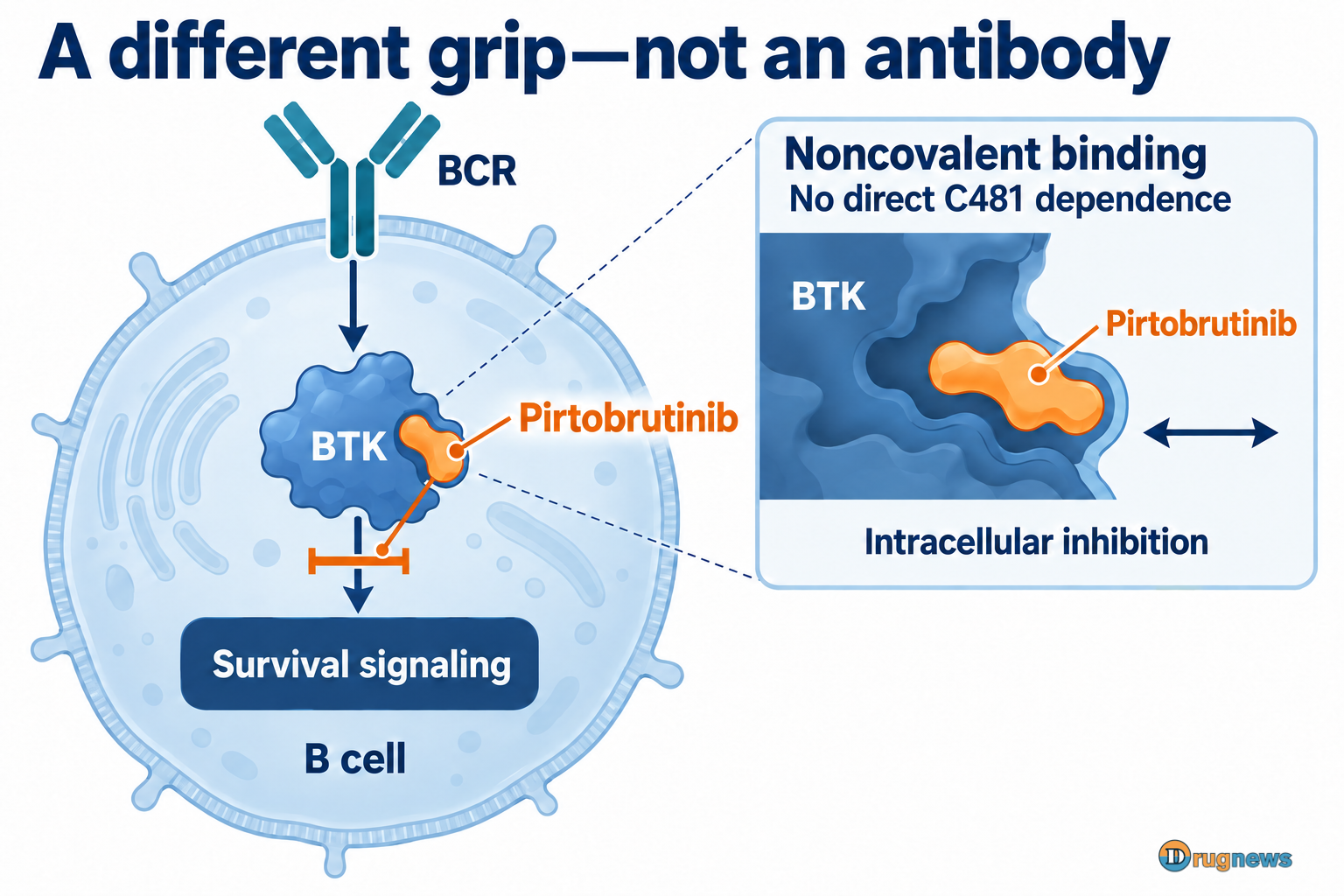
Figure 2 | An intracellular small-molecule BTK inhibitor, not a therapeutic antibody. The binding pocket is conceptual, not an atomic structure or a map of all resistance mechanisms.
2 | A hazard of one-fifth: first identify the opponent
BRUIN CLL-313 randomized 282 previously untreated patients with CLL/SLL without 17p deletion into two groups of 141. One received continuous pirtobrutinib; the other received six cycles of bendamustine plus rituximab.
The primary endpoint was progression-free survival, or PFS, assessed by an independent committee: time without disease progression or death. That is closer to the control sought in long-term treatment than a single measure of tumor shrinkage.
The FDA announcement reported a PFS hazard ratio of 0.20, with a 95% confidence interval of 0.11–0.37. Under the trial’s comparison conditions, the relative instantaneous risk of progression or death was about 80% lower.
That does not mean 80% of patients were cured, or that everyone lived five times longer. PFS and overall survival answer different questions; at the primary PFS analysis, overall-survival data were immature. Median PFS was not estimable with pirtobrutinib versus 33.5 months in the comparator arm. “Not reached” does not mean progression can never occur.
The direction of the result is strong, with an easily lost premise: the comparator was chemoimmunotherapy.
Initial treatment today offers more than that opponent. Covalent BTK inhibitors and other targeted combinations also enter discussions between clinicians and patients. CLL-313 establishes this comparison; it does not construct a cross-trial league table for every drug, regimen and patient population.
Lilly also lists separate phase 3 studies, including CLL-314, a direct comparison with ibrutinib, and studies of venetoclax-containing combinations. Those pose their own evidence questions. The hazard ratio from 313 cannot answer them by substitution.
There is no need to turn good news into bad news. A more precise reading is that the result supplies formal evidence for frontline use. Assessing competition with other modern treatments requires the corresponding studies: what was compared, in which patients and for how long?
The authors’ institutions in the 313 paper include the hematology-oncology team at Linkou Chang Gung Memorial Hospital in Taiwan. An international medicine reaching the frontline is not only a US approval headline; clinical centers across countries contributed patient evidence.
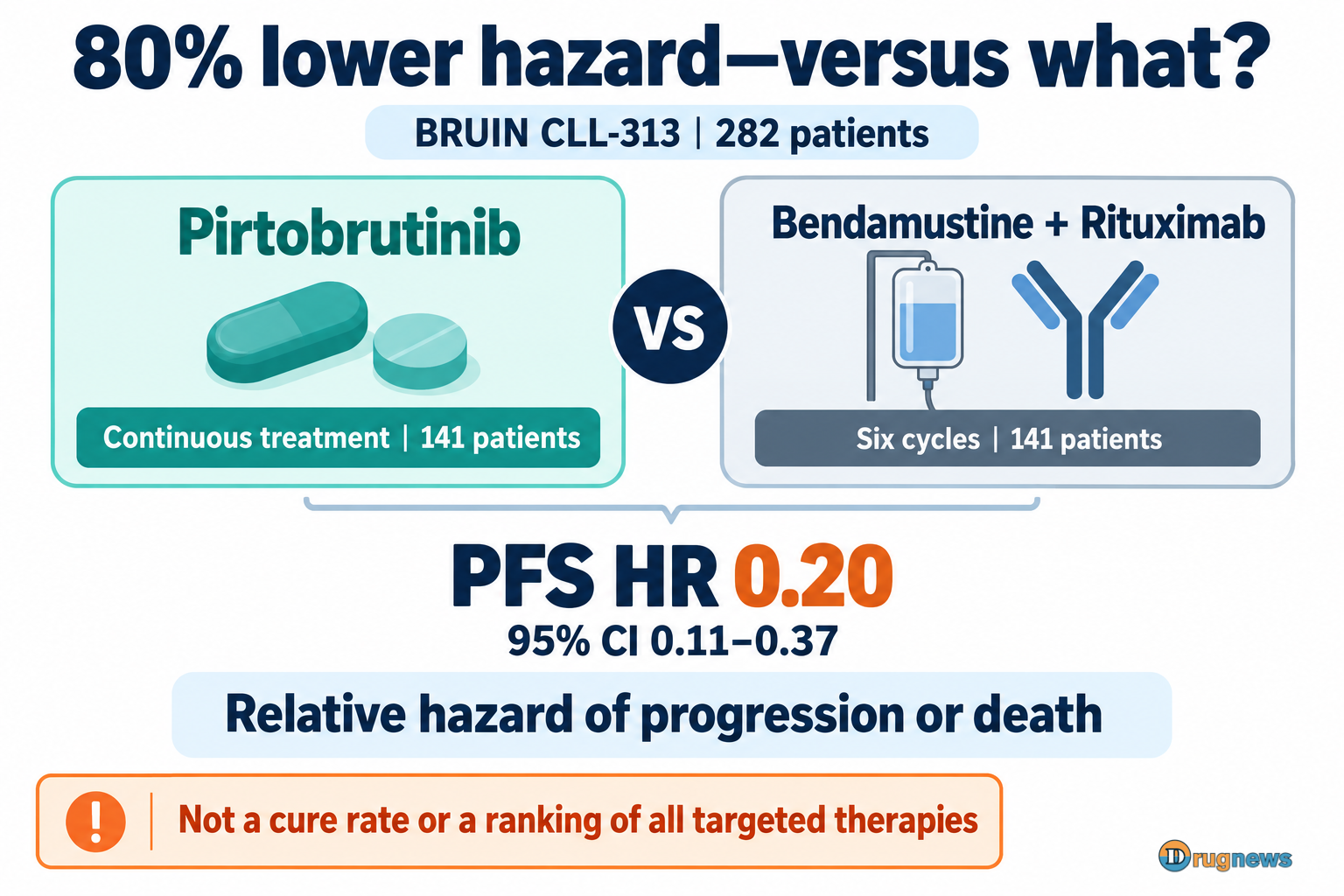
Figure 3 | A randomized 282-patient comparison: PFS HR 0.20, 95% CI 0.11–0.37. The comparator is BR, not all modern targeted regimens.
3 | From a later-line option to a frontline competitor
A later-line market has a built-in condition: patients must first pass through earlier treatments before the drug may become an option. Being considered initially means a product no longer depends solely on people who have already switched treatment.
Frontline approval therefore broadens the setting in which the product can be used and brings the company into an earlier decision. That adds indication value, but is not revenue already received. Actual use still depends on clinical selection, insurance arrangements and whether patients can continue treatment.
Moving earlier is not a free upgrade. A product filling a later-line gap may gain an opportunity because previous choices have run out. At the frontline it must answer, “With other choices available, why this one?” Comparators, long-term tolerability and treatment schedules carry more weight.
The same drug has different commercial stories in different positions. Later-line use focuses on the next option when disease needs controlling again. Frontline use focuses on what can become part of a patient’s daily life without exhausting subsequent pathways too early.
The approved regimen is daily oral treatment until progression or unacceptable toxicity. Continuous treatment and regimens with a fixed endpoint create different experiences for patients and different cumulative costs for payers.
A daily pill may allow treatment without administering every dose in a hospital, but oral dosing does not remove monitoring, adverse effects or the burden of persistence. FDA warnings include infections, hemorrhage, cytopenias and cardiac arrhythmias; serious adverse reactions occurred in 28% of pirtobrutinib-treated patients in 313.
These details affect choices, not merely a risk table at the end. Age, comorbidities, other medicines and daily routines can give convenience a different value for different patients. Continued use is what allows access to become sustained treatment for the company.
It would therefore be misleading to calculate a new market as “existing later-line revenue plus every frontline patient.” Some patients may begin the same drug earlier; others will choose another strategy. Additional use and a shift of existing use to an earlier line need to be separated through actual prescription and persistence data.
There is another point at which market models can move too quickly: diagnosis does not necessarily mean treatment starts that day. The US National Cancer Institute’s patient information lists observation for asymptomatic CLL—monitoring without immediate treatment. What has increased here is choice when treatment is first needed, not an immediate prescription for everyone newly diagnosed.
Separating when treatment is needed, whether the patient meets the indication, which strategy is selected and how long it is used shows where commercial growth actually comes from. Diagnosed prevalence measures disease burden. Eligible patients requiring treatment define the product’s current use opportunity.
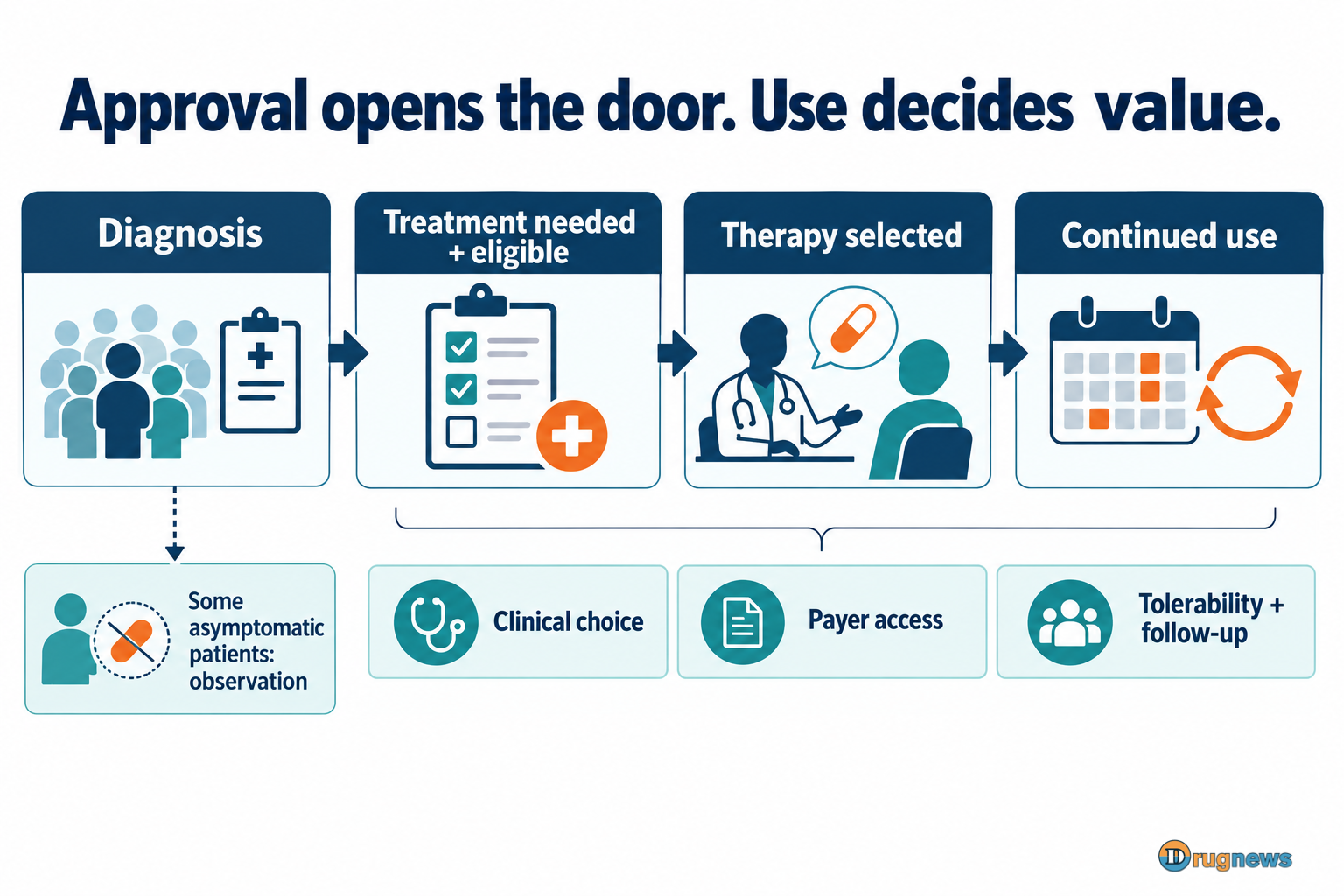
Figure 4 | Clinical choice, payer access and tolerability affect use after approval. Some asymptomatic CLL patients are observed. These boxes and arrows are not measured conversion rates or revenue.
4 | The entry ticket is secured. Who chooses it first?
The new FDA indication has a specific boundary: no known 17p deletion. It is not one uniform selection diagram for everyone newly diagnosed with CLL. Different genetic populations should not be mixed into the same market denominator.
Investors can now look closer to use: in which initial-treatment patients clinicians select the drug, how payers arrange access, whether patients persist and how comparisons between treatment strategies influence those decisions.
That is more useful than replaying “80% lower risk.” Approval answers whether a product can enter a setting. Prescribing and persistence determine its position after entry. These stages need different data; completing the first does not predetermine victory in the second.
For developers of next-generation BTK medicines, the event raises the difficulty of the assignment. A new binding mechanism is a starting point. Which treatment line a product seeks, why it is needed and whether the comparator reflects contemporary choices jointly determine whether evidence can support a market position.
This does not reduce research value to marketing language. A clear use setting helps molecular design target a real gap and helps a trial choose an informative comparator. Without it, an impressive percentage may answer a question whose clinical relevance has already moved on.
Jaypirca has moved its entry earlier. The next question is which patients receive a compelling reason to choose it when they first need treatment and genuinely have several options.
This article provides industry information and commercial analysis. It does not constitute individualized medical or investment advice.
Research and official sources
FDA October 2 approval: indication, primary 313 findings and safety warnings https://www.fda.gov/drugs/resources-information-approved-drugs/fda-approves-pirtobrutinib-previously-untreated-chronic-lymphocytic-leukemia-or-small-lymphocytic
Lilly October 2 announcement: additional frontline indication and separate trial context https://investor.lilly.com/news-releases/news-release-details/lillys-jaypirca-pirtobrutinib-first-and-only-approved-non-1
BRUIN CLL-313 original abstract, JCO 2026 https://pubmed.ncbi.nlm.nih.gov/41363773/
Original pirtobrutinib noncovalent-binding research, Blood 2023 https://pubmed.ncbi.nlm.nih.gov/36796019/
NCI patient information: observation and treatment timing in asymptomatic CLL, updated 2024 https://www.cancer.gov/types/leukemia/patient/cll-treatment-pdq
Cite this article
For decks, research notes, or media references, cite Drugnews with the canonical article URL.
Drugnews Editorial Team. "Lilly’s blood-cancer drug moves earlier. Which contest has it won?" Drugnews, Oct 11, 2026. https://drugnews.com.tw/articles/2026-10-11-lilly-jaypirca-frontline-cll-en.html