
The comparator Lilly chose this time was its own tirzepatide.
In Phase 2 results announced on September 30, it added investigational eloralintide to tirzepatide to create EloraTZP. Among adults with type 2 diabetes and obesity or overweight, the highest-dose combination produced an estimated mean weight reduction of 23.3% at 48 weeks, versus 14.8% with tirzepatide alone in the same trial: a difference of 8.5 percentage points. These figures assume continued treatment.
That increment gives Lilly a reason to keep investing. A challenge emerged alongside it: a higher proportion of participants in the combination groups discontinued treatment because of adverse events than with monotherapy. Adding a second molecule pushed the weight-loss curve down, but the treatment burden up.
The company still plans to advance into Phase 3 before the end of 2026, improve dose escalation, and develop a co-formulation of the two drugs. What determines the outcome of this two-drug bet next is how much additional efficacy it can retain, and how many people it can keep on treatment.
01 | A New Partner Must First Beat the Existing In-House Option
Tirzepatide is already the active ingredient in Mounjaro and Zepbound. Lilly has an existing option, so the new combination must answer a harder question: why would patients need an additional molecule?
Eloralintide offers another route. Tirzepatide acts on GIP and GLP-1 receptors, which participate in regulating appetite and blood glucose; eloralintide targets amylin receptors, helping generate satiety and reduce food intake through another signal involved in regulating eating. This involves two molecules and three receptor pathways, rather than simply increasing the tirzepatide dose further.
Lilly is also studying eloralintide alone in Phase 3. The company is testing both whether the new molecule can become a product in its own right and how much it can add to an existing drug. From a portfolio perspective, the combination's appeal is an additional option for people who need a greater improvement. Human data must show whether it can deliver that.
This 367-participant, 48-week study provided the first strong reason to pursue that route. Eloralintide 9 mg plus tirzepatide 15 mg produced an estimated mean weight reduction 8.5 percentage points greater than tirzepatide 15 mg alone. Including a monotherapy group in the same trial lets readers see what adding the new molecule actually contributes.
The primary comparison was the combination versus placebo; comparisons with treatments such as tirzepatide were secondary endpoints. The difference therefore supports further development, but does not establish the combination as the best of all weight-loss drugs.
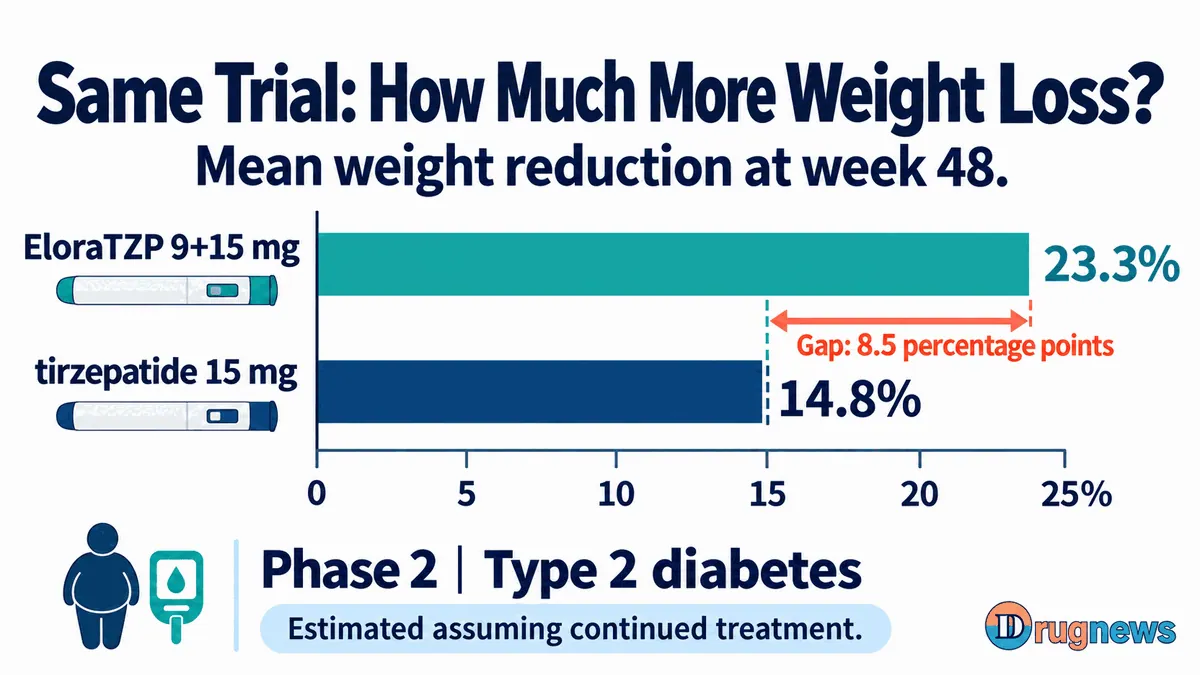
Figure 1 | Mean weight reduction at week 48 in the same Phase 2 trial, in participants with type 2 diabetes and obesity or overweight. The 9 + 15 mg labels refer to the separate doses of the two drugs, which were injected separately in this trial; the pen shapes are illustrative only. The 23.3% and 14.8% figures are estimates under the assumption of continued treatment, a difference of 8.5 percentage points.
02 | Another Column of Numbers Adds a Cost to the Upgrade
The efficacy story is easy to tell. The discontinuation story is more complicated.
Treatment discontinuation due to adverse events ranged from 10.8% to 27.0% across the combination groups, versus 2.9% with tirzepatide and 16.7% with placebo. These are discontinuations due to adverse events, not all-cause dropout rates. The announcement did not map that range to individual groups, so 27.0% cannot be assigned directly to the group achieving 23.3% weight reduction. Groups were limited in size and the placebo rate was also substantial; interpretation still requires the specific reasons.
This gap directly affects product choices. Lilly needs to find a pairing that retains efficacy worth pursuing without making the process of obtaining it too difficult. The highest weight reduction and a range of discontinuation rates across groups are not enough to identify that balance.
The company said gastrointestinal adverse events were most common, generally mild to moderate, concentrated mainly during dose escalation, and more frequent with the combination than with monotherapy. Mild to moderate describes severity. Whether those events interrupt an ongoing treatment is a separate question that must be answered.
That is also why the method behind the 23.3% estimate deserves attention. It asks: assuming all randomized participants continued receiving study treatment, what effect could be achieved at 48 weeks? The framework allows possible interruptions or dose adjustments; it does not simply remove those who stopped treatment and count only completers. It reveals the drug's weight-loss potential, which is still a different question from the average result in everyday use for everyone who starts treatment.
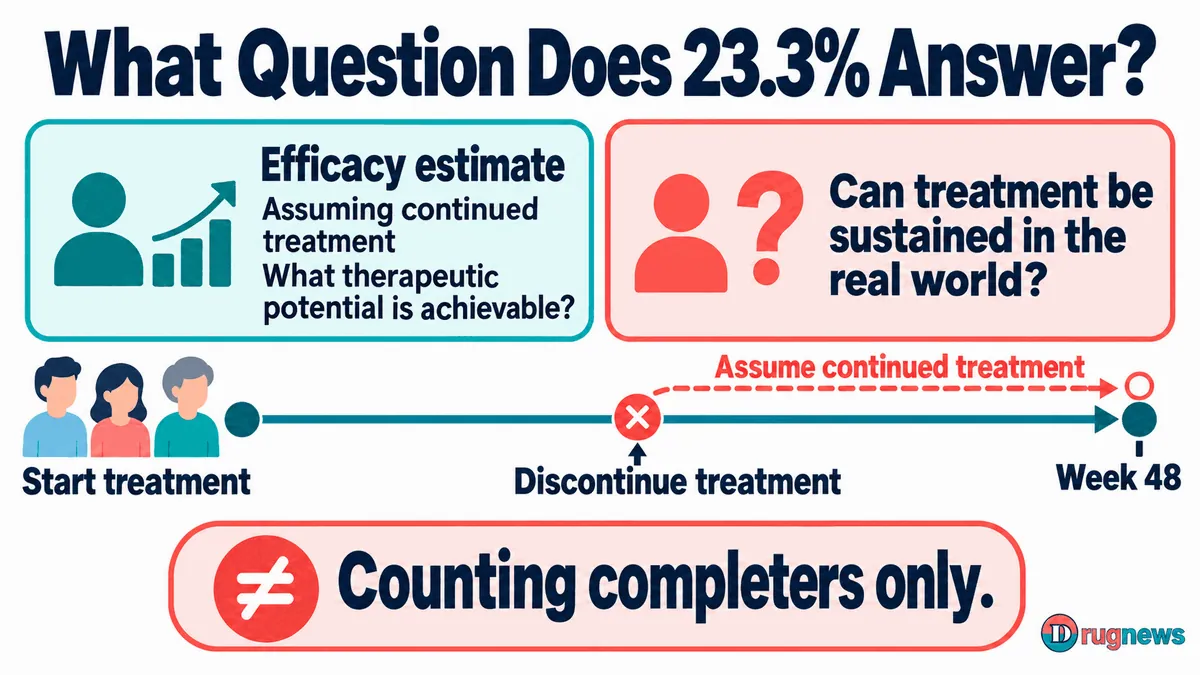
Figure 2 | The 23.3% figure is estimated under the assumption that participants continued receiving the study treatment. The dashed line illustrates a statistical assumption, not an observed patient trajectory; the efficacy estimand is also not equivalent to calculating results only for completers.
The earlier SURMOUNT-4 study provides context for why continued treatment matters. Adults with obesity or overweight but without diabetes received tirzepatide for 36 weeks, then were assigned to continue treatment or switch to placebo. Over the following 52 weeks, those switched to placebo regained weight on average, while those continuing treatment lost further weight. These are not EloraTZP withdrawal results, but they clarify the long-term problem facing developers: after weight is lost, treatment and its results still need to be sustained.
03 | Another Pathway Adds Another Product-Development Test
Receptor pathways may complement one another, but patients experience the entire treatment. EloraTZP has shown additional weight-loss potential. The next step is to put that potential into a regimen people can more readily continue.
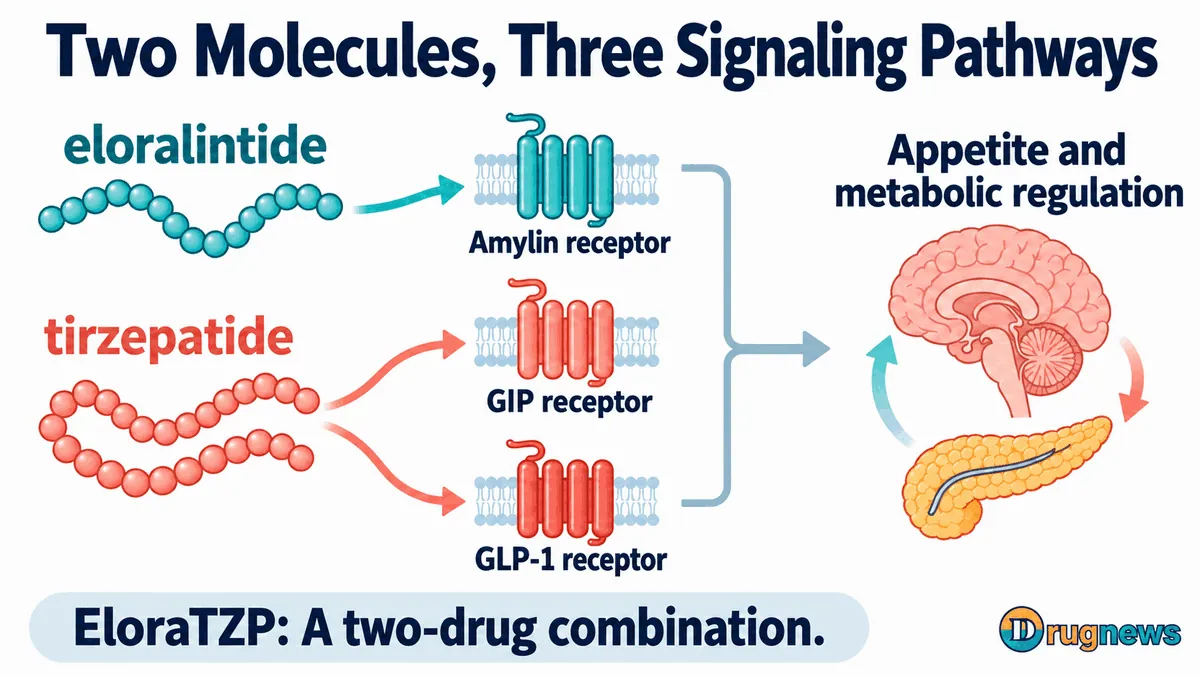
Figure 3 | Eloralintide acts on amylin receptors, while tirzepatide acts on GIP and GLP-1 receptors. This is an illustration of the pathways of action, not a complete diagram of signaling across organs. The value of using the two molecules together must still be assessed in human trials.
Lilly's proposed optimization of dose escalation responds to the observation that gastrointestinal problems occurred mainly while doses were increasing. Starting intensity, escalation speed, and target dose are all adjustments that can be tested. The next question is not just which combination yields the greatest weight reduction, but how much additional efficacy remains after adjustment.
Two possible directions are worth tracking. If the burden is concentrated in a particular combination or escalation stage, the next phase can test whether targeted changes improve continued treatment. If different pairings carry similar burdens, developers must weigh more carefully how much additional weight reduction justifies that discomfort. Group-specific reasons for discontinuation, its timing, and outcomes captured after interruptions will gradually distinguish these paths.
More complete data therefore do more than add tables to the announcement. They will influence which formulation Lilly advances, and whom the new product has the strongest reason to serve.
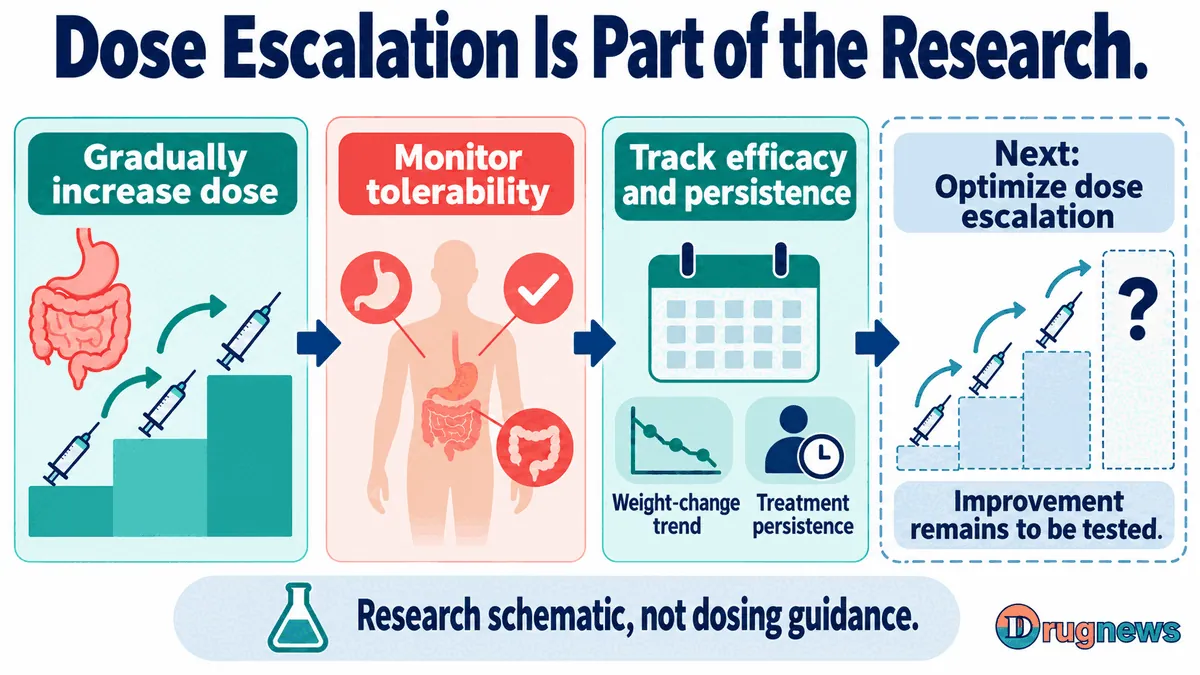
Figure 4 | Dose escalation, tolerability, and continued follow-up need to be designed together. The optimized regimen remains to be validated. The staircase does not represent actual doses or an adjustment schedule and is not personal medication guidance.
04 | A Co-Formulation Still Has to Clear the Tolerability Hurdle
The two drugs were injected separately in this Phase 2 trial. Lilly's planned co-formulation may simplify administration. The two development efforts have their own questions to answer: can formulation integration make injections more convenient, and can dose-escalation changes improve tolerability while preserving additional efficacy? Considering them together shows how much overall improvement patients gain.
This also determines how the new combination could coexist with existing tirzepatide. Monotherapy already works. The two-drug approach must offer people needing a greater improvement a trade-off worth choosing. Pricing and payment arrangements for the new combination have not been announced. The most relevant commercial question now is which patients Lilly can offer a more compelling treatment option.
Conclusion | Worth Advancing, with Trade-Offs the Next Test
These Phase 2 results warrant Lilly's continued development. There is evidence of additional efficacy, and the cost that must be addressed is also visible.
The most meaningful next development will be how much benefit remains after adjusting dose escalation, and how treatment discontinuation due to adverse events changes. If Lilly can do both well, the second molecule will have a better chance of turning additional efficacy into a new option that physicians and patients have reason to choose.
This article is an analysis of the industry and company. It does not constitute investment or medical advice.
References
- Lilly | EloraTZP Phase 2 results, trial design, efficacy-estimand footnote, adverse events, and Phase 3 development plans. September 30, 2026. https://lilly.gcs-web.com/news-releases/news-release-details/lillys-eloratzp-combination-eloralintide-and-tirzepatide
- Aronne et al. | SURMOUNT-4. JAMA. 2024;331:38–48. Background research on treatment withdrawal and continuation, not an EloraTZP trial. https://jamanetwork.com/journals/jama/fullarticle/2812936
Share this analysis
Send this article to readers who follow biotech, company strategy, and capital-market signals.
Cite this article
For decks, research notes, or media references, cite Drugnews with the canonical article URL.
Drugnews Editorial Team. "The Two-Drug Bet in Weight-Loss Injections." Drugnews, Oct 14, 2026. https://drugnews.com.tw/articles/2026-10-14-eloratzp-weight-loss-tolerability-persistence-en.html