
On October 15, AstraZeneca announced an AI drug discovery deal worth up to $1.5 billion. The headline was big. The check due at signing was $40 million.
That is 2.7% of the headline.
The other roughly $1.46 billion arrives only if its partner, insitro, pushes AstraZeneca's chosen targets to a development candidate, and only as AstraZeneca carries those drugs into the clinic and onto the market.
This is not AstraZeneca being stingy. Over the past five years, Lilly, Novartis, Roche and AstraZeneca itself have signed AI deals with headline totals in the billions, and every one of them paid almost exactly the same sliver up front.
Big pharma is buying AI as a cheap option. The price flips only when the first human data arrive.
01 | A $1.5 billion headline, $40 million at signing
The seller, insitro, was founded in 2018 by Daphne Koller, a Stanford computer scientist who co-founded Coursera with Andrew Ng. Her bet: grow human cells at scale, measure what genetic variation does to them, and let machine learning find cause and effect, surfacing targets pharma's own scientists miss. insitro calls the platform its "Virtual Human."
Investors bought in. In March 2021 insitro closed a $400 million Series C with Andreessen Horowitz, GV, BlackRock and Temasek in the round. By this year it had raised more than $750 million in total.
Then the market turned. In May 2025, insitro cut 22% of its staff and said the cuts extended its runway into 2027.
For insitro, the AstraZeneca money is ammunition. For AstraZeneca, it is rounding error in an R&D budget. Two companies signed the same contract and carry very different weights.
02 | AstraZeneca wants a switch in the liver nobody has pressed
The deal covers MASH, metabolic dysfunction-associated steatohepatitis, and cardiomyopathies. MASH runs like an assembly line.
Liver cells fill with fat. The fat draws in immune cells and inflammation. Inflammation pushes stellate cells to lay down scar tissue, and the line runs on to fibrosis and cirrhosis.
Two drugs already make money on this line.
Madrigal's Rezdiffra is an oral small molecule that steps on the gas inside liver cells so the liver burns its fat. It sold $364.3 million in the second quarter of 2026, up 71%, and more than 49,000 patients were on it at the end of June.
Novo Nordisk's Wegovy comes in from the other end. GLP-1 makes people eat less and lose weight, and the liver's load drops with it. On August 15, 2025, the FDA granted accelerated approval for adults with MASH and moderate-to-advanced fibrosis who have not progressed to cirrhosis.
Both drugs hit known positions. AstraZeneca wants the next switch.
Sharon Barr, who runs AstraZeneca's biopharmaceuticals R&D, put it plainly to Reuters: "Choosing the new targets that we want to put into our discovery pipeline is one of the hardest things we do." By the time a new target shows up in a major journal, she said, "it is no longer novel."
Think of it this way: Rezdiffra and Wegovy install faucets on pipes everyone can see. insitro takes genetic data and goes looking inside the wall for a pipe nobody has touched.
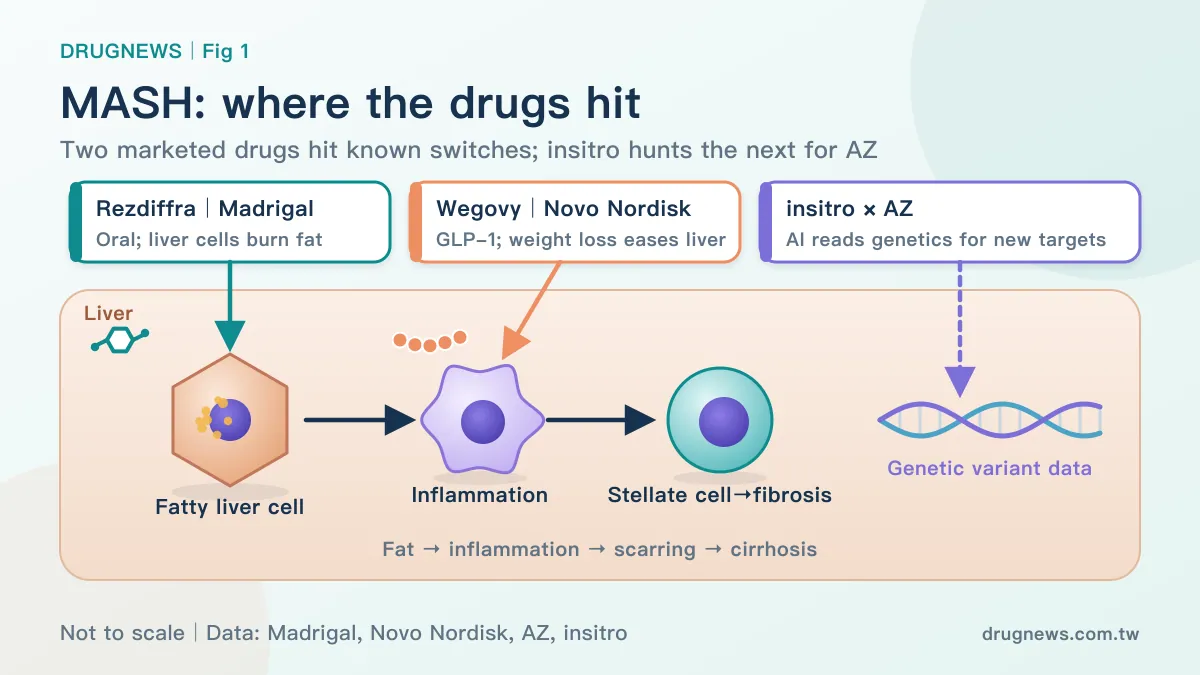
Figure 1|Marketed drugs act on known steps of the line; AstraZeneca is paying for a target nobody has found yet
The one who finds the pipe gets 3%. The one who installs the faucet and sells the water takes most of the rest.
03 | Five AI deals, and every upfront sits between 1% and 3%
Strip the headline numbers apart and AI drug deals look almost identical.
Isomorphic Labs competes on structure prediction. Spun out of Google DeepMind, it bets that protein-structure prediction can design molecules directly. On January 7, 2024, it signed two partners in one day. Lilly paid $45 million up front with up to $1.7 billion in milestones. Novartis paid $37.5 million with up to $1.2 billion.
Recursion competes on scale. In December 2021, Roche and Genentech paid $150 million up front for up to 40 programs, with total potential value of up to $12 billion. The upfront share was 1.25%.
CSPC competes on China's speed and cost. In June 2025, AstraZeneca paid $110 million up front, with up to $1.62 billion in development milestones and $3.6 billion in sales milestones, about $5.33 billion in all.
insitro competes on human cellular data. AstraZeneca paid 2.7% up front.
| Deal | Date | What the AI company competes on | Upfront | Headline total | Upfront share |
|---|---|---|---|---|---|
| AstraZeneca × insitro | 2026-10 | Human cells + genetics to find causality | $40M | ~$1.5B | 2.7% |
| Lilly × Isomorphic | 2024-01 | Structure prediction to design molecules | $45M | ~$1.745B | 2.6% |
| Novartis × Isomorphic | 2024-01 | Structure prediction to design molecules | $37.5M | ~$1.24B | 3.0% |
| AstraZeneca × CSPC | 2025-06 | Preclinical speed and cost | $110M | ~$5.33B | 2.1% |
| Roche × Recursion | 2021-12 | Cell imaging at massive scale | $150M | up to $12B | 1.25% |
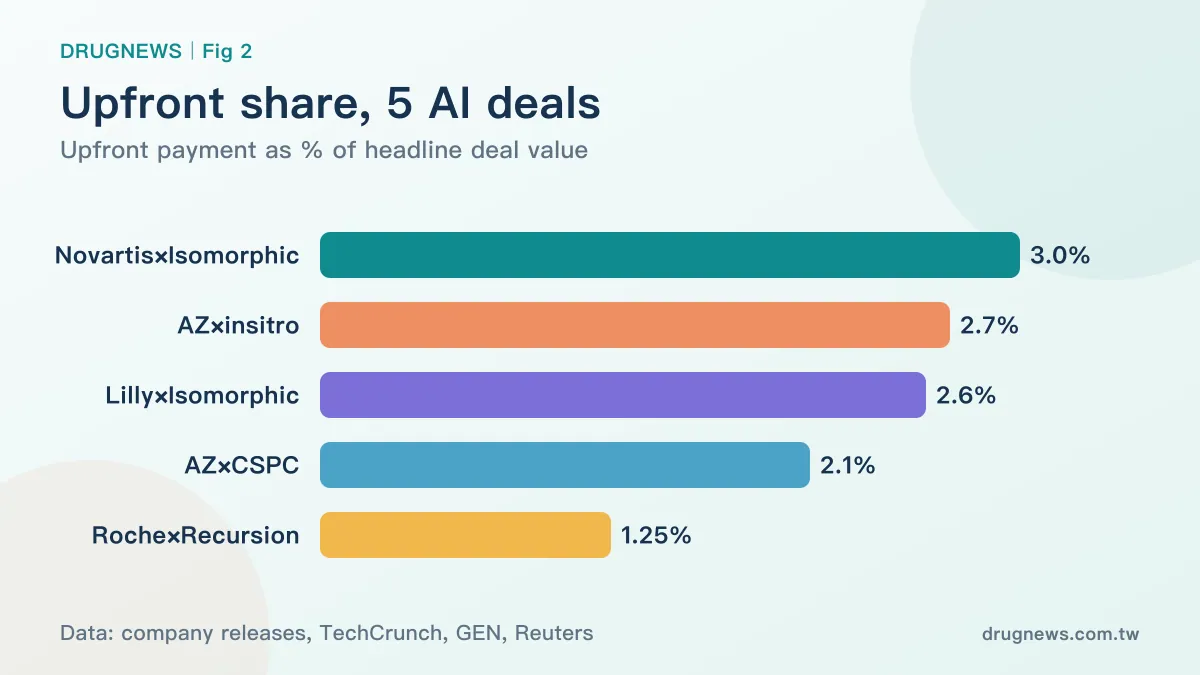
Figure 2|Whatever the AI technology, pharma writes the same price structure
The technologies differ. The formula does not. The buyers across the table are among the richest in the industry, each could afford to pay more up front, and none chose to.
Pharma is not paying for the technology. It is pricing a discount for "unproven." The billion-dollar headline is the ceiling; the floor is 1% to 3%.
04 | With human data, the upfront jumps 100 times
Go back to 2019. That year Gilead paid insitro $15 million up front to work on fatty-liver disease, then called NASH. Seven years later AstraZeneca came back to the same disease and paid $40 million.
In between, insitro raised hundreds of millions more, built the Virtual Human platform and survived a layoff. The upfront grew 2.7 times. The structure did not move: the money still sits at the back.
One term moved the wrong way. Gilead promised royalties in the low double digits. AstraZeneca promised single digits, because this time it keeps all clinical, regulatory and commercial work. Seven years of platform building, and insitro's share of future sales got smaller.
The real control group is on a different road.
In February 2023, Takeda bought Nimbus's TYK2 inhibitor TAK-279. The drug had already been through a Phase 2b trial in people. Takeda paid about $4 billion up front, plus two $1 billion milestones due only when annual sales reach $4 billion and $5 billion.
$4 billion divided by $40 million is 100 times.
The upfront share jumps from 2.7% to about 67%. On one side is a target found by AI. On the other is a molecule with human data.
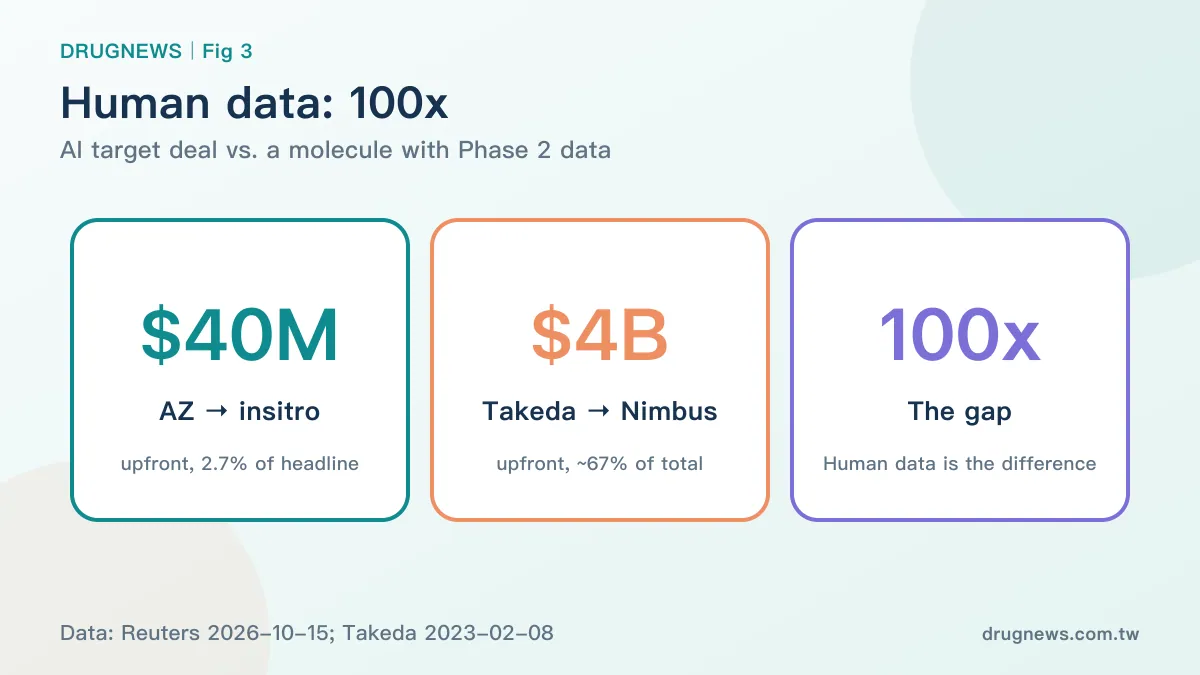
Figure 3|Human data moved the upfront share from 2.7% to about 67%
That is why insitro is making its own drugs. In October 2024, it took an option from Lilly on a GalNAc liver-delivery technology, to pair with two siRNAs aimed at liver targets. In September 2026, it hired a new chief medical officer, Hideo Makimura, to take its lead programs, genetic regulators of liver fat and fibrosis, into human trials in early 2027.
insitro has raised more than $750 million; AstraZeneca's upfront is about 5% of that. AstraZeneca walked away with a cheap option. insitro bought time to reach 2027.
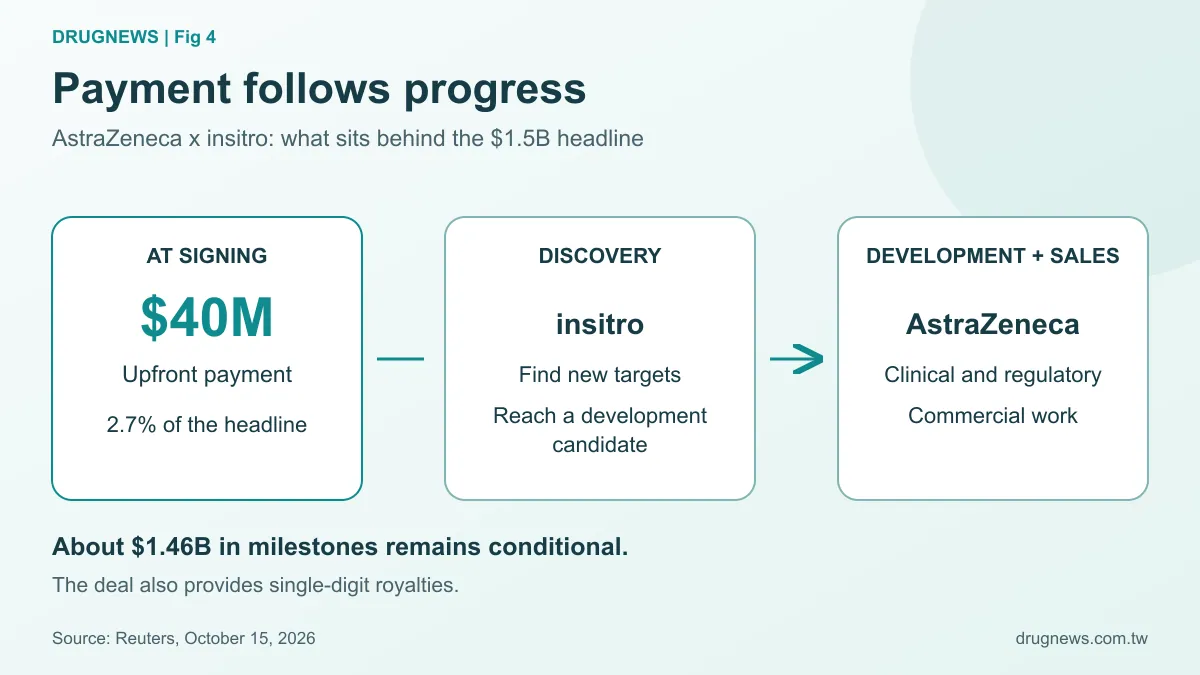
Figure 4 | The upfront is paid at signing; the remaining milestones depend on progress.
05 | Taiwan's licensing headlines deserve the same ruler
When a Taiwanese biotech announces a license worth "up to X billion," readers tend to remember only the X.
Use the same ruler: look at the upfront share first, then the total. At 1% to 3%, the buyer is purchasing an option. When the share climbs past half, the buyer is purchasing a molecule that has already been tested in patients.
A target is a ticket. Human data is leverage. For an AI company to turn 3% into 67%, there is one road: insitro's own liver drug has to reach humans in early 2027.
This article is industry and company analysis, not investment or medical advice.
References
- AstraZeneca strikes $40 million AI drug discovery deal with insitro (Reuters)|Euronext|2026-10-15|https://live.euronext.com/en/financial-news/astrazeneca-strikes-40-million-ai-drug-discovery-deal-insitro
- AstraZeneca signs AI drug discovery deal with insitro|Quartz|2026-10-15|https://qz.com/astrazeneca-insitro-ai-drug-discovery-liver-heart-101526
- Insitro's Virtual Human attracts $1.5B MASH deal with Astrazeneca|BioWorld|2026-10-15|https://www.bioworld.com/articles/734729-insitros-virtual-human-attracts-15b-mash-deal-with-astrazeneca
- Daphne Koller|Wikipedia|2026-10-17|https://en.wikipedia.org/wiki/Daphne_Koller
- Gilead and insitro Announce Strategic Collaboration to Discover and Develop Novel Therapies for Nonalcoholic Steatohepatitis|Gilead|2019-04-16|https://www.gilead.com/news/news-details/2019/gilead-and-insitro-announce-strategic-collaboration-to-discover-and-develop-novel-therapies-for-nonalcoholic-steatohepatitis
- insitro Raises $400 Million in Series C Financing|insitro|2021-03-15|https://www.insitro.com/news/insitro-raises-400-million-in-series-c-financing
- Insitro Cuts 22% of Workforce, Extending Runway Into 2027|BioSpace|2025-05-09|https://www.biospace.com/job-trends/insitro-cuts-22-of-workforce-extending-runway-into-2027
- insitro Names Hideo Makimura Chief Medical Officer Ahead of First Clinical Trials|citybiz|2026-09-08|https://www.citybiz.co/article/899596/insitro-names-hideo-makimura-chief-medical-officer-ahead-of-first-clinical-trials/
- Madrigal Pharmaceuticals Reports Second-Quarter 2026 Financial Results|Madrigal (SEC 8-K)|2026-07-30|https://www.sec.gov/Archives/edgar/data/0001157601/000162828026050775/exhibit991-63026earningspr.htm
- FDA Approves Semaglutide (Wegovy) Injection 2.4 mg for Noncirrhotic MASH|HCPLive|2025-08-15|https://www.hcplive.com/view/fda-approves-semaglutide-wegovy-injection-2-4-mg-for-noncirrhotic-mash
- Isomorphic inks deals with Eli Lilly and Novartis for drug discovery|TechCrunch|2024-01-07|https://techcrunch.com/2024/01/07/isomorphic-inks-deals-with-eli-lilly-and-novartis-for-drug-discovery
- Roche, Genentech, Recursion Launch Up-to-$12B AI Drug Discovery Effort|GEN|2021-12-07|https://genengnews.com/news/roche-genentech-recursion-launch-up-to-12b-ai-drug-discovery-effort
- AstraZeneca enters strategic collaboration with CSPC Pharmaceuticals focused on AI-enabled research|AstraZeneca|2025-06-13|https://www.astrazeneca.com/media-centre/press-releases/2025/astrazeneca-enters-into-collaboration-with-cspc.html
- Takeda Completes Acquisition of Nimbus Therapeutics' TYK2 Program Subsidiary|Takeda|2023-02-08|https://www.takeda.com/newsroom/newsreleases/2023/takeda-completes-acquisition-of-nimbus-therapeutics-tyk2-program-subsidiary/
Share this analysis
Send this article to readers who follow biotech, company strategy, and capital-market signals.
Cite this article
For decks, research notes, or media references, cite Drugnews with the canonical article URL.
Drugnews Editorial Team. "AstraZeneca's $1.5B AI Deal Pays 2.7% Up Front." Drugnews, Oct 21, 2026. https://drugnews.com.tw/articles/2026-10-21-astrazeneca-insitro-ai-deal-upfront-en.html