
──────────
Share this analysis
Send this article to readers who follow biotech, company strategy, and capital-market signals.
When an 8,323-patient trial misses its primary endpoint, the consequences extend beyond one drug's development schedule. An entire business pathway must revisit three questions: which patients need to be identified, what risk a treatment can reduce, and who would pay for that improvement.
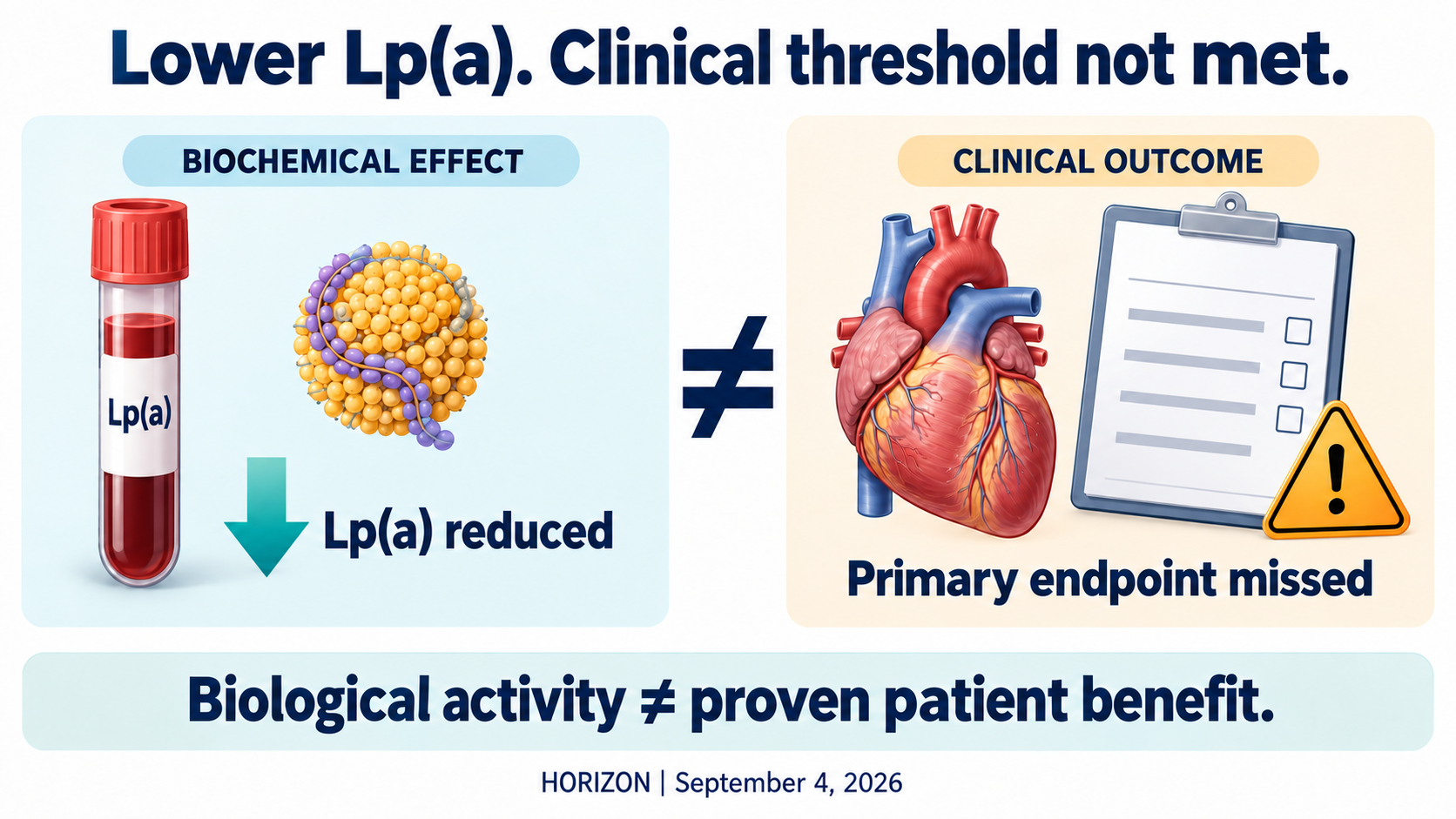
On September 4, 2026, Novartis announced that pelacarsen did not meet the primary cardiovascular endpoint in the Phase III Lp(a)HORIZON trial. The drug lowered blood Lp(a), but the study did not demonstrate a reduction in the risk of the primary cardiovascular events. [1] The anticipated pathway ran from testing and patient identification to treatment of residual risk. The treatment step still lacks the critical evidence needed to support regulatory and reimbursement discussions.
There is more to investigate than simply waiting for another dataset. Novartis holds worldwide development, manufacturing and commercialization rights to pelacarsen, while Ionis provided discovery and early development. Taiwan already has identifiable Lp(a) testing products and laboratory services, as well as documented nucleic acid manufacturing and delivery capabilities. [1][3] The commercial question is which needs those capabilities can serve, which activities may develop first, and which require the clinical evidence to advance further.
Pelacarsen is an antisense oligonucleotide, or ASO, designed to reduce the production of apolipoprotein(a), thereby lowering lipoprotein(a), or Lp(a). Lp(a) is a highly genetic cardiovascular risk factor. Novartis states that approximately 90% of Lp(a) levels are determined by genetics, with limited influence from diet and lifestyle. About one in five people worldwide have elevated Lp(a), and there are currently no approved therapies that specifically target Lp(a). [1]
Lp(a)HORIZON asked a direct and expensive question: in patients with established cardiovascular disease and elevated Lp(a), can lowering Lp(a) further reduce the risk of major cardiovascular events?
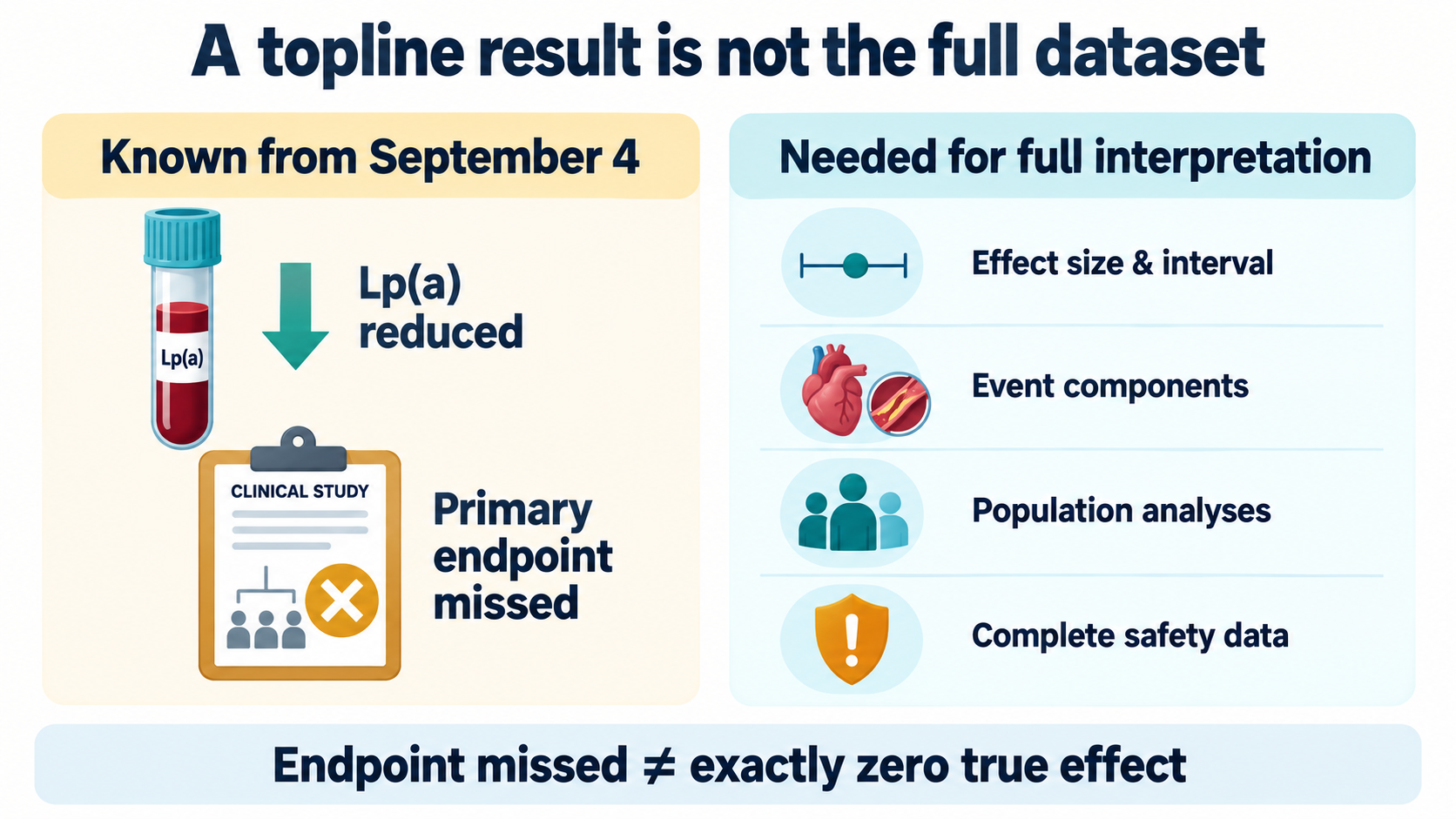
The September 4 initial announcements gave a negative primary conclusion. Pelacarsen lowered Lp(a) in a study population receiving guideline-recommended care, but it did not meet the primary endpoint of reducing the risk of major cardiovascular events compared with placebo. In those September 4 initial announcements, Novartis and Ionis did not provide full effect estimates; both companies said at that time that additional data would be presented at a future medical meeting. [1][3]
This result does not invalidate Lp(a) as a cardiovascular risk factor. It also does not mean that every Lp(a)-lowering approach has failed. It leaves more precise questions: how much Lp(a) reduction is needed, in which patients, with which molecule, and over what duration before a reduction in clinical events can be observed?
【Figure 1|Lowering a marker is not the same as succeeding on clinical outcomes】
【01|HORIZON Was Testing Clinical Events, Not Just Lp(a) Reduction】
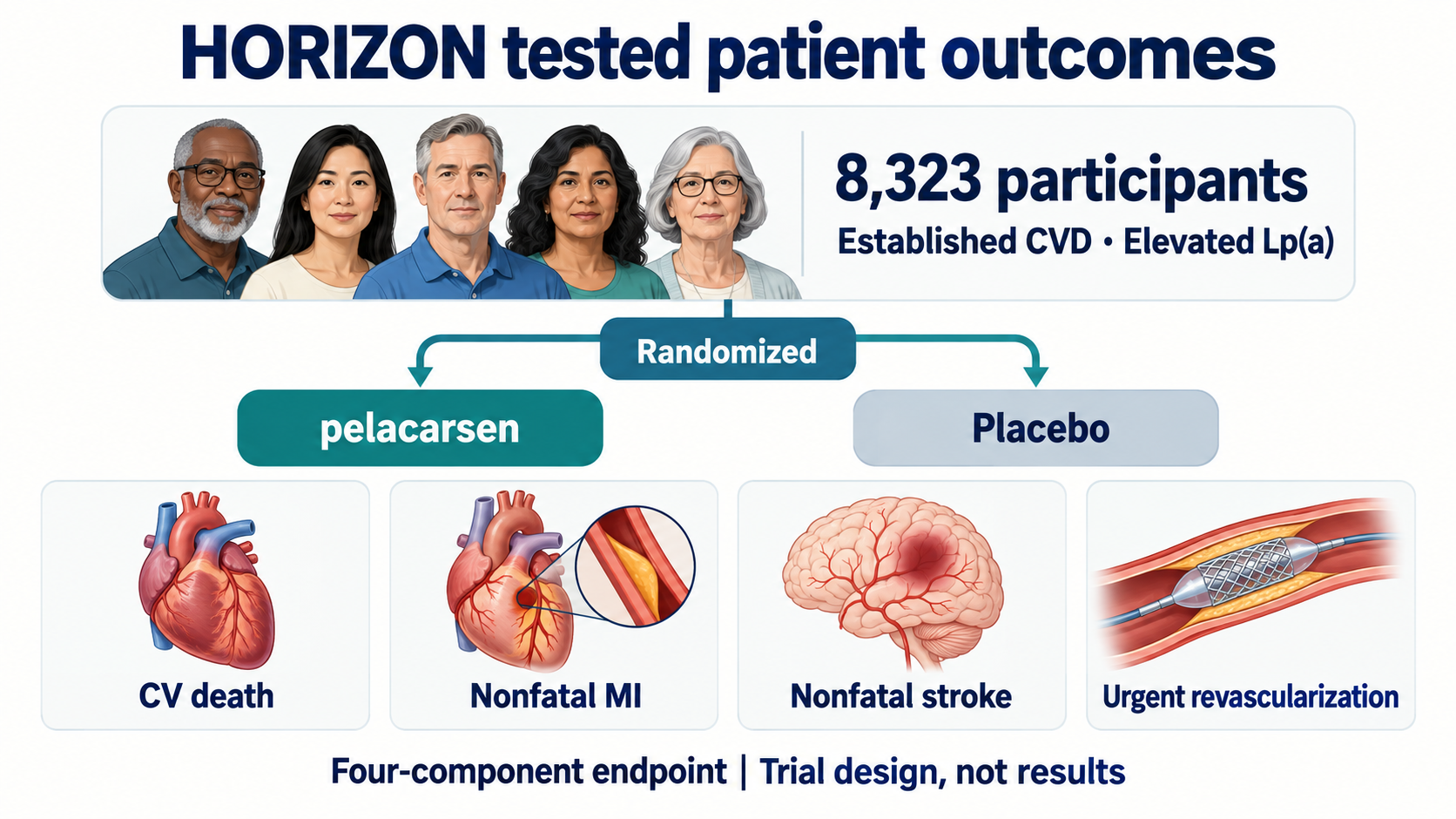
The design of Lp(a)HORIZON was clear: it was a Phase III, randomized, double-blind, placebo-controlled, multicenter global cardiovascular outcomes trial. It enrolled 8,323 patients with elevated Lp(a) and established cardiovascular disease, and evaluated pelacarsen’s effect on 4-point MACE. [1]
4-point MACE refers to a composite of four major adverse cardiovascular events: cardiovascular death, non-fatal myocardial infarction, non-fatal stroke, and urgent coronary revascularization requiring hospitalization. Novartis’s September 4 announcement states that Lp(a)HORIZON did not meet its primary endpoint of reducing the risk of these events compared with placebo. [1]
The critical distinction is between lowering a marker and lowering clinical events.
Prior pelacarsen data and the September 4 announcements support that the drug can lower Lp(a). Ionis also said that pelacarsen produced substantial Lp(a) lowering in HORIZON and had an acceptable safety profile. [3] But HORIZON was not simply a biomarker study. It was a cardiovascular outcomes trial. The question was whether patients would experience fewer cardiovascular deaths, myocardial infarctions, strokes, or urgent coronary revascularizations.
Those two layers are separated by clinical reality.
A marker can be a risk factor and a drug target. Whether it can become a successful therapeutic market depends on whether intervening on that target changes patient outcomes. HORIZON reminds the industry that risk factors, surrogate markers, and final clinical outcomes cannot be treated as the same thing.
【02|Why the Result Surprised the Field】
Lp(a) has long been one of the most attractive targets in cardiovascular medicine.
First, it is largely genetically determined. For many patients, diet, exercise, weight management, and standard lipid-lowering therapies do not meaningfully reduce Lp(a). Second, Lp(a) has biological links to atherosclerosis, inflammation, plaque instability, and thrombotic risk. Third, clinicians already see patients who remain at residual cardiovascular risk despite statins, PCSK9 inhibitors, antiplatelet therapy, and blood pressure management.
Pelacarsen entered HORIZON on that logic. It was not testing a laboratory value in a general low-risk population. It was testing whether further lowering Lp(a) could reduce events in patients with established cardiovascular disease, elevated Lp(a), and contemporary standard care. Novartis framed the trial as addressing an important unresolved question in cardiovascular medicine: when other major risk factors are managed, can lowering Lp(a) further reduce residual risk? [1]
The missed endpoint makes the question more complicated.
There are many possible explanations, but at this stage they remain hypotheses. The study population may have been heterogeneous. The magnitude or duration of Lp(a) lowering may not have been sufficient. Event accumulation may have been inadequate. Background therapy may have reduced the remaining modifiable risk. Lp(a) may also influence different event components, genetic backgrounds, or baseline concentration groups differently. Because the September 4 initial announcements did not provide full effect estimates, this article does not infer the hazard ratio, confidence interval, P value, event count, or any specific subgroup effect.
HORIZON was designed to assess both the overall population with Lp(a) of at least 70 mg/dL and a prespecified population with Lp(a) of at least 90 mg/dL. But a prespecified analysis population is not the same as a proven positive subgroup. Novartis’s September 4 initial announcement did not provide effect estimates for these groups, so this article does not describe them as successful or unsuccessful. [1]
【Figure 2|HORIZON was an outcomes trial, not only a marker-lowering study】
【03|Product Rights Still Need Clinical Value That Can Support Payment】
The rights structure around pelacarsen is clear. Ionis discovered and initially developed pelacarsen. In 2019, Novartis exercised its option to license the program for cardiovascular indications. Novartis’s announcement also states that, under its agreement with Ionis, it obtained worldwide rights to develop, manufacture, and commercialize pelacarsen. [1][3]
Therefore, HORIZON is not only a scientific event. It affects the value of rights and the rhythm of commercialization.
The original business case can be made more concrete. If a treatment demonstrates fewer events in an appropriate population, testing can help identify potentially eligible patients, and physicians have a stronger basis for explaining an additional intervention alongside existing care. Payers can then evaluate whether the clinical value of reducing events supports the treatment's cost. If that pathway becomes viable, product rights, testing access and patient-identification processes may each become important commercial positions.
HORIZON's missed primary endpoint obstructs that pathway at the crucial clinical-value step. This is a conditional scenario, not evidence of established reimbursement, new revenue or a confirmed eligible market size.
The situation is now different. With the primary endpoint missed, Novartis cannot support the same commercial narrative using Lp(a) reduction alone. The next step depends on the full dataset: whether a specific patient group, baseline Lp(a) level, event component, or treatment background shows a signal strong enough to justify continued development. If the full data do not reveal a path that can support regulatory and reimbursement discussions, pelacarsen’s commercialization path could be delayed or repositioned.
Ionis is in a somewhat different position. Pelacarsen remains an important example of Ionis’s nucleic acid drug capabilities, but Ionis also has other commercial medicines and research programs. In its announcement, Ionis shifted attention back to its broader business while noting that additional pelacarsen data would still be presented. [3]
That is the risk profile of an ASO platform company. A platform can repeatedly generate candidate medicines, but the commercial value of each large indication still depends on its own endpoint data. Platform capability does not equal product success. A single product setback also does not invalidate the entire platform.
【04|For the Lp(a) Field, the Question Becomes More Precise】
HORIZON’s missed endpoint will cool the Lp(a) field in the short term. It does not make the problem disappear.
Lp(a) remains a highly genetic and independent cardiovascular risk factor with causal evidence behind it. Novartis and Ionis both emphasized that elevated Lp(a) affects about one in five people worldwide and that U.S. and European guidelines recommend that adults have Lp(a) measured at least once in their lifetime. [1][3]
That statement should be handled carefully. It is a description of guideline recommendations cited by the companies. It is not individualized medical advice from this article. Whether a specific person should be tested, how a result should be interpreted, and whether further action is needed should be determined by healthcare professionals based on personal history, family history, and overall cardiovascular risk.
The development threshold has changed.
The market has often treated Lp(a) as the next LDL-C. But the LDL-C story cannot simply be copied. LDL-C has enormous support from lipid-lowering drugs, genetics, epidemiology, and outcomes trials. Lp(a) has strong risk evidence, but whether lowering blood levels can consistently translate into improved outcomes still needs to be answered through large outcomes trials.
Future Lp(a) drugs, including siRNA, small molecules, or other ASO approaches, will be compared against HORIZON. The comparison will not only be about who lowers Lp(a) the most. It will be about who can show event reduction in the right population. Duration of effect, dosing interval, baseline Lp(a) threshold, background therapy, event composition, and follow-up time will all be re-examined.
That is the scientific value of HORIZON. Even without meeting its primary endpoint, it provides the first large cardiovascular outcomes trial-level signal of this kind: in this population, under contemporary standard care, and with this trial design, pelacarsen lowered Lp(a) but did not demonstrate success on the primary cardiovascular endpoint. That sentence is not as attractive as the market’s earlier hopes, but it will shape the next generation of Lp(a) trial design.
【Figure 3|Known and unknown should be kept separate】
【05|Taiwan's Potential Roles: Testing Access, Manufacturing Processes and Delivery】
For Taiwan readers, the closest practical entry point is testing and risk stratification.
Novartis and Ionis both noted that U.S. and European guidelines recommend that adults have Lp(a) measured at least once in their lifetime. [1][3] That does not mean a large treatment market will appear immediately in Taiwan. It does mean that the questions of who should be tested, how testing should be performed, and how results should be interpreted will become more important.
Taiwan already has identifiable Lp(a) testing products and services. TST Biomedical Electronics lists a lipoprotein(a) assay cartridge set with a TFDA medical device license number, using a 5 uL blood sample as a rapid testing product. [4] Union Clinical Laboratory lists a Lipoprotein a / Lp(a) test, including its method and self-pay price, with the service page updated on July 31, 2026. [5]
These examples occupy different commercial positions. TST Biomedical Electronics supplies a testing product: if more clinical settings adopt compatible testing workflows, the opportunity may involve product and cartridge use. Union Clinical Laboratory supplies a testing service, more directly tied to demand for submitted samples. Product supply and laboratory services are distinct revenue activities; a listed product or service does not establish that usage has increased. [4][5]
The promising conditional scenario is that broader inclusion of Lp(a) in overall cardiovascular risk assessment could create demand accessible to existing suppliers and laboratories. If a future medicine also demonstrates fewer clinical events, testing could become an initial step in identifying eligible patients. Actual risk-assessment use can be observed before the drug-dependent opportunity matures. Product adoption, testing volumes or formal operating disclosures would be needed to establish growth; this article does not assume it has occurred.
Nucleic acid drug manufacturing and delivery platforms sit farther from this specific event, but they remain adjacent capabilities to watch.
Genomics lists a GMP nucleic acid and peptide manufacturing facility, positioning itself in TIDES CDMO with oligonucleotide synthesis, purification, concentration, lyophilization, and packaging capabilities. [6] FormuRx lists its FRx LNP nucleic acid lipid nanoparticle platform for mRNA, siRNA, miRNA, and other nucleic acid medicines. [7] Intelligene describes RNA nucleic acid drugs, LNP and exosome delivery technologies, along with a GMP pilot facility and process research center. [8] Holy Stone Healthcare lists the HylX hyaluronic acid drug-delivery platform and HylCaryo nucleic acid delivery technology. [9] General Biologicals Corporation has in vitro diagnostic and diagnostic CDMO capabilities. [10]
The potential business becomes clearer when these capabilities are placed within a developer's work. A new nucleic acid candidate progressing toward clinical development needs reproducible synthesis, purification and manufacturing processes. The capabilities listed by Genomics provide a specific entry point for following process-development and contract-manufacturing opportunities. Where a candidate requires a suitable delivery system, the disclosed platforms at FormuRx, Intelligene and Holy Stone Healthcare provide separate opportunities to monitor research collaborations, technical validation and subsequent development. General Biologicals' diagnostic capabilities occupy a different position in testing products and diagnostic contract development and manufacturing. [6][7][8][9][10]
These are potential collaboration scenarios derived from disclosed capabilities, not evidence that the companies have joined pelacarsen's supply chain. Pelacarsen is an ASO; another nucleic acid or LNP platform should not automatically be treated as its required solution. HORIZON's setback does not itself create Taiwan orders. Named customers or collaborations, product-compatibility validation, process milestones and orders would be the verifiable developments that move the commercial case forward.
Taiwan’s position in this topic can therefore be divided into two layers. Testing and risk stratification are closer. Nucleic acid manufacturing and delivery are farther away. The former may be influenced earlier by medical awareness and health-check demand. The latter depends on whether future drug development continues and whether Taiwan platforms can secure concrete partnerships or commercial work.
【06|What to Watch in the Next Dataset】
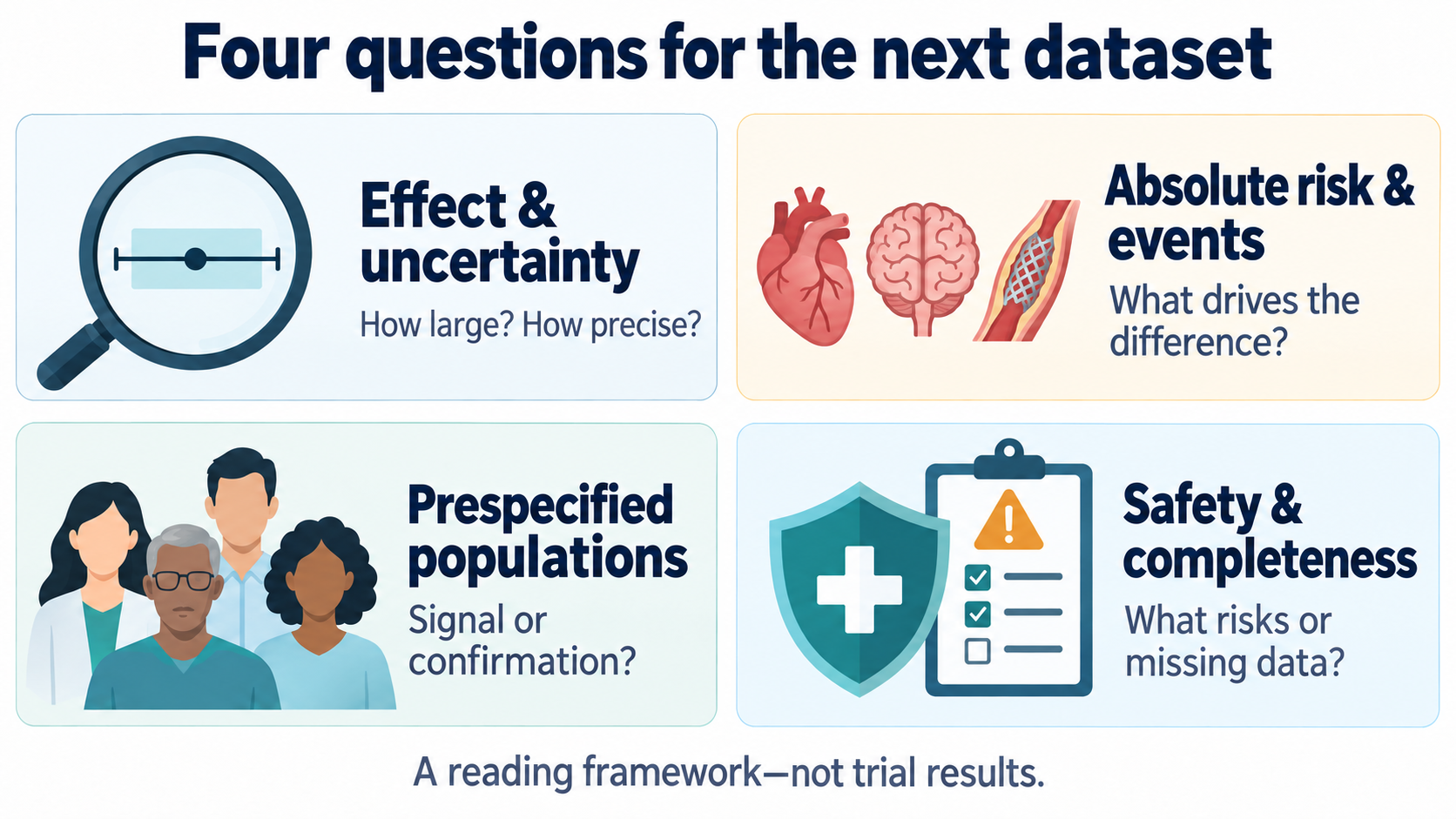
In their September 4 initial announcements, Novartis and Ionis both said that additional Lp(a)HORIZON data would be presented at a future medical meeting. [1][3]
That dataset will matter more than the topline announcement.
First, the field will need the main effect estimate and its uncertainty range. Without the hazard ratio, confidence interval, P value, and event count, it is difficult to know whether the missed endpoint reflects no directional signal, too small an effect, inadequate event accumulation, or heterogeneity across the population.
Second, absolute risk and event composition will matter. The 4-point MACE endpoint includes cardiovascular death, non-fatal myocardial infarction, non-fatal stroke, and urgent coronary revascularization. If different components move in different directions, that will affect how researchers understand Lp(a) biology and future endpoint design.
Third, the prespecified populations will matter. HORIZON included the overall population with Lp(a) of at least 70 mg/dL and a population with Lp(a) of at least 90 mg/dL. The September 4 announcement did not provide effect estimates for these groups. If a higher-Lp(a) group shows a directional signal, future trials may narrow toward higher-risk patients. If not, the field will face a harder set of questions.
Fourth, safety and data completeness will matter. Ionis said pelacarsen had an acceptable safety profile, but complete safety interpretation requires the meeting or publication dataset. For a drug that might be used in chronic cardiovascular risk management, long-term tolerability will directly affect regulatory and reimbursement discussions. [3]
【Figure 4|The next full dataset will decide the direction】
【Conclusion|Connect Capabilities to Actual Use】
HORIZON represents a material setback for pelacarsen's commercial path: the drug lowered Lp(a), but missed the primary cardiovascular endpoint, and the September 4 initial announcement did not provide full effect estimates. [1] The result affects development, regulatory and payment discussions. It does not answer the question for every other medicine or eliminate high-risk patients' needs.
The next competition is more concrete. A product-rights holder needs to establish which patients receive sufficient clinical value. A testing provider needs risk identification to enter real workflows. Manufacturing and delivery businesses need their capabilities to fit developers' actual requirements. Taiwan has identifiable products, services and platforms; their commercial prospects can be followed through these specific capabilities, rather than a shared thematic label.
A full dataset clarifying effects, prespecified populations and safety could change subsequent development choices. New testing adoption or named collaborations could make Taiwan's role more tangible. Which would you watch first: clinical-event evidence, or actual use in testing and process development?
This article is for biotech industry and research information only and does not constitute individualized medical or investment advice. Treatment decisions should be made by healthcare professionals based on individual circumstances and the latest approved labeling. Research progress does not guarantee regulatory approval, commercial success, or investment returns.
Sources:
[1] Novartis. Novartis announces Lp(a)HORIZON Phase III topline results for pelacarsen in patients with elevated Lp(a) and established cardiovascular disease (CVD). September 4, 2026. https://www.novartis.com/news/media-releases/novartis-announces-lpahorizon-phase-iii-topline-results-pelacarsen-patients-elevated-lpa-and-established-cardiovascular-disease-cvd
[2] ClinicalTrials.gov. NCT04023552, Lp(a)HORIZON. https://clinicaltrials.gov/study/NCT04023552
[3] Ionis Pharmaceuticals. Ionis partner Novartis announces Lp(a)HORIZON Phase 3 topline results for pelacarsen. September 4, 2026. https://ionispharmaceuticalsinc.gcs-web.com/news-releases/news-release-details/ionis-partner-novartis-announces-lpahorizon-phase-3-topline
[4] TST Biomedical Electronics. Lipoprotein(a) assay cartridge set. https://www.tst.bio/zh/lpaassaycartridgeset
[5] Union Clinical Laboratory. Lipoprotein a, Lp(a). Updated July 31, 2026. https://www.ucl.com.tw/webshop/shop/ServiceQueryInfo.asp?GoodsID=D0107076
[6] Genomics. R&D and Technology / GMP Facility. https://www.genomics.com.tw/tw/technology/equipment
[7] FormuRx. FRx LNP nucleic acid lipid nanoparticle platform. https://formurx.com/lnp-2-2/
[8] Intelligene. Drug delivery technologies. https://www.intelli-gene.com/drug-delivery
[9] Holy Stone Healthcare. HylX platform. https://www.hshc.com.tw/zh-tw/hdd_main.php
[10] General Biologicals Corporation. IVD / CDMO diagnostic capabilities. https://www.gbc.com.tw/en/products/cdmobygbc/
Cite this article
For decks, research notes, or media references, cite Drugnews with the canonical article URL.
Drugnews Editorial Team. "After Novartis’ 8,323-Patient Trial Setback, How Should the Cardiovascular Business Case Be Rebuilt?" Drugnews, Sep 22, 2026. https://drugnews.com.tw/articles/2026-09-22-pelacarsen-horizon-topline-evidence-en.html