
──────────
Share this analysis
Send this article to readers who follow biotech, company strategy, and capital-market signals.
Cancer vaccines are usually discussed after cancer has already appeared: a tumor is present, and the immune system is trained to recognize and attack it.
NOUS-209 asks an earlier question. If a person is born with a higher cancer risk, can the immune system be trained before cancer becomes clinically visible?
On January 16, 2026, Nature Medicine published a Phase 1b/2 study of NOUS-209 in carriers of Lynch syndrome. The study was single-arm, open-label and multicenter. Forty-five participants were included in the safety analysis. Of the 37 participants evaluable for immunogenicity at week 9, all 37 developed vaccine-induced immune responses. That is a strong immunogenicity signal, but it is not a 100% cancer-prevention rate. The co-primary endpoints were safety and immunogenicity, not proven reduction in cancer incidence. [1]
The value of this study is not that an early number can be turned into a victory. It is that a new prevention logic is becoming more concrete: cancer prevention may not only mean finding cancer earlier, but also training immunity to intercept cells before they become clinically visible disease.
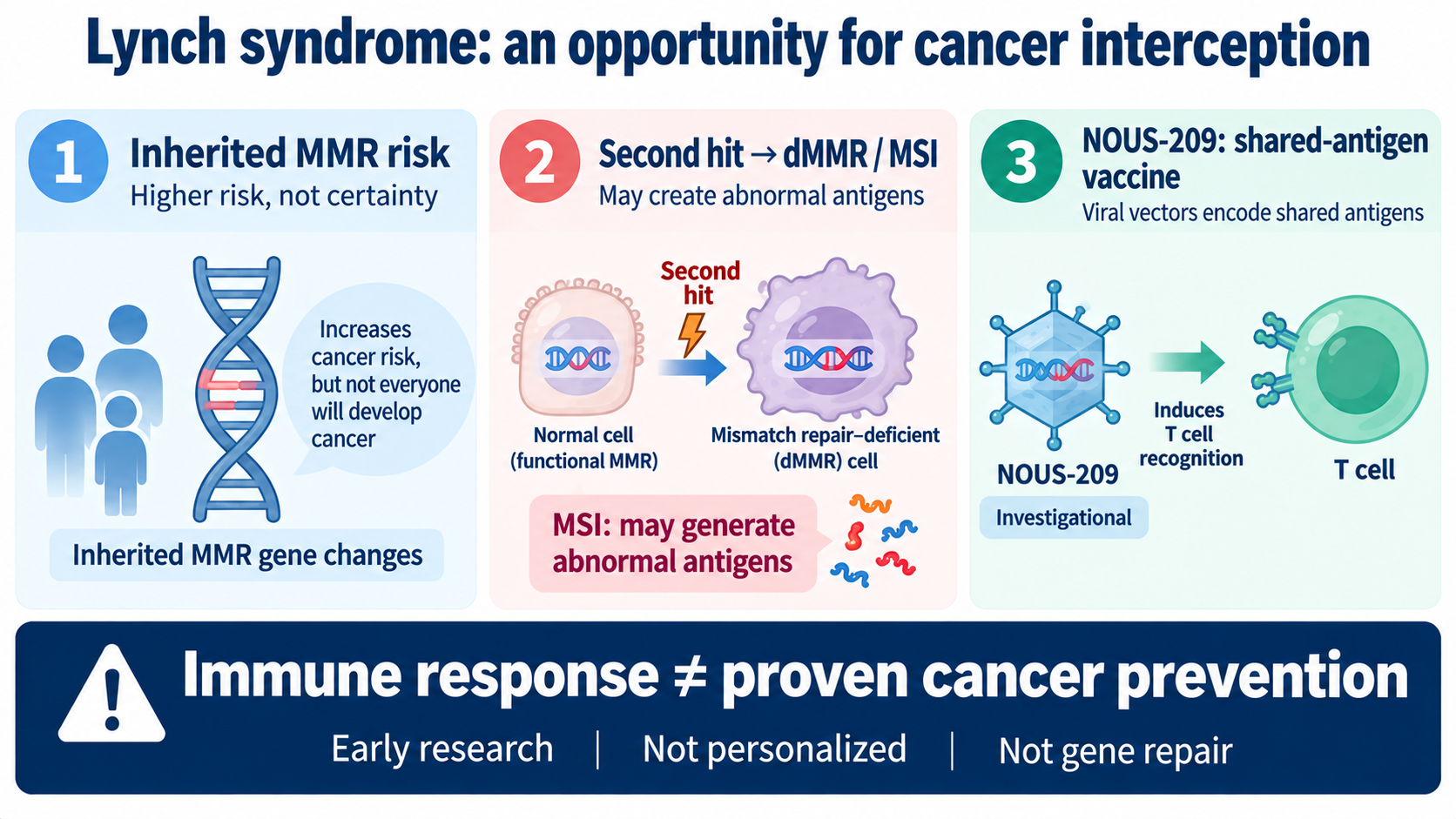
【Figure 1|Risk and immune response: recognition is not proof of prevention】
【01|Why Lynch Syndrome Fits the Cancer-Interception Question】
Lynch syndrome is a common hereditary cancer predisposition syndrome driven by germline variants in mismatch repair, or MMR, genes. When cells later lose the remaining functional MMR allele, microsatellite instability, or MSI, can develop. This creates insertion or deletion mutations in repetitive DNA regions. When these changes occur in coding regions, they can generate frameshift peptide, or FSP, neoantigens. [1]
That is the biological opening for NOUS-209.
Many personalized neoantigen vaccines begin with tumor sequencing. A tumor is already present, and the vaccine is designed around mutations in that patient’s cancer. Lynch syndrome creates a different opportunity. MMR deficiency and MSI can repeatedly generate shared frameshift peptides across tumors and premalignant lesions. NOUS-209 attempts to turn those shared signals into an off-the-shelf immune training strategy for a genetically high-risk population. [1]
This is not conventional screening. Screening looks for lesions that already exist. Immune interception attempts to make the body better at recognizing cells that may be moving toward cancer. The clinical question is whether immune intervention can add measurable benefit on top of colonoscopy and existing risk management.
【02|What NOUS-209 Is: Viral Vectors, Not mRNA and Not Gene Repair】
NOUS-209 is not an mRNA vaccine. It is also not a gene-repair therapy for MMR mutations.
The Nature Medicine paper describes NOUS-209 as a heterologous prime-boost regimen. At week 0, participants receive a great ape adenovirus, or GAd, vector as the prime. At week 8, they receive a modified vaccinia Ankara, or MVA, vector as the boost. Together, the viral vectors encode 209 shared frameshift peptides found in MSI tumors and premalignant lesions. [1]
That design has an important development logic. Viral vectors can deliver a broad antigen payload and are well suited for inducing T-cell responses. Using GAd first and MVA later also attempts to strengthen the immune response while reducing limitations from vector-specific immunity.
The same design also brings development challenges. NOUS-209 is not a single short peptide and not a simple plug-and-play sequence platform. It requires viral vector engineering, GMP manufacturing, potency and quality control, immunogenicity testing, and safety evaluation in a high-risk population that does not have active or recurrent invasive cancer at enrollment.
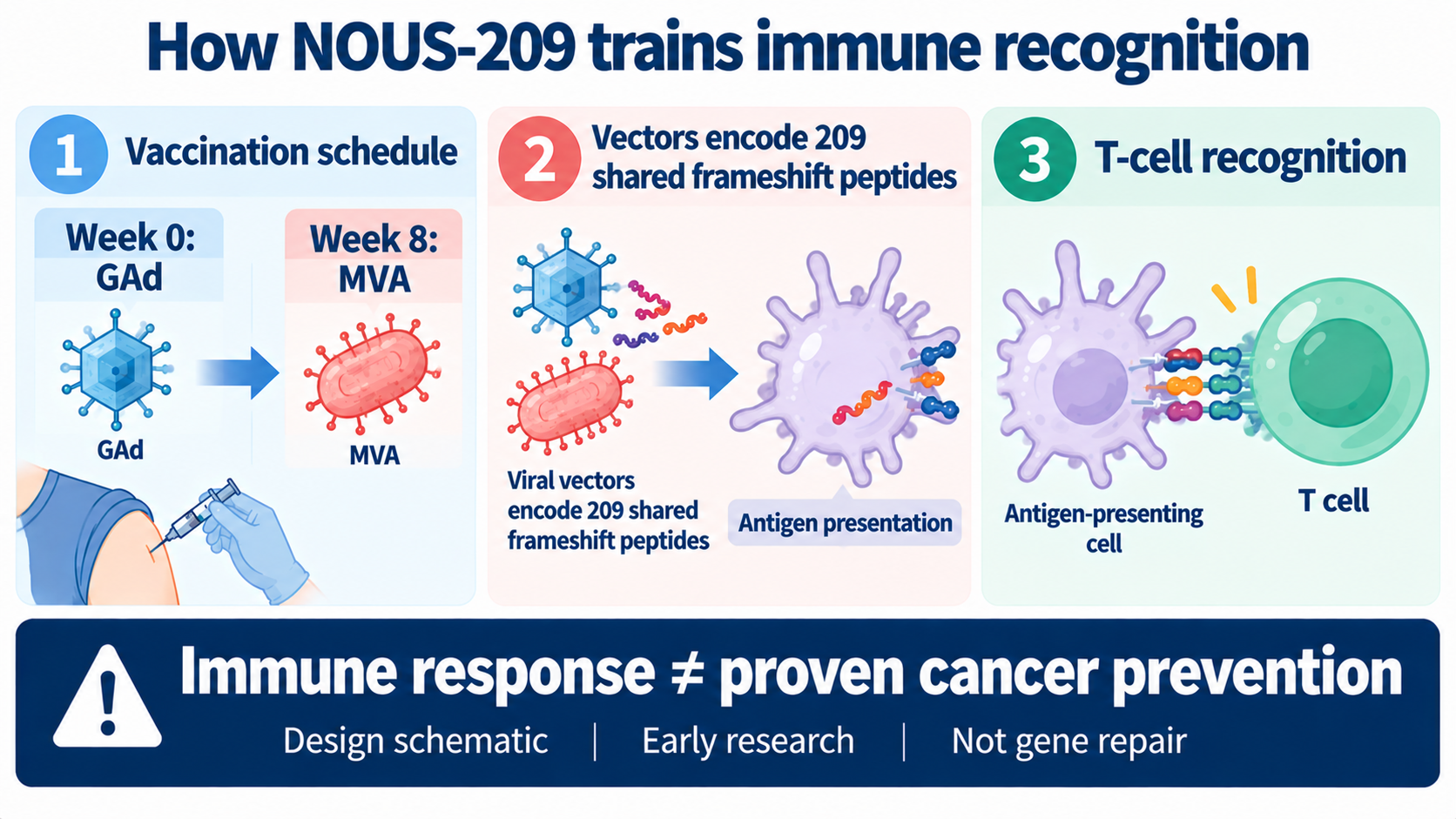
【Figure 2|GAd/MVA vector mechanism: teaching recognition, not repairing genes】
【03|45, 37 and 43: Three Denominators That Should Not Be Mixed】
The easiest way to misread this study is to mix denominators.
The first denominator is 45. The study included 45 Lynch syndrome carriers in the safety analysis. These participants should not all be described as people who had never had cancer. The paper shows that 19 of the 45 had a prior history of cancer, but no active malignancy or recurrent invasive cancer within at least 6 months before enrollment. That means the study excluded recent active or recurrent invasive cancer; it does not mean every participant had always been cancer-free. [1]
The second denominator is 37. At week 9, 37 participants were evaluable for immune response, and all 37 developed neoantigen-specific T-cell responses. The paper also reports that immune responses were maintained to some extent at 6 months and 1 year. This is an important immunogenicity signal. It means that the vaccine induced measurable immune responses in the evaluable participants. It does not mean that all 37 were protected from cancer. [1]
The third denominator is 43. Of the 45 vaccinated participants, 43 completed the end-of-study colonoscopy. In the study, 12 participants had 23 adenomas detected. No advanced adenoma or colorectal cancer was observed at the end-of-study colonoscopy. However, the overall pre-post difference was not statistically significant, and the study had no concurrent control group. [1]
These denominators answer different questions. Forty-five describes the safety population. Thirty-seven describes the immunogenicity-evaluable population. Forty-three describes the colonoscopy follow-up population. Mixing them turns an early study into a prevention conclusion that the study was not designed to prove.
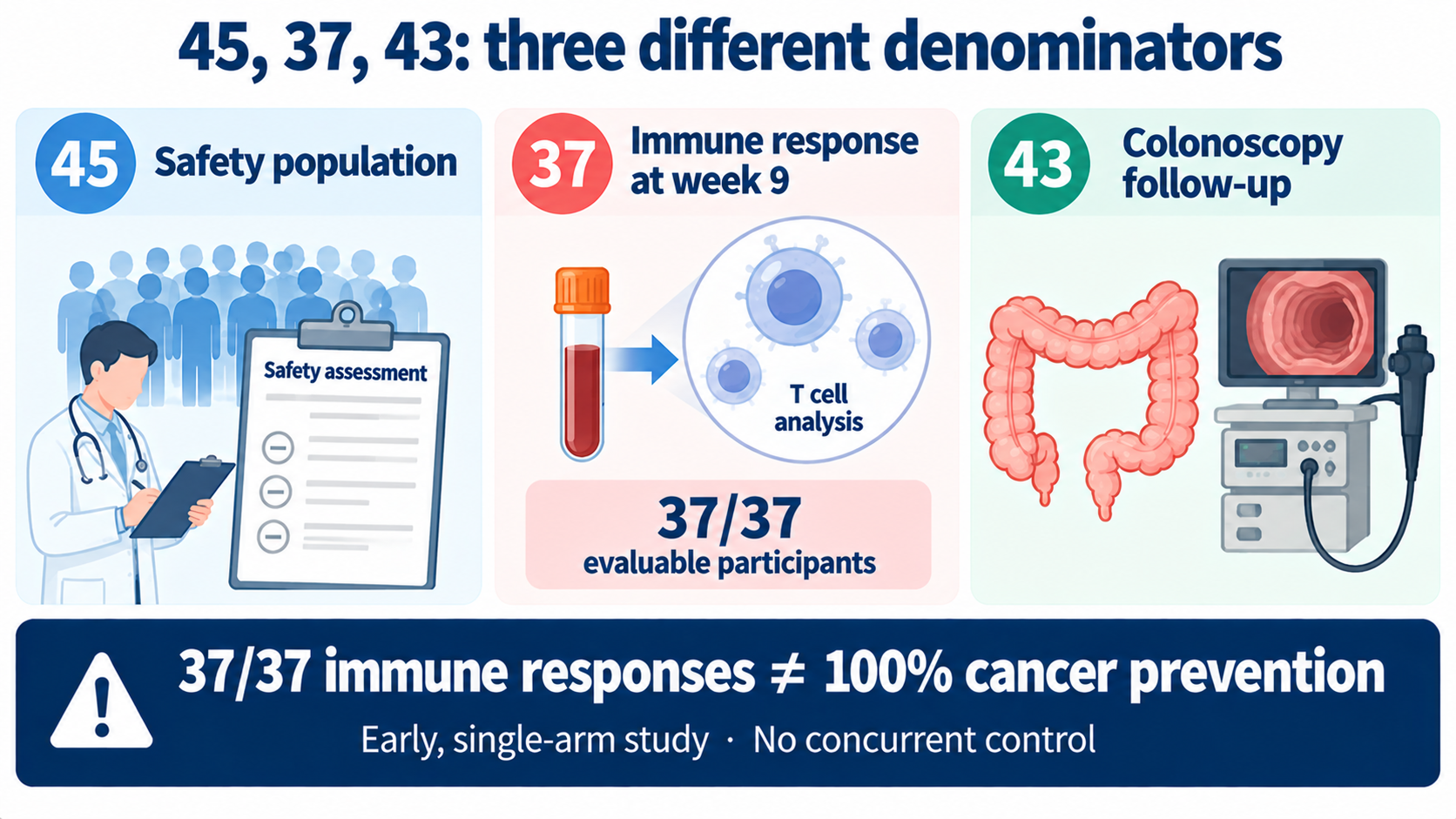
【Figure 3|45 / 37 / 43: different denominators, different questions】
【04|How to Read Safety: No Treatment-Related Serious AE Does Not Mean No Side Effects】
In a prevention or interception setting, the safety bar is higher than in late-stage cancer treatment. Participants are not patients who already need urgent treatment for advanced cancer. They are high-risk individuals who, at enrollment, do not have active or recurrent invasive cancer.
The paper reports no treatment-related serious adverse events among the 45 participants. That is meaningful. But it does not mean there were no adverse events. The most common adverse events included injection-site reactions and fatigue. Injection-site reactions occurred in 91% of participants after the GAd prime and 76% after the MVA boost. Fatigue occurred in 80% after the GAd prime and 53% after the MVA boost. A small number of transient grade 3 events were observed, described in the paper as short-lived, not requiring hospitalization, and resolving with management. [1]
For developers, these data support further research. For clinicians and payers, the questions continue. If immune interception is to be used in a high-risk population over time, the field still needs to understand adverse-event frequency, revaccination safety, population representativeness, different ages and comorbidity settings, and how the vaccine would fit with existing surveillance.
【05|How to Read Colonoscopy Findings: No Advanced Adenoma or CRC Is Not Proof of Prevention】
The end-of-study colonoscopy findings are notable, but they also require discipline.
Among the 43 participants who completed the end-of-study colonoscopy, 31 had no colorectal adenomas, while 12 participants had 23 adenomas detected. No adenoma at the end-of-study colonoscopy was classified as advanced, and no colorectal cancer was detected. At baseline colonoscopy, 2 participants had advanced adenomas. [1]
This can be described as an early observation worth watching. It should not be described as the vaccine eliminating advanced adenomas or as proof of cancer prevention. There are three reasons.
First, the study was single-arm and open-label, with no concurrent control group. Second, the paper states that the overall proportion and number of adenomas or advanced adenomas did not differ significantly from baseline. Third, the sample was small, and colonoscopy findings can be influenced by baseline status, follow-up timing, removal of lesions and individual risk differences. [1]
The study also reported 3 non-colorectal invasive cancers diagnosed during follow-up: gastric cancer, non-small-cell lung cancer and prostate cancer. These events should be reported, but they should not be automatically attributed to the vaccine. They also should not be used to claim that the vaccine has no effect on other cancers. With this amount of data, the responsible position is to record the events and wait for larger studies. [1]
【06|The Next Milestone: An ESMO Preview Is Not the Result, and Part II Is Not Placebo-Controlled Prevention Efficacy】
On July 20, 2026, Nouscom announced that NOUS-209 retreatment and long-term follow-up data had been accepted for oral presentation at ESMO Congress 2026, scheduled for October 23–27, 2026. That is a future data milestone, but the announcement is a preview, not a results disclosure. [3]
The distinction matters. The July announcement refers to retreatment safety, immunogenicity and more than 1 year of clinical follow-up. It does not provide the complete retreatment data, and it does not allow conclusions to be written before the data are publicly presented. [3]
ClinicalTrials.gov information for NCT05078866 also needs to be read carefully. Part I, which was published in Nature Medicine, concerns the initial vaccination cohort. The later revaccination cohort compares retreatment strategies in previously vaccinated participants, including MVA-only retreatment or GAd plus MVA retreatment. It is not a trial that randomizes the original 45 participants to vaccine versus placebo to test cancer-prevention efficacy. [4]
When NCT05078866 was previously read on September 20, 2026, the results status indicated that results had been submitted but quality-control review had not been completed. Therefore, this article uses the published paper, trial-registration information and company preview; it does not treat unreviewed or unpublished follow-up material as a formal result. [4]
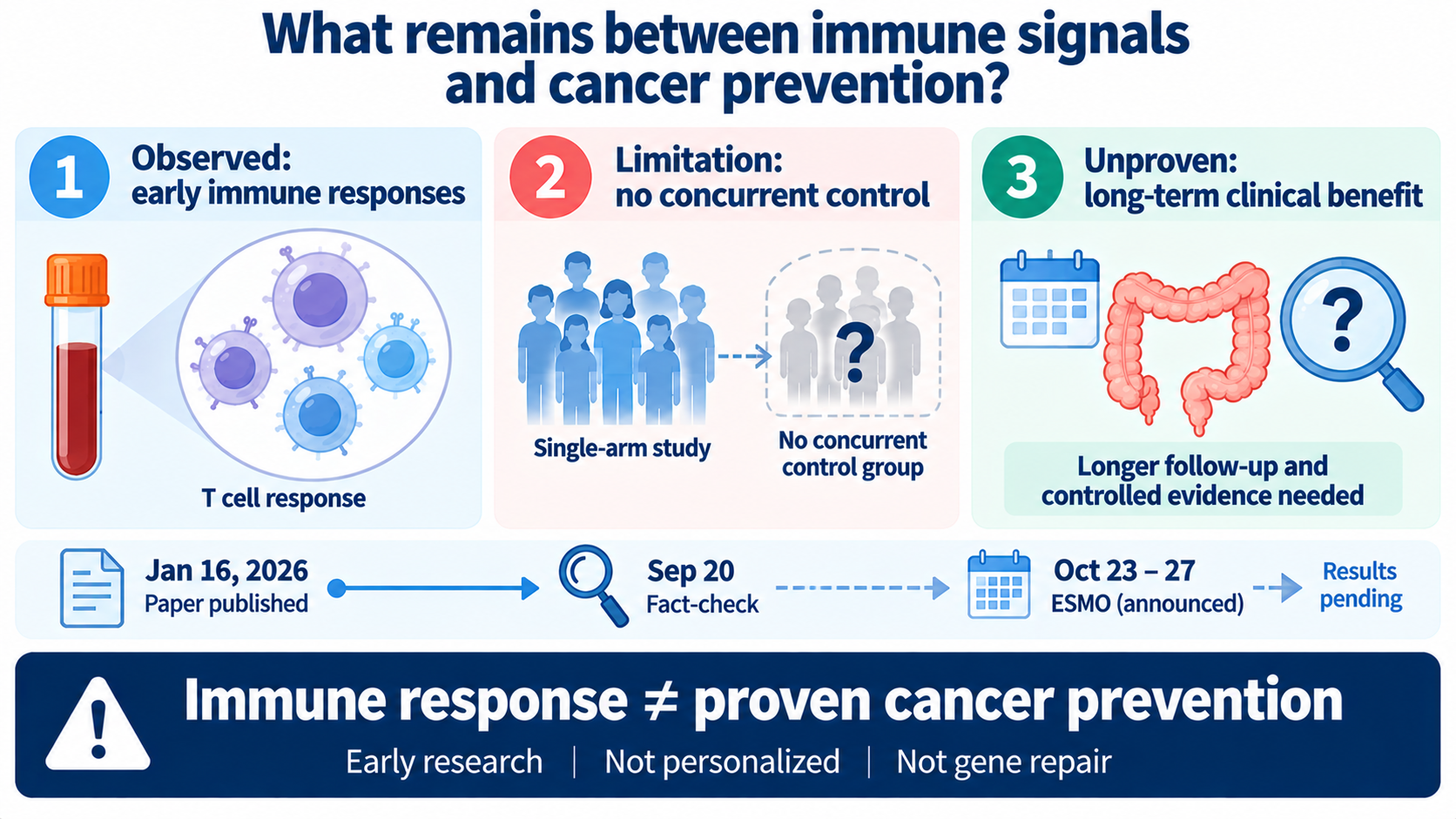
【Figure 4|From immune signal to clinical benefit, controls and follow-up are still needed】
【07|Industry Meaning: Cancer Vaccines Are Moving From Treatment Toward Interception】
The industry significance of NOUS-209 goes beyond Lynch syndrome.
It reflects two broader movements in cancer-vaccine development. The first is a shift from personalized vaccines toward shared-antigen, off-the-shelf designs. Personalized vaccines depend on tumor sequencing, antigen prediction and custom manufacturing. That can fit a patient who already has cancer. But in a high-risk person without clinically visible cancer, there may not be enough tumor tissue to sequence. A shared-antigen strategy is more practical for prevention or interception.
The second shift is from late-stage treatment toward cancer interception. That changes the business model. Late-stage cancer drugs can be evaluated using tumor response, progression-free survival or overall survival. Interception products require longer follow-up of cancer incidence, premalignant lesions, colonoscopy results, safety and quality of life. Trials become longer and more expensive. Payers will also ask how much additional value a vaccine provides on top of colonoscopy and surveillance.
That is why NOUS-209 matters even before it can be described as a successful prevention vaccine. It pushes a new question to the front of the industry: can cancer prevention move from periodically finding lesions toward teaching the immune system to recognize risk earlier?
【08|Taiwan Context: Testing, Vector Manufacturing and Vaccine Platforms Have Conditional Relevance】
Publicly available sources do not show a direct licensing, co-development, manufacturing or commercial partnership between Taiwan companies and NOUS-209, Nouscom or NCT05078866. The more relevant Taiwan angle is a set of adjacent capabilities that could support future cancer-interception research: viral-vector manufacturing, vaccine CDMO capacity, MSI/MMR-related testing and cancer-immunity platforms.
The first adjacent capability is viral-vector manufacturing. TFBS Bioscience lists GMP adenoviral vector services, including GMP-grade adenoviral vector production, purification and characterization for vaccine products. NOUS-209 uses GAd and MVA viral vectors. TFBS has not announced a partnership with Nouscom or NOUS-209, but if cancer vaccines and vector-based products require process development, testing or GMP manufacturing capacity in Asia, this kind of capability becomes relevant infrastructure. [5]
The second capability is vaccine CDMO and aseptic filling. Adimmune lists PIC/S GMP vaccine drug substance production, cell-culture facilities, prefilled-syringe and vial aseptic filling lines, and integrated CDMO/CMO services. These capabilities are relevant to vaccine scale-up, filling, quality systems and regulatory support. They do not mean Adimmune can directly manufacture the GAd/MVA regimen for NOUS-209, and they do not imply any partnership with Nouscom. [6]
The third is diagnostics and population stratification. Lynch syndrome is closely linked to MMR/MSI biology. Sofiva lists MSI testing services and explains that MSI can be used to evaluate the DNA repair ability of cancer cells. Such testing is relevant to tumor immunotherapy, MMR/MSI stratification and research classification. But tumor MSI testing is not the same as germline Lynch syndrome screening, which requires genetic counseling and professional risk management. [7]
The fourth is cancer-vaccine and immune-platform capability. PapiVax describes DNA plasmid vector design and a delivery platform for therapeutic vaccines targeting specific antigens. JY Biomed lists a dendritic-cell cancer-vaccine platform focused on activating a patient’s immune system to recognize tumor cells. These are adjacent to cancer immunotherapy and cancer-vaccine development, but the platform format, antigen source, clinical stage and business path differ from NOUS-209. They should not be described as direct comparators or beneficiaries. [8][9]
The practical Taiwan business logic is conditional. If cancer-interception vaccines eventually gain support from larger, randomized and controlled clinical evidence, Asian markets may need three types of capability: high-risk population identification and testing, viral-vector or vaccine manufacturing with quality systems, and clinical research networks that can connect to international trials. Taiwan has pieces of that foundation. Turning those pieces into orders, licensing deals or partnerships will still require product-level clinical value, concrete collaborations and regulatory milestones.
【Conclusion|NOUS-209 Makes Cancer Interception More Concrete, but the Answer Is Not Finished】
The NOUS-209 Phase 1b/2 study makes cancer interception more tangible.
In Lynch syndrome carriers, it showed a notable immune response, and in the 45-person safety analysis it did not show treatment-related serious adverse events. It also provided end-of-study colonoscopy observations and neoantigen-recognition data that support further research. [1]
But the correct conclusion is still “encouraging safety and immunogenicity signals,” not “proven cancer prevention.” The 37 of 37 result is an immune-response number, not a prevention rate. The 43-person colonoscopy observation showing no advanced adenoma or colorectal cancer at end-of-study is an early observation, not proof of causality. The Part II revaccination cohort compares retreatment strategies; it is not a placebo-controlled cancer-prevention efficacy trial of the original 45 participants. [1][4]
The real gates remain ahead: larger sample size, randomization, a control group, longer follow-up, clinical endpoints, and adequate safety in Lynch syndrome high-risk individuals who do not have active or recurrent invasive cancer at enrollment.
Can the immune system intercept cancer before it appears? NOUS-209 makes that question more clinically concrete. The answer is not complete, but the direction is important enough for the industry to take seriously.
This article is for biotech industry and research information only and does not constitute individualized medical or investment advice. Treatment decisions should be made by healthcare professionals based on individual circumstances and the latest approved labeling. Research progress does not guarantee regulatory approval, commercial success or investment returns.
Sources:
[1] Nature Medicine. NOUS-209 neoantigen vaccine for cancer prevention in Lynch syndrome carriers: a phase 1b/2 trial. January 16, 2026. https://www.nature.com/articles/s41591-025-04182-9
[2] MD Anderson Research News. Immune-targeting vaccine shows promise intercepting cancer in patients with Lynch Syndrome. January 16, 2026. https://www.mdanderson.org/newsroom/research-newsroom/immune-targeting-vaccine-shows-promise-intercepting-cancer-in-pa.h00-159852189.html
[3] Nouscom / GlobeNewswire. NOUS-209 re-treatment and long-term follow-up selected for oral presentation at ESMO Congress 2026. July 20, 2026. https://www.globenewswire.com/news-release/2026/07/20/3329622/0/en/nouscom-selected-for-oral-presentation-on-nous-209-re-treatment-and-long-term-follow-up-in-lynch-syndrome-carriers-at-esmo-congress-2026.html
[4] ClinicalTrials.gov. NCT05078866. https://clinicaltrials.gov/study/NCT05078866
[5] TFBS Bioscience. GMP adenoviral vector CDMO. https://www.tfbsbio.com/zh-TW/cdmo/pWhOY7IIjY0Zh0X4
[6] Adimmune. CDMO. https://www.adimmune.com.tw/tw/cdmo
[7] Sofiva Genomics. Microsatellite instability testing. https://www.sofiva.com.tw/Product/ProductIndex?productNo=PD2024080021
[8] PapiVax Biotech. Company origin / DNA vaccine platform. https://papivax.com/zh/about-us/company-origin/
[9] JY Biomed. Technology platforms / dendritic-cell cancer vaccine. https://www.jy-biomed.com/zh/technology-platforms
Cite this article
For decks, research notes, or media references, cite Drugnews with the canonical article URL.
Drugnews Editorial Team. "Can a Vaccine Intercept Cancer Before It Develops? Early Research in People With Lynch Syndrome." Drugnews, Sep 23, 2026. https://drugnews.com.tw/articles/2026-09-23-lynch-nous209-cancer-interception-en.html