
──────────
Share this analysis
Send this article to readers who follow biotech, company strategy, and capital-market signals.
On September 2, Novartis signed an agreement with South Korea's Alteogen to develop subcutaneous formulations for multiple products using ALT-B4. The contract has a maximum value of US$3.223 billion, with sales royalties additional. That ceiling includes signing payments, option exercise fees and milestones, subject to the relevant conditions being met.[1][2]
A few months earlier, Lilly also made a substantial commitment to delivery technology. In April, it announced the acquisition of Kelonia for up to US$7 billion, including an upfront payment commitment of US$3.25 billion. The acquisition closed on June 25. Kelonia is developing treatments that generate CAR-T cells directly inside the body.[3][4]
Although both deals fall under drug delivery, the companies are buying solutions to different problems. Lilly wants to loosen the constraints of individualized cell-therapy manufacturing. Novartis wants to change how medicines are administered. To assess a platform's value, investors first need to identify the step it changes, then who will keep paying for that change.
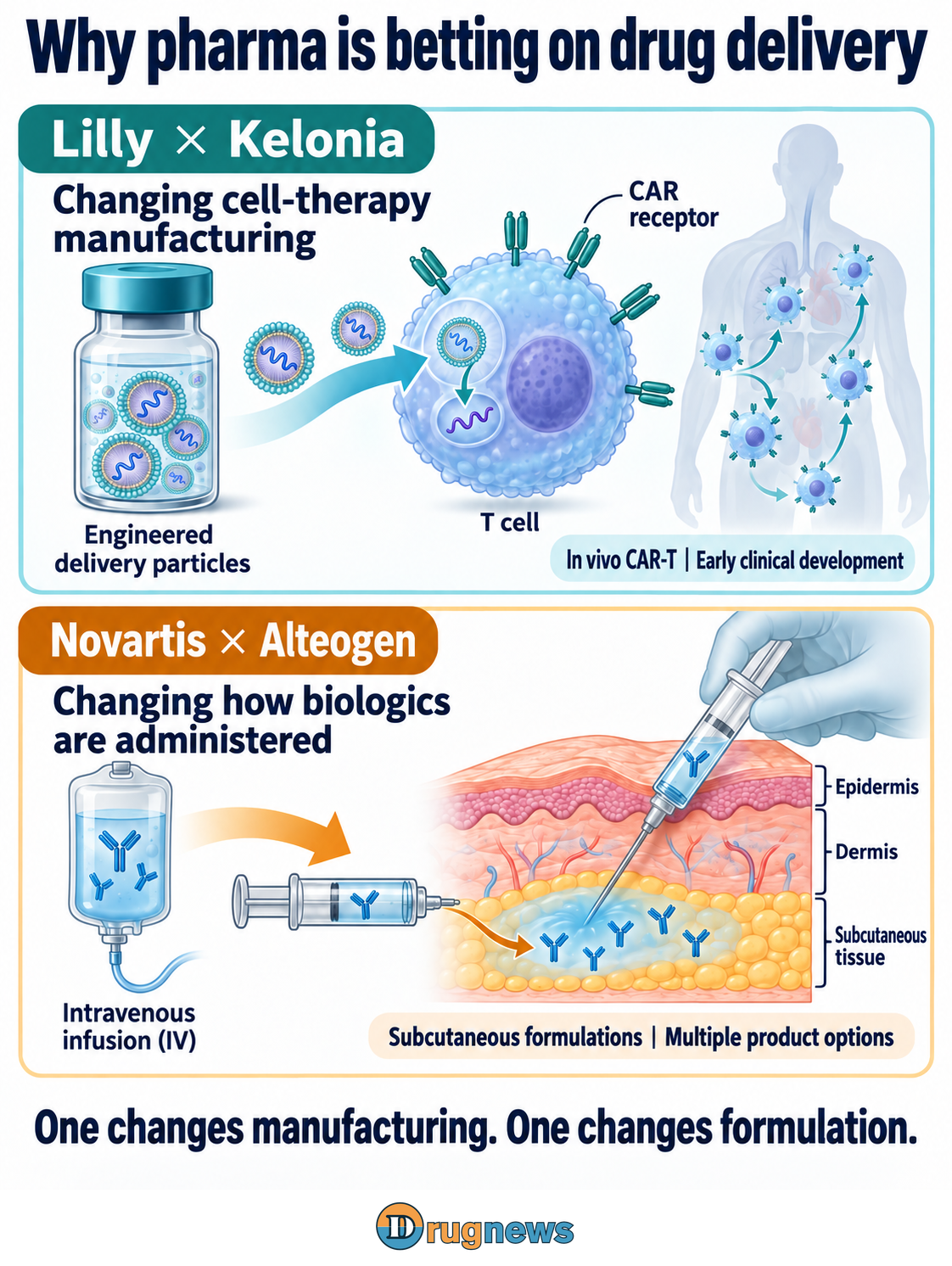
Figure 1. The deals address cell-therapy manufacturing and biologic formulation, with different rights structures.
【Lilly wants to move cell engineering from the factory into the body】
Conventional autologous CAR-T therapy starts by collecting a patient's T cells, engineering and expanding them outside the body, testing the resulting product and reinfusing it. The added chimeric antigen receptor, or CAR, allows the T cells to recognize a particular tumor antigen and act as a treatment.
The difficulty is the one-patient, one-batch model. Collection, manufacturing and reinfusion must be coordinated. Production planning depends on each patient's treatment course as well as factory capacity. Manufacturing and delivery therefore become constraints when a treatment aims to reach more patients.
🔬 Kelonia changes where the engineering happens.
Its iGPS platform uses engineered lentiviral vectors to deliver a CAR gene into T cells in the body. Its lead program, KLN-1010, is designed as a single intravenous treatment that generates CAR-T cells recognizing BCMA, a surface target on myeloma cells, for relapsed or refractory multiple myeloma.[3]
There are two distinct recognition steps. The vector must deliver its genetic cargo to T cells. The engineered T cells then use their CAR to recognize the tumor. Getting a gene into the body addresses only part of the problem. Which cells receive it, and how many functional CAR-T cells are generated, affect whether the treatment works consistently.
The location of quality control also changes. With the ex vivo approach, developers can test the engineered cell product before release. With the in vivo approach, the product supplied is the vector, and CAR-T generation occurs after administration. Developers must make the vector consistently and understand differences in patients' cellular responses. Both approaches require quality management, but the objects of that control differ.
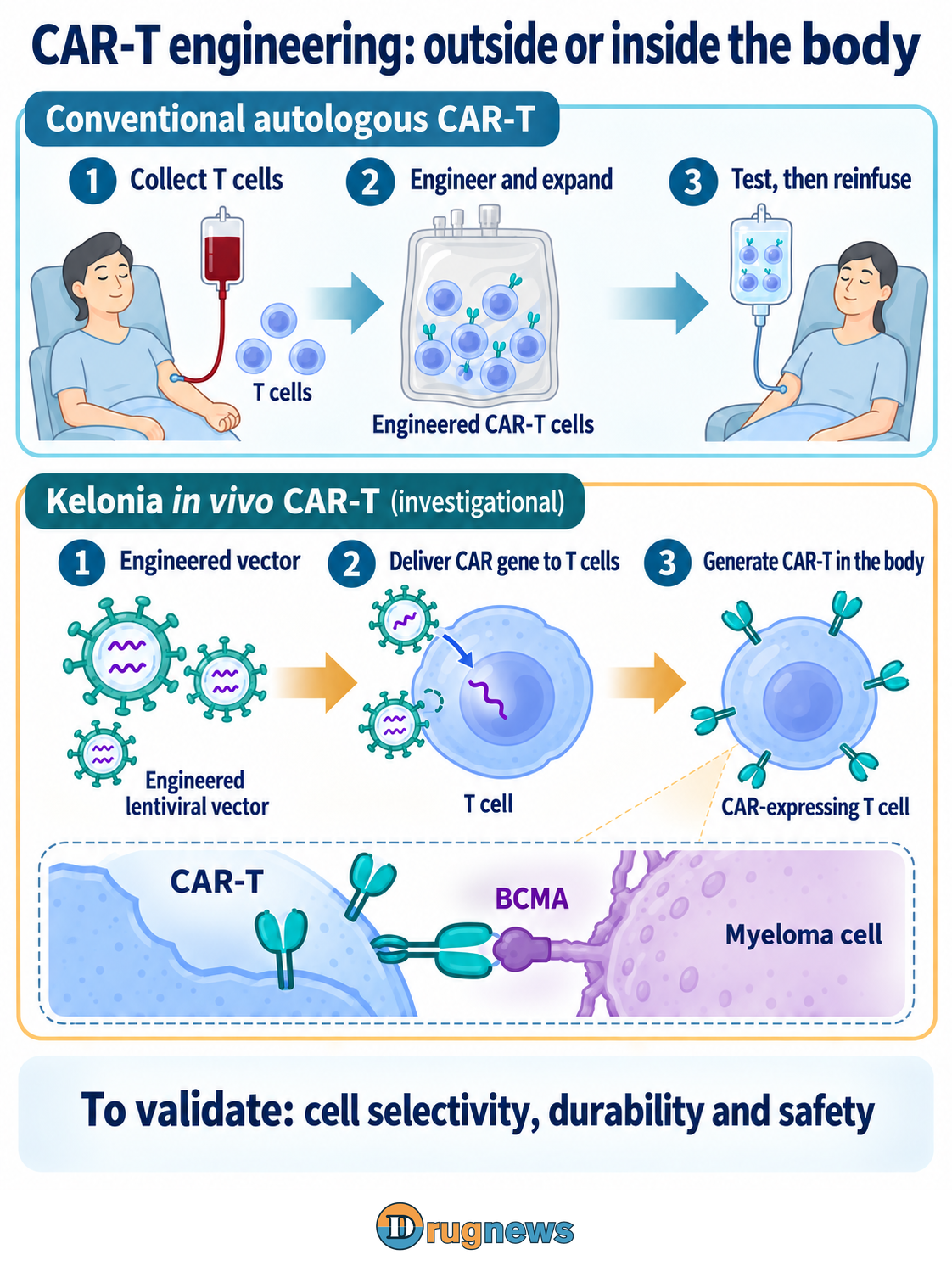
Figure 2. In vivo CAR-T remains investigational. Intermediate molecular steps after vector entry are omitted.
📊 What do the human studies show?
The phase I inMMyCAR abstract at ASCO 2026 reported six patients who had received at least three prior lines of therapy. All had negative bone-marrow minimal residual disease, or MRD, tests one month after dosing: no residual tumor cells were detected at the respective assays' sensitivities.[5]
The evidence did not stop at those six patients. In a May 31 update, Kelonia reported that 18 patients had been dosed. All evaluable patients had responded and had MRD-negative bone marrow at one month. For safety, 16 of the 18 experienced grade 1–2 cytokine release syndrome, or CRS. There was also one grade 1 and one grade 3 event of immune effector cell-associated neurotoxicity syndrome, or ICANS.[6]
Durability requires a separate look. The company reported that among six patients with at least four months of follow-up, four had stringent complete responses and two had very good partial responses, all with ongoing MRD-negative bone marrow. This longer follow-up gets closer to the durability question than an initial test alone. Patients with different follow-up durations cannot be pooled into a single long-term success rate.[6]
These findings provide an early human antitumor signal for CAR-T cells generated in vivo, while showing that immune-toxicity management remains necessary. The later data are a company-reported conference update. The 18 dosed patients must not all be assumed to be efficacy-evaluable. Small samples, no control group and differing follow-up durations also leave a gap between early MRD negativity and durable clinical benefit.
One design feature directly concerns treatment workflow: patients did not receive preparative lymphodepleting chemotherapy. That deserves attention because it could reduce preparation steps. Any reduction in the overall care burden must still be assessed alongside monitoring and management of CRS and neurotoxicity.[5][6]
📌 The commercial change concerns what hospitals receive.
The conventional model supplies engineered cells made for an individual patient. If the in vivo approach succeeds, part of that workflow could shift to a delivery product prepared in advance, with cell engineering completed inside the patient. In Drugnews' analysis, this is why the platform could change treatment supply, beyond simply removing an ex vivo step.
A cost comparison should follow the changed workflow. Reducing individualized cell processing can change production planning, while vector manufacturing, testing and post-treatment care carry their own costs. Investors need the economics of the entire treatment-delivery process, not just the cost of one removed manufacturing step.
【Novartis wants to change how a medicine is used】
ALT-B4 addresses a different physical barrier. Hyaluronan in the extracellular matrix of subcutaneous tissue affects drug dispersion. This recombinant human hyaluronidase temporarily breaks down hyaluronan, helping co-administered medicines disperse and be absorbed. It can support the development of subcutaneous versions of some biologics usually administered by intravenous infusion.[1]
The two approaches operate at different scales. Kelonia needs to enter T cells and deliver engineering instructions. ALT-B4 changes the extracellular environment under the skin to help a medicine spread. Both are delivery technologies, but they require different validation.
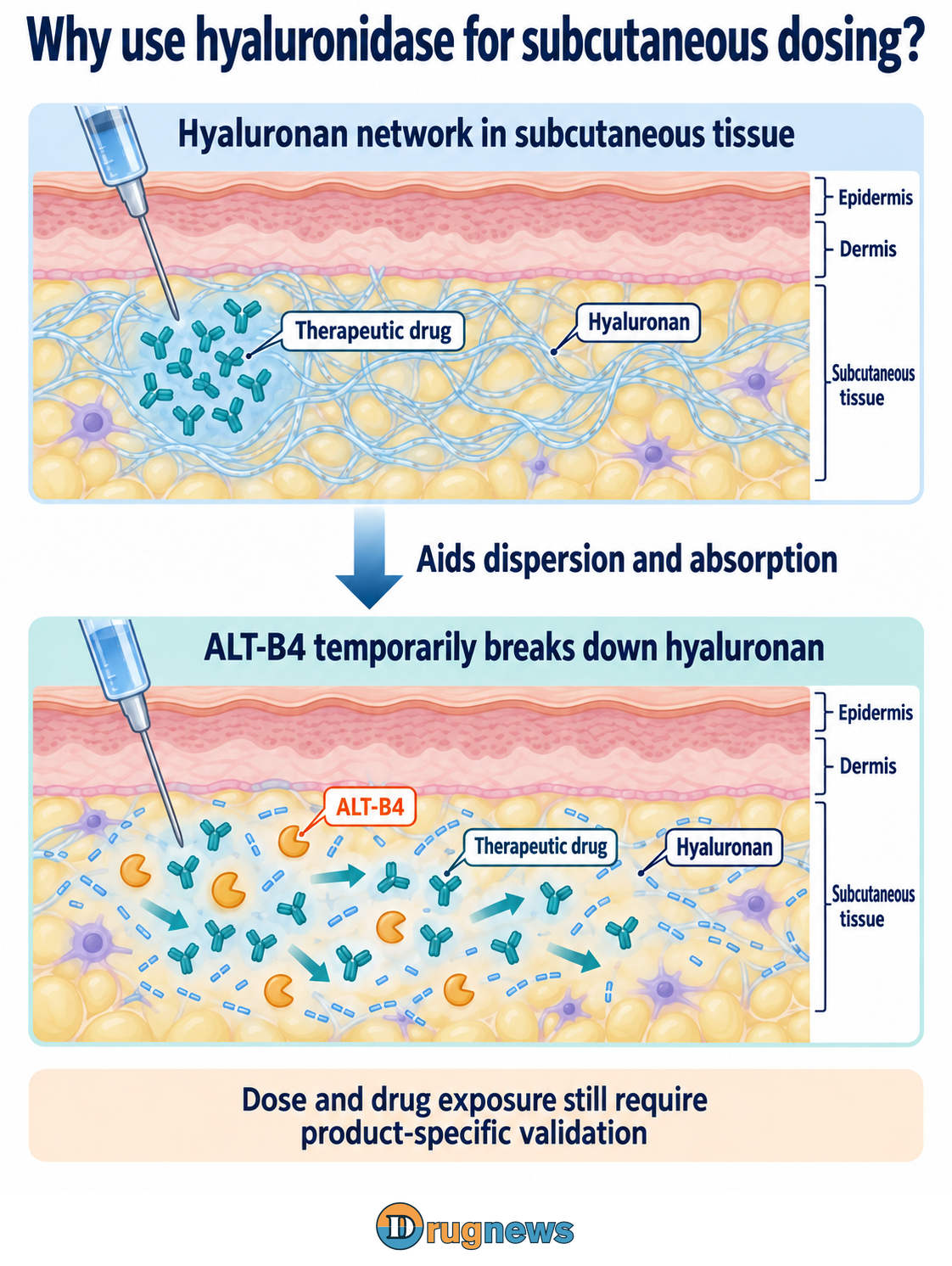
Figure 3. ALT-B4 temporarily breaks down subcutaneous hyaluronan to aid dispersion and absorption of a co-administered drug.
🔬 Why does a new administration route still require clinical testing?
Intravenous administration puts a drug directly into the circulation. Subcutaneous dosing adds an absorption step. An effective medicine therefore cannot simply be injected elsewhere at the same milligram dose and be assumed to achieve the same exposure. Dose, absorption and dosing interval must be validated together.
The phase III 3475A-D77 trial, published in Annals of Oncology in 2025, offers a concrete example. It randomized 377 previously untreated patients with metastatic non-small-cell lung cancer without specified EGFR, ALK or ROS1 alterations to subcutaneous or intravenous pembrolizumab. Both groups also received platinum-doublet chemotherapy.[7]
Both regimens were administered every six weeks, but the subcutaneous dose was 790 mg and the intravenous dose was 400 mg. The study tested a particular combination of dose and route, not interchangeability at the same dose.
📊 Two pharmacokinetic measures were central to the paper.
One was AUC, which measures overall drug exposure over a period of time. The other was trough concentration, the concentration at the end of a dosing interval. The subcutaneous regimen containing berahyaluronidase alfa met noninferiority criteria for both primary measures. Median injection time was two minutes.[7]
For cycle-one AUC over six weeks, the geometric mean ratio for subcutaneous versus intravenous administration was 1.14, with a 96% confidence interval of 1.06–1.22. Its lower bound exceeded the prespecified noninferiority margin of 0.8. That result addresses preservation of exposure. A ratio of 1.14 does not mean a 14% improvement in anticancer efficacy.[7]
The study supports maintaining drug exposure while changing administration. Demonstrating superior anticancer efficacy was not its primary objective. It is a Merck product example using the same enzyme technology, not clinical evidence for Novartis' undisclosed programs. The two minutes refer only to injection, not other treatments or the entire visit.
📌 Formulation value depends on patients' and hospitals' choices.
Drugnews' view is that the commercial assessment should begin with the original product's use: whether patients still need same-day chemotherapy, and how a hospital organizes preparation and observation, will determine the value of greater convenience. Eligible patients and care arrangements also define the market the change can address. Subcutaneous administration does not itself mean self-injection at home. For Novartis, product selection may matter more than a few minutes saved.
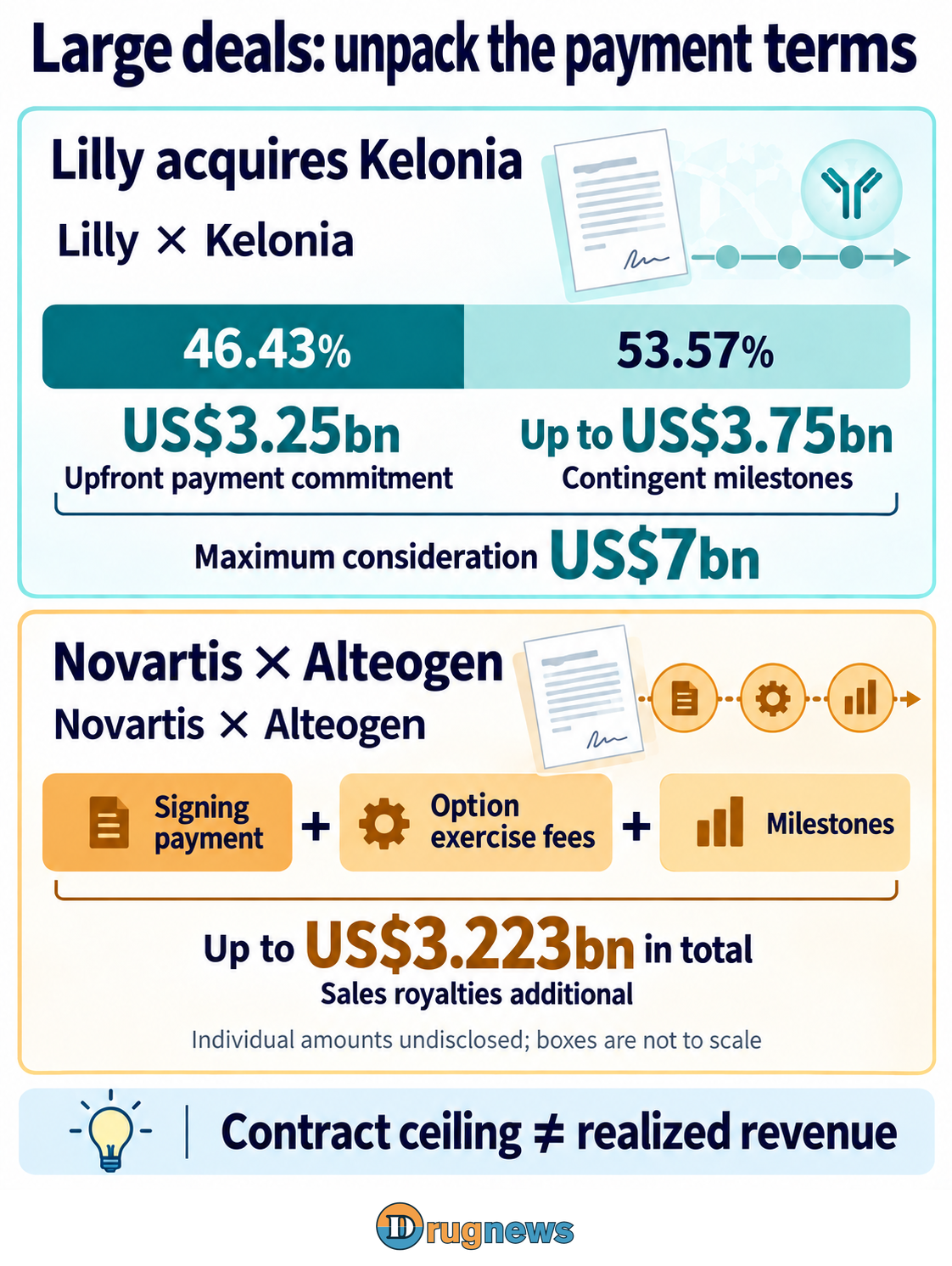
Figure 4. Lilly's consideration comprises an upfront commitment and contingent milestones. Alteogen's individual amounts are undisclosed, with royalties additional.
【Payment terms show more than the headline price】
Lilly acquired Kelonia as a company. The US$3.25 billion upfront payment commitment represents substantial capital committed early in development. The remaining US$3.75 billion of the US$7 billion maximum consideration depends on subsequent clinical, regulatory and commercial milestones.[3][4]
The acquisition thus includes two commitments: acquiring the company and its development assets, then paying contingent consideration for specified achievements. The upfront commitment can indicate the risk a buyer is willing to assume, but it cannot be converted into a clinical probability of success.
Novartis' structure leaves room to proceed product by product. Multiple options can give it exclusive rights to develop and commercialize subcutaneous formulations of specified products. It does not need to acquire the entire company to access the formulation technology it needs.[1]
🔍 Investors can follow development through the payment conditions.
Exercising an option takes a collaboration further on the relevant product. Development and regulatory milestones relate to agreed program achievements. Sales royalties connect to net sales after commercialization. These payments answer different questions and cannot be added together as if they were current revenue.[2]
Alteogen has not disclosed the individual amounts or specific products in this collaboration. Without product names, the existing market, competitors and required development spending are difficult to estimate concretely. US$3.223 billion indicates the collaboration's maximum contractual scale, but cannot by itself support a revenue forecast.
Will Kelonia's next dataset sustain efficacy and safety across more patients and longer follow-up? Which products will Novartis put through ALT-B4, and which specific advances will trigger further payments? Those are the questions the two large deals must answer next.
Sources
[1] Alteogen, September 2, 2026: https://alteogen.com/en/sub/ir/news.php?bid=13&idx=359&mode=view [2] KRX contract disclosure: https://kind.krx.co.kr/external/2026/09/02/000182/20260901000471/72050.htm [3] Lilly acquisition announcement, April 20, 2026: https://lilly.gcs-web.com/news-releases/news-release-details/lilly-acquire-kelonia-therapeutics-advance-vivo-car-t-cell [4] Lilly Q2 2026 Form 10-Q: https://www.sec.gov/Archives/edgar/data/59478/000005947826000081/lly-20260630.htm [5] Ho et al., JCO 2026 ASCO meeting abstract 7509: https://ascopubs.org/doi/10.1200/JCO.2026.44.16_suppl.7509 [6] Kelonia company conference update, May 31, 2026, Business Wire: https://www.businesswire.com/news/home/20260531412768/en/ [7] Felip et al., Annals of Oncology 2025, phase III 3475A-D77: https://pubmed.ncbi.nlm.nih.gov/40157574/ . The 2026 corrigendum corrects a carboplatin chemotherapy dose not quoted here: https://doi.org/10.1016/j.annonc.2026.02.002
This article provides industry analysis and does not constitute investment or medical advice.
Cite this article
For decks, research notes, or media references, cite Drugnews with the canonical article URL.
Drugnews Editorial Team. "Why Are Lilly and Novartis Betting on How Medicines Are Delivered?" Drugnews, Sep 24, 2026. https://drugnews.com.tw/articles/2026-09-24-delivery-platform-deals-lilly-kelonia-novartis-alteogen-2026-en.html