
──────────
Share this analysis
Send this article to readers who follow biotech, company strategy, and capital-market signals.
First-line lung cancer treatment already includes immunotherapy. If an antibody-drug conjugate (ADC) is added, is the additional benefit worth the additional adverse effects? On June 8, 2026, Merck and Gilead announced the discontinuation of the Phase 3 EVOKE-03/KEYNOTE-D46 trial. An external data monitoring committee recommended stopping after reviewing the planned final progression-free survival (PFS) analysis and interim overall survival (OS) analysis. The companies considered statistically significant OS at the final analysis unlikely. [1]
Data presented at the World Conference on Lung Cancer (WCLC) on September 13 made the trade-off clearer: the combination produced more tumor responses and numerically longer PFS, but did not cross the prespecified success threshold, while Grade 3 or higher treatment-related adverse events increased substantially. [2][4]
Patients and investors face a shared question: can the additional antitumor activity translate into enough clinical value to support first-line adoption? Regional subgroups offer further clues, but the starting point is what the overall 620-patient trial actually tested.
【01|The Additional Drug Must Beat an Active Comparator】
EVOKE-03 enrolled patients with metastatic non-small cell lung cancer (NSCLC) who had not received systemic treatment, whose tumors had a PD-L1 tumor proportion score of at least 50%, and who did not have specified sensitizing EGFR, ALK or ROS1 alterations. These conditions define the trial population; it was not a study of all patients with lung cancer. [1]
The 620 participants were randomized 1:1 to Trodelvy (sacituzumab govitecan, SG) plus Keytruda (pembrolizumab), or pembrolizumab alone. The trial was open-label, but the primary PFS assessment used blinded independent central review. [1][2]
Pembrolizumab blocks PD-1-related inhibitory signaling to support immune-cell activity. SG uses an antibody to recognize the cell-surface target TROP2 and carries a cytotoxic drug. These provide different sources of activity, but complementary mechanisms do not establish that their clinical benefits will necessarily add together. [1]
The challenge is that patients in the monotherapy arm can already benefit. The combination must establish how much value it adds beyond that treatment foundation. Looking only at the combination’s response rate leaves out the most important comparator.
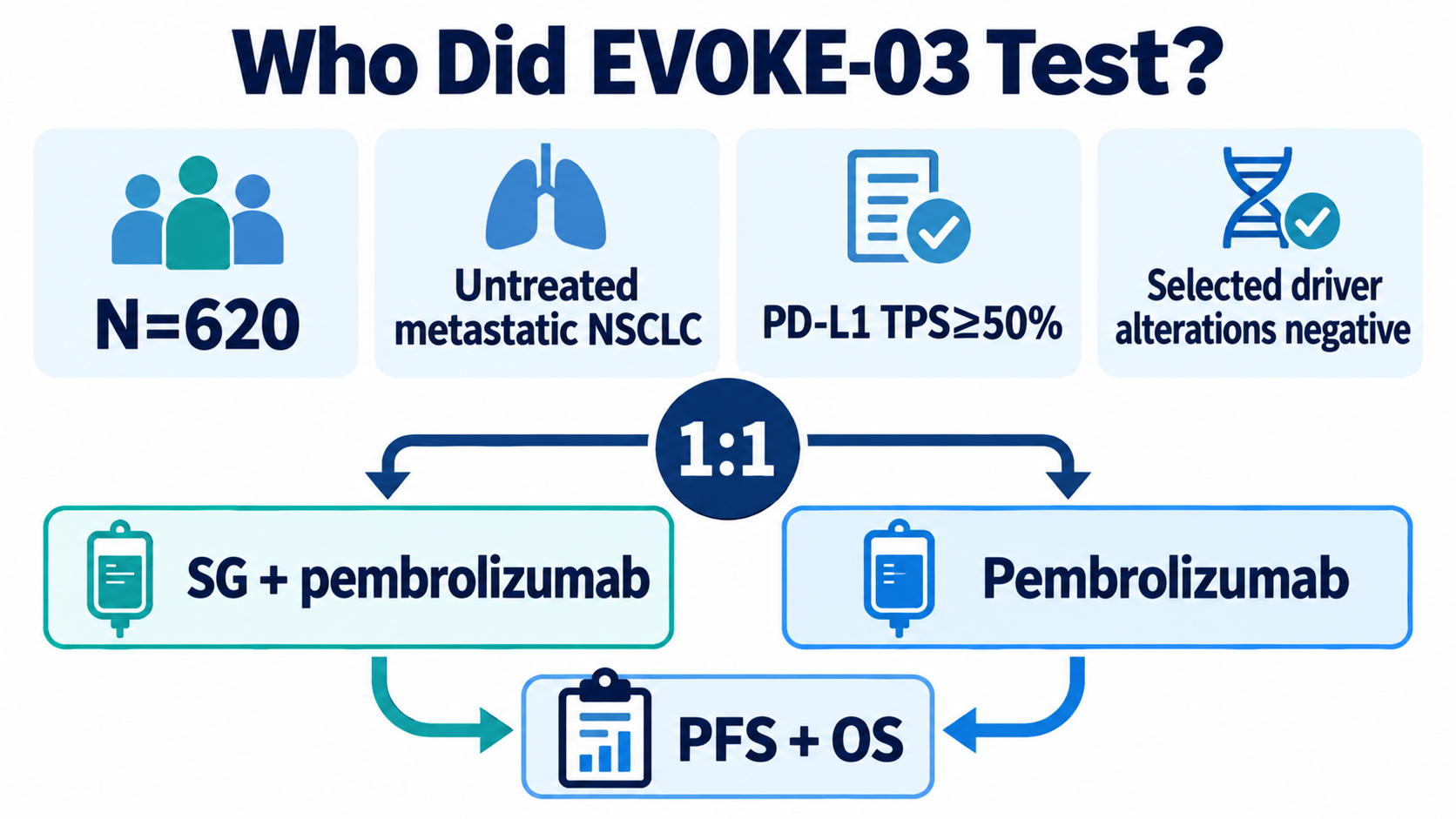
Figure 1 | The same 620-patient trial randomized participants 1:1 to SG plus pembrolizumab or pembrolizumab alone. Both arms were evaluated for PFS and OS, with eligibility excluding specified sensitizing driver alterations. [1][2]
【02|An Additional 4.1 Months Still Needs Interpretation】
PFS measures the time from randomization to disease progression or death. Median PFS was 11.8 versus 7.7 months, a difference of 4.1 months. This does not mean each patient lived an average of 4.1 months longer. The HR was 0.81, with a 95% confidence interval of 0.66–1.00 and P=0.0252. A hazard ratio compares the relative instantaneous event rates between groups; it is different from a cumulative-risk ratio or a ratio of the medians. [2]
The trial prospectively arranged statistical testing across PFS, OS and different analysis times. IASLC explicitly states that PFS did not meet the prespecified threshold. The verifiable public primary-results report does not provide the precise alpha allocation, so the conventional 0.05 cutoff cannot be substituted to declare success. Such testing rules help prevent chance differences from being mistaken for reliable evidence when effects are examined repeatedly.
Interim median OS was 21.5 versus 22.8 months, with HR 1.07, a 95% confidence interval of 0.85–1.35 and P=0.7155. This analysis did not establish a survival improvement; nor did it establish that adding the drug increased mortality. [2]
🔎 Objective response rate (ORR) measures the proportion meeting a predefined standard for tumor shrinkage. It was 55.6% versus 43.7%, an 11.9-percentage-point advantage for the combination. That supports additional antitumor activity, but ORR was a secondary endpoint and cannot replace the primary-endpoint determination. [2]
Among responders, median duration of response was 21.4 versus 21.3 months. Similar medians do not establish equivalence of the full distributions. They also underscore that getting more patients to respond and keeping those responses going longer are separate questions. [2]
【03|Additional Burden Does Not Disappear Because the Toxicity Is Familiar】
Grade 3 or higher treatment-related adverse events (TRAEs) occurred in 55.7% versus 16.5%, a difference of 39.2 percentage points. Grade describes the severity of an adverse event and is distinct from the regulatory classification of a serious adverse event. [2]
Investigators reported no new toxicity beyond the known profiles of the two agents, but the burden of anemia, alopecia, neutropenia, diarrhea and nausea increased. The trial schedule also added a practical difference: monotherapy was given on day 1 of each 21-day cycle, whereas the combination included SG on days 1 and 8. [1][2]
🩺 An additional 11.9 percentage points of response and an additional 39.2 percentage points of higher-grade adverse events cannot simply be subtracted to produce a “net benefit.” The same patient can experience both a tumor response and toxicity. How long an event lasts, whether it can be managed and whether it interrupts treatment all affect the trade-off.
The Drugnews team’s interpretation is that a first-line combination needs to persuade physicians and payers that additional treatment, visits and supportive care deliver outcomes that patients value. A higher response rate alone is insufficient to put a value on the additional burden.
Subsequent quality-of-life, symptom and treatment-discontinuation data could add the experience of using the treatment to the averages. Their role is not to rename a negative primary analysis, but to identify which burdens most interfere with treatment and inform the next dose, combination or patient-selection strategy.
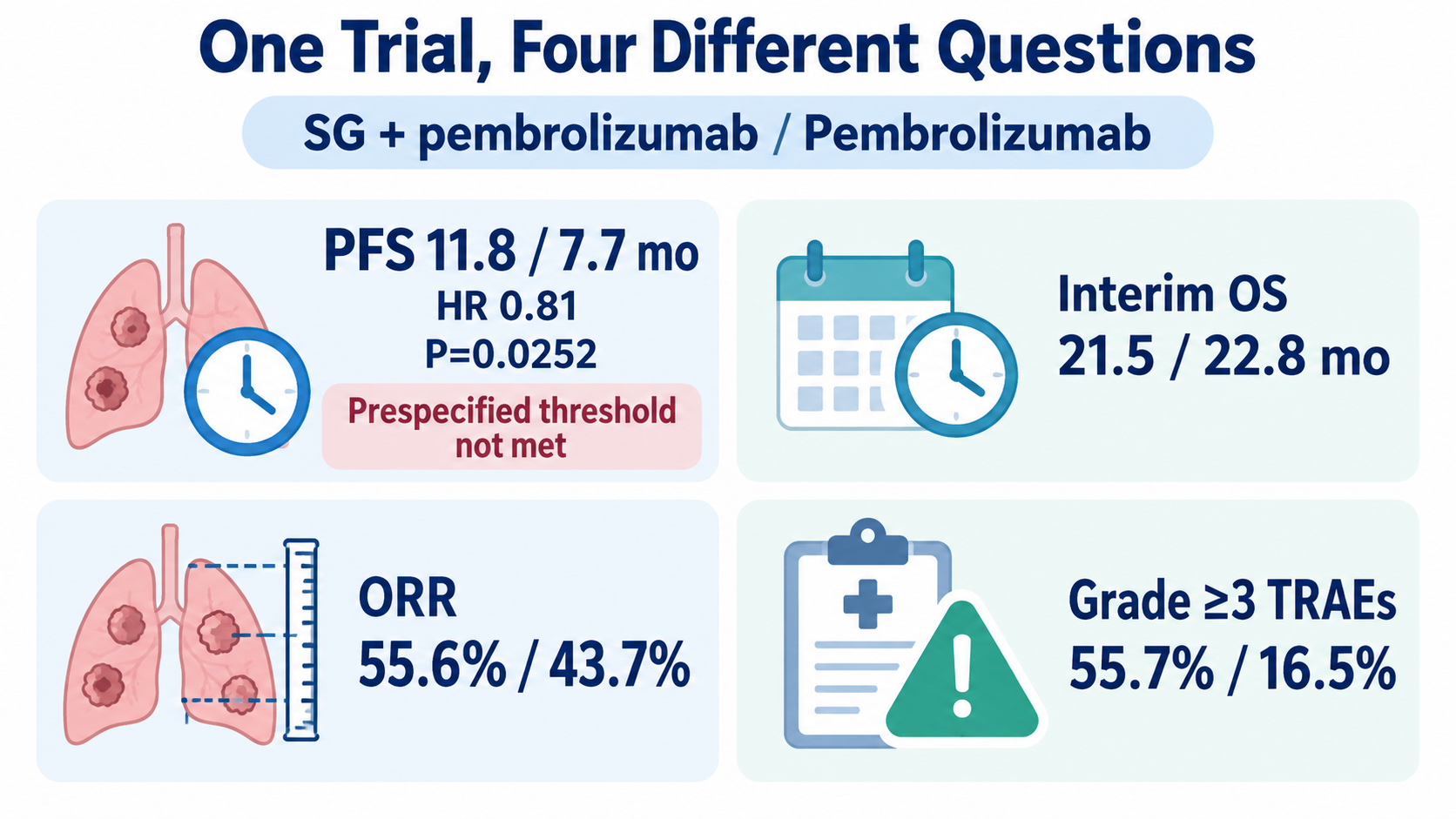
Figure 2 | Four areas use the same treatment-arm order to compare PFS, interim OS, ORR and Grade 3 or higher TRAEs. Response, survival and toxicity answer different questions; no single measure replaces an overall assessment of benefit. [2]
【04|What Next Step Would the East Asian Signal Justify?】
Presenter Giannis Mountzios’s public summary states that approximately one-third of participants came from East Asia, where the PFS subgroup showed a favorable trend. OS analyses in both the East Asian and China-only patient strata were post-hoc exploratory. The public summary does not establish whether the East Asia PFS subgroup was prespecified. [3]
Post-hoc exploration can identify populations worth studying, but multiple subgroup definitions and comparisons also increase the opportunity for chance findings. Establishing that region modifies treatment effect requires an interaction analysis that formally compares treatment effects between regions. A favorable direction within one group does not establish geography as a predictive biomarker.
As of September 27, the public materials used in this article remain insufficient to verify complete regional sample sizes, event counts, confidence intervals and interaction results. China-only and East Asia should not be treated as mutually exclusive patient groups, effectively counting overlapping support from the same trial twice.
A practical next step would be to examine whether histology, baseline characteristics or treatment patterns explain the signal, then prospectively specify the population and endpoints worth testing. This requires additional participants and funding. A narrower treatment population also need not mean a larger market.
If a regional difference is eventually established, commercial analysis must still ask whether it can become a recognizable and workable patient-selection approach. Birthplace or trial location alone may not help a physician identify who is likely to gain more from treatment. Developers need a rule that can be reproduced in another dataset.
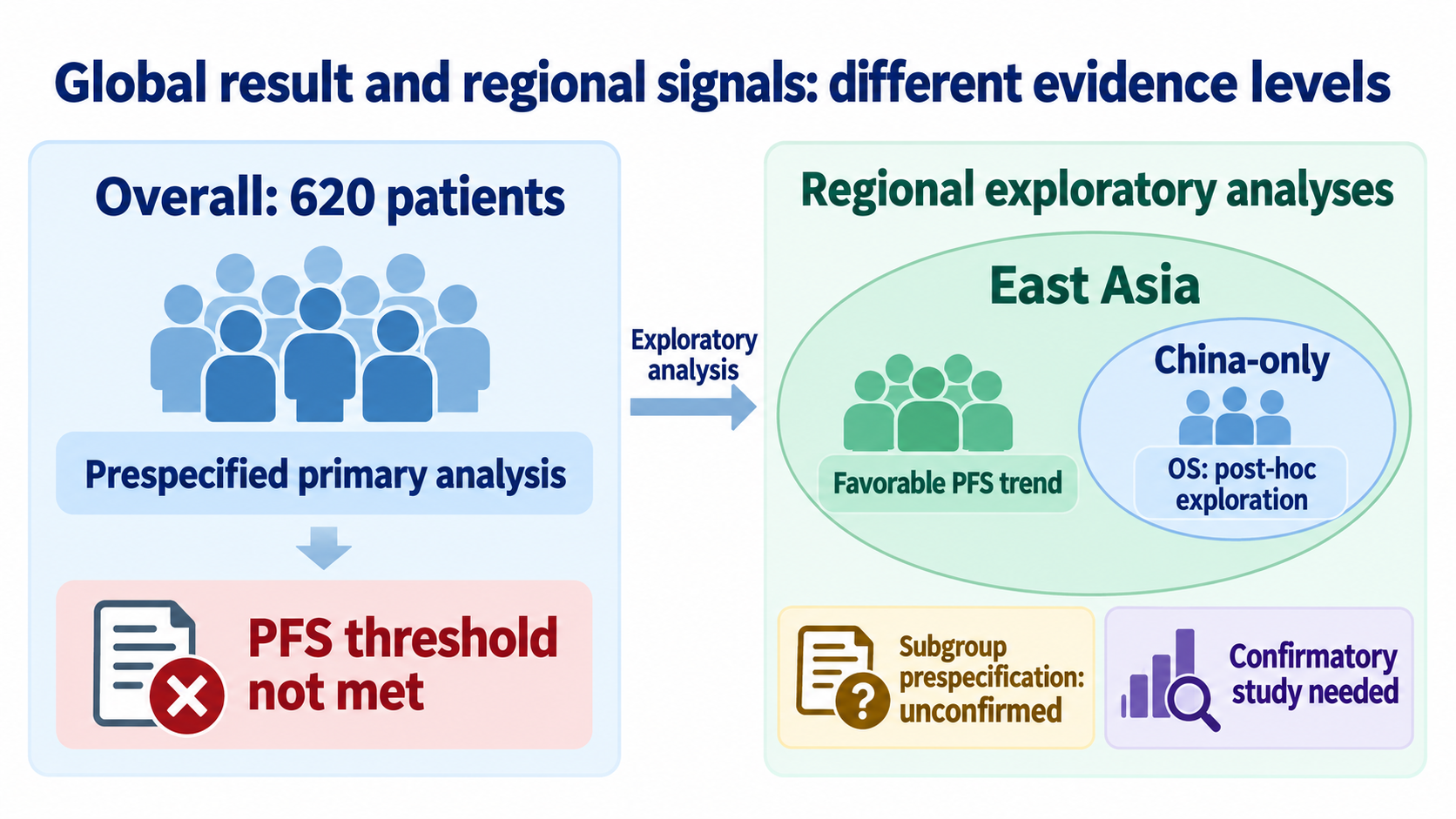
Figure 3 | The overall and regional analyses come from the same trial. China-only is contained within East Asia, and area sizes do not represent sample size or effect magnitude. Both regional OS analyses are post hoc; East Asia PFS prespecification remains unknown, and confirmation is still needed. [3]
【05|For OBI, Sharing TROP2 Still Requires an Answer of Its Own】
An ADC’s performance depends on more than its target. Antibody binding, how the linker attaches and releases the payload, the average drug-to-antibody ratio (DAR), and exposure in the body all influence usable doses and toxicity. Cancer type, treatment line and combination partner also matter. [1][6]
Taiwan’s OBI Pharma (4174) is developing OBI-992 and OBI-902, both TROP2 ADCs for advanced solid tumors. The company’s pipeline information accessible on September 27 states that OBI-992 has stopped new enrollment, while treatment and data collection continue for some participants. OBI-902 is enrolling in a Phase 1/2 study in the United States and Taiwan. [6]
The TROP2 antibody amino-acid sequence used by the two programs was licensed from Biosion. OBI holds the relevant commercial rights outside mainland China, Hong Kong and Macau. OBI-992 uses cysteine conjugation, while OBI-902 uses the GlycOBI glycan-conjugation platform. Different engineering creates differences to test, not an established ranking of human performance. [6]
For OBI’s development and licensing value, the most useful evidence would identify a combination of acceptable dose, response duration and safety within clearly defined cancer types and treatment lines, with adequate follow-up. Preclinical comparisons on the company’s website can support a research direction, but cannot be ranked directly against EVOKE-03 results from a different population.
This also makes a prospective partner’s questions more concrete: which cancer should the next trial prioritize, at what dose, as monotherapy or a combination, and at what cost of confirmation? Data answering those questions could move an asset from “another candidate against the same target” toward an actionable development plan.
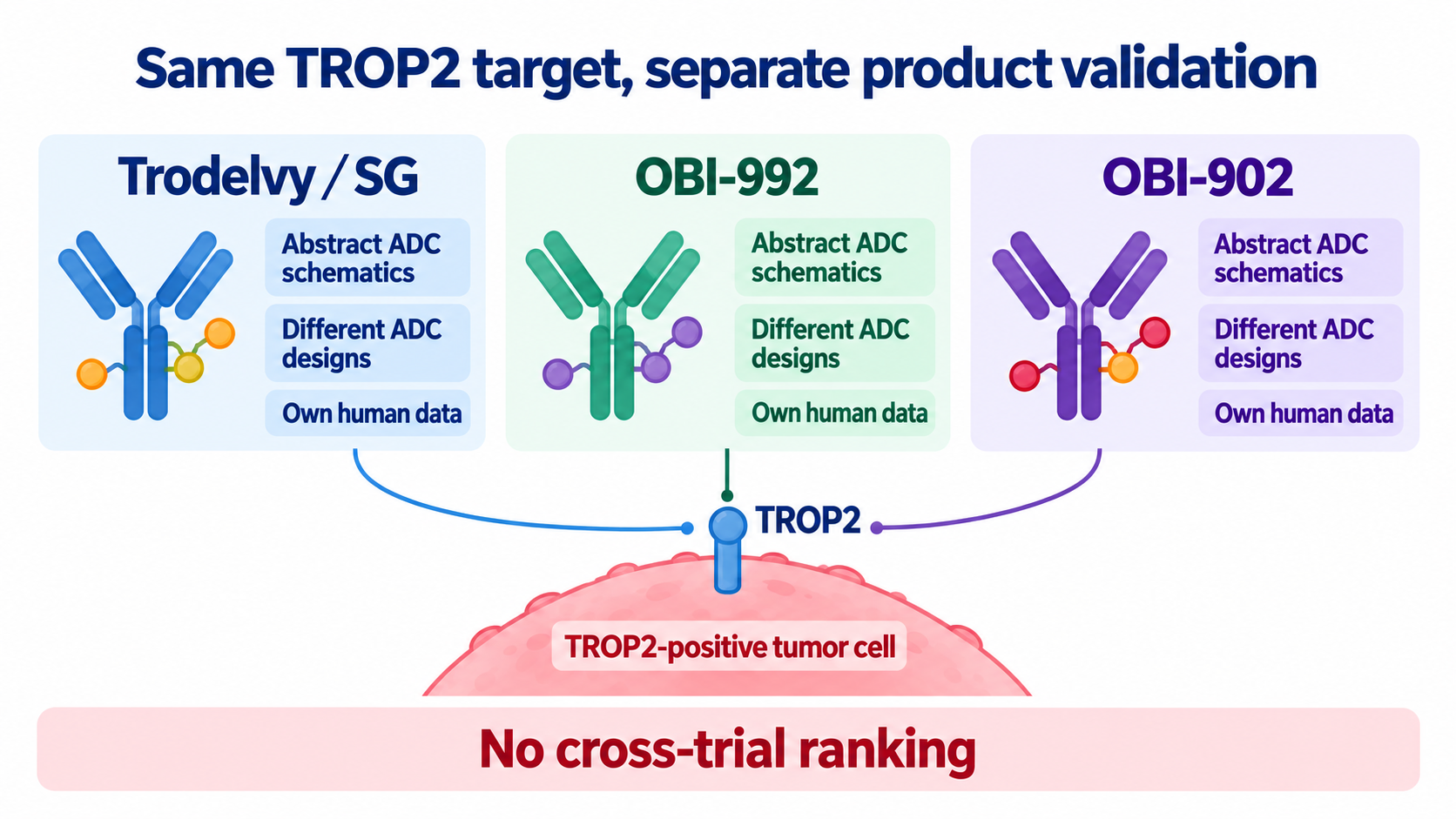
Figure 4 | Trodelvy/SG, OBI-992 and OBI-902 all target TROP2, but their designs and development settings differ, and each needs its own human evidence. The ADC illustrations are functional schematics, not representations of exact molecular structures. [1][6]
The next substantive question is how much of the East Asian signal survives a fuller dataset: after accounting for key patient differences, does an effect remain that warrants prospective testing, and which patients could gain enough from the added drug to offset its toxicity? That answer would determine where the next investment in first-line lung cancer development belongs.
This article provides industry information and business analysis and does not constitute individualized medical or investment advice.
Sources
[1] Merck and Gilead provide update on Phase 3 KEYNOTE-D46/EVOKE-03, 2026-06-08 https://www.gilead.com/news/news-details/2026/merck-and-gilead-provide-update-on-phase-3-keynote-d46-evoke-03-study
[2] IASLC: Sacituzumab Govitecan Plus Pembrolizumab Does Not Meet Primary Endpoints, WCLC 2026 https://www.iaslc.org/iaslc-news/press-release/sacituzumab-govitecan-plus-pembrolizumab-does-not-meet-primary-endpoints
[3] Giannis Mountzios, WCLC 2026 regional analysis summary https://www.linkedin.com/posts/giannis-mountzios-91692a40_wclc26-nsclc-activity-7504943096363843584-0v17
[4] WCLC 2026, PL02.06, 2026-09-13 https://meetingsapp.iaslc.org/event/wclc2026/planning/UGxhbm5pbmdfNDU5MDMwNg%3D%3D
[5] ClinicalTrials.gov: NCT05609968 (current record unavailable in this read) https://clinicaltrials.gov/study/NCT05609968
[6] Obi Pharma: pipeline overview, accessed 2026-09-27 https://www.obipharma.com/zh-hant/what-we-do/pipeline-overview/
Cite this article
For decks, research notes, or media references, cite Drugnews with the canonical article URL.
Drugnews Editorial Team. "Adding an ADC to Lung Cancer Immunotherapy: More Tumor Responses, but Why Did Phase 3 Fall Short?" Drugnews, Oct 01, 2026. https://drugnews.com.tw/articles/2026-10-01-trodelvy-evoke03-east-asia-subgroup-phase3-en.html