
On October 23, the opening day of ESMO 2026 in Madrid, Takeda put up a gastric cancer result that drew attention.
Late-line patients on its CLDN18.2 antibody-drug conjugate lived a median 10.2 months. Patients on chemotherapy lived 6.9 months.
Two days later, AstraZeneca brought a drug against the same target, built the same way, to an ESMO Presidential Symposium.
This is the first head-to-head moment for CLDN18.2 ADCs. Takeda has the cleaner numbers. AstraZeneca will reach American patients first.
The gap is not about which molecule works better. It is about where each phase 3 trial enrolled, and where each company drew the line for which patients qualify.
01 | A nameplate on the surface of gastric cancer cells
CLDN18.2 is a protein made by cells that line the stomach. In healthy tissue it is tucked into the tight junctions between cells.
When those cells turn cancerous and lose their orderly structure, CLDN18.2 ends up exposed across the cell surface.
For drug developers it works like a nameplate. A molecule that recognizes it can find the tumor cell.
Astellas was first to turn that nameplate into revenue. Its antibody Vyloy (zolbetuximab) binds the cancer cell and recruits immune cells to kill it.
Vyloy won US approval in 2024 for first-line use alongside chemotherapy.
It has sold quickly. Astellas reported Vyloy global revenue of 63.1 billion yen for fiscal 2025, which ended in March 2026, up from 12.2 billion yen the year before.
An ADC takes a more direct route: the antibody is the missile, and a chemotherapy payload is the warhead.
The missile finds the nameplate, gets pulled inside the cell, and releases the warhead there.
Takeda's arcotatug tavatecan (also known as IBI343 and TAK-921) carries exatecan. AstraZeneca's sonesitatug vedotin, or Sone-Ve, carries MMAE.
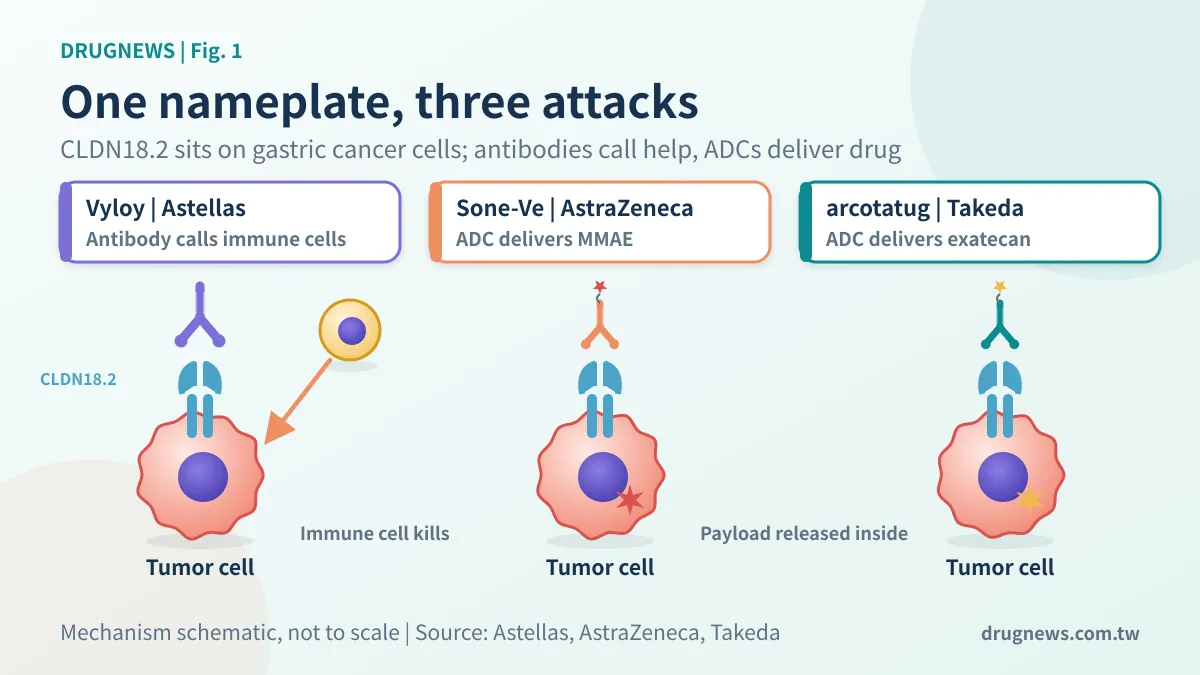
Fig. 1 | Vyloy calls in immune cells; the two ADCs deliver chemotherapy straight into the tumor cell
02 | Takeda's scorecard: nearly five times as many tumors shrank
Takeda did not discover this drug. It came from China's Innovent Biologics.
In October 2025, Takeda paid $1.2 billion upfront, including a $100 million equity investment, for rights outside Greater China to this ADC and a second immuno-oncology drug. The full deal was valued at up to $11.4 billion.
A year later, the bet paid out.
The phase 3 G-HOPE-001 trial enrolled 464 patients in China and Japan. All had already received two to four lines of treatment.
To qualify, at least 75% of tumor cells had to show CLDN18.2 staining of 2+ intensity or higher.
The comparison arm was physician's choice of chemotherapy: irinotecan, paclitaxel, or trifluridine/tipiracil.
Three numbers separated clearly.
Median overall survival was 10.2 months versus 6.9 months, a 43% reduction in the risk of death (hazard ratio 0.57).
Median progression-free survival was 7.1 months versus 3.1 months.
The confirmed response rate was 37.4% versus 7.7%.
In late-line gastric cancer, 3.3 extra months of median survival is a large gap.
Safety also compared well with chemotherapy. Grade 3 or higher treatment-related adverse events occurred in 47.4% of patients on the ADC versus 55.9% on chemotherapy.
Grade 3 or higher low neutrophil counts were 17.4% versus 32.0%. The trade-off was more anemia: 20.4% versus 13.1%.
One patient on the ADC died suddenly of unknown cause. Takeda says it is still investigating.
P.K. Morrow, head of Takeda's oncology therapeutic area unit, told Fierce Biotech the deal "absolutely" paid off. She said the drug could be a best-in-class CLDN18.2 ADC.
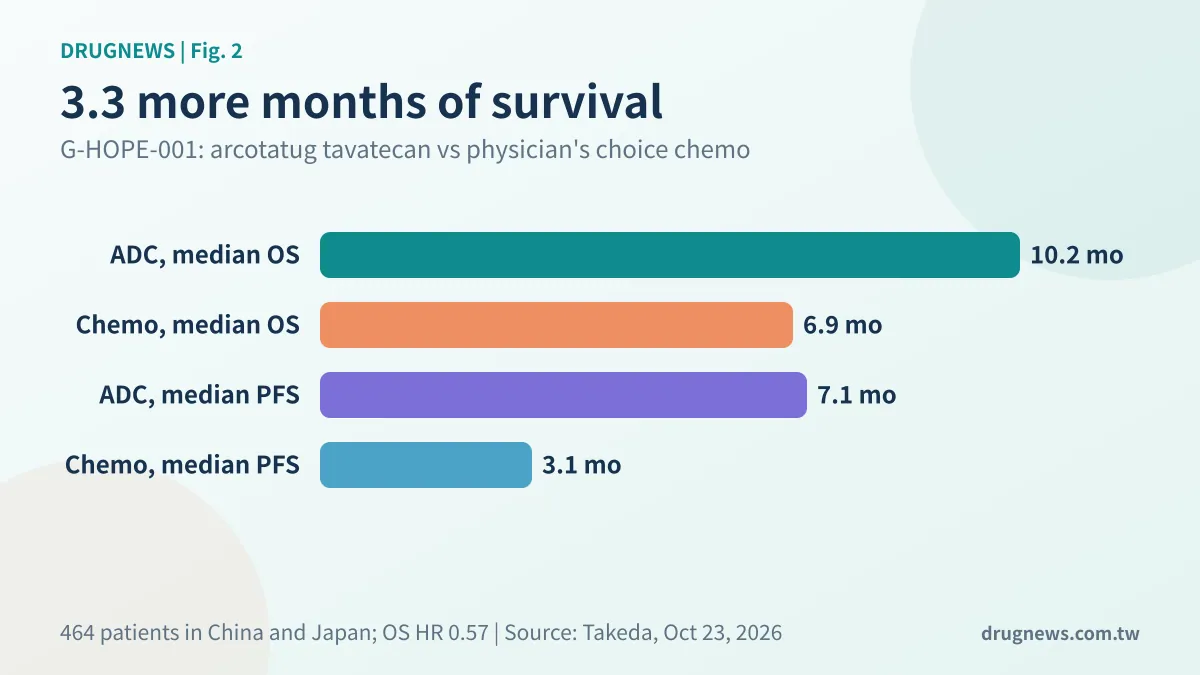
Fig. 2 | In G-HOPE-001, both survival and time without progression ran well ahead of chemotherapy
03 | One yardstick: who qualifies, where the trial ran, and how close to market
Best-in-class only counts once a drug is on the market.
Put the three CLDN18.2 drugs on one yardstick and four things matter: the patient selection threshold, the line of therapy, where the phase 3 enrolled, and how far each is from approval.
| Vyloy (Astellas) | Sone-Ve (AstraZeneca) | arcotatug tavatecan (Takeda / Innovent) | |
|---|---|---|---|
| Drug type | Monoclonal antibody | ADC (MMAE) | ADC (exatecan) |
| Line of therapy | First line, with chemo | Second line and later | Third line and later |
| CLDN18.2 threshold | ≥75% of cells, moderate-to-strong | ≥25% of cells, any intensity | ≥75% of cells, 2+ or higher |
| Patients who qualify | About 38% | About 60% | A high bar similar to Vyloy |
| Phase 3 result | OS 14.39 vs 12.16 months | OS met in 3L+, PFS not significant | OS 10.2 vs 6.9 months |
| Phase 3 geography | Global | 19 countries, 175 centers | China and Japan |
| Status | US approved in 2024 | Global phase 3, heading to regulators | Under priority review in China |
Takeda loses on two rows of this table.
The first is geography. G-HOPE-001 enrolled only in China and Japan. Takeda itself says it plans new global phase 3 trials to support US and European filings.
A global phase 3 in late-line gastric cancer takes at least two years to go from first patient to overall survival data.
AstraZeneca's CLARITY-Gastric01 ran in 19 countries, so its data can go straight to the US Food and Drug Administration. When it reported topline results in July, the company said the data would be shared with global regulatory authorities.
The second is the threshold.
AstraZeneca only requires CLDN18.2 on 25% of tumor cells. The company estimates about 60% of gastric cancers meet that bar.
Takeda and Vyloy both draw the line at 75%. In Vyloy's two phase 3 trials, that line captured only about 38% of patients.
Out of the same 100 patients with previously treated gastric cancer, AstraZeneca can treat far more than Takeda.
AstraZeneca has its own weak spot. Its progression-free survival endpoint did not reach statistical significance. On the data alone, Takeda's package is cleaner.
But when an American oncologist reaches for a prescription, there will be one CLDN18.2 ADC on the shelf. It will be AstraZeneca's.
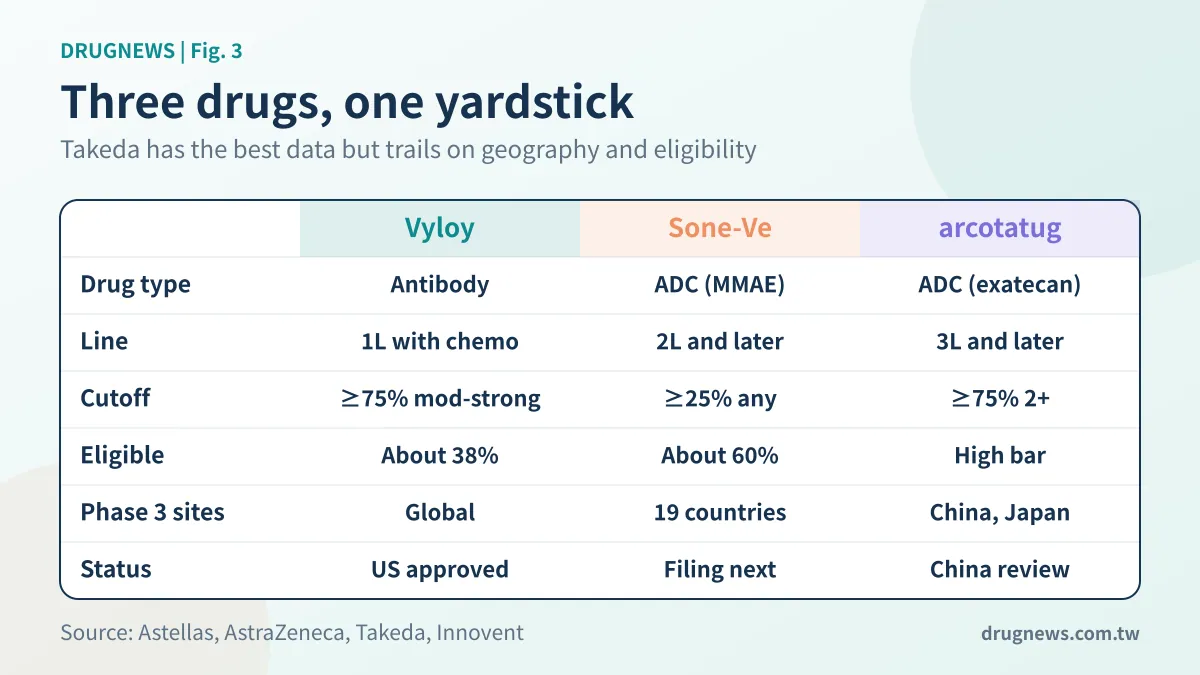
Fig. 3 | Takeda has the best data but trails on trial geography and patient eligibility
04 | The price of arriving early, and the price of arriving late
The two companies also paid very different prices for their tickets.
AstraZeneca licensed the molecule, then called CMG901, from KYM Biosciences in February 2023. KYM is a joint venture of China's Keymed Biosciences and Lepu Biopharma.
The upfront payment was $63 million, with up to $1.1 billion more in milestones and tiered royalties up to the low double digits.
At the time the drug was in phase 1. AstraZeneca took global rights and now calls Sone-Ve its first wholly owned ADC.
Takeda came in two and a half years later, after Innovent's drug had already started its phase 3. The upfront was $1.2 billion, roughly 19 times what AstraZeneca paid, though Takeda's package also covered a second drug.
Arriving late cost Takeda money, and it also cost Takeda the right to run the pivotal trial its own way.
G-HOPE-001 was already running before Takeda signed, and it enrolled only in China and Japan. That gave Innovent the fastest route to a Chinese approval. It gave Takeda a dataset the FDA has rarely accepted on its own for a full approval.
This is the trade-off in most China-to-West licensing deals of the past two years. The buyer pays for de-risked data, then discovers the data was built for someone else's regulator.
The next battleground is first line, where Vyloy sits today.
AstraZeneca is already running CLARITY-Gastric02, a first-line phase 3 combining Sone-Ve with capecitabine, with or without its bispecific rilvegostomig.
Takeda told Fierce Biotech it intends to "move at speed" into front-line gastric cancer. Innovent has first-line gastric and pancreatic studies under way in China.
If an ADC wins in first line, Vyloy's growth story changes. Astellas built a 63.1-billion-yen product in two years on a naked antibody. An ADC that kills the tumor directly, and qualifies more patients, would compete for the same first-line slot.
The diagnostic test matters here too. Takeda's trial used the VENTANA CLDN18 (43-14A) assay, the same family of test used to select Vyloy patients. AstraZeneca is validating the VENTANA SP455 assay with its broader 25% cutoff.
Pathology labs that already run the Vyloy test can slot Takeda's drug in easily. AstraZeneca has to persuade them that a lower cutoff on a different assay is worth adopting.
That is a real hurdle. It is a smaller hurdle than running a new global phase 3.
05 | What Taiwan's patients can get today: first-line Vyloy only
Taiwan diagnoses more than 4,000 new gastric cancer cases a year. Gastric cancer ranked eighth among cancer causes of death in Taiwan in 2024.
Taiwan's National Health Insurance began reimbursing Vyloy on April 1, 2026.
The terms mirror the US label's strict threshold: first line, HER2-negative, and at least 75% of tumor cells with moderate-to-strong staining.
Coverage also forces a one-way choice between Vyloy and an immune checkpoint inhibitor. After treatment fails, patients cannot switch.
That leaves CLDN18.2-positive patients in Taiwan with no targeted CLDN18.2 option after first line.
Which ADC reaches Taiwan first may differ from the US answer.
Takeda's deal left Greater China rights with Innovent. Innovent has already filed in China and received priority review, making arcotatug tavatecan the first CLDN18.2 ADC submitted to any regulator.
AstraZeneca is running a global playbook, and Taiwan typically follows the US and Europe.
For oncologists in Taiwan, the real variable is the threshold. If Sone-Ve launches with the 25% cutoff, patients whose CLDN18.2 expression sits between 25% and 75% would get a targeted option for the first time.
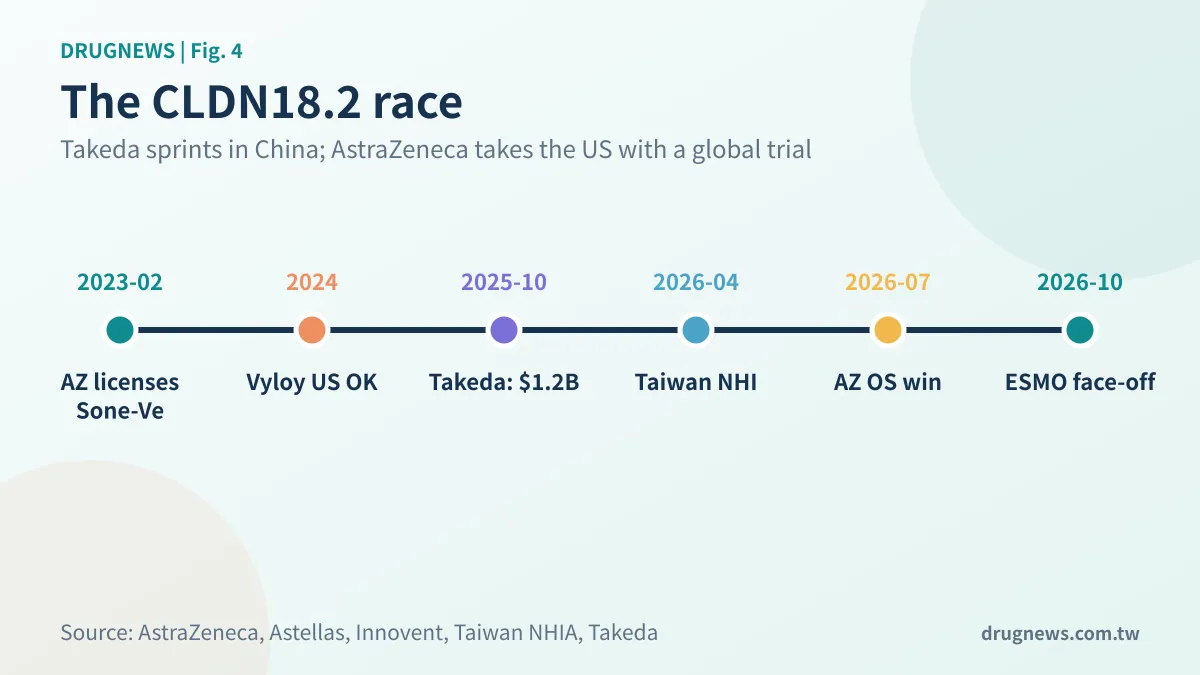
Fig. 4 | Takeda sprints in China; AstraZeneca uses a global trial to take the US
06 | Two finish lines
This race has two finish lines.
In China and Japan, Takeda and Innovent arrive first. Innovent's priority review is under way and Takeda has said it will file in Japan. The world's first CLDN18.2 ADC approval should come in the first half of 2027.
In the US, AstraZeneca arrives first. Takeda, with the better data, still has to run a global phase 3.
Those two years give AstraZeneca enough time to build prescribing habits among American oncologists.
One thing would change this call: the FDA agreeing to review Takeda's China and Japan data for an accelerated approval. If Takeda announces a US filing before mid-2027, that door is open.
Has anyone you know with gastric cancer been tested for CLDN18.2?
Follow Drugnews for a daily breakdown of the business logic behind one major global pharma event.
This article is industry and company analysis, not investment or medical advice.
References
- Takeda Announces Arcotatug Tavatecan (TAK-921) Demonstrated Statistically Significant and Clinically Meaningful Improvements in Overall Survival and Progression-Free Survival in Phase 3 Advanced Gastric Cancer Study|Takeda|2026-10-23|https://www.takeda.com/newsroom/newsreleases/2026/arcotatug-tavatecan-phase-3-study/
- ESMO: Takeda's $1.2B bet on Innovent 'absolutely' pays off with details of ADC's phase 3 win|Fierce Biotech|2026-10-23|https://www.fiercebiotech.com/biotech/esmo-takedas-12b-bet-innovent-absolutely-pays-adcs-phase-3-win
- Innovent Biologics Announces Global Strategic Partnership with Takeda|BioSpace (Innovent press release)|2025-10-22|https://www.biospace.com/press-releases/innovent-biologics-announces-global-strategic-partnership-with-takeda-to-bring-innovents-next-gen-io-backbone-therapy-and-adc-molecules-to-the-global-market
- Innovent, fresh from $1.2B deal, posts phase 3 win for Takeda-partnered ADC|Fierce Biotech|2026-06-04|https://fiercebiotech.com/biotech/innovent-fresh-12b-deal-posts-phase-3-win-cldn182-adc
- Sonesitatug vedotin demonstrated a statistically significant and highly clinically meaningful improvement in overall survival in 2nd and later-line CLDN18.2-positive advanced gastric/GEJ cancers|AstraZeneca|2026-07-27|https://www.astrazeneca.com/media-centre/press-releases/2026/sone-ve-improved-survival-in-gastric-cancers.html
- AstraZeneca to present overall survival data from four pivotal Phase III trials in Presidential Symposia at ESMO 2026|AstraZeneca|2026-10-19|https://www.astrazeneca.com/media-centre/press-releases/2026/astrazeneca-present-survival-data-from-four-pivotal-phase-iii-trials-at-esmo-2026-featuring-sone-ve-imfinzi-tagrisso-orpathys.html
- AstraZeneca enters license agreement with KYM Biosciences for CMG901, a Claudin 18.2 antibody drug conjugate|AstraZeneca|2023-02-23|https://www.astrazeneca.com/media-centre/press-releases/2023/astrazeneca-enters-license-agreement-with-kym-biosciences-for-cmg901-a-claudin-182-antibody-drug-conjugate.html
- Astellas Announces Positive Findings from Phase 3 GLOW Trial of Zolbetuximab|Astellas|2023-03-22|https://newsroom.astellas.com/2023-03-22-Astellas-Announces-Positive-Findings-from-Phase-3-GLOW-Trial-of-Zolbetuximab-during-March-ASCO-Plenary-Series
- FY2025 Financial Results Supplementary Information (Sales of major products)|Astellas|2026-04-27|https://www.astellas.com/content/dam/astellas-com/global/en/confidential-documents/financial-results/4q2025_sup_en.pdf
- Drug reimbursement rule revision, item 9.133 zolbetuximab (effective April 1, 2026)|Taiwan National Health Insurance Administration|2026-04-01|https://www.nhi.gov.tw/ch/dl-97151-a6aec2bac5b0488a87cc56995538c5ca-1.pdf
- 2024 cause of death statistics|Taiwan Ministry of Health and Welfare|2025-06-16|https://www.mohw.gov.tw/cp-16-82775-1.html
- More than 4,000 gastric cancer cases a year in Taiwan|TVBS Health|2025-02-19|https://health.tvbs.com.tw/cancer/353026
- Sonesitatug Vedotin Improves Overall Survival in Second- and Later-Line CLDN18.2-Positive Gastric/GEJ Cancer|OncLive|2026-07-27|https://www.onclive.com/view/sonesitatug-vedotin-improves-overall-survival-in-second--and-later-line-cldn18-2-positive-gastric-gej-cancer
Share this analysis
Send this article to readers who follow biotech, company strategy, and capital-market signals.
Cite this article
For decks, research notes, or media references, cite Drugnews with the canonical article URL.
Drugnews Editorial Team. "Gastric ADC Race: Takeda Wins Data, AZ Wins US." Drugnews, Oct 28, 2026. https://drugnews.com.tw/articles/2026-10-28-gastric-cancer-cldn18-2-adc-takeda-astrazeneca-race-en.html