
Pancreatic cancer has been chemotherapy's territory for decades, and about half of patients are metastatic at diagnosis. [8]
In August, the FDA approved a pill that had beaten chemotherapy in a Phase 3 trial. Median overall survival was 13.2 months on the drug and 6.7 months on chemotherapy. [4]
The drug is Rasonque (daraxonrasib), an oral RAS inhibitor from Revolution Medicines. In about five weeks on the market it booked $197.6 million in net product revenue, including initial channel stocking. [9]
On November 19 the company showed what happens when newly diagnosed patients take it with chemotherapy: 60.7% responded, and median progression-free survival reached 12.8 months. The same chemotherapy alone delivered 5.5 months in its landmark trial. [1][6]
Most coverage compares 12.8 months with 5.5. The number we care about is different.
In US records of 7,666 patients with metastatic pancreatic cancer, only 38.2% of those who started first-line treatment ever reached second line, most often because they died first. [15]
Today's label therefore reaches fewer than three in ten metastatic patients. A first-line label would reach more than seven in ten. That is what the November 19 data really put in play. [15]
Our call: the first-line Phase 3 trial will succeed, and Rasonque plus chemotherapy will become the new standard for metastatic pancreatic cancer. Today's first-line chemotherapy regimens have the most to lose.
We will be wrong if, by the end of 2028, RASolute 303 has not shown clearly longer progression-free survival for the combination than for chemotherapy alone, or if too many patients stop treatment because of side effects.
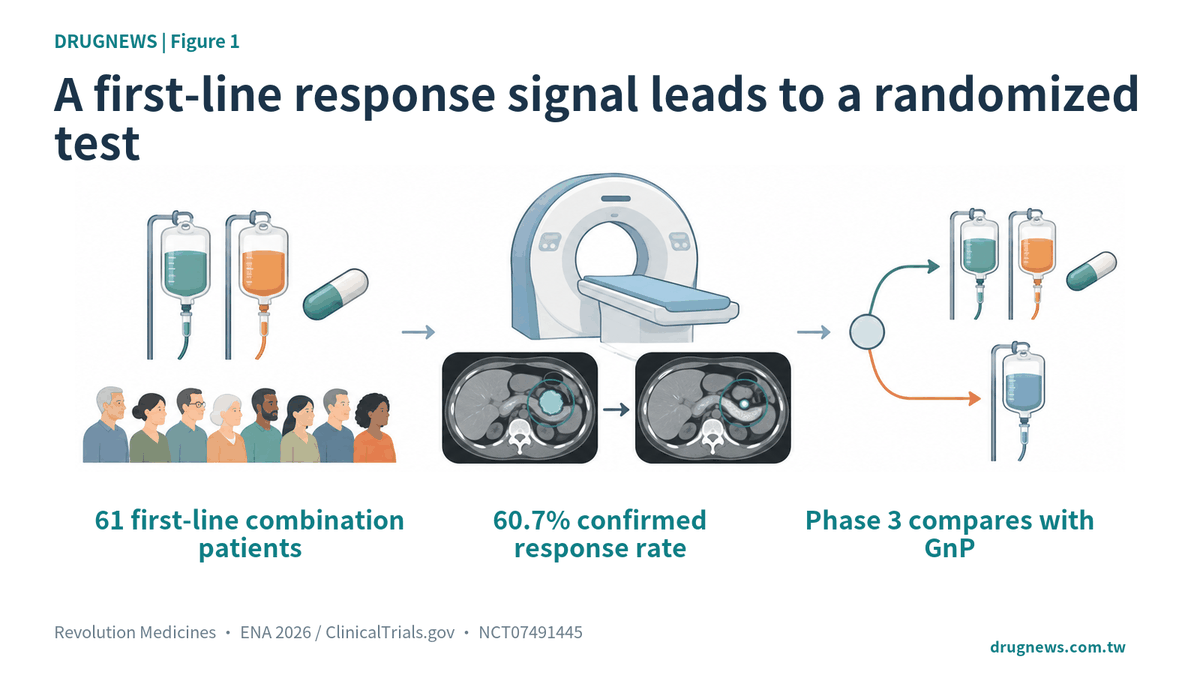
In the 61-patient cohort, 60.7% had a confirmed response. Phase 3 will test whether adding daraxonrasib extends disease control.
Second line is already won: nearly double the survival, fewer dropouts
Start with what has been proven.
The FDA approved Rasonque on August 26 for adults with metastatic pancreatic adenocarcinoma who have had at least 1 prior systemic therapy or are unsuitable for multiagent systemic therapy. [4]
The approval rested on RASolute 302, a 500-patient Phase 3 trial. Overall survival was 13.2 versus 6.7 months, a 60% reduction in the risk of death. [4]
Patients also stayed on it. In data presented at this year's ASCO meeting, 1.2% of patients on Rasonque stopped because of treatment-related side effects, against 11.2% on chemotherapy. [12]
A daily pill at home replaces regular trips to the hospital for infusions. For a patient with advanced disease, that changes what a week looks like.
The market's answer is in the financials. In the roughly five weeks between approval and the end of September, more than 5,000 US patients received the drug. Third-quarter net product revenue was $197.6 million, including initial channel stocking. [9]
The price is not modest: the list price is $39,800 per 30 days. We ran those numbers in our November 7 analysis. [13]
At diagnosis: six in ten tumors shrink, three in four patients alive at one year
With second line taken, the bigger market is first line.
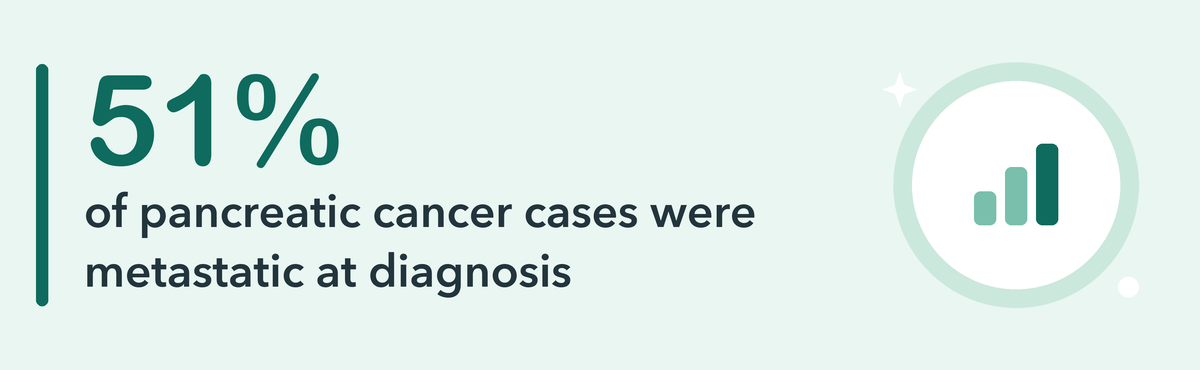
The American Cancer Society estimates 67,530 new US pancreatic cancer cases in 2026. In the SEER registry, 51% of cases are already metastatic at diagnosis. [7][8]
First-line patients are more numerous and fitter, and they stay on treatment longer. The current monotherapy label does not reach newly diagnosed patients who can tolerate multiagent chemotherapy. [4]
The new data cover 61 patients in the Phase 1/2 study RMC-GI-102. Their first treatment after diagnosis was 200 mg of daraxonrasib a day plus gemcitabine and nab-paclitaxel, the chemotherapy pair known as GnP. [1]

The confirmed objective response rate was 60.7%. Six in ten patients saw their tumors shrink substantially, and 8.2% had no detectable disease on scans. Counting patients whose disease held stable, the disease control rate was 90.2%. [1]
On the same chemotherapy alone, the response rate in MPACT, the large 2013 trial, was 23%. [6]
The responses lasted. Among responders, the median duration of response was 11.1 months. [1]
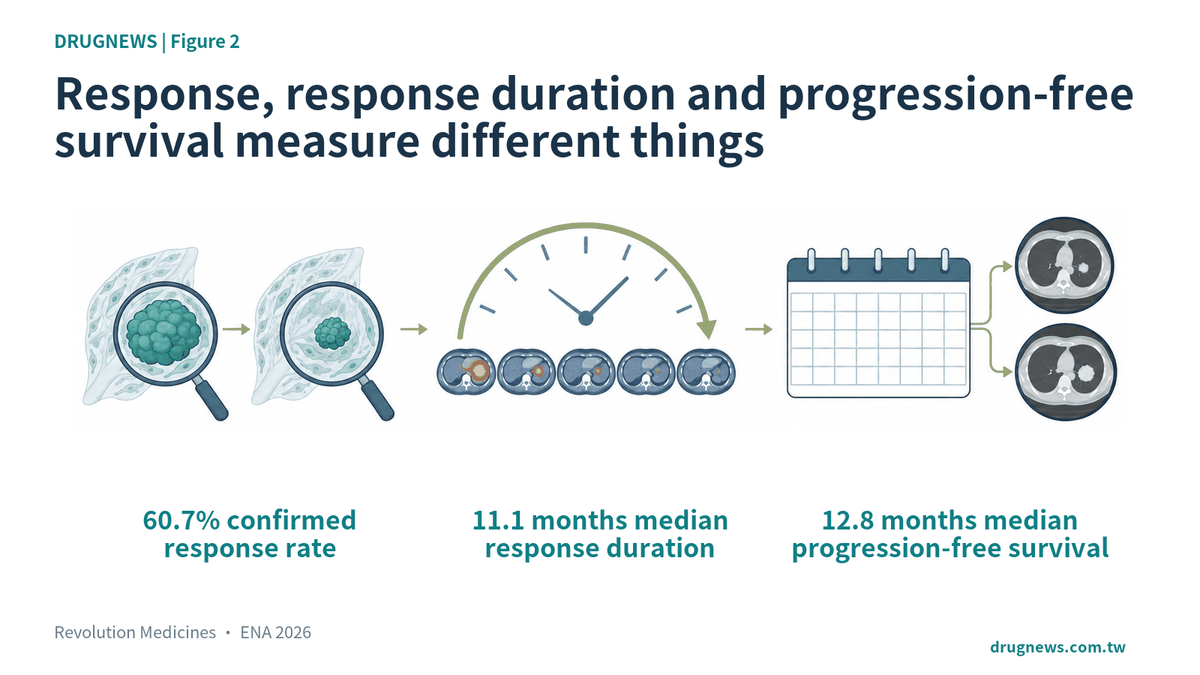
Confirmed response was 60.7%. Median response duration was 11.1 months, and median progression-free survival was 12.8 months.
Median progression-free survival for the whole cohort was 12.8 months. [1]
Compared with what? GnP alone delivered 5.5 months in MPACT. NALIRIFOX, the most recently approved first-line chemotherapy regimen, reached 7.4 months in its own Phase 3 trial. [2][6]
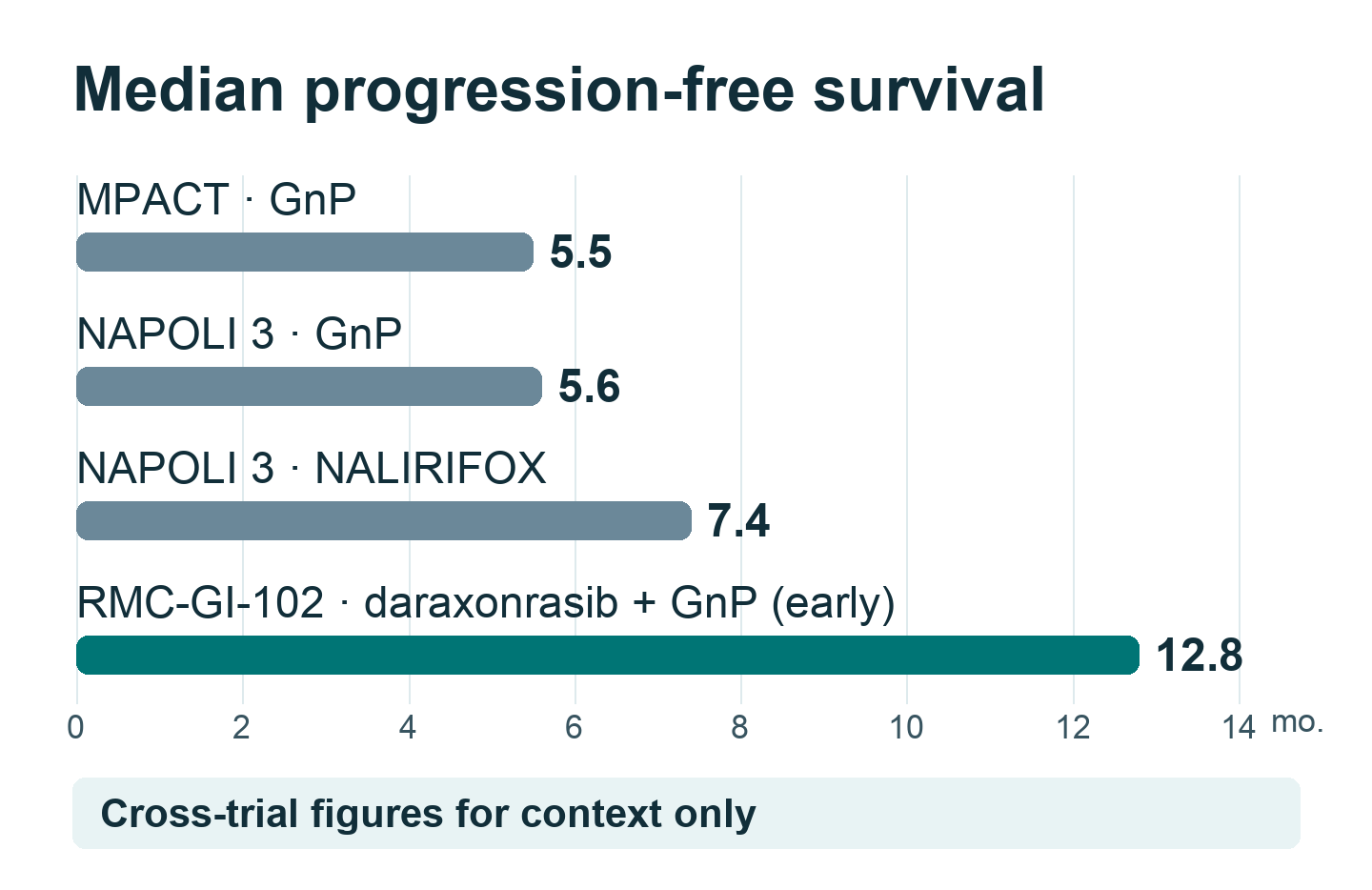
The early combination cohort reported 12.8 months. Phase 3 will test the added benefit against GnP within the same trial.
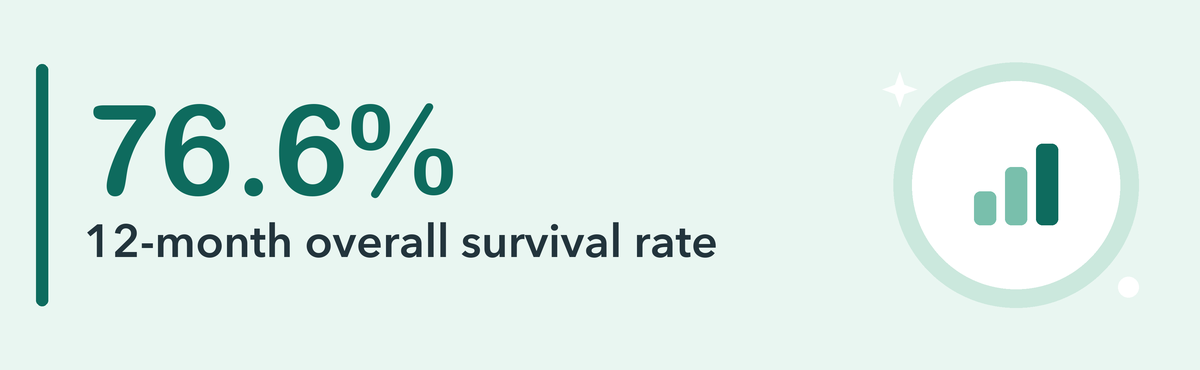
The 12-month overall survival rate was 76.6%. In MPACT, 35% of patients on GnP alone were alive at one year, and median overall survival was 8.5 months. [1][6]
The FDA has granted Breakthrough Therapy designation to the first-line combination. [1]
What the update left out, and why we still expect a win
Weaknesses first: 61 patients, no control arm, a selected population. Numbers from different trials are background only. In pancreatic cancer, strong early data that shrink in Phase 3 are common enough.
The bigger gap is safety. In the second-line trial only 1.2% of patients stopped because of side effects, and that is half the reason the drug beat chemotherapy.
The first-line release offers one sentence: safety was consistent with the known profiles of the two treatments. It gives no rates for severe side effects or for discontinuation. [1][12]
A targeted drug on top of two chemotherapy agents: whether patients can finish the course is where Phase 3 is most likely to surprise.
We still expect a win because the same drug has already beaten chemotherapy in a randomized 500-patient second-line trial, cutting the risk of death by 60%. This is not its first test. [4]
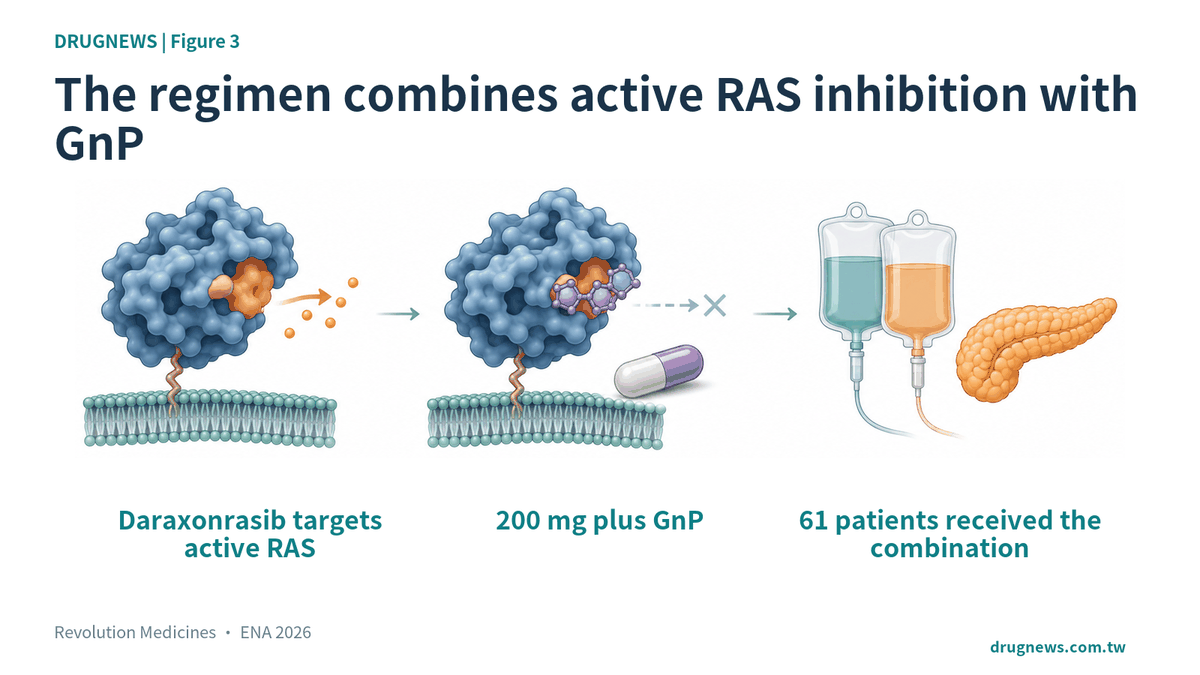
Daraxonrasib targets active RAS. The 200 mg cohort kept GnP in the regimen, and 61 patients received the combination.
Why can one drug cover so much of pancreatic cancer? Activating RAS mutations occur in more than 90% of these tumors. RAS works like an accelerator, and the mutation jams it down. [16]
Earlier KRAS drugs recognize only one mutation, G12C. Daraxonrasib does not care which mutation is present. It binds RAS in its active, switched-on state, and that includes normal RAS too. [16][17]
That is also the cost. Skin, mouth and gut cells rely on RAS to renew.
In the single-agent Phase 1/2 study the most common side effects were rash, diarrhea and mouth sores, and 30% of 168 patients had grade 3 or higher treatment-related events. [16]
Chemotherapy hits the same tissues. The toxicity of the combination does not simply add up; it lands on the same normal cells.
The drug won second line partly because few patients stopped, and that advantage is what first line is most likely to erode.
The Phase 3 trial, RASolute 303, asks one question: does adding this drug help? Patients are randomly assigned to 3 arms: daraxonrasib alone, daraxonrasib plus GnP, or GnP alone. The trial measures both progression-free survival and overall survival. [5]
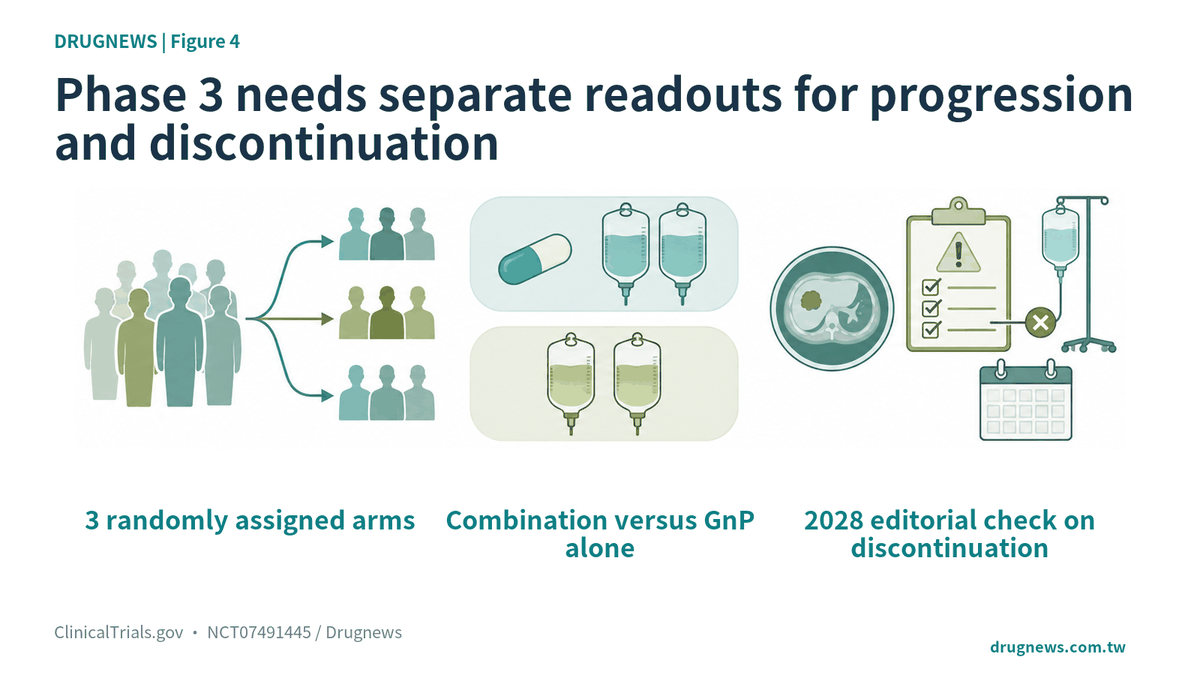
Phase 3 randomly assigns patients to 3 arms. The key comparison is progression-free survival and discontinuation for the combination versus GnP alone.

In its third-quarter report the company said US enrollment was complete and global enrollment should finish in the first half of 2027. The registry gives April 2028 as the estimated primary completion date. [5][9]
The design hides a second answer. One arm takes daraxonrasib with no chemotherapy at all.
If that arm comes close to the combination, first-line patients may be spared chemotherapy's side effects, and the change would be to the treatment itself, not just the order. [5]
Who gets squeezed: today's first-line chemotherapy
Rasonque's first-line rival is chemotherapy.
The most recently approved first-line regimen is NALIRIFOX, built around Ipsen's Onivyde. [2]

The FDA approved it on the strength of NAPOLI 3, a 770-patient randomized trial that also used GnP as the comparator. Progression-free survival was 7.4 versus 5.6 months, and overall survival was 11.1 versus 9.2 months. [2]
Less than two extra months of survival was enough for a first-line approval. If Rasonque plus chemotherapy reproduces even half of its early result in Phase 3, the default first choice will change.

Another contender is Verastem, which is also adding drugs to GnP. Its June update covered 29 patients at the recommended Phase 2 dose, a long way from Phase 3. [3]
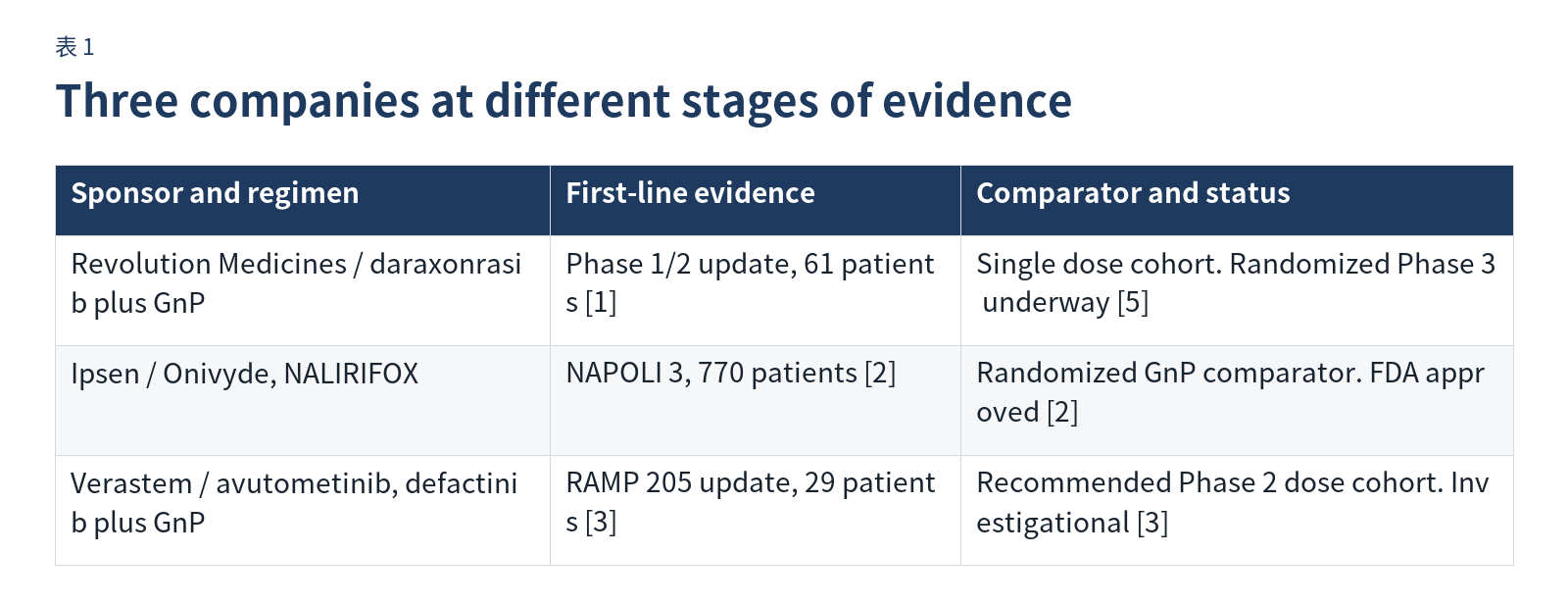
| Sponsor and regimen | First-line evidence | Comparator and status |
|---|---|---|
| Revolution Medicines / daraxonrasib plus GnP | Phase 1/2 update, 61 patients [1] | Single dose cohort. Randomized Phase 3 underway [5] |
| Ipsen / Onivyde, NALIRIFOX | NAPOLI 3, 770 patients [2] | Randomized GnP comparator. FDA approved [2] |
| Verastem / avutometinib, defactinib plus GnP | RAMP 205 update, 29 patients [3] | Recommended Phase 2 dose cohort. Investigational [3] |
Taiwan: five trial sites are recruiting, and 2028 decides PharmaEngine's first line
For patients in Taiwan the drug is still far away. When we checked in early November, Rasonque had no marketing authorization in Taiwan. BeOne Medicines holds rights in selected Asian markets, and neither company has said whether Taiwan is included. [10][13]
The nearer route is a clinical trial. The RASolute 303 registry record lists 5 recruiting sites in Taiwan, across Taipei, Taichung, Tainan and Kaohsiung. [5]
The disease matters here. In the cause-of-death statistics that Taiwan's Ministry of Health and Welfare published in June, pancreatic cancer ranked 7th among cancer deaths, and it is one of the few cancers whose age-standardized death rate is still rising. [11]
The Taiwan-listed company most directly involved is PharmaEngine (4162). It ran Onivyde's early clinical development.
Royalties on sales in Europe and Asia, plus sales in Taiwan, drive its profit, and NALIRIFOX has been reimbursed by Taiwan's National Health Insurance since December 1, 2025. [13][14]
On November 7 we wrote that Rasonque cuts both ways for PharmaEngine: second line is displaced first, while first line holds until the Phase 3 result. The new data do not change that sentence.
If Phase 3 succeeds as we expect, the order flips. With Rasonque plus GnP in first line, NALIRIFOX gets squeezed. The next step after progression, though, could return to Onivyde's original indication: second line after gemcitabine-based therapy.
For decades, first-line treatment of pancreatic cancer has been one chemotherapy combination after another. The next rewrite now has a date on the calendar.
This article provides industry and clinical research information and does not constitute medical or investment advice.
References
- Revolution Medicines, ENA Phase 1/2 update, 2026-11-19. https://www.globenewswire.com/news-release/2026/11/19/3407195/0/en/revolution-medicines-presents-updated-phase-1-2-data-for-rasonque-daraxonrasib-plus-chemotherapy-in-first-line-metastatic-pancreatic-cancer-at-ena-2026.html
- FDA, first-line Onivyde approval, 2024-02-13. https://www.fda.gov/drugs/cancer-approvals/fda-approves-irinotecan-liposome-first-line-treatment-metastatic-pancreatic-adenocarcinoma
- Verastem Oncology, RAMP 205 update, 2026-06-17. https://investor.verastem.com/news-releases/news-release-details/verastem-oncology-announces-positive-updated-results-ramp-205-0/
- FDA, daraxonrasib approval, 2026-08-26. https://www.fda.gov/drugs/cancer-approvals/fda-approves-daraxonrasib-metastatic-pancreatic-adenocarcinoma
- ClinicalTrials.gov, RASolute 303 record updated 2026-11-16. https://clinicaltrials.gov/study/NCT07491445
- Von Hoff et al., MPACT trial, NEJM, 2013-10-31. https://www.nejm.org/doi/full/10.1056/NEJMoa1304369
- American Cancer Society, Cancer Statistics 2026, 2026-01-13. https://acsjournals.onlinelibrary.wiley.com/doi/10.3322/caac.70043
- NCI SEER, pancreatic cancer stage at diagnosis, 2016–2022 data, accessed 2026-11-22. https://seer.cancer.gov/statfacts/html/pancreas.html
- Revolution Medicines, third-quarter 2026 financial results, 2026-11-04. https://ir.revmed.com/news-releases/news-release-details/revolution-medicines-reports-third-quarter-2026-financial/
- Revolution Medicines, BeOne collaboration, 2026-08-10. https://ir.revmed.com/news-releases/news-release-details/revolution-medicines-and-beone-medicines-announce-clinical
- Ministry of Health and Welfare (Taiwan), 2025 cause-of-death statistics, 2026-06-22. https://mohw.gov.tw/cp-16-86970-1.html
- OncoDaily, RASolute 302 trial and ASCO 2026 data, 2026-05-31. https://oncodaily.com/oncolibrary/rasolute-302-trial-daraxonrasib-mpdac
- Drugnews, Rasonque launch and PharmaEngine analysis, 2026-11-07. https://drugnews.com.tw/articles/2026-11-07-rasonque-pancreatic-cancer-launch-q3-pharmaengine-prmt5-en.html
- GeneOnline, Onivyde first-line combination added to Taiwan NHI reimbursement, 2025-11-18. https://geneonline.news/4162-onivyde-2025-cancer/
- O'Reilly et al., real-world treatment sequencing in metastatic PDAC (Flatiron, 7,666 patients), Cancer Medicine, 2020-09-30. https://pmc.ncbi.nlm.nih.gov/articles/PMC7666752/
- Wolpin et al., daraxonrasib in previously treated RAS-mutated pancreatic cancer, NEJM, 2026-05-07. https://pubmed.ncbi.nlm.nih.gov/42090791/
- Jiang et al., translational evaluation of RMC-6236, Cancer Discovery, 2024-06-03. https://pubmed.ncbi.nlm.nih.gov/38593348/
Share this analysis
Send this article to readers who follow biotech, company strategy, and capital-market signals.
Cite this article
For decks, research notes, or media references, cite Drugnews with the canonical article URL.
Drugnews Editorial Team. "Rasonque Eyes First-Line Pancreatic Cancer." Drugnews, Nov 25, 2026. https://drugnews.com.tw/articles/2026-11-25-daraxonrasib-pancreatic-cancer-first-line-en.html