
Summary and Core Assessments
In Q3, injectables and pills both contributed to growth in the U.S. obesity market. Higher volume offset lower realized prices at Lilly. Novo’s Wegovy pill helped lift its obesity business. Both companies raised full-year guidance. [O-LIL] [O-NOV]
Core assessment 1 | Volume is still offsetting price pressure. Lilly’s global volume rose 53% and realized prices fell 15%. Its annual revenue guidance rose to $91 billion to $92 billion. At Novo, U.S. injectable Wegovy sales growth was still −13% at constant exchange rates, while its U.S. obesity business grew 20% on the same basis. Novo’s adjusted sales guidance range now includes positive growth. [O-LIL] [O-NOV]
Core assessment 2 | Oral products now contribute measurable sales. Q3 global sales reached DKK 5.394 billion for the Wegovy pill and $184 million for Foundayo. Wegovy has launched across several markets and Foundayo is reaching patients through more self-pay channels. Refills, net prices and manufacturing costs will determine commercial scale. [O-NOV] [O-LIL] [O-HIM]
Core assessment 3 | Self-pay channels are expanding, and Medicare demonstration coverage is time-limited. Hims & Hers adds an access point at existing self-pay prices. CMS reaffirmed that the Bridge runs through the end of 2027, with eligible patients paying $50 a month. The Taiwan analysis follows the reimbursement and supply-chain framework in the Taiwan chapter. [O-HIM] [O-CMS] [O-BRI]
01 Q3 Results: Lilly Offsets Price Pressure as Novo’s Pill Grows
Lilly’s Q3 global revenue was $24.397 billion, up 39% year over year. Mounjaro contributed $10.723 billion, Zepbound $5.352 billion and Foundayo $184 million. Milestone revenue and favorable rebate and discount adjustments were among the factors that added about $900 million to quarterly revenue. Full-year revenue guidance rose to $91 billion to $92 billion. [O-LIL]
Novo’s Q3 net sales were DKK 79.195 billion, up 4% at constant exchange rates. Injectable Ozempic contributed DKK 29.706 billion, injectable Wegovy DKK 20.407 billion and the Wegovy pill DKK 5.394 billion. Global injectable Wegovy sales fell 2% at constant exchange rates. Novo raised its full-year adjusted sales growth guidance to −2% to +2% at constant exchange rates. [O-NOV]
The Q2 charts and figures below provide historical context.
Lilly: Tirzepatide Approaches $15 Billion in a Single Quarter
Lilly's second-quarter revenue reached $22.97 billion, up 48% year-over-year. Mounjaro contributed $9.94 billion, up 91% year-over-year; Zepbound contributed $4.93 billion, up 46% year-over-year; and oral Foundayo, launched in April, contributed $98 million [S01; 2026-08-05]. Together, the three totaled approximately $14.97 billion, accounting for roughly 65% of the company's revenue (calculated in this report).
Regional distribution is also shifting. Mounjaro's revenue outside the US reached $5.2 billion, up 172% year-over-year, surpassing the $4.8 billion in the US; in the first quarter, non-US revenue was $4.4 billion, likewise higher than the $4.2 billion in the US [S01; 2026-08-05][S02; 2026-04-30]. This indicates that tirzepatide is no longer a product reliant solely on the US market.
Yet the cost of growth is evident in pricing. In the second quarter, global realized prices dropped 13% while volume rose 60%; US prices declined 3%, or approximately 9% excluding adjustments to estimates for rebates and discounts; non-US prices fell 36%, primarily due to Mounjaro's inclusion in China's National Reimbursement Drug List (NRDL) [S01; 2026-08-05].
Zepbound's trajectory highlights the power of pricing. In the first quarter of 2026, Zepbound's revenue was $4.16 billion, down from $4.26 billion in the fourth quarter of 2025; the company attributed part of the 7% decline in first-quarter US realized prices to previously announced out-of-pocket price cuts [S02; 2026-04-30][S03; 2026-02-04]. In the second quarter, it rebounded to $4.93 billion, driven by volume [S01; 2026-08-05].
Taking a longer view, in full-year 2025, Mounjaro generated $22.97 billion and Zepbound $13.54 billion, with total company revenue at $65.18 billion [S03; 2026-02-04]. In the first half of 2026, Mounjaro had already posted $18.61 billion and Zepbound $9.09 billion [S01; 2026-08-05]. If the second half maintains first-half levels, full-year combined revenue for the two will be approximately 1.5 times that of 2025 (extrapolation).
Figure 1 | Combined revenue of Mounjaro and Zepbound over six consecutive quarters increased from approximately $6.2 billion to approximately $15.0 billion; Q3 2025 is calculated by subtracting the other three quarters from the full-year figure. Sources: S01 (2026-08-05), S02 (2026-04-30), S03 (2026-02-04)
Through August, Lilly had raised its full-year revenue guidance twice: from $80.0 billion–$83.0 billion given in February, adjusted to $82.0 billion–$85.0 billion in April, and raised again to $85.0 billion–$87.0 billion in August [S03; 2026-02-04][S02; 2026-04-30][S01; 2026-08-05]. In contrast, the August earnings per share guidance was slightly adjusted from $35.50–$37.00 to $35.50–$36.50; the company explained that an acquired in-process research and development (IPR&D) charge of $3.03 per share in the second quarter offset the upward revision in the core business [S01; 2026-08-05].
Novo: New Oral Product Cushions the Decline
First, consider the baseline. Novo's 2025 revenue was DKK 309.06 billion, up 10% at constant exchange rates; full-year Wegovy was DKK 79.11 billion, growing 41% [S05; 2026-02-03]. In February, the company flagged that 2026 would turn to negative growth, citing reasons including lower realized prices resulting from U.S. MFN agreements, loss of exclusivity in certain international markets, and intensifying competition [S05; 2026-02-03].
Novo's second-quarter revenue was DKK 78.49 billion, up 3% at constant exchange rates; adjusted growth excluding the prior-year reversal of 340B rebate provisions was 7% [S04; 2026-08-04]. 340B is a U.S. program requiring drug manufacturers to provide discounts to covered healthcare entities; the reversal represents a one-off accounting adjustment, which is why the adjusted figure should be examined.
By product, Ozempic was DKK 31.38 billion, up 5% at constant exchange rates; injectable Wegovy was DKK 19.48 billion, growing only 1%; oral Wegovy reached DKK 3.22 billion in the second quarter, of which DKK 3.14 billion came from the U.S. Obesity care totaled DKK 23.15 billion, up 16% at constant exchange rates [S04; 2026-08-04].
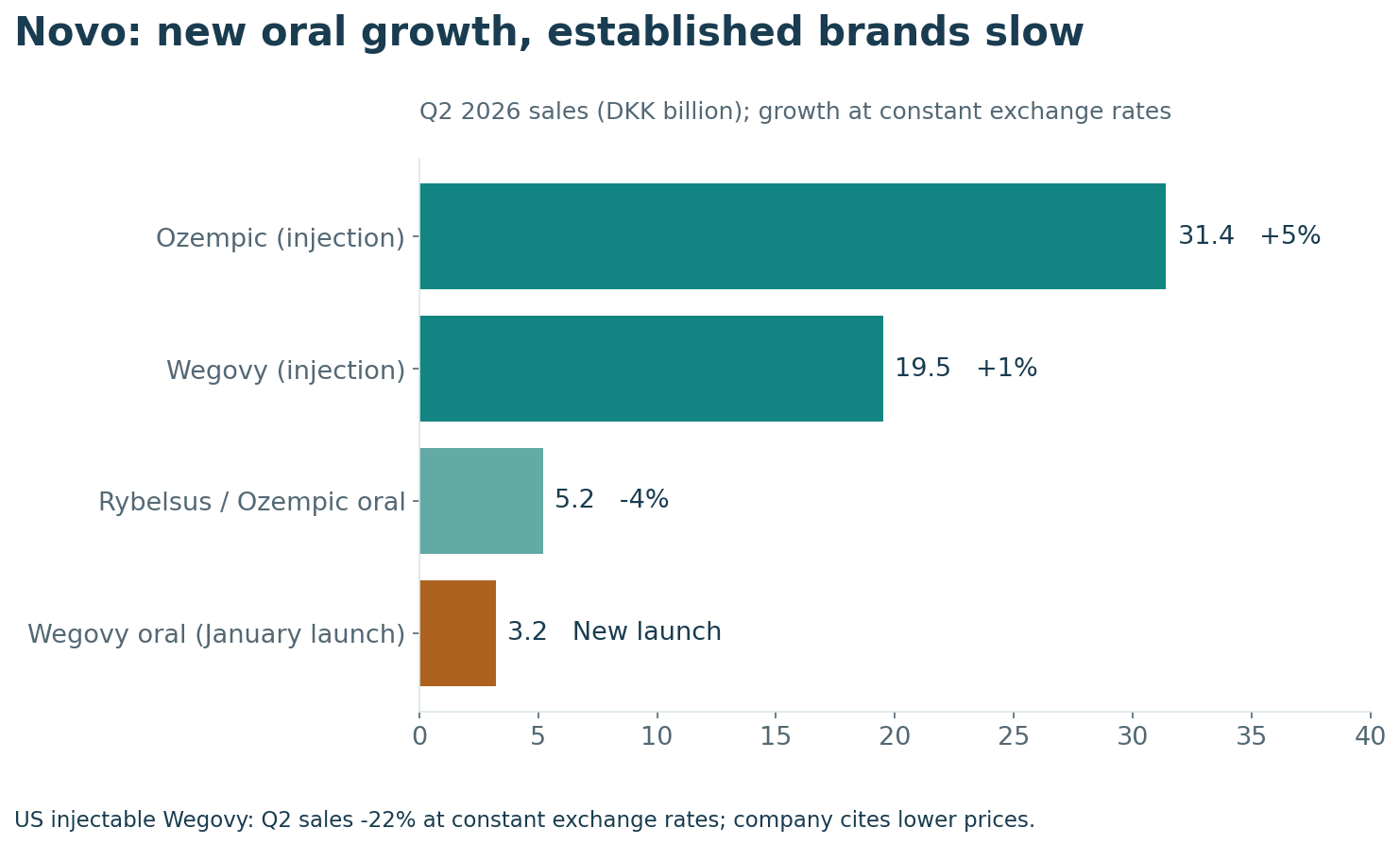
Figure 2 | Ozempic and injectable Wegovy remain the primary contributors, but growth has nearly stalled; oral Wegovy, launched in January, is the only notable source of incremental volume. Source: S04 (2026-08-04)
The most critical line is in the U.S.: injectable Wegovy declined 22% year-over-year at constant exchange rates in the second quarter, which the company attributed to lower realized prices; during the same period, international markets grew 46% [S04; 2026-08-04]. In other words, volume in the U.S. did not disappear, but was diluted by lower pricing and shared with the oral formulation.
Looking at the first half overall, Novo's adjusted revenue was DKK 148.55 billion, up 2% at constant exchange rates; within this, the U.S. fell 4% year-over-year on an adjusted basis, while international markets grew 8% [S04; 2026-08-04]. Growth in international markets was partially offset by loss of exclusivity in regions such as Canada and price reductions in China, which will be discussed further in Chapter 06.
The profitability picture was not as bleak as revenue. Novo's adjusted operating profit in the second quarter was DKK 33.39 billion, up 11% at constant exchange rates; the full-year free cash flow guidance was raised from DKK 36.0 billion–DKK 46.0 billion to DKK 45.0 billion–DKK 55.0 billion [S04; 2026-08-04]. The company explained that savings from organizational streamlining were already reflected in lower sales and distribution costs.
Novo's full-year guidance trajectory moved in the same direction as Lilly's, though from a different baseline. In February, adjusted sales growth was projected at −5% to −13% year-over-year, revised in May to −4% to −12%, and revised again in August to 0% to −6%, primarily driven by higher GLP-1 sales expectations [S05; 2026-02-03][S04; 2026-08-04].
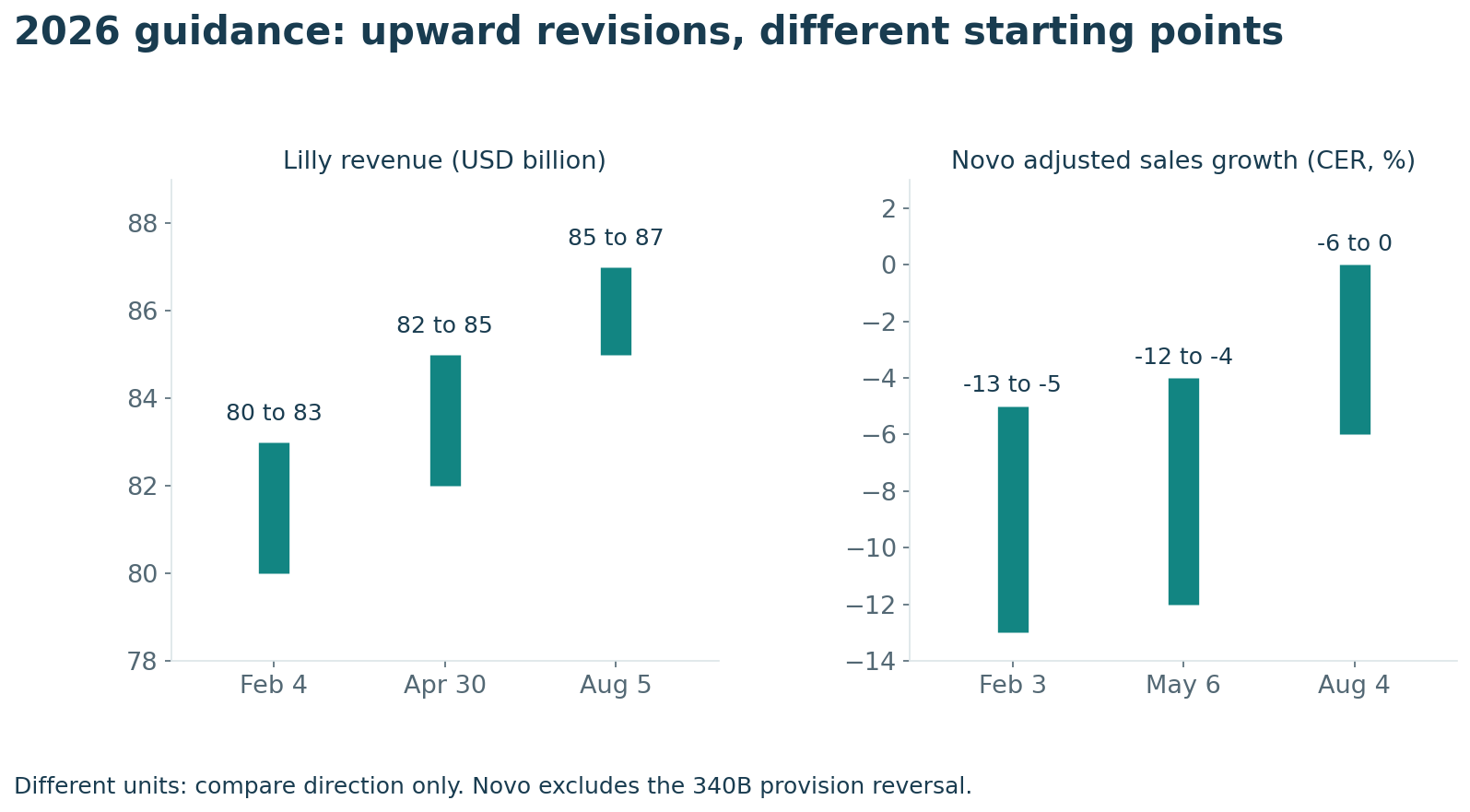
Figure 3 | Lilly's guidance is in revenue figures, while Novo's guidance is in adjusted sales year-over-year growth rates; units differ, and only directions are compared. Sources: S01 (2026-08-05), S02 (2026-04-30), S03 (2026-02-04), S04 (2026-08-04), S05 (2026-02-03)
Table 1 Key Highlights for Both Companies in Q2 2026 (in respective reporting currencies)
| Item | Lilly (USD) | Novo (DKK) |
|---|---|---|
| Q2 Revenue | 22.97 billion, +48% YoY [S01; 2026-08-05] | 78.49 billion, CER +3%, adjusted +7% [S04; 2026-08-04] |
| Major Injectables | Mounjaro 9.94 billion, Zepbound 4.93 billion [S01; 2026-08-05] | Ozempic 31.38 billion, Wegovy injectable 19.48 billion [S04; 2026-08-04] |
| New Oral Products | Foundayo 0.098 billion [S01; 2026-08-05] | Wegovy oral 3.22 billion [S04; 2026-08-04] |
| Price Signals | Global realized price −13%, U.S. −3% [S01; 2026-08-05] | U.S. Wegovy injectable CER −22% [S04; 2026-08-04] |
| 2026 Guidance | Revenue 85.0 billion to 87.0 billion [S01; 2026-08-05] | Adjusted sales 0% to −6% [S04; 2026-08-04] |
Summing Novo's four semaglutide products in the second quarter yields approximately DKK 59.3 billion, accounting for about 76% of revenue. Converted at Novo's disclosed first-half average exchange rate of DKK 640 per USD 100, this is approximately $9.3 billion; Lilly's tirzepatide and Foundayo were approximately 1.6 times that amount (authors' calculation, noting differences in exchange rate conventions) [S04; 2026-08-04][S01; 2026-08-05].
Novo is also downsizing. In September 2025, it announced plans to eliminate approximately 9,000 positions, expecting to save about DKK 8 billion annually by the end of 2026, which will be redirected into diabetes and obesity commercial and R&D operations [S24; 2025-09-10]. This is reserving ammunition for the price war, not exiting the race. As of the second quarter, Novo had approximately 66,700 employees across 80 countries [S04; 2026-08-04].
02 The U.S. Price Ladder: List Prices Step Down, Payers Multiply
Chapter assessment: U.S. obesity medications are shifting from "high list price, low reimbursement" to "low net price, multi-channel." The number of patients who can afford treatment is increasing, but revenue generated per patient for manufacturers is declining; whoever maintains lower unit costs will be the one able to sustain this transition.
First, distinguish among several types of prices. List price (WAC) is the catalog price at which pharmaceutical companies sell to wholesalers; realized price is the net price manufacturers actually receive after deducting rebates and discounts; patient out-of-pocket costs depend on insurance coverage or self-pay programs. In financial reports, "price decline" refers to realized prices, not list prices.
One Agreement Rewrites Four Channels
On November 6, 2025, the White House announced an agreement with Lilly and Novo: the Medicare price for Ozempic, Wegovy, Mounjaro, and Zepbound was set at $245 per month, with state Medicaid also eligible to acquire them at the same price; Medicare beneficiaries pay $50 out-of-pocket per month [S06; 2025-11-06].
The Medicaid component is less clear. While the agreement allows states to acquire these medications at the same price, whether to include them in coverage is determined by each state individually [S06; 2025-11-06][S07; 2025-11-06]. As of the data cutoff date, this article found no official statistics on the number of states that have adopted this, and therefore does not estimate Medicaid volume.
The same briefing also established self-pay prices: purchases of Wegovy and Ozempic via TrumpRx were reduced to $350 per month, Zepbound and orforglipron averaged $346, and the oral starting dose was $150 [S06; 2025-11-06]. TrumpRx is a price-comparison and referral website established by the federal government that directs patients to manufacturers' self-pay channels.
Lilly's version included additional conditions of exchange. The company stated that it would receive three years of tariff relief, exemption from future pricing mandates, and invest over $50 billion in U.S. manufacturing; the agreement entails no pricing obligations for commercial insurance [S07; 2025-11-06]. This implies that drug price reductions were traded for policy certainty and localized manufacturing.
The same press release also mentioned that Lilly will offer self-pay purchases of Mounjaro, Trulicity, and other drugs on LillyDirect at a 50% to 60% discount off the list price [S07; 2025-11-06]. Drawing Mounjaro, used for diabetes, into direct-to-consumer self-pay indicates that price reductions are not confined solely to obesity indications.
TrumpRx launched on February 5, 2026. The comparison released by the White House showed: injectable Wegovy dropped from $1,349 per month to an average of $350, with a low of $199; oral Wegovy reached a low of $149; Zepbound dropped from $1,088 to an average of $346, with a low of $299 [S10; 2026-02-05]. In September, the White House stated that patients had saved more than $700 million since the launch of TrumpRx, but it did not break down the proportion attributable to obesity medications, nor did it explain the calculation methodology [S11; 2026-09-18].
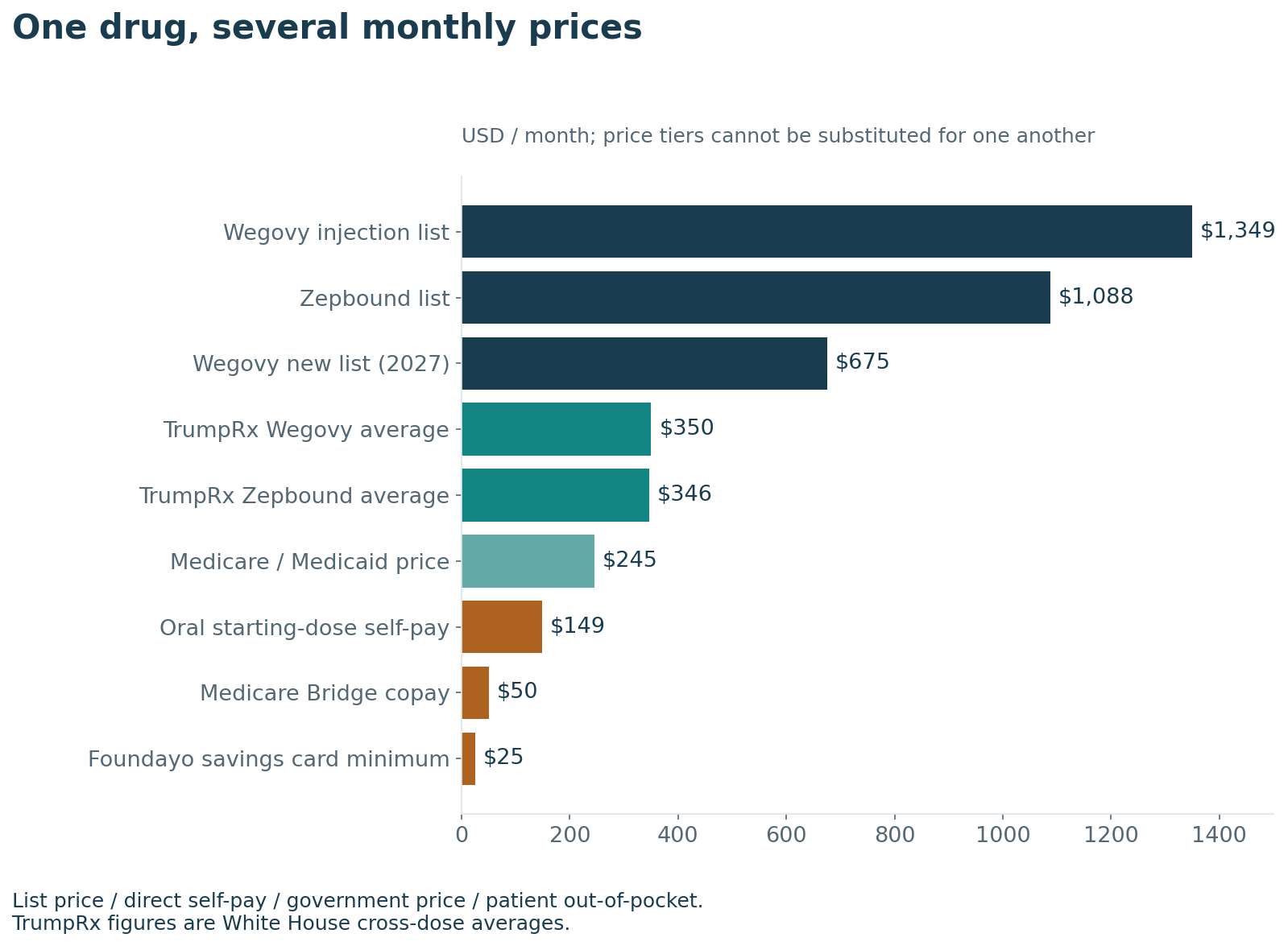
Figure 4 | List price, direct-to-consumer self-pay price, government-reimbursed price, and patient out-of-pocket costs represent distinct tiers of pricing; multiple figures can coexist simultaneously for the same drug. Sources: S04 (2026-08-04), S06 (2025-11-06), S09 (2026-06), S10 (2026-02-05), S13 (2026-04-09)
Medicare Bridge: Open the Door First, Check the Bill Later
The Medicare GLP-1 Bridge took effect on July 1, 2026, running through December 31, 2027. It is operated outside the Part D payment workflow by a single central processor contracted by CMS responsible for prior authorization, claims adjudication, and pharmacy reimbursement; Part D plans bear no risk [S08; 2026-07-13].
Eligibility criteria are not lenient. Patients must have Part D and a BMI of 35 or higher; or a BMI of 30 or higher combined with specific heart failure, uncontrolled hypertension, or stage 3a or higher chronic kidney disease; or a BMI of 27 or higher combined with prediabetes, a history of myocardial infarction, stroke, or peripheral artery disease. Those with conditions already eligible for plan coverage, such as type 2 diabetes, are excluded [S09; 2026-06].
Operationally, after a physician writes a prescription and the pharmacy verifies eligibility, the physician submits a form to request Medicare approval; refills do not require reapplication even if the dose is adjusted for the same medication [S09; 2026-06]. This $50 does not count toward the Part D annual out-of-pocket maximum, nor is there a low-income subsidy [S08; 2026-07-13].
For pharmaceutical manufacturers, the Bridge opens up a demographic that previously had virtually no coverage. Novo stated in its financial report that the Bridge covers the majority of Medicare beneficiaries [S04; 2026-08-04]. However, because it excludes patients such as those with diabetes whose GLP-1 treatments are already covered by plans, the incremental volume primarily stems from individuals with "obesity and related risks only"—an inference made in this article based on the eligibility criteria [S09; 2026-06].
The drug formulary also reveals a linkage between capacity and pricing: it covers Foundayo, injectable and tablet Wegovy, while covering Zepbound only in multi-dose KwikPens, excluding single-dose pens and vials [S09; 2026-06]. Multi-dose pens allow multiple doses to share a single device, which leads to lower per-dose device costs (an inference); this aligns with Lilly setting the self-pay price for multi-dose pens between $299 and $449 [S07; 2025-11-06].
CMS indicated that the Bridge was extended to collect medication utilization data ahead of the potential implementation of the BALANCE model [S08; 2026-07-13]. Whether routine coverage will continue after the end of 2027 remains unknown as of the data cutoff date; this represents one of the largest policy variables for Lilly and Novo's 2028 revenue.
List Prices Themselves Are Also Receding
Novo’s earlier announcement sets a monthly wholesale list price of $675 for specified Wegovy, Ozempic and Rybelsus strengths starting January 1, 2027, with separate self-pay offers. CMS refreshed its statutory negotiated-price list in November. The negotiated price for applicable Ozempic, Rybelsus and Wegovy products is $274 per 30-day supply, effective the same day. The Bridge separately has a $245 monthly net price and a $50 copay for eligible beneficiaries. [O-WAC] [O-MFP] [O-MFA] [O-BRI]
On Lilly's side, the first quarter had already noted that previously announced out-of-pocket price cuts weighed on realized prices [S02; 2026-04-30]. Lilly cited a survey stating that roughly half of Americans with employer-sponsored insurance lack coverage for obesity medications [S13; 2026-04-09]. For those with commercial insurance coverage, the Foundayo savings card offers costs as low as $25 per month, though government insurance beneficiaries are ineligible [S13; 2026-04-09]. Commercial insurance remains a coverage gap, which is also why out-of-pocket direct-to-consumer channels have been able to grow.
Inference: Medicare government prices are approximately 80% lower than Wegovy's original list price and nearly 80% lower than Zepbound's original list price (calculated by the author) [S06; 2025-11-06][S10; 2026-02-05], making it difficult for drugmakers' unit revenues in the US to return to past levels. The key for financial reports over the next two years will not be unit price, but whether prescription volume growth can consistently outpace the magnitude of price declines.
The two companies also have different exposure to US pricing. Lilly's second-quarter US revenue reached $14.4 billion, accounting for approximately 63%; Novo's reported second-quarter US revenue was DKK 40.87 billion, accounting for approximately 52% (calculated by the author) [S01; 2026-08-05][S04; 2026-08-04]. With each step downward in US pricing, Lilly has a larger share of revenue exposed, though its volume is currently growing at a faster pace.
Lilly’s agreement with Hims & Hers gives eligible patients with a prescription access to Lilly’s existing self-pay prices on the platform. Monthly prices start at $149 for Foundayo and $299 for Zepbound. The CMS annual report restates the Bridge end date as the end of 2027. Novo reported that the three largest U.S. pharmacy benefit managers added Wegovy HD to their standard formularies. Individual coverage remains plan-specific. [O-HIM] [O-CMS] [O-NOV]
03 The Oral Battle: Pills Alter Supply, Not Just Convenience
Chapter assessment: The weight loss magnitude of oral GLP-1s is currently lower than that of the most potent injectables, but they unlock new patients and distribution channels. The two companies chose distinct chemical pathways: Novo formulated a peptide into tablets, while Lilly utilized a small molecule; this choice will determine the winner in manufacturing capacity and cost.
Oral Wegovy: The Fastest Out of the Gate
On December 22, 2025, the FDA approved once-daily 25 mg semaglutide tablets for weight management and reducing the risk of major adverse cardiovascular events; the OASIS 4 trial demonstrated an average weight loss of 16.6% under the assumption of full adherence [S15; 2025-12-22]. This figure is an estimate of "if all patients adhered to treatment," not the actual real-world outcome across all participants.
Novo launched in the US on January 5, 2026, with an out-of-pocket price ranging from $149 to $299 per month [S05; 2026-02-03]. By the week of July 17, weekly prescriptions for oral Wegovy exceeded 265,000, bringing cumulative prescriptions since launch to over 5 million; weekly prescriptions for the entire Wegovy portfolio stood at approximately 575,000, with injectables accounting for around 310,000 [S04; 2026-08-04].
The growth curve has been steep. In the week of January 23, weekly prescriptions for oral Wegovy were approximately 50,000, predominantly for the 1.5 mg starting dose [S05; 2026-02-03]; half a year later, that figure surpassed 265,000. Revenue rose from approximately DKK 2.26 billion in the first quarter to DKK 3.22 billion in the second quarter, representing a quarter-over-quarter increase of approximately 43% (deduced by subtracting the second quarter from first-half figures) [S04; 2026-08-04].
Out-of-pocket pricing is tiered by dose, spanning $149 to $299 [S05; 2026-02-03]. Inference: When prescriptions are heavily concentrated in the starting dose, revenue per prescription is relatively low; only after patients titrate upward will revenue per prescription increase, which means revenue growth may lag prescription volume growth for some time.
Internationally, oral Wegovy launched in the UAE in June, launched in the UK in July, and secured EU approval [S04; 2026-08-04]. The company described this as the strongest GLP-1 launch momentum in US history; however, this is a self-reported corporate characterization with undisclosed comparative benchmarks.
Will oral cannibalize injectable formulations? In the week of mid-July, oral Wegovy accounted for approximately 46% of weekly prescriptions across the entire Wegovy portfolio (calculated by the author by dividing 265,000 by 575,000) [S04; 2026-08-04]. In the same quarter, US injectable Wegovy revenue fell 22% year-over-year; while pricing was the primary reason cited by the company, a prescription shift toward oral is very likely also a contributing factor—this is an inference.
For Novo, this is a double-edged sword. The oral form brings in new patients, but also transitions some patients who otherwise would have used injectables into the $149 to $299 monthly price band [S05; 2026-02-03]. If the unit cost of oral is elevated due to higher active pharmaceutical ingredient (API) consumption, gross margins could come under pressure; this is likewise an inference, as the company does not disclose gross margins by dosage form.
Foundayo: Small Molecule, Fast Review, One Quarter Slower
Lilly's orforglipron, branded as Foundayo, received FDA approval on April 1, 2026. This was the first new molecular entity approval under the Commissioner's National Priority Voucher (a pilot program for accelerated review), completed 50 days post-submission, which the FDA described as the fastest new molecular entity approval since 2002 [S12; 2026-04-01].
In the 72-week ATTAIN-1 trial, continuous users on the highest dose achieved an average weight loss of 12.4%, with an estimate regardless of whether patients completed the trial of 11.1%, compared to 0.9% and 2.1% for placebo, respectively [S13; 2026-04-09]. Foundayo entered retail pharmacies on April 9, with an out-of-pocket price of $149 per month for the lowest dose [S13; 2026-04-09]. It comes in six dose strengths ranging from 0.8 to 17.2 mg, and has been covered under Medicare Bridge since July 1 [S13; 2026-04-09][S09; 2026-06].
An easily overlooked structural shift is present here: under Bridge, patients pay a $50 monthly copay regardless of whether they choose oral or injectable [S09; 2026-06]. Once the price gap vanishes, choices will hinge strictly on efficacy, tolerability, and administration convenience; by inference, this favors injectables offering greater weight loss, while neutralizing the pricing advantage of oral medications.
Foundayo posted second-quarter revenue of $98 million [S01; 2026-08-05]. In the same quarter, oral Wegovy recorded DKK 3.22 billion, approximately equivalent to $500 million based on the average exchange rate for the first half (converted by the author) [S04; 2026-08-04]. However, there is a three-month gap between their respective launch dates, and oral Wegovy was already in its second quarter on the market, meaning this comparison cannot be taken directly as a market share conclusion.
Lilly stated that Foundayo is under regulatory review in more than 40 countries, aiming to complete its global rollout by 2027; a US submission for the type 2 diabetes indication has also been filed [S22; 2026-09-21][S01; 2026-08-05]. This represents a broader geographic footprint than oral Wegovy, with success contingent on national regulatory reviews and pricing.
The API Arithmetic Behind the Pill
Oral peptides have low bioavailability, which necessitates higher doses. The maintenance dose for injectable Wegovy is 2.4 mg weekly, with a high-dose version at 7.2 mg; the tablet formulation is 25 mg once daily [S04; 2026-08-04][S15; 2025-12-22]. Converted to a weekly dose, 175 mg of tablets is approximately 73 times that of the standard injection, and approximately 24 times that of the 7.2 mg high-dose injection (author's calculation).
This does not necessarily mean Novo will face an API shortage, as the company's 2026 capital expenditure remains focused primarily on active pharmaceutical ingredients (API) and fill-finish operations [S05; 2026-02-03]. However, it does mean that each incremental patient on oral semaglutide exerts a substantially larger pull on peptide API supply than one on the injectable form.
Lilly, by contrast, has explicitly stated that Foundayo is a small molecule rather than a peptide, and is investing $6.5 billion in Houston to construct an API manufacturing facility to supply products including Foundayo [S22; 2026-09-21]. Deduction: Small molecules can be scaled via traditional chemical synthesis without requiring peptide synthesis, aseptic fill-finish, or autoinjector pens; should demand scale into the tens of millions of patients, this offers a structural cost advantage.
In Q3, U.S. Wegovy pill sales were DKK 4.178 billion, with about 3.6 million prescriptions in the quarter. The number of launch markets went from four at quarter-end to eight by the earnings release. Foundayo had $184 million in global Q3 sales. The products have different launch dates and market footprints, and their sales are reported in different currencies. [O-NOV] [O-LIL]
Lilly reported Phase 3 ATTAIN-OSA results. In the trial without positive airway pressure, the apnea-hypopnea index fell 43.8% from baseline with Foundayo and 6.3% with placebo at 52 weeks under the efficacy estimand. Lilly targets a U.S. filing for moderate to severe obstructive sleep apnea by the end of 2026. [O-OSA]
04 Next-Generation Mechanisms: Weight Loss Figures Keep Climbing, Timelines Become Capacity-Driven
This chapter's assessment: Next-generation therapies are pushing mean weight loss toward 30%, yet gaps within class are narrowing; whether a candidate reaches the market first increasingly hinges on manufacturing data packages rather than solely on clinical outcomes.
Before examining the figures, a distinction between two estimands is warranted. The "efficacy estimand" assumes full adherence to the protocol and yields higher numbers; the "treatment-regimen estimand" includes patients regardless of discontinuation, more closely reflecting real-world conditions. A wider gap between the two highlights a greater impact of discontinuation or non-adherence.
Triple Agonism: Retatrutide
Retatrutide acts simultaneously on GIP, GLP-1, and glucagon receptors; the former two suppress appetite and regulate blood glucose, while glucagon receptor activation is believed to increase energy expenditure. In the 80-week TRIUMPH-1 trial, the 12 mg cohort achieved a mean weight reduction of 28.3% (25.0% under the treatment-regimen estimand), compared with 2.2% and 3.9% for placebo [S16; 2026-05-21]. This trial enrolled 2,339 participants, with an extension to 104 weeks for an additional 532 participants with a BMI of 35 or higher [S16; 2026-05-21].
Side effects and treatment discontinuations represent the other side of the coin. The discontinuation rate due to adverse events was 11.3% in the 12 mg group versus 4.9% for placebo [S16; 2026-05-21]. In TRIUMPH-3, which enrolled patients with comorbid cardiovascular disease and a BMI of 35 or higher, the 12 mg group achieved a 22.6% weight reduction with a discontinuation rate of 13.5% [S17; 2026-07-23].
In TRIUMPH-2 in patients with comorbid type 2 diabetes, the 12 mg cohort demonstrated a 20.8% weight reduction at 80 weeks, with HbA1c declining by 1.5 percentage points from a baseline of 7.7%, compared to a 0.2 percentage point drop for placebo [S17; 2026-07-23]. This positions retatrutide with pathways in both obesity and diabetes.
The most notable remark pertained not to efficacy, but to manufacturing: Lilly stated that it is finalizing the chemistry, manufacturing, and controls (CMC) package, targeting a US filing in the first quarter of 2027 [S17; 2026-07-23]. The CMC package consists of documentation proving the ability to consistently manufacture a drug of identical quality at scale. In August, Lilly announced that the clinical data package for the obesity indication was complete [S01; 2026-08-05]—in other words, the submission timeline hinges on manufacturing documentation.
Novo’s Near-Term Arsenal: Doses and Combinations
Novo first deployed higher dosing. On March 19, 2026, the FDA approved Wegovy 7.2 mg injection—marking the fourth approval under the priority review voucher program, completed 54 days post-submission [S14; 2026-03-19]. The FDA did not specify weight loss percentages in its press release, stating only that it yielded additional weight loss compared to the original dose. For patients with comorbid type 2 diabetes, the reduction in HbA1c with the high dose was comparable to that of the original dose [S14; 2026-03-19].
Amylin is a hormone co-secreted with insulin by the pancreas that delays gastric emptying and promotes satiety. Novo’s CagriSema combines the amylin analog cagrilintide with semaglutide; submitted to the FDA in December 2025, a US regulatory decision is expected in the fourth quarter of 2026 [S18; 2026-02-23][S04; 2026-08-04].
However, head-to-head comparisons were less favorable. In the 84-week open-label REDEFINE 4 trial, CagriSema achieved a mean weight reduction of 23.0% versus 25.5% for tirzepatide; under the treatment-regimen estimand, it was 20.2% versus 23.6%, failing to meet the primary endpoint of non-inferiority [S18; 2026-02-23]. In REIMAGINE 4 in type 2 diabetes, weight loss was non-inferior to tirzepatide, but it failed to achieve non-inferiority for HbA1c reduction [S04; 2026-08-04].
Novo’s next move is dose escalation and indication expansion: the company plans to initiate a Phase 3 trial for a high-dose 2.4/7.2 mg CagriSema regimen in the second half of 2026, with REDEFINE 11 data expected in the first half of 2027 [S18; 2026-02-23].
The Amylin Challengers
Competitors are in close pursuit. In Phase 2, Lilly's eloralintide achieved up to a 20.1% weight reduction at 48 weeks, compared to 0.4% for placebo [S19; 2025-11-06]. Zealand and Roche have initiated Phase 3 trials for petrelintide, with three trials projected to enroll approximately 7,000 participants [S20; 2026-10-07].
Pfizer acquired Metsera at an enterprise value of approximately $7 billion, securing GLP-1 candidates administrable weekly or monthly, as well as a once-monthly amylin candidate [S21; 2025-11-13]. The transaction consideration consists of $65.60 per share in cash, plus contingent value rights (CVRs) of up to $20.65 [S21; 2025-11-13]; petrelintide will also be developed in combination with Roche’s enicepatide [S20; 2026-10-07].
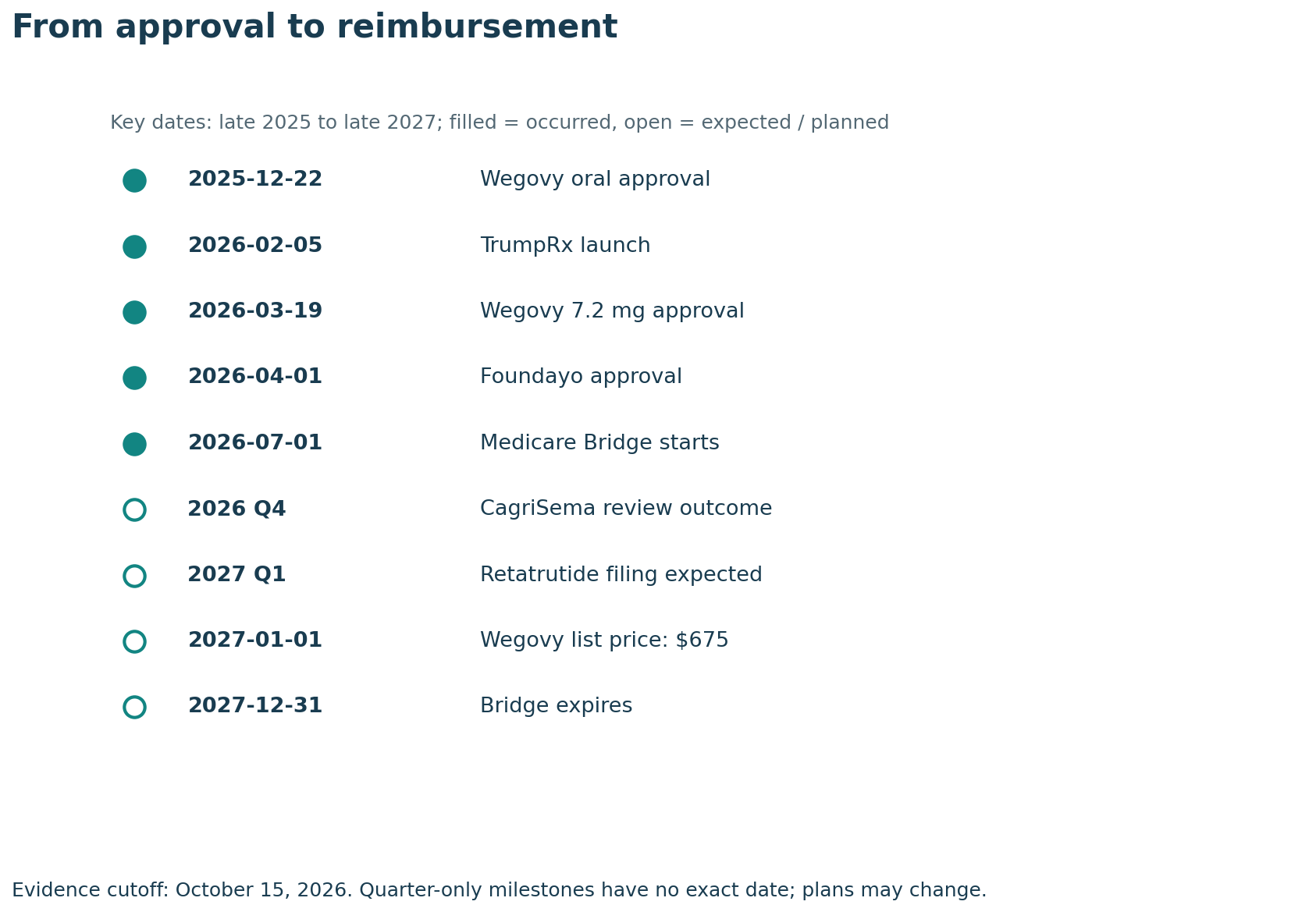
Figure 5 | Approval and reimbursement events that have already occurred were concentrated in the first half of 2026; the next batch of milestones includes the CagriSema review, 2027 list price reductions, and the retatrutide filing. Source: S04 (2026-08-04), S05 (2026-02-03), S08 (2026-07-13), S10 (2026-02-05), S12 (2026-04-01), S14 (2026-03-19), S17 (2026-07-23)
Inference: When the best drugs achieve between 20% and 28%, a difference of a few percentage points carries limited significance for most payers. The next round of differentiation may come from discontinuation rates, dosing intervals (weekly vs. monthly), oral versus injectable formats, and the ability to supply at scale at lower costs.
Lilly reported Phase 3 topline results from TRANSCEND-T2D-2 in adults with type 2 diabetes. At 80 weeks, under the efficacy estimand, weight loss was 20.9% with the highest retatrutide dose and 9.4% with the Ozempic comparator. The comparison used Ozempic for type 2 diabetes. [O-RET]
Novo reported Phase 3 REDEFINE 9 results in adults with overweight or obesity. At 68 weeks, the treatment-regimen estimand showed weight loss of 19.4% and 18.6% for the higher and lower CagriSema doses and 4.6% for pooled placebo. The trial was designed for comparisons of each dose against placebo. Novo’s expected U.S. decision window remains Q4 2026. [O-CAG]
05 Capacity: From Scrambling for Supply to Choosing the Right Capacity
Chapter assessment: GLP-1 has moved from the "shortage" phase to the "capacity allocation" phase. The question is no longer whether there is enough, but whether it is cheap enough and in the right form: peptides or small molecules, single-dose pens or multi-dose pens, injectables or tablets.
World Health Organization estimates provide background: even with rapid production growth, by 2030 GLP-1 drugs will still reach less than 10% of potential beneficiaries [S40; 2025-12-01]. While global demand far exceeds supply, capacity surplus and shortage may emerge simultaneously: insufficient cheap, right-fit capacity alongside an excess of expensive or wrong-format capacity—this is an inference.
The Era of Shortages Has Officially Ended
On October 2, 2024, the FDA determined that the tirzepatide shortage was resolved, reissuing the decision on December 19; the semaglutide shortage was resolved on February 21, 2025 [S25; 2026-04-01]. With shortages resolved, the rationale for mass pharmacy compounding disappeared, a topic discussed in the next chapter.
Novo’s acquisitions were a product of the previous shortage cycle. Novo Holdings acquired Catalent at an enterprise value of approximately $16.5 billion, completing the deal on December 18, 2024, whereupon Novo Nordisk acquired three fill-finish sites in Anagni (Italy), Bloomington (US), and Brussels (Belgium) [S23; 2024-12-18] for $11.7 billion [S05; 2026-02-03].
Why fill-finish plants? After peptide active pharmaceutical ingredients (APIs) for injectable GLP-1s are manufactured, they must be formulated in a sterile environment, filled into cartridges or prefilled pens, and then assembled into injector pens. This stage requires specialized equipment, and new production lines must undergo validation and regulatory approval. Because expansion takes time, this step became a bottleneck during the shortage and a prime target for acquisitions.
From Capacity Expansion to "Slimming Down" Capacity Contracts
Novo’s capital expenditures totaled DKK 60.1 billion in 2025, with approximately DKK 55 billion projected for 2026, primarily allocated to API and fill-finish capacity [S05; 2026-02-03]. First-half capital expenditures were DKK 24.0 billion, down 15% year-over-year [S04; 2026-08-04]. Investment remains substantial, but has moved downward from its peak.
More notably, Novo recognized an approximately DKK 3.0 billion one-time cost in gross profit in the second quarter due to "adjusting the scale of capacity contracts" [S04; 2026-08-04]. Inference: at least a portion of outsourced capacity has exceeded Novo's current demand or pricing structure, turning contracts signed during shortages into a cost burden.
Lilly: Betting Capacity on the US and Small Molecules
Since 2020, Lilly has announced ten manufacturing sites in the United States: five API plants, four injectable and device plants, and one genetic medicine plant; its $6.5 billion Houston API facility will manufacture small molecules and oligonucleotides such as Foundayo, creating over 600 jobs [S22; 2026-09-21]. The construction period involves an additional approximately 4,000 construction jobs [S22; 2026-09-21].
The four injectable and device plants are located in Research Triangle Park and Concord, North Carolina; Kenosha, Wisconsin; and Lehigh Valley, Pennsylvania [S22; 2026-09-21]. Expanding both injector pens and small-molecule API lines simultaneously amounts to betting on both injectables and oral formulations at the same time.
In Q2, Lilly additionally committed $4.5 billion to expand facilities in Indiana [S01; 2026-08-05]. These investments echo the aforementioned exchange for tariff relief [S07; 2025-11-06]. The risk is that if prices fall faster than volumes grow, large fixed assets will depress returns—a factor that will only become visible once depreciation begins.
How Capacity Impacts Price and Timelines
Three signals are worth examining together: first, Medicare covers only the multi-dose pen of Zepbound [S09; 2026-06]; second, the retatrutide filing is waiting on CMC data [S17; 2026-07-23]; third, weekly dosage for oral peptides is tens of times that of injectables (author's calculation). Capacity is no longer merely a supply-side topic; it directly influences pricing and launch timelines.
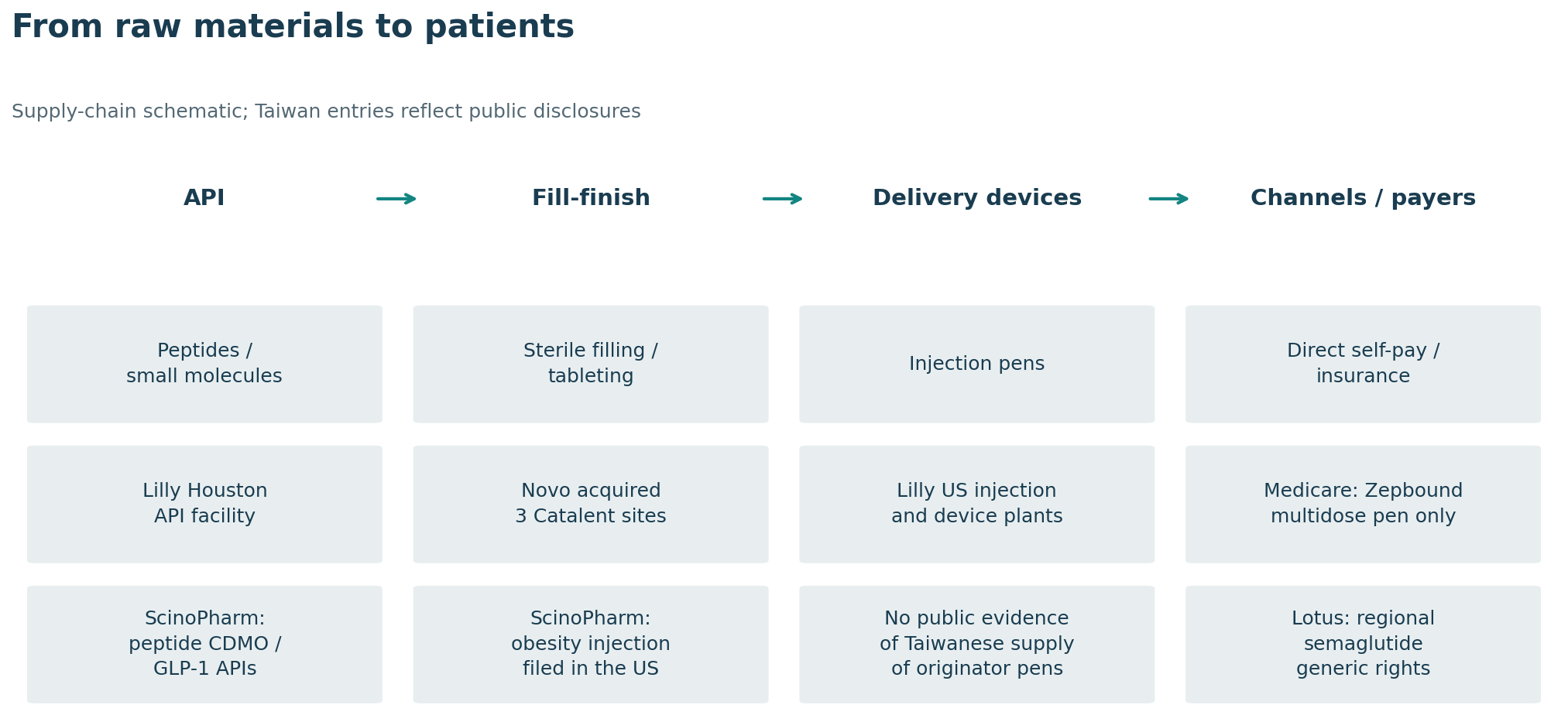
Figure 6 | Schematic. Major pharmaceutical players are making moves across the four links: API, fill-finish, drug delivery devices, and reimbursement channels; Taiwan's publicly identifiable positioning is concentrated in peptide APIs, CDMO, and generic licensing. Source: S04 (2026-08-04), S05 (2026-02-03), S09 (2026-06), S22 (2026-09-21), S33 (2026-08-17), S34 (2026-10-15), S35 (2025-10-08)
Novo also recognized a DKK 4.061 billion impairment from resizing its manufacturing network in Q3. It reflects a change in the carrying value of assets. Usable output remains the measure of supply capacity. [O-NOV]
06 Compounded Drugs Recede as Generics Open Doors Outside the US
Chapter assessment: The compounded gray market in the US is being squeezed from both sides by regulation and price cuts; concurrently, semaglutide patents are expiring in certain countries, allowing generics to gradually turn this molecule into a commodity outside the US.
Compounding: Grace Periods End, Enforcement Escalates
Compounded drugs are unapproved medications prepared by pharmacies that were permitted for mass production during shortages; 503A refers to standard compounding pharmacies, and 503B refers to outsourcing manufacturing facilities. The 503A grace period for tirzepatide ended after a court dismissal in March 2025, while that for 503B outsourcing facilities ended on March 19; semaglutide grace periods ended in April and on May 22, respectively [S25; 2026-04-01].
The market did not disappear immediately after the grace period ended. Novo cited its own market research stating that substantial compounding persists at a largely unchanged scale [S05; 2026-02-03]. This is the drugmaker's assertion; by inference, this is also one reason why both companies pushed out-of-pocket prices down to the range of $149 to $350 per month [S10; 2026-02-05].
On February 6, 2026, the FDA stated it would restrict GLP-1 active pharmaceutical ingredients (APIs) used in unapproved compounded products, naming companies including Hims & Hers [S26; 2026-02-06]. The FDA Commissioner also warned that operators could face legal actions such as seizures or injunctions without further notice [S26; 2026-02-06]. On March 3, warning letters were further issued to 30 telehealth providers for implying that compounded versions were equivalent to approved drugs [S27; 2026-03-03].
In the same announcement, the FDA specifically distinguished between two things: compounded drugs are not approved by the FDA, whereas generic drugs must be approved by the FDA [S27; 2026-03-03]. As semaglutide enters the generic era in more countries, this distinction will determine which low-cost products can legally enter legitimate channels.
An FDA page updated on October 1 noted that an import green list alert for GLP-1 active pharmaceutical ingredients has been established to prevent raw materials of questionable quality from entering the United States; as of May 31, 2026, it had received 990 adverse event reports for compounded semaglutide and over 730 for compounded tirzepatide [S28; 2026-10-01]. The FDA also cautioned that standard compounding pharmacies are not required to report to the FDA, so the actual number of cases may be higher [S28; 2026-10-01].
The same page also mentioned that the FDA has warned telehealth providers marketing unapproved retatrutide [S28; 2026-10-01]. Inference: when out-of-pocket prices for approved drugs drop to several hundred dollars, narrowing the price advantage of compounded versions, the grey market may shift toward unapproved, next-generation molecules.
Generics: Canada Opens the Door First
Novo explicitly stated in its financial report that the compound patent for semaglutide has expired in certain markets, and the loss of exclusivity in Canada has depressed realized prices [S04; 2026-08-04]. On April 29, 2026, Dr. Reddy's announced that it received Canada's first marketing approval for generic semaglutide injection [S29; 2026-04-29].
Dr. Reddy's stated that its active pharmaceutical ingredients are entirely self-manufactured, while finished dosage forms are produced by a partner; it also cited IQVIA data indicating that Canada is the world's second-largest semaglutide market [S29; 2026-04-29]. The products are 2 mg and 4 mg prefilled injector pens [S29; 2026-04-29]. This is a typical approach of generic drug companies integrating upstream, and it also illustrates that peptide APIs are a core competency in generic competition.
China is another source of price pressure. Lilly's realized prices outside the United States fell 36% in the second quarter, primarily due to Mounjaro's inclusion in China's National Reimbursement Drug List [S01; 2026-08-05]; Novo also noted that Wegovy's realized price in China trended lower after list prices were lowered in late Q4 2025 [S04; 2026-08-04]. Trading price for volume is occurring simultaneously outside the United States.
This also offers insights for Taiwan. Taiwan's regulatory approach focuses primarily on licenses, distribution tracing, and online inspections [S36; 2026-03-21]; by inference, the true future price variable will be the timing of generic drug launches in Taiwan. Lotus Pharmaceutical has acquired rights in Taiwan [S35; 2025-10-08], but the launch date has not been announced.
Inference: Outside the United States, semaglutide is transitioning from an innovator brand into a multi-source molecule. While this represents pricing pressure for originator manufacturers, for suppliers with peptide API and sterile fill-finish capabilities, it represents a new source of customers.
The FDA required GLP-1 receptor agonist labels to carry a warning about the safety signal for non-arteritic anterior ischemic optic neuropathy (NAION). The requirement applies at the drug-class level. Updated labels will record the warning for individual products. [O-FDA]
07 Taiwan: NHI Does Not Cover Weight Loss; Opportunities Lie in the Supply Chain
Chapter Assessment: Taiwan's weight-loss drug market is an out-of-pocket self-pay market lacking official data on its market size; National Health Insurance (NHI) covers only glycemic control for diabetes. For Taiwan's industry, more practical entry points lie in peptide APIs, CDMO, and generic licensing, rather than waiting for NHI reimbursement.
Demand Side: Half of Adults Are Overweight; NHI Covers Glycemic Control Only
The Health Promotion Administration's National Nutrition and Health Survey from 2020 to 2024 shows that 51.3% of adults aged 18 and older met the criteria for overweight or obesity [S32; 2026-03-04]. The underlying demand base is massive, but this does not equate to a medication market, as most individuals do not meet medication criteria and may not be willing to pay out-of-pocket.
Regarding National Health Insurance, GLP-1 medications are reimbursed only for glycemic control, with weight loss paid out-of-pocket. National Health Insurance Administration data indicate that between 2020 and 2024, the number of NHI GLP-1 users increased from 37,000 to 56,000, and reimbursed expenditure rose from NT$1.26 billion to NT$1.86 billion [S30; 2026-02-08].
Broken down, the annual NHI reimbursement per user was approximately NT$33,000 to NT$34,000, remaining virtually unchanged across both years (author's calculation). In other words, growth in NHI GLP-1 expenditure was primarily driven by patient headcount rather than rising unit prices.
International policy signals are shifting. In September 2025, the WHO included semaglutide, tirzepatide, and other drugs in its Model List of Essential Medicines, restricted to adults with type 2 diabetes having concurrent cardiovascular or renal disease and a BMI of 30 or higher; in December, it released guidelines conditionally recommending GLP-1s for the long-term treatment of adult obesity [S41; 2025-09-05][S40; 2025-12-01].
The WHO also explicitly stated that high prices limit accessibility and advocated for generic competition to drive prices down [S41; 2025-09-05]. Inference: If Taiwan discusses including obesity medications under NHI coverage, pricing and the timing of generic market entry will be prerequisites, not just clinical efficacy.
Both Wegovy and Mounjaro entered the Taiwan market in 2025 [S37; 2025-11-05]. Taiwan FDA data show that for GLP-1s with weight management indications, there are a total of 36 drug licenses across three active ingredients: 18 for tirzepatide, 17 for semaglutide, and 1 for liraglutide [S31; 2026-07-29]. A February report cited 40 licenses; this difference in reporting criteria remains to be clarified [S30; 2026-02-08].
This is not the first time Taiwan has experienced a GLP-1 surge. In November 2022, the Taiwan Food and Drug Administration (TFDA) explained that once-weekly injectables such as semaglutide were facing supply shortages due to global production issues, prompting manufacturers to supply healthcare institutions through volume allocation controls and requesting physicians to prioritize their use for type 2 diabetes; at the time, only a single liraglutide product was approved for weight management [S39; 2022-11-24]. Four years later, the number of approved drug licenses has reached dozens.
Regulatory Front: Tracking and Warnings Strengthened in Tandem
Starting in 2025, the TFDA incorporated GLP-1 pharmaceuticals into its track-and-trace system, requiring drug distributors and manufacturers to report distribution flows; authorities uncovered 85 violations resulting in NT$2.6 million in fines in 2024, and 26 violations resulting in NT$700,000 in fines in 2025 [S36; 2026-03-21]. As of July 16, 2026, cumulative adverse event reports for weight-loss indications reached 48 cases, and patient medication safety guidelines were mandated to include warnings for acute kidney injury, dehydration, and related conditions [S31; 2026-07-29].
The number of reported cases has climbed continuously: a cumulative 21 cases from 2023 through 2025 [S30; 2026-02-08], rising to 35 cumulative cases by March 19, 2026 [S36; 2026-03-21], and reaching 48 cases by July 16 [S31; 2026-07-29]. The TFDA stated that no new risks have been detected to date [S31; 2026-07-29]; the rising case count more likely reflects increased volume of use, which is an inference.
Online sales channels represent another regulatory focal point. The TFDA stated that it has collaborated with Meta to remove illegal advertisements, partnered with TWNIC to block unlawful websites, and is deliberating amendments to the Pharmaceutical Affairs Act to regulate online drug sales [S36; 2026-03-21].
Regarding the scale of the out-of-pocket (self-pay) market, no official statistics were found as of the data cutoff date; sales rankings sporadically cited by media outlets did not disclose their data sources and are not adopted in this report. This stands as the single largest unknown when interpreting the Taiwan market.
Supply Side: Who Is Positioned in Peptides and Generics
ScinoPharm Taiwan’s official website states that its contract development and manufacturing business provides one-stop services spanning peptide synthesis strategy design, API process development, sterile injectable manufacturing, and analytical testing [S38; 2026-10-15]. This corresponds directly to the two most challenging segments of GLP-1 generics: peptide APIs and sterile fill-finish.
During its August institutional investor conference, ScinoPharm stated that it had submitted an injectable drug license application in the United States for a weight-loss indication and is currently cooperating with regulatory authorities to respond to information requests; an earlier submitted diabetes injectable within its GLP-1 portfolio is also under review [S33; 2026-08-17]. The company did not disclose the product name, competitor count, or anticipated revenue, making it impossible to estimate the contribution.
ScinoPharm has an established track record of bringing complex injectables into the U.S. market: Glatiramer Acetate injection, indicated for multiple sclerosis, officially commenced commercial shipments to the U.S. in March 2026; Bortezomib, indicated for multiple myeloma, was incorporated into Taiwan’s National Health Insurance reimbursement in June [S33; 2026-08-17]. While this does not guarantee approval for its GLP-1 products, it demonstrates that its sterile injectable capabilities possess commercial market validation.
At the same investor conference, ScinoPharm reported consolidated revenue of NT$1.338 billion for the first half of 2026, noting that customer product sales slowdowns and operational shortfalls at affiliated investee companies impacted profitability; contract development and manufacturing remains focused on peptides, steroids, and cytotoxic products [S33; 2026-08-17]. GLP-1 currently remains an option and has not yet materialized into a quantifiable revenue stream.
Formosa Laboratories’ official website lists solid-phase peptide synthesis and peptide analytical testing services [S34; 2026-10-15]. As of the data cutoff date, this report identified no primary public figures regarding Formosa Laboratories' GLP-1 commercial supply, clients, or production capacity; it is therefore classified merely as a potential participant with peptide capabilities.
Lotus Pharmaceutical, on the other hand, has pursued a licensing pathway. An October 2025 report noted that Lotus Pharmaceutical entered into a license and supply agreement with European drugmaker Adalvo, securing exclusive rights to generic Wegovy across South Korea, Taiwan, Thailand, Singapore, and Vietnam, and will initiate local registration filings [S35; 2025-10-08]. Launch timelines and patent statuses in Taiwan were not specified in the report.
Inference: The opportunity for Taiwanese manufacturers lies not in competing with originators for branded market share during patent terms, but rather across three avenues: supplying peptide APIs to generic manufacturers, securing CDMO contracts such as sterile fill-finish, and acquiring generic distribution rights in post-patent markets. All three paths require regulatory approvals and audits from the United States or Europe as prerequisites for entry.
08 Who Will Win, and the Next Numbers to Watch
Assessment of this chapter: Over the coming 18 months, Lilly remains in a more advantageous position, as it simultaneously commands the highest-grossing obesity and diabetes injectables, a small-molecule oral candidate, the triple agonist retatrutide with industry-leading weight-loss data, and expanding manufacturing capacity across the United States. Novo’s levers for counterattack center on its first-mover status in oral peptides, list price reductions in 2027, and the regulatory review outcome for CagriSema.
This is not to say Novo will forfeit the market. Weekly prescriptions of 265,000 for oral Wegovy demonstrate that demand for oral formulations is genuine [S04; 2026-08-04]. Yet in an environment of persistent price compression, unit cost and production capacity serve as the true moats—an arena where Lilly’s capital deployment has been earlier and more concentrated.
Novo’s competitive edge resides elsewhere: semaglutide already boasts three commercialized presentations—injectable, tablet, and high-dose—while the fixed-dose combination CagriSema remains under review, enabling the company to deploy distinct products across varying price tiers [S04; 2026-08-04][S14; 2026-03-19]. Should the January 2027 list price reductions trigger expanded commercial insurance coverage, Novo will have the opportunity to reclaim prescription share via the lowest list price; this is an inference.
The ultimate winners may well be payers. Medicare is securing therapies with list prices exceeding $1,000 for $245 per month [S06; 2025-11-06][S10; 2026-02-05]. Drugmakers are trading price for patient volume; while overall industry revenue will continue expanding, the ceiling on operating margins has been suppressed (inference).
What could change this assessment? First, if Foundayo prescription growth significantly lags behind oral Wegovy, the cost advantage of small molecules remains merely theoretical. Second, if CagriSema is successfully approved and competitively priced, Novo will hold an additional card on the injectable front. Third, if there is no follow-up plan after the Bridge program ends in late 2027, the volume brought by Medicare may recede.
For Taiwan's industry, the touchstones are the US regulatory review results for ScinoPharm's weight-loss injectable and the registration progress of Lotus Pharmaceutical's generic semaglutide [S33; 2026-08-17][S35; 2025-10-08]. Until then, it is ill-advised to equate the GLP-1 theme directly with revenue for Taiwanese companies.
For Taiwanese readers, what is most worth tracking is not which company achieves an additional 2% weight loss, but rather when the following figures are updated and which direction they move.
| Metrics to Watch | Current Value | Why It Matters |
|---|---|---|
| Lilly US realized price change | U.S. realized prices in Q3: −7% year over year, including rebate and discount estimate adjustments [O-LIL] | Whether volume can continue to offset price |
| Novo US Wegovy injectable growth | Q3 −13% at constant exchange rates [O-NOV] | Whether the price decline has bottomed out |
| Wegovy pill quarterly prescriptions | about 3.6 million U.S. prescriptions in Q3 [O-NOV] | The demand ceiling for oral peptides |
| Foundayo quarterly revenue | Q3 global sales of $184 million [O-LIL] | Whether oral small molecules can catch up |
| Medicare Bridge user count | White House stated approximately 600,000 over two months [S11; 2026-09-18] | The basis for standard coverage post-2027 |
| CagriSema US regulatory review | Expected Q4 2026 [S04; 2026-08-04] | Whether Novo's next-generation product can enter the field |
| retatrutide filing | Expected Q1 2027 [S17; 2026-07-23] | Whether CMC is completed on schedule |
| Taiwan NHI GLP-1 user count | 56,000 (2024) [S30; 2026-02-08] | Local demand and budget pressure |
| ScinoPharm weight-loss injectable US review | Responding to information request [S33; 2026-08-17] | The first validation point for Taiwan's peptide supply chain |
Finally, a reminder of three unknowns deliberately preserved in this article: the market size of Taiwan's self-pay weight-loss drugs, the US reimbursement system after the Bridge program ends, and the actual available manufacturing capacity of Lilly and Novo. If new primary data emerges for any of these three, it could alter the assessment in this article.
This article also deliberately refrained from doing two things: estimating the market size of Taiwan's self-pay market, and forecasting the share prices or valuations of the two companies. The former lacks primary data, while the latter falls outside the scope of this report.
The above is industry analysis and does not constitute investment or medical advice.
Sources and Data Dates
- S01 · Eli Lilly: Q2 2026 Earnings Release (SEC Form 8-K Exhibit) · https://www.sec.gov/Archives/edgar/data/0000059478/000005947826000077/q226lillysalesandearningsp.htm · Published 2026-08-05; Data period 2026-04-01 to 2026-06-30 · Key highlights, revenue tables, price and volume analysis, 2026 guidance
- S02 · Eli Lilly: Q1 2026 Earnings Release (SEC Form 8-K Exhibit) · https://www.sec.gov/Archives/edgar/data/0000059478/000005947826000043/q126lillysalesandearningsp.htm · Published 2026-04-30; Data period 2026-01-01 to 2026-03-31 · Mounjaro, Zepbound sections and 2026 guidance
- S03 · Eli Lilly: Q4 2025 Earnings and 2026 Guidance (SEC Form 8-K Exhibit) · https://www.sec.gov/Archives/edgar/data/59478/000005947826000008/q425lillysalesandearningsp.htm · Published 2026-02-04; Data period full year 2025 · Product revenue tables, 2026 guidance
- S04 · Novo Nordisk: 2026 Half-Year Financial Report (SEC Form 6-K) · https://www.sec.gov/Archives/edgar/data/0000353278/000035327826000023/caq22026.htm · Published 2026-08-04; Data period 2026-01-01 to 2026-06-30 · Product sales tables, US operations, oral Wegovy, outlook, MFN agreement, R&D milestones, exchange rate tables
- S05 · Novo Nordisk: 2025 Full Year Financial Report (SEC Form 6-K) · https://www.sec.gov/Archives/edgar/data/353278/000035327826000006/caq42025.htm · Published 2026-02-03; Data period full year 2025 · 2026 outlook, oral Wegovy launch, fixed-dose combinations, Catalent sites and capital expenditure, CagriSema submission
- S06 · Fact Sheet: President Donald J. Trump Announces Major Developments in Bringing Most-Favored-Nation Pricing to American Patients · https://www.whitehouse.gov/fact-sheets/2025/11/fact-sheet-president-donald-j-trump-announces-major-developments-in-bringing-most-favored-nation-pricing-to-american-patients/ · Published 2025-11-06; Agreement announcement date · Medicare/Medicaid pricing, TrumpRx pricing sections
- S07 · Eli Lilly: Press release on agreement with US government to expand obesity medication access · https://lilly.gcs-web.com/node/53251 · Published 2025-11-06; Agreement announcement date · Medicare, LillyDirect out-of-pocket pricing, tariff relief, and manufacturing investment sections
- S08 · Medicare GLP-1 Bridge · https://www.cms.gov/medicare/coverage/prescription-drug-coverage/medicare-glp-1-bridge · Page updated 2026-07-13; Program period 2026-07-01 to 2027-12-31 · Program period, central processing unit, relationship with Part D, BALANCE sections
- S09 · Medicare.gov: Medicare GLP-1 Bridge Fact Sheet (CMS Product No. 12234) · https://www.medicare.gov/publications/12234-medicare-glp-1-bridge-glp-1-drugs-for-50-a-month.pdf · Published 2026-06; Effective 2026-07-01 · Covered drugs, eligibility criteria, copayment
- S10 · Fact Sheet: President Donald J. Trump Launches TrumpRx.gov to Bring Lower Drug Prices to American Patients · https://www.whitehouse.gov/fact-sheets/2026/02/fact-sheet-president-donald-j-trump-launches-trumprx-gov-to-bring-lower-drug-prices-to-american-patients/ · Published 2026-02-05; Launch date · GLP-1 price comparison section
- S11 · Fact Sheet: President Donald J. Trump Announces Lower Drug Prices for All 50 State Medicaid Programs · https://www.whitehouse.gov/fact-sheets/2026/09/fact-sheet-president-donald-j-trump-announces-lower-drug-prices-for-all-50-state-medicaid-programs/ · Published 2026-09-18; Data period 2026-07 to 2026-09 · Seniors GLP-1 $50/month and user count section (administration claim)
- S12 · FDA Approves First New Molecular Entity Under National Priority Voucher Program · https://www.fda.gov/news-events/press-announcements/fda-approves-first-new-molecular-entity-under-national-priority-voucher-program · Published 2026-04-01; Approval date 2026-04-01 · Full text
- S13 · Eli Lilly: Foundayo U.S. Launch Press Release · https://lilly.gcs-web.com/node/54111 · Published 2026-04-09; Approval 2026-04-01 · ATTAIN-1 data, out-of-pocket price, Medicare, retail channel section
- S14 · FDA Approves Fourth Product Under National Priority Voucher Program, Higher Dose Semaglutide · https://www.fda.gov/news-events/press-announcements/fda-approves-fourth-product-under-national-priority-voucher-program-higher-dose-semaglutide · Published 2026-03-19; Approval date 2026-03-19 · Full text
- S15 · Novo Nordisk A/S: Wegovy® pill approved in the US as first oral GLP-1 for weight management · https://www.biospace.com/press-releases/novo-nordisk-a-s-wegovy-pill-approved-in-the-us-as-first-oral-glp-1-for-weight-management · Published 2025-12-22; Approval date 2025-12-22 · Approved doses, OASIS 4, cardiovascular indications
- S16 · Eli Lilly: retatrutide TRIUMPH-1 Phase 3 Results Press Release · https://lilly.gcs-web.com/node/54321 · Published 2026-05-21; Trial duration 80 weeks · Primary results, discontinuation rates
- S17 · Eli Lilly: retatrutide TRIUMPH-2, TRIUMPH-3 Results Press Release · https://lilly.gcs-web.com/node/54736 · Published 2026-07-23; Trial duration 80 weeks · Results table, discontinuation rates, CMC and submission timeline section
- S18 · Novo Nordisk: REDEFINE 4 Results Announcement (SEC Form 6-K) · https://www.sec.gov/Archives/edgar/data/353278/000117184326000996/f6k_022326.htm · Published 2026-02-23; Trial duration 84 weeks · Results section, submission and review timeline
- S19 · Eli Lilly: eloralintide Phase 2 Results Press Release · https://lilly.gcs-web.com/node/53246 · Published 2025-11-06; Trial duration 48 weeks · Primary results, Phase 3 plans
- S20 · Zealand Pharma announces positive Phase 2 ZUPREME-2 topline results for amylin analog petrelintide in people with overweight or obesity and type 2 diabetes | Taiwan News | Oct. 8, 2026 01:14 · https://www.taiwannews.com.tw/en/news/6454059 · Published 2026-10-07; Announcement date · Full text
- S21 · Pfizer: Press Release on Completion of Metsera Acquisition · https://www.pfizer.com/news/press-release/press-release-detail/pfizer-completes-acquisition-metsera · Published 2025-11-13; Transaction completion date · Transaction terms, assets, and development stages
- S22 · Eli Lilly: Houston Manufacturing Facility Groundbreaking Press Release · https://lilly.gcs-web.com/node/54921 · Published 2026-09-21; Announcement date · Investment amount, products, list of 10 U.S. manufacturing sites, Foundayo global reviews
- S23 · Novo Holdings Completes Acquisition of Catalent · https://www.catalent.com/news/novo-holdings-completes-acquisition-of-catalent · Published 2024-12-18; Transaction completion date · Transaction value, three fill-finish sites
- S24 · Novo Nordisk: Organizational Restructuring Announcement (SEC Form 6-K) · https://www.sec.gov/Archives/edgar/data/353278/000117184325005809/f6k_091025.htm · Published 2025-09-10; Announcement date · Number of layoffs, savings amount
- S25 · CDER Update · https://www.fda.gov/drugs/drug-alerts-and-statements/fda-clarifies-policies-compounders-national-glp-1-supply-begins-stabilize · Content updated 2026-04-01; Event period 2024-10 to 2025-05 · Shortage resolution dates, 503A/503B grace periods
- S26 · FDA Intends to Take Action Against Non-FDA-Approved GLP-1 Drugs · https://www.fda.gov/news-events/press-announcements/fda-intends-take-action-against-non-fda-approved-glp-1-drugs · Published 2026-02-06; Announcement date · Full text
- S27 · FDA Warns 30 Telehealth Companies Against Illegal Marketing of Compounded GLP-1s · https://www.fda.gov/news-events/press-announcements/fda-warns-30-telehealth-companies-against-illegal-marketing-compounded-glp-1s · Published 2026-03-03; Announcement date · Full text
- S28 · FDA’s Concerns with Unapproved GLP-1 Drugs Used for Weight Loss · https://www.fda.gov/drugs/drug-alerts-and-statements/fdas-concerns-unapproved-glp-1-drugs-used-weight-loss · Content updated 2026-10-01; Adverse event statistics through 2026-05-31 · Adverse events, Import Alert 66-80, telehealth warning section
- S29 · Dr. Reddy's Laboratories: Canadian Generic Semaglutide Approval (NSE Exchange Announcement) · https://nsearchives.nseindia.com/corporate/DRREDDY_29042026091107_DRL_SE_intimation_29th_Apr_2026.pdf · Published 2026-04-29; Announcement date · Full text
- S30 | Liberty Times: Rampant Chaos in "Slimming Injections": Medical Aesthetics Clinics Disassembling Pens for Resale, Pharmacies Supplying Under the Table (citing NHIA and TFDA data) | https://news.ltn.com.tw/news/life/paper/1743094 · Published 2026-02-08; Data period 2020 to 2024 · NHI user count and expenditure, license count paragraphs
- S31 | United Daily News: Cumulative 48 Adverse Reactions to "Slimming Injections": TFDA Mandates Drug Warnings for Acute Kidney Injury, Dehydration, etc. | https://udn.com/news/story/7266/9658558 · Published 2026-07-29; Data as of 2026-07-16 · License count, reported cases, warning label paragraphs
- S32 | Ministry of Health and Welfare: Responding to World Obesity Day: Two Steps to Initiate Health Management | https://www.mohw.gov.tw/cp-16-85702-1.html · Published 2026-03-04; Survey period 2020 to 2024 · First paragraph prevalence rate
- S33 | ScinoPharm Taiwan: ScinoPharm Solidifies Layout of Three Core Businesses and Continuously Optimizes Production Capacity Allocation (Investor Conference News) | https://www.scinopharm.com/tw/news-detail/145/ · Published 2026-08-17; Data period first half of 2026 · Revenue, proprietary formulations, CDMO paragraphs
- S34 | Formosa Laboratories: Peptide Synthesis Services Page | https://www.formosalab.com/tw/peptide-synthesis-list · Page undated; Accessed 2026-10-15 · Service description paragraph
- S35 · Taiwan's Lotus Pharma to commercialise Semaglutide injection for obesity in multiple Asian markets · https://www.biospectrumasia.com/news/25/26723/taiwans-lotus-pharma-to-commercialise-semaglutide-injection-for-obesity-in-multiple-asian-markets.html · Published 2025-10-08; Agreement announcement date · Full text
- S36 | Central News Agency: Report on TFDA's GLP-1 Traceability and Violation Enforcement | https://www.cna.com.tw/news/ahel/202603210152.aspx · Published 2026-03-21; Data period 2023 to 2026-03-19 · Violation cases, track and trace, adverse reaction paragraphs
- S37 · CommonHealth Magazine: Report on Wegovy and Mounjaro Entering the Taiwan Market · https://www.commonhealth.com.tw/article/93241 · Published 2025-11-05; Reporting year 2025 · First paragraph
- S38 | ScinoPharm Taiwan: Official Website Homepage "Contract Development & Manufacturing" Description | https://www.scinopharm.com/tw/ · Page undated; Accessed 2026-10-15 · Solutions section
- S39 | Food and Drug Administration, Ministry of Health and Welfare: TFDA Clarifies Today's Media Reports Alleging a Shortage of "Slimming Pens" | https://www.fda.gov.tw/tc/newsContent.aspx?cid=4&id=t601323 · Published 2022-11-24; Incident period 2022-11 · Full text
- S40 · WHO issues global guideline on the use of GLP-1 medicines in treating obesity · https://www.who.int/news/item/01-12-2025-who-issues-global-guideline-on-the-use-of-glp-1-medicines-in-treating-obesity · Published 2025-12-01; Guideline publication date · Recommendations, accessibility projection paragraphs
- S41 · WHO updates list of essential medicines to include key cancer, diabetes treatments · https://www.who.int/news/item/05-09-2025-who-updates-list-of-essential-medicines-to-include-key-cancer--diabetes-treatments · Published 2025-09-05; 2025 Essential Medicines List · GLP-1 listing criteria and price paragraphs
- O-BRI · CMS Medicare GLP-1 Bridge plan guidance · 2026-11-19 (accessed)
- O-CAG · Novo Nordisk REDEFINE 9 results · 2026-11-14
- O-CMS · CMS fiscal-year financial report · 2026-11
- O-FDA · FDA GLP-1 safety labeling communication · 2026-11-09
- O-HIM · Lilly and Hims & Hers agreement · 2026-11-06
- O-LIL · Eli Lilly Q3 results · 2026-10-29
- O-MFA · CMS 2027 negotiated-price fact sheet · 2025-11-25
- O-MFP · CMS negotiated-price list update · 2026-11-02
- O-NOV · Novo Nordisk Q3 financial report (SEC filing) · 2026-11-04
- O-OSA · Lilly ATTAIN-OSA results · 2026-11-09
- O-RET · Lilly TRANSCEND-T2D-2 topline results · 2026-10-28
- O-WAC · Novo Nordisk U.S. WAC announcement · 2026-02-24
Updates and Corrections
- 2026-10-15 · First public release of the complete report; data current as of 2026-10-15.
- 2026-11-19 · Added Q3 financial and oral sales data, revised Novo’s outlook to a range spanning flat growth, and updated self-pay access, statutory pricing, clinical results and safety labeling. CMS reaffirmed the Bridge end date.