
A promising antibody for people with hemophilia has run into an obstacle that does not appear on an efficacy curve: a manufacturing facility.
Share this analysis
Send this article to readers who follow biotech, company strategy, and capital-market signals.
On October 2, Novo Nordisk said denecimig, known during development as Mim8, remained under review by the US Food and Drug Administration, with no new decision timeline.
According to the company, the extended review concerns ongoing remediation at a manufacturing facility; the FDA has not identified deficiencies in the clinical efficacy or safety data submitted with the application. That is Novo’s account of regulatory feedback, not an FDA approval announcement.
The contrast is striking. Research has appeared in the New England Journal of Medicine, and Europe’s CHMP issued a positive opinion in September, but the US market has not opened. Novo aims to launch in the US in the first half of 2027, subject to a regulatory decision.
For investors, this does not turn an effective candidate into an ineffective one. What needs reassessment is when a clinical result can become a product delivered to patients.
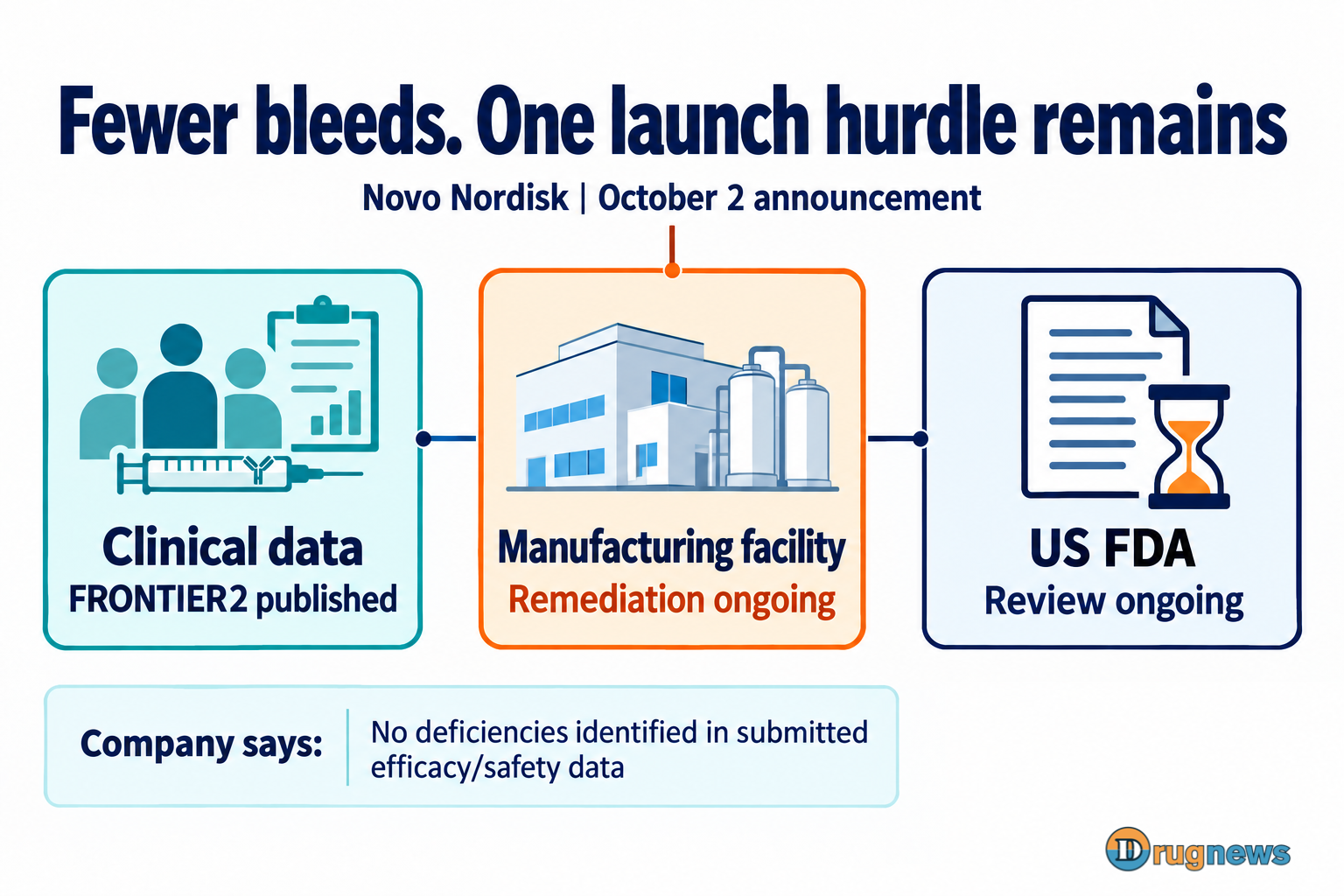
Figure 1 | The October 2 company update: remediation and formal review remain unfinished. Company-reported clinical feedback is not FDA approval.
1 | An antibody rebuilds the missing bridge
Hemophilia A involves a deficiency of clotting factor VIII. When a blood vessel is injured, the body needs a sequence of cooperating proteins to form a clot. Without this important helper, that relay is impaired.
Mim8 does not simply provide another vial of factor VIII. It is a bispecific antibody: one side binds activated factor IX, or IXa, and the other binds factor X. By mimicking the helper function of activated factor VIII, it facilitates the activation of factor X by IXa and helps the clotting process proceed.
Think of it as rebuilding a bridge rather than replacing the missing component with an identical one. This also explains its development for patients with or without factor VIII inhibitors: it does not depend on supplemented factor VIII itself.
The value of this design is practical. People with hemophilia need protection not only from a single injury, but from the effects of recurring bleeds on joints and daily life. Preventing bleeding and reducing the burden of long-term treatment matter more than the label “bispecific.”
FRONTIER2, a phase 3 study published in April, enrolled patients aged 12 and older and evaluated weekly or monthly subcutaneous Mim8. Its question was not how long an antibody remained in blood, but how often bleeding required treatment with a coagulation-factor product.
Among patients previously receiving on-demand treatment, the estimated annualized treated-bleeding rate was 15.76 in the group continuing on-demand treatment and 0.20 with monthly Mim8, a relative reduction of 98.7%. Those groups included 17 and 20 patients, respectively, within a 58-patient cohort.
This does not mean that 98.7% of patients were cured. It describes a difference between estimated event rates. Annualization expresses the observed frequency on a yearly scale; it does not imply an identical number of bleeds for every patient.
For someone previously treated only after a bleed, moving from responding to an accident to preventing it is the meaningful change in these data. The study also compared patients previously receiving factor prophylaxis with their own prior experience, but it did not directly compare Mim8 with Hemlibra. The percentage cannot rank the two antibodies.
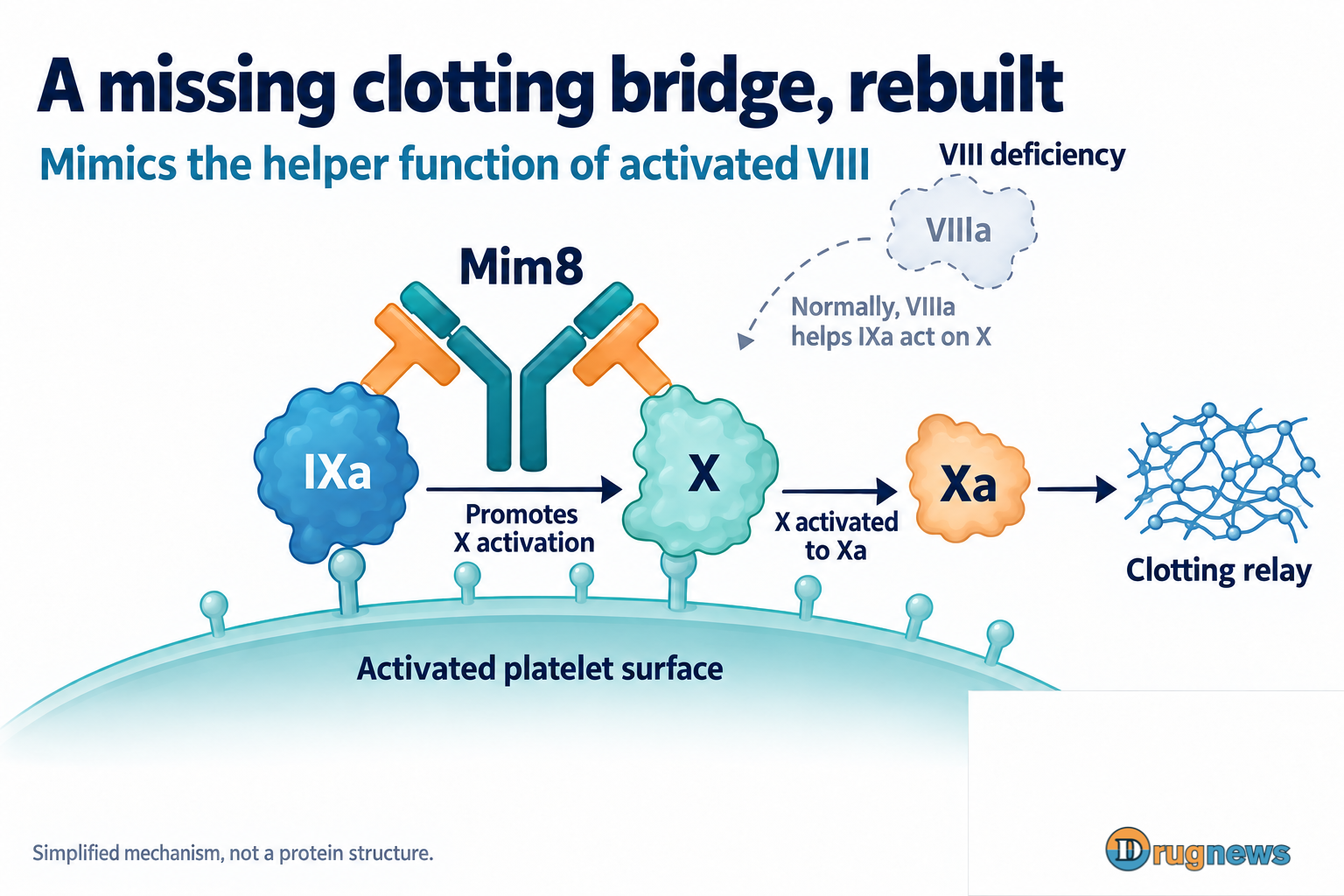
Figure 2 | Mim8 mimics the helper function of activated VIII to support the clotting relay. Simplified mechanism, not a protein structure.
2 | Can the drug in a trial be reproduced batch after batch?
Clinical research asks whether people using a product experience an improvement. Manufacturing quality asks whether every subsequent batch can continue to meet the required standard.
The questions are connected, but they are not the same scorecard.
The FDA’s explanation of pharmaceutical quality is straightforward: review covers manufacturing processes and facilities as well as the finished product. Identity, strength, consistency and purity need dependable controls. Significant quality issues identified before approval must be resolved.
“Repeatable” is the easily underestimated word. Producing one acceptable batch today is different from reliably supplying acceptable product to many patients over time. Sampling the finished product cannot substitute for quality management built into the process.
Patients may not know which production run their medicine came from, but they can reasonably expect this dose to be as reliable as the last. A quality system makes that expectation less dependent on luck: how raw materials are checked, how a process is monitored and how unexpected results are investigated all need continuing arrangements.
A facility is therefore more than a story about how many vials it can produce each day. Capacity answers whether supply can keep up; quality controls answer whether the supplied product can be used with confidence. Both affect the business after launch, but neither can be inferred solely from spending on expansion or the number of machines.
An antibody’s commercial promise rests not only on its molecular design, but also on manufacturing records, equipment, people, testing and deviation handling working together. A strong research abstract does not automatically certify that system.
Novo has not publicly described the specific deficiencies involved in this remediation. The disclosed issue concerns manufacturing, but there is no basis to invent a contamination incident, a particular equipment failure or problems affecting every batch.
The company also says the facility feedback does not affect its other marketed products. Extending a pending candidate’s obstacle into a company-wide supply crisis would exceed the available information.
What deserves attention is that even a company with a global manufacturing network must complete the relevant requirements for this product. Scale provides resources; it does not allow a new product to bypass its own approval threshold.
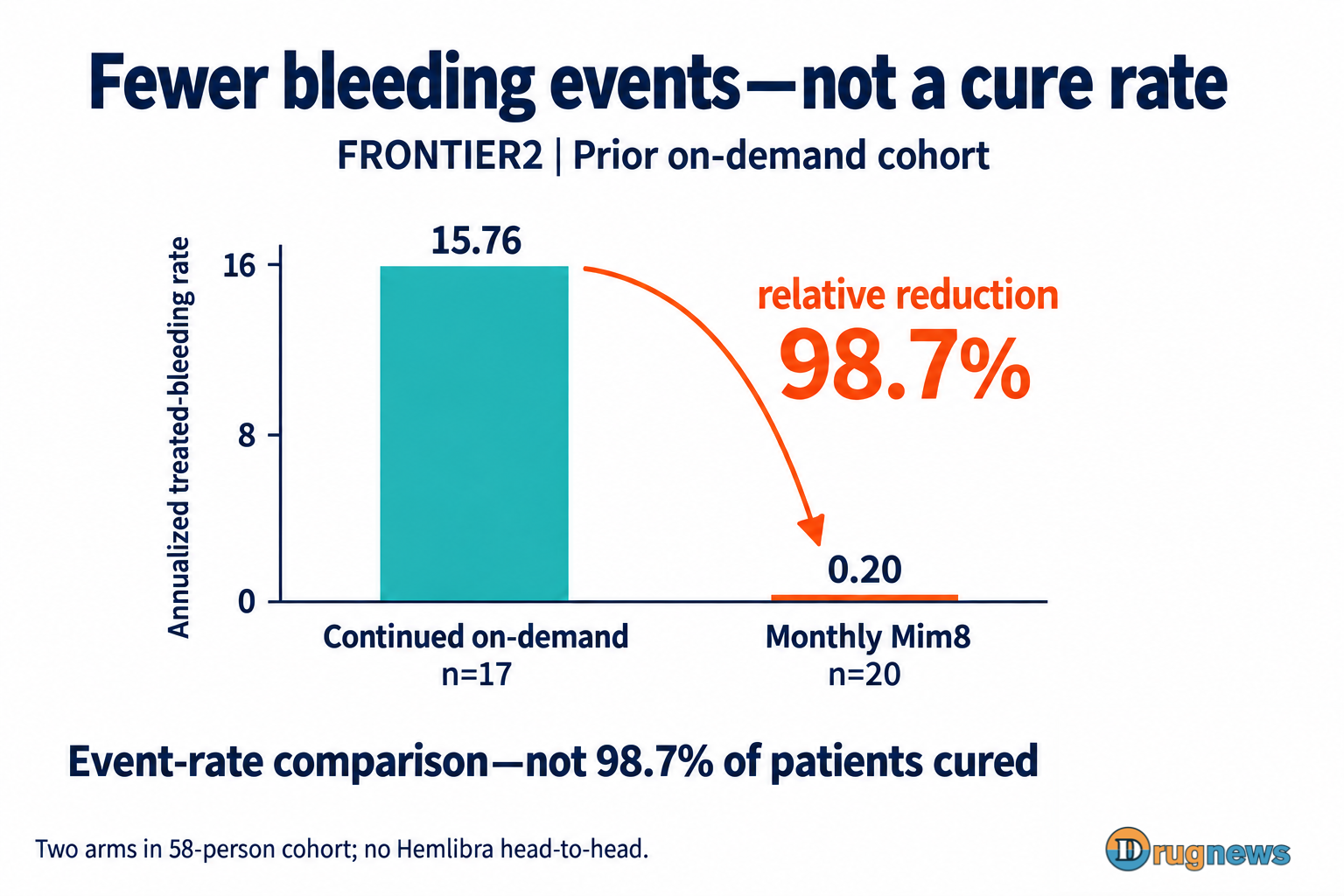
Figure 3 | The arms contain 17 and 20 patients within the 58-patient prior on-demand cohort. 98.7% is relative event-rate reduction, not a cure rate or a Hemlibra head-to-head.
3 | The delay concerns market entry, not publication
For a research team, a successful trial is an important endpoint. For a company, it is the starting point for discussing a product.
Without US approval, a planned launch is not yet commercial delivery in that market. A delay changes the sequence of market entry: when clinicians can consider a new choice, when payers make arrangements and when patients can begin using it.
There is no need to invent a revenue-loss estimate to understand this. If part of a product’s value is more convenient preventive treatment, a later launch brings that choice to patients later.
Existing treatments remain in use during the wait. Clinicians accumulate experience and patients establish routines. A later entrant must provide a reason to switch. A delay does not automatically destroy competitiveness, but moving a date on a calendar does not leave every other condition untouched either.
That is a commercial time cost, not evidence that this announcement has already caused a loss of market share. Estimating its size requires product positioning, pricing, access and actual use data.
Two investment questions must therefore be separated: has the product’s clinical appeal changed, and has the timing of revenue changed? This manufacturing update mainly adds uncertainty to the second question. Looking only at bleeding rates misses the launch timetable; looking only at the delay may discard valuable clinical evidence.
Even “waiting for approval” can call for different next evidence. A candidate with unresolved efficacy needs more patient outcomes. A product whose disclosed obstacle concerns facility requirements needs evidence of how those requirements are being met. Treating both as one generic risk obscures what to look for in the next announcement.
Novo says the extended review does not affect its 2026 financial outlook. That concerns the company’s overall expectation for the year; it does not answer the product’s revenue trajectory over subsequent years or remove launch-timing risk.
More importantly, the FDA has not provided a new decision date. The time needed for remediation, and how the regulator determines that the requirements have been met, will shape the next step. Public information does not yet support a fully revised timetable.
The next investor question need not be another slide on bleeding rates. If the clinical data are already known, the new evidence that can change the probability and timing of launch concerns the handling of manufacturing requirements and a formal regulatory decision.
4 | Europe moving ahead is not a US approval
On September 17, Europe’s CHMP issued a positive opinion recommending marketing authorization for denecimig. Its European product name is Frehemgo.
A positive opinion does not complete every authorization step. At this check, the EMA product page still placed it before a European Commission decision. Europe and the US also have separate formal decision processes.
Keeping those paths separate avoids using progress in one jurisdiction to overwrite an obstacle in another. Europe’s positive opinion contributes evidence about the product; the ongoing US review remains an unfinished outcome.
This event offers a practical framework for evaluating a medicine: how the molecule works, what improves for patients, whether the product can be manufactured reliably and when it reaches actual use are four connected questions.
The brightest answer does not pay for the other three.
For a biotech company, manufacturing cannot be relegated to a final cleanup exercise. It determines whether a clinical result can be delivered at scale. A buyer evaluating an asset cannot look only at efficacy in a data room: manufacturing capability and regulatory progress affect when that buyer can actually operate the product as a business.
An asset partnership that discusses molecular rights without clarifying responsibility for process and quality, or for post-launch supply, may leave a capability gap on the way to market. This is not a disclosed contractual problem with Mim8. It is a lesson for buyers from this event: acquiring clinical data and taking over a business capable of continuing delivery are not the same completed task.
The next Mim8 announcement worth reading should fill that gap: where does remediation stand, and which regulator has made which formal decision? Until then, bleeding rates establish the candidate’s clinical value. The route to US patients still has a delivery stage to complete.
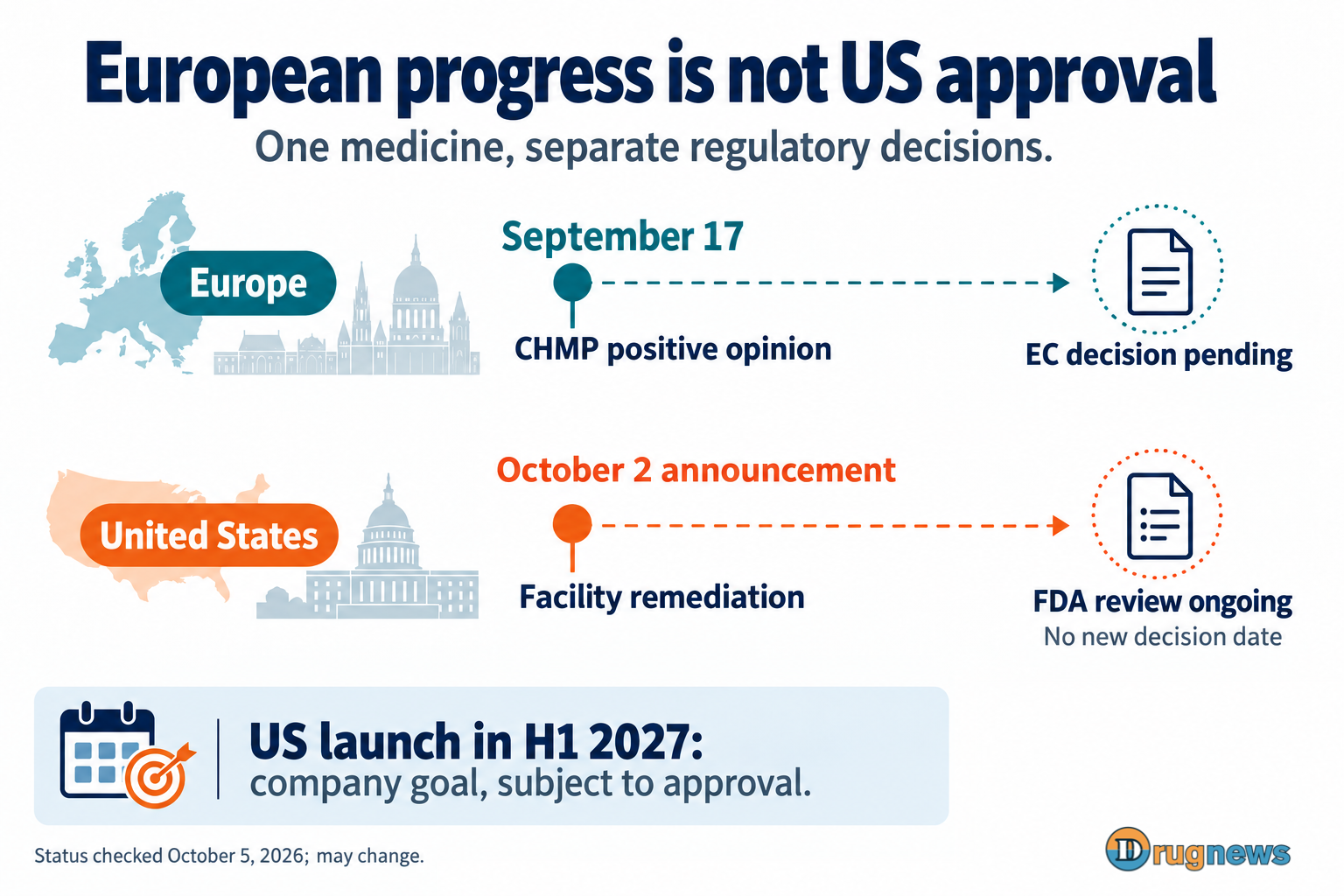
Figure 4 | Regulatory stages checked October 5. The H1 2027 US launch is a company goal contingent on approval, not an approved date.
This article provides industry information and commercial analysis. It does not constitute individualized medical or investment advice.
Research and official sources
Novo Nordisk, October 2: US review, facility remediation and company launch target https://www.novonordisk.com/news-and-media/news-and-ir-materials/news-details.html?id=917287
FRONTIER2, NEJM 2026: original abstract, groups and annualized treated-bleeding rates https://pubmed.ncbi.nlm.nih.gov/42054679/
EMA Frehemgo: September 17 opinion and formal authorization stage https://www.ema.europa.eu/en/medicines/human/EPAR/frehemgo
FDA pharmaceutical quality functions: preapproval quality, process and facility review https://www.fda.gov/drugs/things-know-about/10-things-know-about-cders-pharmaceutical-quality-functions
FDA CGMP explanation: quality systems and repeatable manufacturing https://www.fda.gov/drugs/pharmaceutical-quality-resources/facts-about-current-good-manufacturing-practice-cgmp
Cite this article
For decks, research notes, or media references, cite Drugnews with the canonical article URL.
Drugnews Editorial Team. "Fewer bleeds. Why is Novo’s new drug still waiting outside the US?" Drugnews, Oct 10, 2026. https://drugnews.com.tw/articles/2026-10-10-novo-mim8-manufacturing-fda-delay-en.html