
One of Merck's most interesting defensive moves may be taking place not in a new-drug laboratory, but beside a treatment chair.
Share this analysis
Send this article to readers who follow biotech, company strategy, and capital-market signals.
Its second-quarter results, released in August, put a trackable number on that story: KEYTRUDA QLEX, the subcutaneous formulation, generated $463 million in quarterly sales. Approved by the US FDA in September 2025, it has moved from a claim about faster administration into the company's income statement.
The anticancer component is still pembrolizumab, the PD-1 antibody in Keytruda. What changes is delivery: an approximately 30-minute intravenous infusion becomes a subcutaneous injection taking about one or two minutes, depending on the regimen, administered by a healthcare professional.
That is injection time, not a two-minute visit. Why should moving an established treatment from an infusion stand to a syringe matter so much to Merck?
Because a blockbuster has more to defend than its molecule. It also has to defend its place in the way hospitals work every day.
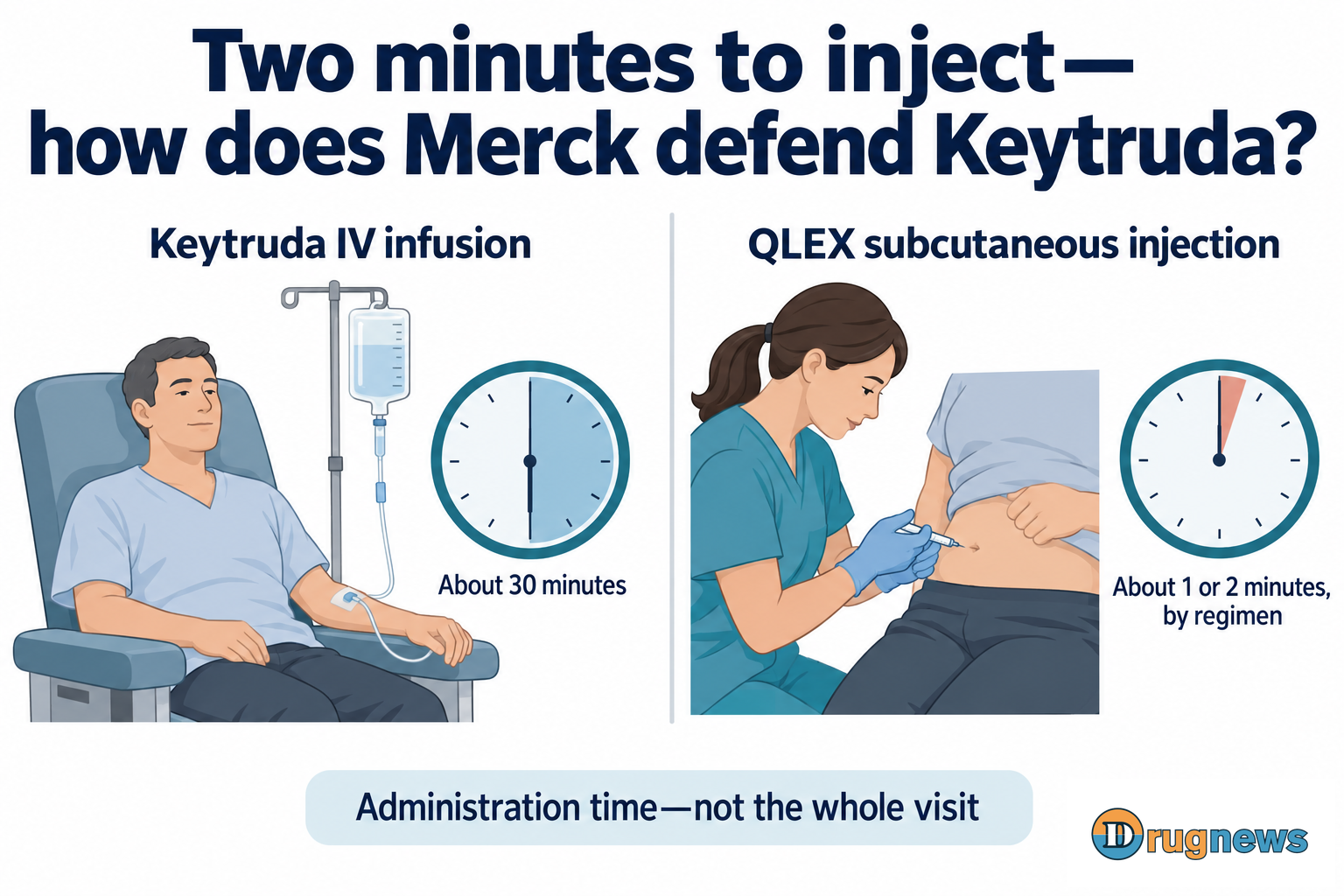
Figure 1 | About one or two minutes, depending on the regimen, refers to QLEX injection time—not the whole visit. Both products contain pembrolizumab as the anticancer component.
The anticancer engine stays; the delivery route changes
Keytruda is an immune checkpoint inhibitor. PD-1 on T cells normally participates in suppressing immune responses; tumours can use that pathway to restrain the immune cells attacking them. Pembrolizumab blocks the signal, allowing antitumour immune activity an opportunity to function again.
QLEX does not replace that anticancer mechanism. It brings an additional delivery component: berahyaluronidase alfa, a hyaluronidase enzyme.
Subcutaneous tissue is not an empty pouch. Its extracellular matrix contains several components, including hyaluronan. The enzyme temporarily breaks down hyaluronan locally, increasing tissue permeability and helping a larger volume of drug disperse. Think of it as loosening local passageways for the solution, not deploying a second anticancer force.
That distinction matters. QLEX addresses whether an already effective antibody can be delivered reliably by another route. It does not introduce another cancer target.
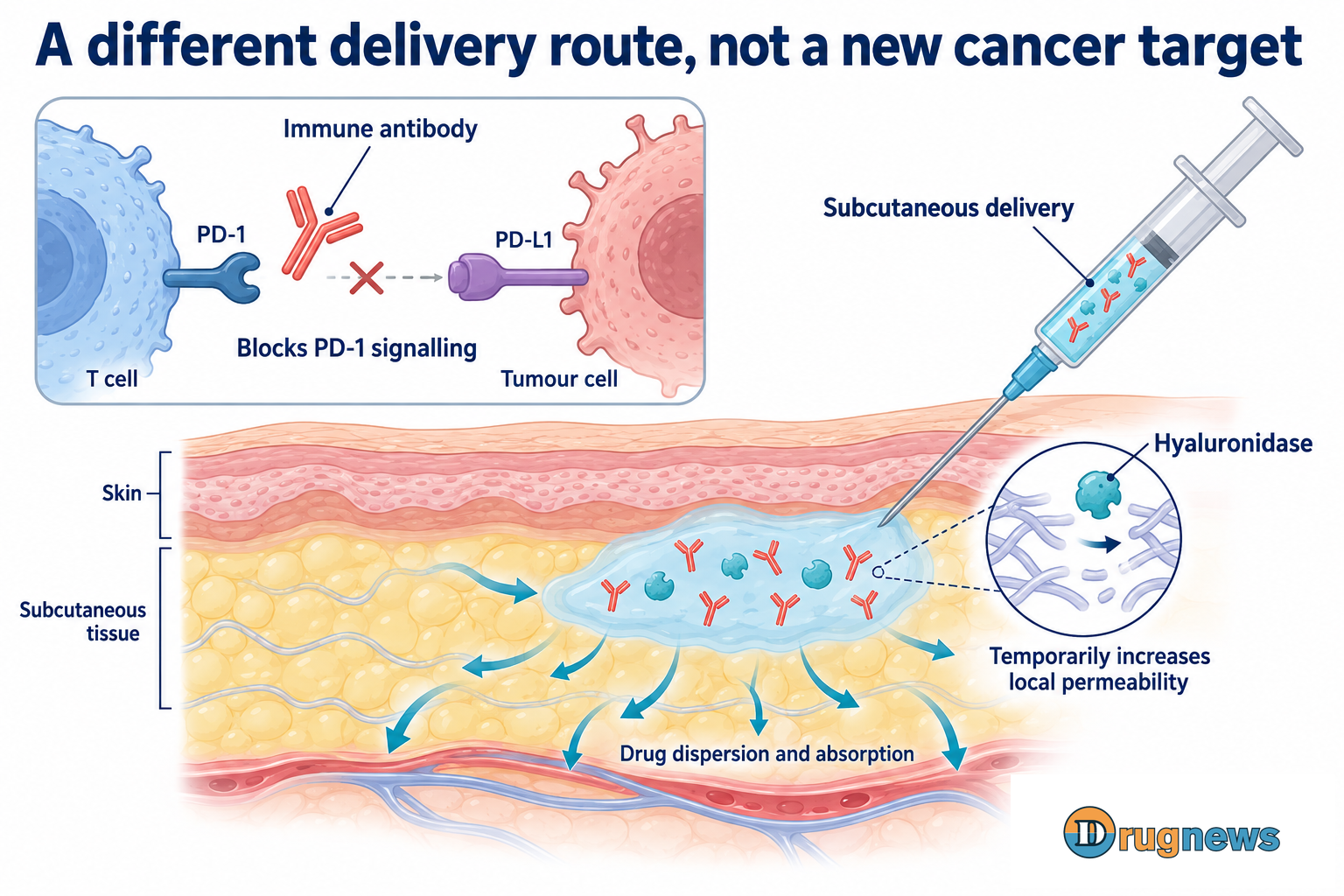
Figure 2 | The antibody blocks the PD-1 pathway; hyaluronidase temporarily increases local subcutaneous permeability, supporting dispersion and absorption. Mechanistic illustration, not to scale.
With an IV infusion, the drug enters the bloodstream directly. With a subcutaneous injection, it first enters tissue and is then absorbed. What looks like a different injection requires fresh work on formulation, absorption, dose and consistent delivery.
For example, the pivotal six-week-regimen comparison used 790 mg of subcutaneous pembrolizumab versus 400 mg intravenously. The larger subcutaneous dose does not mean twice the anticancer firepower. Absorption differs between routes; the relevant comparison is the resulting exposure in the body, not which syringe carries more milligrams.
This is the value of formulation engineering. The user sees a simpler procedure; developers have to build that simplicity on reliable, repeatable drug delivery. Convenience does not dispense with validation. It places the complexity behind the product.
Accordingly, the 377-patient lung-cancer trial supporting approval primarily examined drug exposure: how much drug the body encounters over a period, and how much remains before the next dose. Those measures correspond to AUC and trough concentration—not two abbreviations included to decorate an article.
The trial met its predefined pharmacokinetic comparability criteria. Efficacy was assessed descriptively, with no notable differences observed in PFS or OS. These findings support the change in administration route; they do not announce that the two-minute version treats cancer more powerfully.
For patients, treatment value is not confined to the percentage by which a tumour shrinks. Maintaining the established treatment's action while avoiding some infusion time or the trouble of venous access could be a concrete improvement.
The person saving time may not be the person deciding to switch
In our April article, “Can Merck build another oncology empire?”, we asked which new engine might follow Keytruda. QLEX asks a different question: before a successor grows into its role, can the current mainstay become easier to use?
Its potential need not start with a distant peak-sales forecast. Consider a clinic with a full treatment schedule: waiting patients, nursing procedures and occupied infusion chairs all consume capacity.
If an appropriate treatment step can be shortened, a hospital may be able to return time to patients or rearrange limited service capacity. That is the value of delivery. Actual time saved still needs to be calculated within the local workflow.
But a cancer regimen is not necessarily a stand-alone Keytruda prescription. If chemotherapy is also being infused that day, the patient already needs the chair. Switching one component to a subcutaneous injection may not turn an entire morning into a few minutes.
Conversely, patients who do not need another IV treatment that day, and for whom the product is suitable, may notice a greater difference. The value varies by regimen. That makes “which patients switch first?” a more useful question than “will everyone switch?”
A treatment chair represents capacity, not a sum of money automatically earned whenever it becomes free. Can more patients be served after time is released? Will staffing, the pharmacy or other investigations remain bottlenecks? The answers determine whether convenience becomes a reason for hospitals to adopt the product.
Patients appreciate speed, clinical teams want smoother workflows, and payers ask what the entire treatment costs. Those interests may overlap, but they are not naturally identical.
A new formulation cannot win a market with a stopwatch alone. It has to enter hospital purchasing, treatment scheduling and payment arrangements before it becomes part of routine work.
There is also a question easily overlooked: who captures the value saved? Patients gain time, hospitals gain capacity, the manufacturer wants to retain prescriptions, and payers may want lower costs. To sell, the product needs a compelling reason for decision-makers to switch—not just a better experience on a promotional page.
The same “faster” proposition can produce different adoption speeds in different healthcare systems. Market development has to work through those differences. Translating a US approval announcement does not complete global commercialisation.
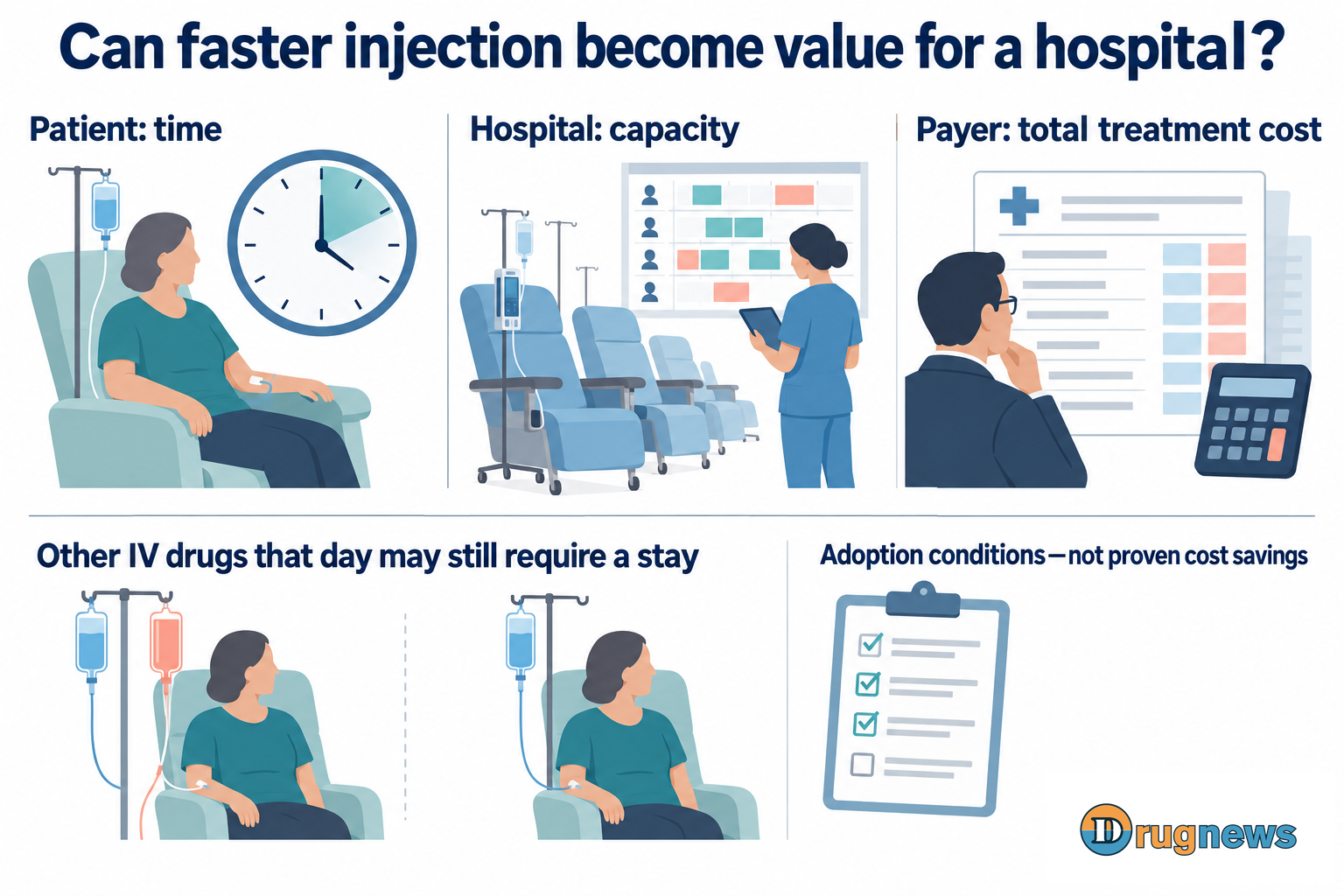
Figure 3 | Whether faster administration produces hospital value depends on the whole regimen and workflow. Other IV treatment that day may still require a stay. The illustrative situations are not measured cost savings.
What kind of growth is $463 million?
The results show that QLEX has a business. They still leave a distinction between having business and adding a new business.
Merck disclosed approximately $8.366 billion in combined second-quarter KEYTRUDA and QLEX sales, including $463 million from QLEX—about 5.5% of the combination. The subcutaneous version now has a measurable presence, while standing beside a much larger established market.
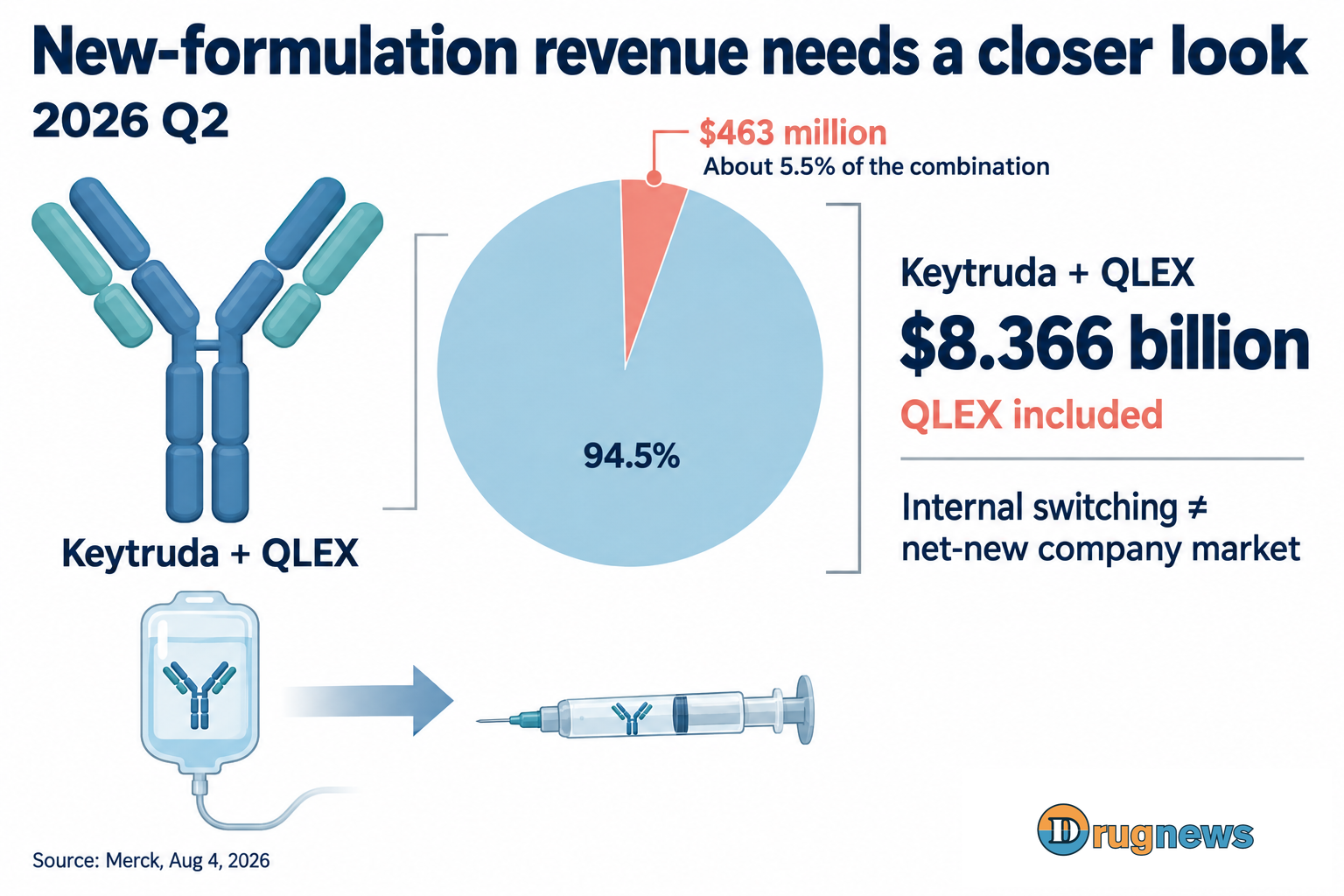
Figure 4 | Combined second-quarter 2026 sales of $8.366 billion already include QLEX's $463 million. Internal product switching cannot be counted again as a net-new company market. Source: Merck, August 4, 2026.
Suppose a patient previously receiving IV Keytruda switches to QLEX. Subcutaneous revenue rises, but Merck has not gained another patient. This is an internal product migration, not a market that can be added once more to the company's total.
For a mature pharmaceutical company, however, migration is not necessarily bad. The purpose may be precisely to move some demand into a new delivery format while customer relationships, physician familiarity and brand trust remain strong.
That is a different challenge from convincing physicians to trust an unfamiliar target. QLEX can build on existing experience with pembrolizumab and offer another administration option. Its differentiation still needs to be felt by users.
Investors therefore need to separate two questions. The subcutaneous share of the same product family indicates conversion progress. Revenue retained across the family comes closer to measuring the defensive outcome. Following only the first can mistake a format change for a new market; following only the second can miss the internal transition under way.
Reported product revenue does not answer every detail. The questions extend beyond sales to which treatment settings convert fastest, payment arrangements and product economics. These are not qualifications added to dampen good news. They describe the customer-migration project the business is undertaking.
If Merck can turn convenience into a workflow clinical teams want to retain, it may reduce the pressure for future competition to revolve solely around price.
The real defence is making the new version worth keeping
Patent-cliff stories often focus on companies buying businesses, filling pipelines and waiting for the next blockbuster. QLEX reminds us that defence can also take place in the final delivery stage of an established product.
A new formulation does not automatically extend every patent covering the original molecule. Protection for the drug, formulation and uses, and competitive paths in different markets, each require examination. A new brand name does not settle that legal question.
The more interesting part is the combination of capabilities. Merck brings an established anticancer antibody and commercial channels. Alteogen supplies the capability to develop and manufacture the hyaluronidase component. The latter need not become a fully integrated oncology company to participate in upgrading a major product.
There is a practical lesson for the industry: a valuable technology need not directly shrink tumours further. If it unlocks an established product's delivery constraints and provides a usable difference for both the manufacturer and providers, it may become a crucial component in a partnership network.
Assessing a delivery-technology company therefore requires more than counting the major drugs its technology might accompany. The stronger questions are whether a partner has incorporated it into a product actually on the market, and how quickly that product is converting users. A technology option acquires a firmer commercial outline when it becomes a component used repeatedly.
For QLEX, the interesting next development is not a louder claim about two minutes. It is how much demand the new version can retain within real treatment regimens that might otherwise move elsewhere.
If the subcutaneous share rises in the next report, the question will be: how much value did those conversions actually preserve for Merck?
This article provides industry information and commercial analysis. It is not individualized medical or investment advice.
Sources
| No. | Source and scope |
|---|---|
| 1 | FDA: September 19, 2025 approval and the 377-patient study. |
| 2 | Merck: September 19, 2025 QLEX approval announcement. |
| 3 | Merck: August 4, 2026 second-quarter results. |
| 4 | DailyMed: QLEX prescribing information, mechanism and pharmacokinetics. This article uses Section 12 mechanism and exposure information, not administration instructions. |
| 5 | Drugnews: April 2, 2026, “Can Merck build another oncology empire?”. Used to continue the earlier research question, not replace current primary sources. |
Cite this article
For decks, research notes, or media references, cite Drugnews with the canonical article URL.
Drugnews Editorial Team. "A two-minute injection: how does Merck defend its blockbuster?" Drugnews, Oct 12, 2026. https://drugnews.com.tw/articles/2026-10-12-keytruda-qlex-subcutaneous-delivery-value-en.html