
Somewhere past 40, the phone starts drifting to arm's length and restaurant menus get held a little farther away. That is presbyopia, and almost nobody escapes it.
On October 16 (US Eastern time), Viatris said the FDA had approved Ryzumvi (phentolamine ophthalmic solution 0.75%) to treat presbyopia in adults. It is the fifth eye drop for age-related blurry near vision in the United States.
The same press release carried a second line: Viatris is "exploring the potential for a partner in the United States to commercialize RYZUMVI."
The approval had barely landed, and the owner was already looking for someone else to sell it.
Presbyopia drops work. They are also a poor business. By mid-2027, Ryzumvi will still not be on US pharmacy shelves for presbyopia.
01 | Why can a single drop make reading easier?
Seeing up close depends on the lens of the eye changing shape. In youth the lens is soft, and the ciliary muscle can squeeze it into a thicker, near-focus shape. After 40 the lens stiffens and stops responding.
So presbyopia is a loss of focusing flexibility. It has nothing to do with the prescription numbers of nearsightedness or farsightedness, and no drop makes the lens soft again.
The drops use a different trick. They shrink the pupil.
It works like stopping down a camera aperture. A smaller opening deepens the depth of field, so more of the scene is in focus. LENZ describes a "sub-2mm pupil" for its drug, which is this pinhole effect at work.
All five drugs shrink the pupil. They differ in how.
Two muscles pull against each other around the pupil. A ring-shaped sphincter tightens it; a spoke-like dilator pulls it open.
Vuity and Qlosi (both pilocarpine) and Vizz (aceclidine) all tighten the sphincter. Pilocarpine also tugs on the ciliary muscle, which can bring headaches and blurrier distance vision, and rare retinal tears have been reported with it. Vizz is marketed as acting almost entirely on the pupil, with minimal ciliary effect.
Ryzumvi goes the other way. It blocks alpha-1 receptors on the dilator muscle, so the dilator cannot hold the pupil open and the pupil narrows on its own. Opus Genetics, which developed it, says this spares the ciliary muscle, improving near vision while preserving distance vision.
Yuvezzi, approved in January, does both: carbachol tightens the sphincter and brimonidine holds back the dilator.
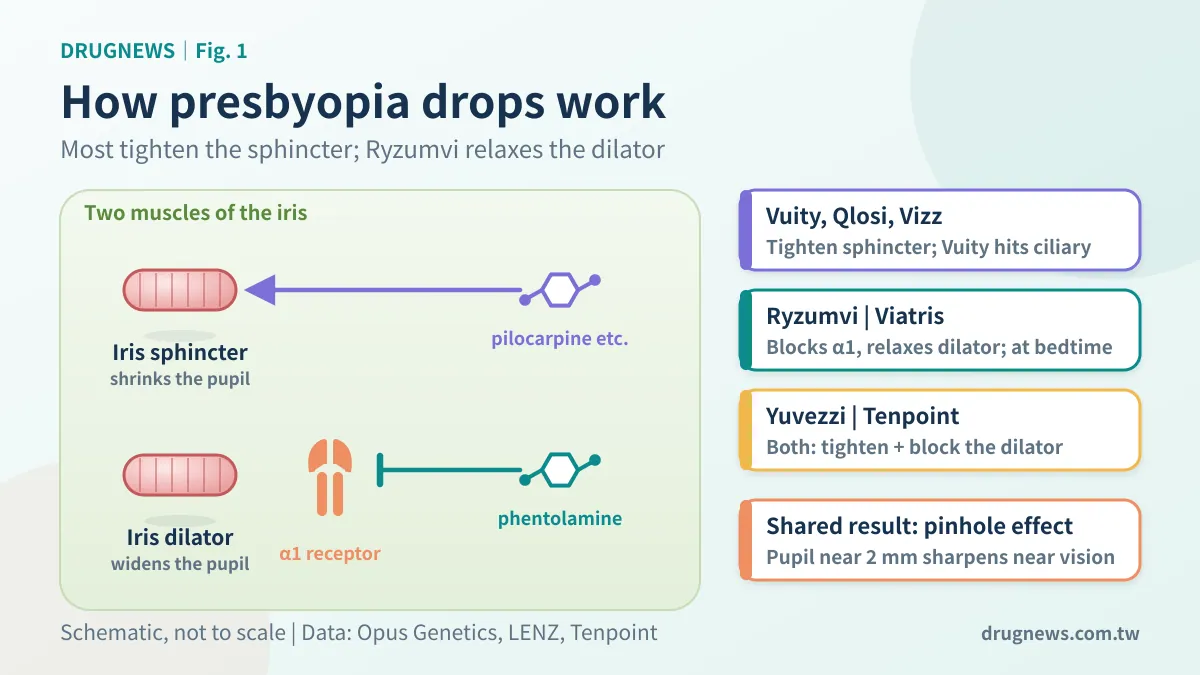
Fig. 1 | Every drop shrinks the pupil; Ryzumvi is the one that works only by relaxing the dilator
02 | One drop at bedtime: how much better is the morning?
Ryzumvi's most unusual feature is when you take it: in the evening.
That timing is a product decision as much as a pharmacological one. The other drops are taken in the morning and wear off over the day. Ryzumvi is taken before sleep, and the trial measured it the next morning, 12 hours later. The pitch is simple: wake up and read your phone without hunting for glasses.
It is also not a new molecule for Viatris. Ryzumvi was already approved to reverse pupil dilation after an eye exam, the only commercially available FDA-approved product for that use, according to Viatris. Opus is also testing it in a Phase 3 program called LYNX for dim-light vision problems after laser eye surgery. Presbyopia was supposed to be the big market.
The Phase 3 VEGA-3 trial enrolled 545 people who dosed once each evening. On Day 8, 12 hours after dosing, 27.2% gained three or more lines of near vision without losing distance vision, against 11.5% on placebo. One hour after the first dose, the split was 20.6% versus 6.1%.
Roughly one user in four notices a clear difference.
What does three lines mean? On a standard reading chart, each line is a step down in letter size. Three lines is the difference between squinting at a medicine label and reading it comfortably. It is the bar the FDA uses for every presbyopia drop, which is why it is the number to compare.
Compare Vizz. In its Phase 3 CLARITY 2 trial, 71% of users gained three lines at both 30 minutes and 3 hours, and 40% still did at 10 hours. The trials measured differently, Vizz in one eye and Ryzumvi with both eyes, so the numbers are a rough guide. The gap is still wide.
Ryzumvi's advantage is tolerability. Headache was 2.6% in VEGA-3; for Vizz, placebo-adjusted headache across its Phase 3 program was 7.6%. The trade-off is red eyes: the label lists conjunctival hyperemia at 21% and instillation-site irritation at 16%.
Yuvezzi, the January entrant, attacked that same weakness. In its 12-month BRIO II study, eye redness was 2.8% with the combination against 10.7% with carbachol alone, and Tenpoint says pupil constriction lasts from 30 minutes up to 10 hours. On redness, Ryzumvi now looks like the outlier in a category where looks matter: these are cosmetic-adjacent drops used before a dinner or a meeting.
Ryzumvi solves the hunt for reading glasses first thing in the morning. A glasses-free day is a different promise.
03 | The first drop stumbled, and the second sells slowly
Go back to October 29, 2021. AbbVie's Vuity became the first FDA-approved presbyopia drop, and the company said 128 million Americans had the condition.
Within a year it changed course. In September 2022, AbbVie decided to cut sales and marketing investment in Vuity, which triggered an impairment review. pharmaphorum reports the resulting charge at $770 million, and AbbVie has never broken out Vuity sales.
Vizz was supposed to be the second generation. LENZ won approval on July 31, 2025, launched in September, and promised one drop a day lasting up to 10 hours.
Here is the scorecard. In Q2 2026, Vizz booked $1.7 million in net product revenue on about 27,000 packs. More than 13,000 clinicians have prescribed it since launch. LENZ lost $31.9 million in the same quarter.
The trend matters more than the single quarter. Vizz made $1.6 million in Q4 2025 on about 20,000 prescriptions, according to pharmaphorum. Q1 2026 came in around $1.65 million and Q2 at $1.7 million. Three quarters, essentially flat.
Divide $1.7 million by 27,000 packs and each monthly pack brings in a little over $60 of net revenue. LENZ added a telehealth prescribing option in July 2026 to make it easier to start. The early numbers say the hard part is not access. It is persuading people that a daily drop beats a pair of readers.
Thirteen thousand prescribers, 27,000 packs in a quarter.
That works out to about two packs per prescriber per quarter.
CEO Eef Schimmelpennink called early refill behavior "encouraging," and more than 60% of ePharmacy patients have bought more than one monthly pack. Refills show that users like it. They do not show a growing market: packs rose from roughly 25,000 in Q1 to 27,000 in Q2, about 8%.
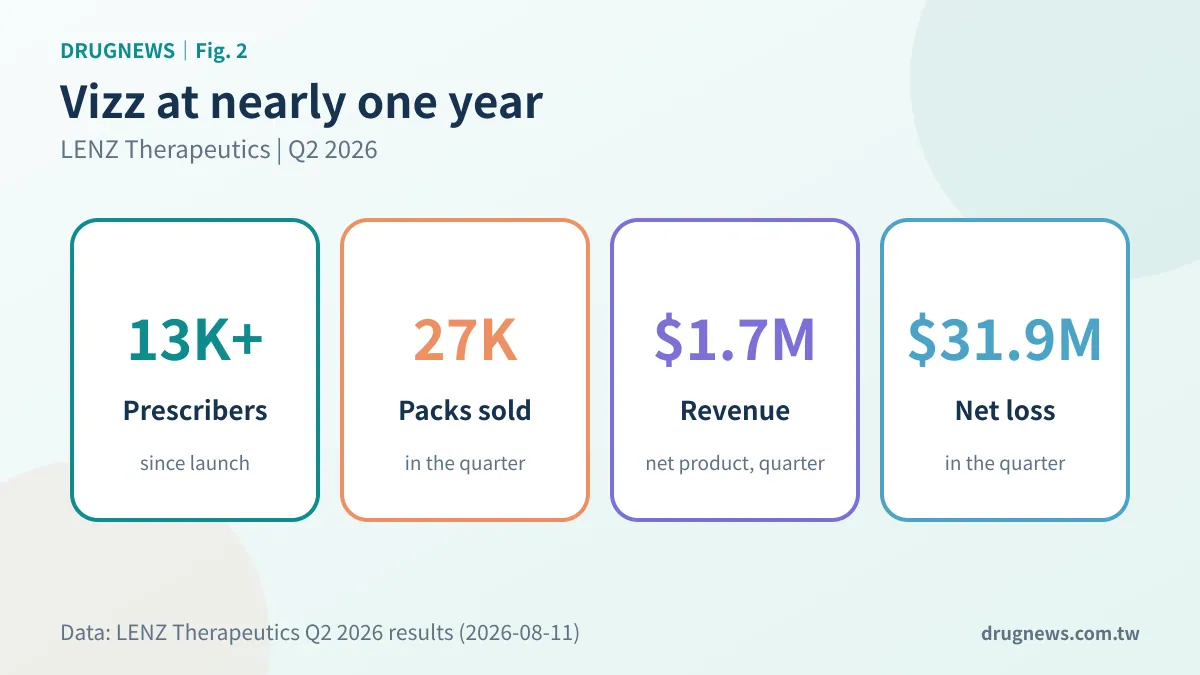
Fig. 2 | More than 13,000 prescribers, $1.7 million in quarterly product revenue
04 | Viatris already has an eye-care sales team. Why look for a partner?
This is the most telling part of the approval.
Viatris does not lack an eye-care channel. In January 2023 it spent about $750 million on Oyster Point Pharma and Famy Life Sciences, formed an Eye Care Division, and took over Tyrvaya, a nasal spray for dry eye.
It also bet on this drug early. In November 2022, Viatris paid $35 million upfront for global rights, with double-digit royalties running through 2040. Four years later, with the approval in hand, it chose to look for someone else to sell it in the US.
Run the math a partner would run. The category's best seller earns about $1.7 million a quarter in the US. A specialty sales force covering optometrists and ophthalmologists costs tens of millions of dollars a year; LENZ's own quarterly loss is $31.9 million. Any partner would also owe Opus double-digit royalties on net sales. For a fifth entrant with red-eye rates of 21%, that is a hard business case to sign.
A company with its own eye-care salesforce declining to push the product has already scored this market in its own press release.
None of the other players has shown a better number. Orasis, which sells the twice-daily pilocarpine drop Qlosi, is privately held and does not disclose sales. Tenpoint guided to broad US availability of Yuvezzi only from the second quarter of 2026. AbbVie folds Vuity into its eye-care line. The only public, product-level revenue in the category is LENZ's, and it is the $1.7 million above.
The problem is presbyopia itself. It does not hurt and is not dangerous, and a cheap pair of readers fixes it. A drop has to be used daily, lasts hours, and is usually paid for out of pocket. The US market has now taught that lesson twice, with Vuity and with Vizz.
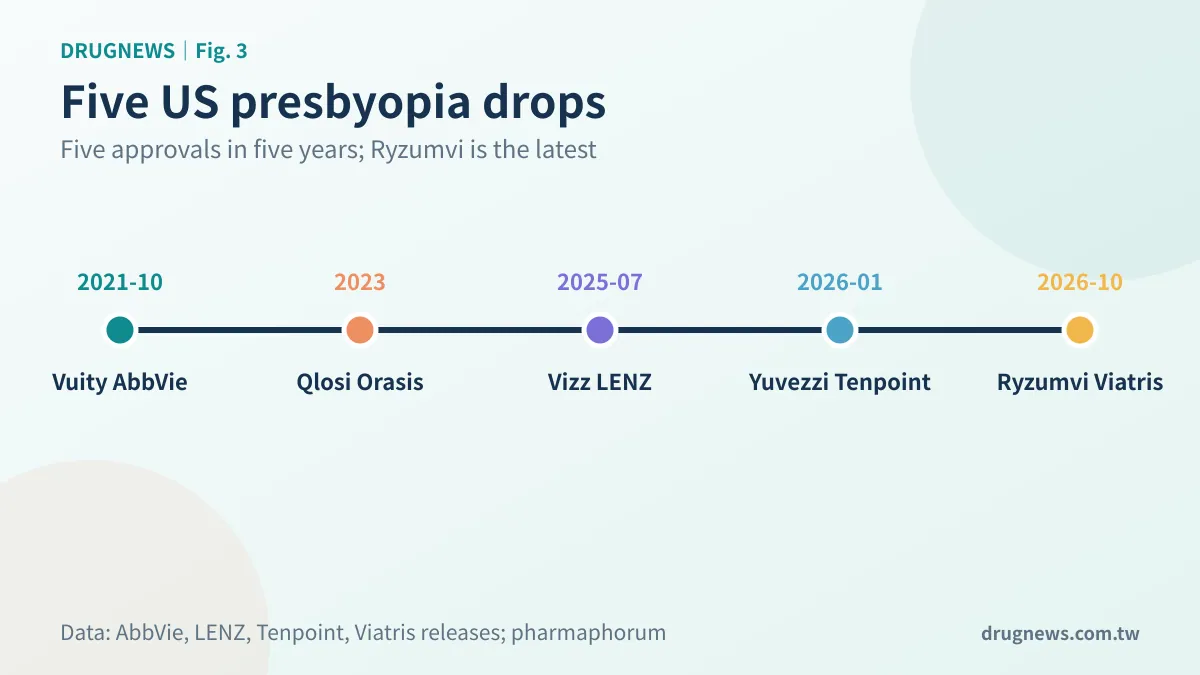
Fig. 3 | Five approvals in five years; the best disclosed quarter is Vizz's $1.7 million
The counterargument comes from the startups betting on the category. Tenpoint raised $235 million in Series B financing and credit to launch Yuvezzi, and LENZ held $220 million in cash and securities at mid-year. They are betting that doctors and patients will build the habit over time.
Over the next two years, that money will buy prescribers first. Revenue will take longer.
There is a real argument on their side. Presbyopia affects 128 million Americans by AbbVie's count, and Opus says about 90% of US adults over 45. Even a sliver of that market would be large. But five products in five years have not found the sliver, and the company with the most resources in the category, AbbVie, pulled back within a year of launch.
Ryzumvi will not launch in the US for presbyopia before June 30, 2027, and Vizz, the category's best seller, will book less than $10 million in net product revenue for full-year 2026.
05 | Taiwan: none approved yet, and a myopia problem
Taiwan has not approved any eye drop specifically for presbyopia. EBC News reported on October 12 that the first one could arrive as early as 2027, without naming the product or the company.
Taiwan also has a problem the US sees less of: very high rates of severe nearsightedness. Ophthalmologist Lu Da-wen of Tri-Service General Hospital told Liberty Times Health that highly myopic patients on a pupil-shrinking drop may feel their myopia has worsened by 100 to 150 degrees. The best candidates, he said, are people with mild farsightedness of about 150 degrees.
He added that more than one million people in Taiwan have had laser vision correction, and that group may be the most interested.
That makes Taiwan's eventual market different from the American one. In the US, the pitch is to people in their mid-40s with otherwise good distance vision. In Taiwan, a large share of that age group is already nearsighted, and a drop that sharpens near vision by shrinking the pupil can make distance vision feel worse for them. The doctor's ideal candidate, someone mildly farsighted or post-laser, is a smaller group.
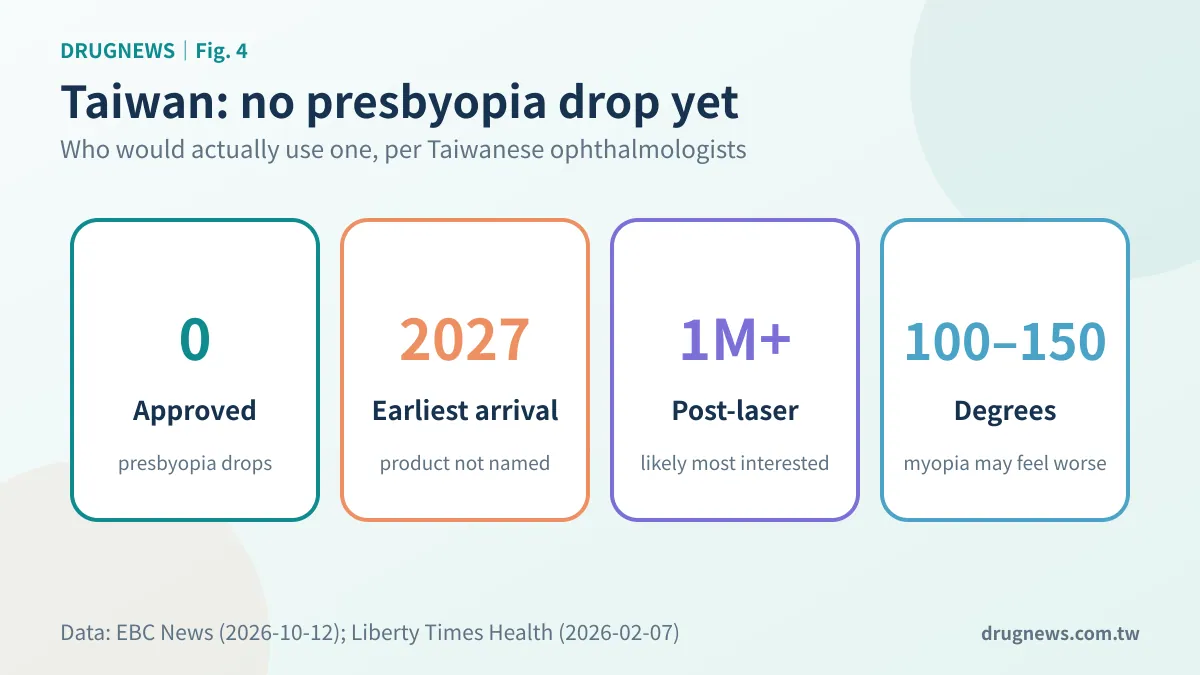
Fig. 4 | Taiwan has no approved presbyopia drop yet, and the doctors' best candidates are a narrow group
Ophthalmologist Chung Pei-chen put it plainly: the drops "only temporarily improve near vision" and do not treat presbyopia itself.
So even if a drop arrives in Taiwan in 2027, its natural customers will be a narrow slice: people who have had laser surgery and would rather not pull out reading glasses at the dinner table.
Whoever brings the first drop to Taiwan will also face the same pricing question as in the US. Taiwan's National Health Insurance is unlikely to treat a convenience product for near vision as a priority, which means patients would pay themselves, just as most Americans do today. That is the setting in which Vuity and Vizz have struggled.
For most people holding their phones at arm's length, Ryzumvi is half good news. The drops do work. The best-value answer is still at the optician.
This article is industry and company analysis, not investment or medical advice.
References
- Viatris Receives U.S. FDA Approval for RYZUMVI for the Treatment of Presbyopia|Viatris (PR Newswire)|2026-10-16|https://www.prnewswire.com/news-releases/viatris-receives-us-fda-approval-for-ryzumvi-for-the-treatment-of-presbyopia-302911593.html
- Opus Genetics Announces FDA Approval of Phentolamine Ophthalmic Solution 0.75% for the Treatment of Presbyopia|Opus Genetics (Yahoo Finance)|2026-10-16|https://finance.yahoo.com/healthcare/articles/opus-genetics-announces-fda-approval-160000544.html
- FDA Approves RYZUMVI for Presbyopia; Viatris Seeks Commercial Partner|Clinical Trial Vanguard|2026-10-17|https://www.clinicaltrialvanguard.com/news/fda-approves-ryzumvi-for-presbyopia-viatris-seeks-commercial-partner/
- Opus Genetics Announces VEGA-3 Phase 3 Trial Met its Primary Endpoint|Opus Genetics|2025-06-26|https://ir.opusgtx.com/press-releases/detail/490/opus-genetics-announces-vega-3-phase-3-trial-met-its-primary-endpoint-for-phentolamine-ophthalmic-solution-0-75-for-the-treatment-of-presbyopia
- LENZ Therapeutics Reports Second Quarter 2026 Financial Results|LENZ Therapeutics (StockTitan)|2026-08-11|https://www.stocktitan.net/news/LENZ/lenz-therapeutics-reports-second-quarter-2026-financial-results-and-llc8l7sjzg2q.html
- FDA Approves Aceclidine (VIZZ) for Presbyopia in Adults|HCPLive|2025-07-31|https://www.hcplive.com/view/fda-approves-aceclidine-vizz-for-presbyopia-in-adults
- LENZ Therapeutics announces results from Phase 3 CLARITY study|LENZ Therapeutics|2024-06-01|https://lenz-tx.com/?p=649
- Tenpoint eyes presbyopia drug launch after FDA nod|pharmaphorum|2026-01-29|https://pharmaphorum.com/news/tenpoint-eyes-presbyopia-drug-launch-after-fda-nod
- Tenpoint Therapeutics Announces FDA Approval of YUVEZZI|Tenpoint Therapeutics (Business Wire)|2026-01-28|https://www.businesswire.com/news/home/20260128284402/en/Tenpoint-Therapeutics-Ltd.-Announces-FDA-Approval-of-YUVEZZI-the-First-and-Only-Combination-Eye-Drop-Approved-to-Treat-Presbyopia
- U.S. FDA Approves VUITY, the First and Only Eye Drop to Treat Presbyopia|AbbVie|2021-10-29|https://news.abbvie.com/2021-10-29-U-S-Food-and-Drug-Administration-Approves-VUITY-TM-pilocarpine-HCI-ophthalmic-solution-1-25-,-the-First-and-Only-Eye-Drop-to-Treat-Presbyopia-Age-Related-Blurry-Near-Vision
- AbbVie Form 10-Q for the quarter ended September 30, 2022|U.S. SEC|2022-09-30|https://www.sec.gov/Archives/edgar/data/1551152/000155115222000045/abbv-20220930.htm
- Ocuphire Pharma Enters Global License Agreement with Viatris for Nyxol|Ocuphire Pharma (SEC 8-K Exhibit 99.1)|2022-11-07|https://ir.opusgtx.com/sec-filings/all-sec-filings/content/0001140361-22-040303/brhc10043812_ex99-1.htm
- Viatris Completes $750-M Acquisition of Two Ophthalmology Companies|DCAT Value Chain Insights|2023-01-05|https://www.dcatvci.org/top-industry-news/viatris-completes-750-m-acquisition-of-two-ophthalmology-companies/
- Presbyopia eye drops may launch next year (in Chinese)|EBC News|2026-10-12|https://news.ebc.net.tw/news/health/575361
- New presbyopia drop cleared by FDA; why Taiwan can't buy it (in Chinese)|Liberty Times Health|2026-02-07|https://health.ltn.com.tw/article/breakingnews/5335642
Share this analysis
Send this article to readers who follow biotech, company strategy, and capital-market signals.
Cite this article
For decks, research notes, or media references, cite Drugnews with the canonical article URL.
Drugnews Editorial Team. "Presbyopia drop Ryzumvi wins FDA nod, but nobody wants to sell it." Drugnews, Oct 22, 2026. https://drugnews.com.tw/articles/2026-10-22-ryzumvi-presbyopia-eye-drops-viatris-partner-en.html