
Unmet Needs in MSS Colorectal Cancer and the Potential Role of HDAC Inhibition
Can HDAC Inhibition Help Close the Treatment Gap in MSS Colorectal Cancer?
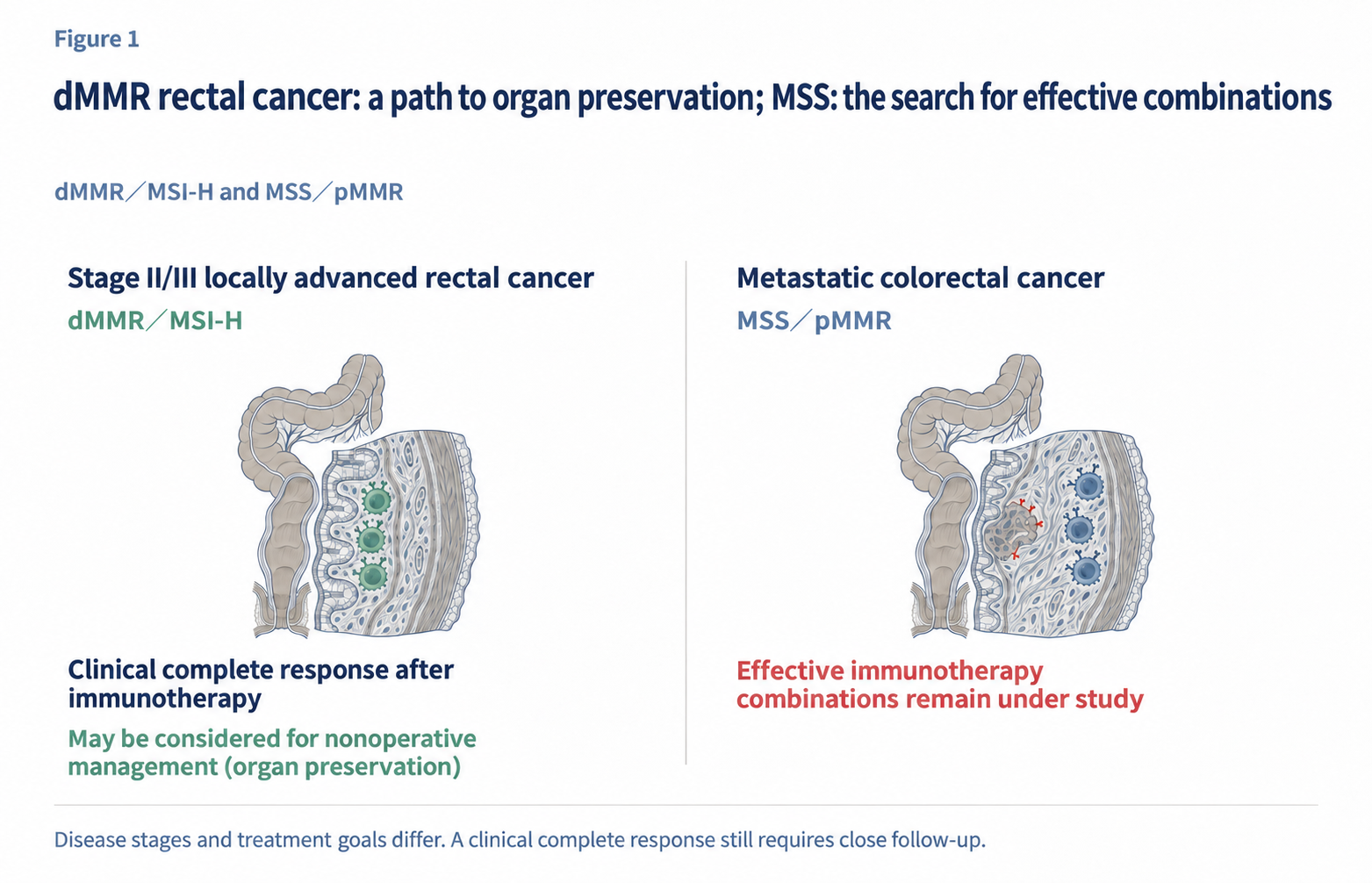
On October 19, 2026, the U.S. FDA granted accelerated approval to GSK's Jemperli (dostarlimab), based on AZUR-1 data, for adults with stage II/III locally advanced rectal cancer with deficient mismatch repair or high microsatellite instability (dMMR/MSI-H). Patients receive immunotherapy first. Those who achieve a clinical complete response may, after evaluation, be managed nonoperatively under close surveillance, potentially avoiding surgery and radiation while preserving the rectum. [1]
This approval applies to locally advanced dMMR/MSI-H rectal cancer. A different and still largely unsolved challenge is metastatic colorectal cancer that is microsatellite stable and mismatch-repair proficient (MSS/pMMR). Over the past decade, major drugmakers have tested many immunotherapy combinations in this population, but only a handful have improved survival in Phase 3 trials.
That same month, ESMO 2026 delivered another signal: in a Phase 3 trial in advanced melanoma, an HDAC inhibitor plus a PD-1 antibody improved progression-free survival. The result adds a piece of evidence to the therapeutic strategy behind Anbogen Therapeutics' ABT-301 triplet and sharpens the central question: can this approach work in MSS colorectal cancer? [8]
01 Why the Same Immunotherapy Needs a Different Combination
dMMR tumors cannot repair DNA properly. They accumulate more mutations and neoantigens, making them easier for the immune system to recognize. Once a PD-1 antibody releases the brake, T cells have a chance to attack.
In the FDA's review of AZUR-1, 154 patients received treatment. Among the 116 independently assessed, response-evaluable patients, 54 (47%) achieved a clinical complete response lasting 12 months. For people with rectal cancer, organ preservation can also reduce the effects of surgery and radiation on bowel, urinary, and reproductive function. A clinical complete response still requires follow-up confirmation and should not be treated as a cure. [1,22]
MSS tumors face a different set of barriers. Many have fewer mutations and neoantigens, making immune recognition more difficult. Abnormal blood vessels and stroma may keep T cells out, while myeloid-derived suppressor cells and regulatory T cells dampen the immune response. Releasing the PD-1 brake alone is often not enough to get the system moving.
That does not mean Jemperli has failed in MSS disease. GSK is testing dostarlimab plus chemotherapy in resectable, locally advanced MSS colon cancer in AZUR-4. The same drug may require a different combination for a different tumor biology. [2]
02 Beyond Response Rate the Harder Hurdle Is Survival
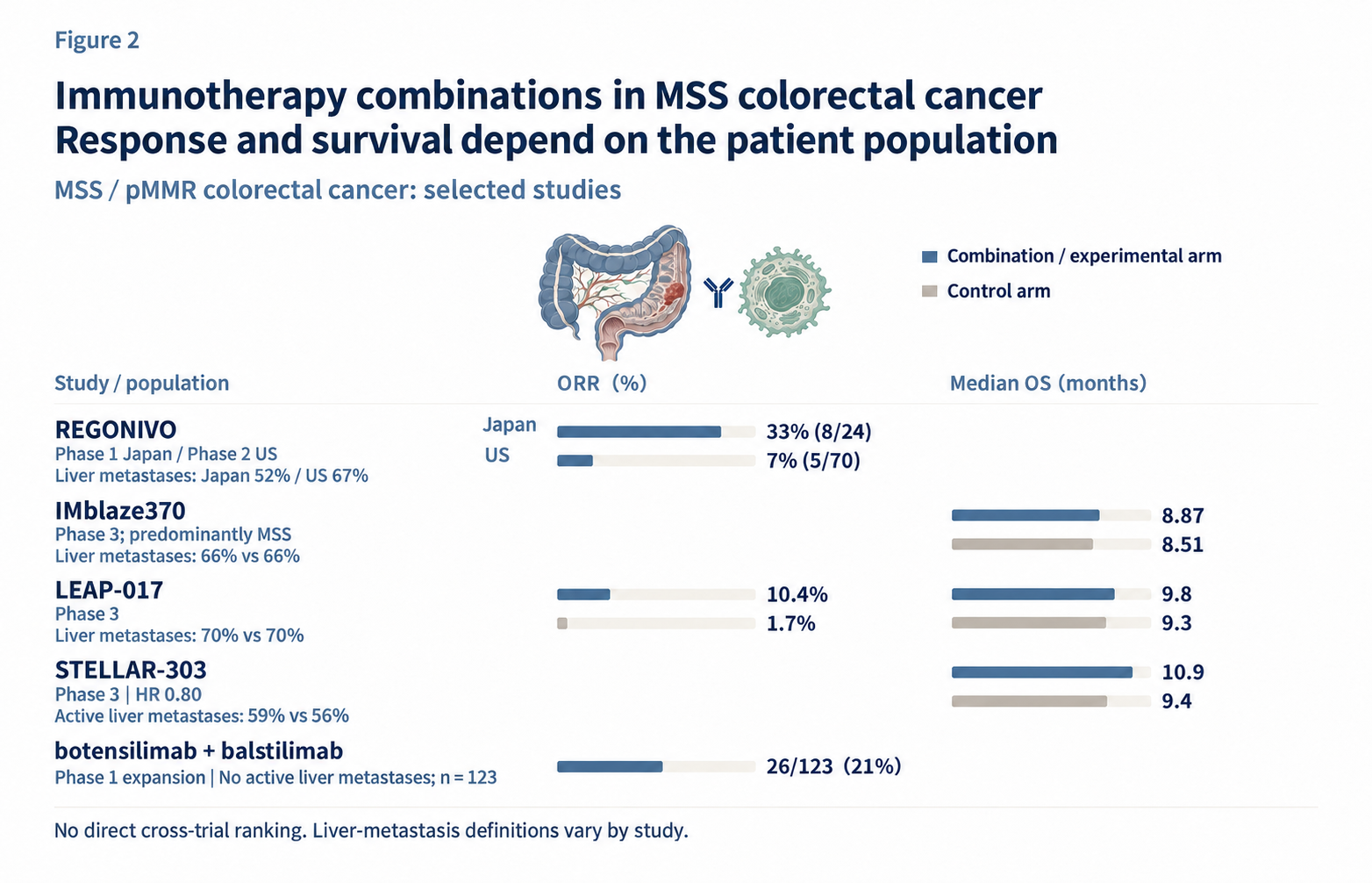
When comparing representative trials, response rates and survival need to be considered alongside prior lines of therapy and the definitions and prevalence of liver metastases:
| Trial and phase | Study regimen | Prior treatment and liver metastases | Objective response rate | Median OS (months) |
|---|---|---|---|---|
| REGONIVO Japan Phase 1b [3] |
regorafenib + nivolumab | CRC cohort: ≥3 prior lines, 80% (20/25) Baseline liver metastases: 52% (13/25) |
MSS: 33% (8/24) |
Single-arm No cross-trial comparison |
| U.S. Phase 2 [4] | regorafenib + nivolumab | Prior anticancer regimens: 2, 43%; ≥3, 53%* Baseline liver metastases: 67% (47/70) |
7% (5/70) All responders had no baseline liver metastases |
Single-arm No cross-trial comparison |
| IMblaze370 Phase 3 [5] |
cobimetinib + atezolizumab vs. regorafenib | ≥2 prior systemic chemotherapy regimens Baseline liver metastases: 66% (121/183) vs. 66% (59/90) |
— | 8.87 vs. 8.51 HR 1.00 |
| LEAP-017 Phase 3 [6] |
lenvatinib + pembrolizumab vs. physician's choice | Pooled: 2 prior lines, 51%; ≥3 lines, 46% Baseline liver metastases: 70% in each arm |
10.4% vs. 1.7% | 9.8 vs. 9.3 HR 0.83 Prespecified threshold not met |
| STELLAR-303 Phase 3 901 patients [7] |
zanzalintinib + atezolizumab vs. regorafenib | Median 2 prior systemic therapy lines Active liver metastases: 59% (264/451) vs. 56% (254/450) |
— | 10.9 vs. 9.4 HR 0.80 Overall-population endpoint met |
| C-800-01 Phase 1b expansion [9] |
botensilimab + balstilimab | Multiple prior lines 123 patients without active liver metastases |
21% (26/123) |
Single-arm No cross-trial comparison |
Table notes: Patient populations, prior treatment, control arms, and data cutoffs differ across trials, precluding direct ranking. In the Japanese REGONIVO study, prior treatment and liver-metastasis percentages use all 25 patients with colorectal cancer as the denominator; ORR uses the 24 patients with MSS disease. A dash indicates a result not listed in this table.
* The 43% and 53% in the U.S. Phase 2 study refer to prior anticancer treatment regimens, including neoadjuvant, adjuvant, and repeated regimens. They should not be equated directly with lines of therapy. The 51% and 46% in LEAP-017 are pooled across both arms.
Liver metastases at baseline and active liver metastases are not interchangeable. Patients without active liver metastases may include those who have never had liver metastases and those whose previously treated liver metastases meet the study's stability criteria after local therapy. STELLAR-303 required the relevant local treatment to have occurred at least six months before enrollment, with no subsequent radiographic progression. C-800-01 also enrolled patients without active liver metastases. Each trial must be interpreted using its own definitions. [9,18]
Together, these studies offer three lessons:
First, eye-catching results from a small trial may not be reproducible. REGONIVO's response rate fell sharply from the Japanese Phase 1 study to the U.S. Phase 2 study. Sample size, patient mix, and the prevalence of liver metastases differed between the trials, but the development lesson is clear: early numbers must be confirmed in larger populations that more closely resemble real-world practice.
Second, tumor shrinkage still has to translate into a survival benefit. LEAP-017 produced a numerically higher response rate, but not an OS improvement that crossed the prespecified statistical threshold. Grade 3 or higher treatment-related adverse events occurred in 58.4% of the combination arm versus 42.1% of the control arm. Developers have to evaluate efficacy and patient tolerability together. [6]
Third, patient mix shapes how results should be interpreted. Some early studies with higher response rates had a lower prevalence of liver metastases or excluded patients with active liver metastases. These are important conditions for interpreting the results, not evidence that one combination is more effective than another. The botensilimab data came from a single-arm study in patients without active liver metastases. STELLAR-303 met its OS endpoint in the overall population, but the final analysis of the co-primary endpoint in patients without active liver metastases, reported in 2026, was not statistically significant. [7,9,17]
Competition is also moving across drug modalities. The PD-1/VEGF bispecific antibody ivonescimab is being paired with chemotherapy in the first-line setting, while the antibody-drug conjugate telisotuzumab adizutecan plus bevacizumab is being tested in later lines. [10,11]
STELLAR-303's Phase 3 survival evidence in the overall population is an important advance. But the trials differ in patients, lines of therapy, and control arms, so they should not be ranked by response rate or survival months. What the next generation of combinations must deliver is a reproducible response, durable disease control, and a regimen patients can stay on.
03 New ESMO Evidence Takes HDAC Plus PD-1 into Phase 3 Validation
HDAC inhibitors have been marketed in hematologic malignancies for years. In solid tumors and immunotherapy combinations, however, development has repeatedly run into two questions: which tumors are the right fit, and can patients stay on treatment long enough?
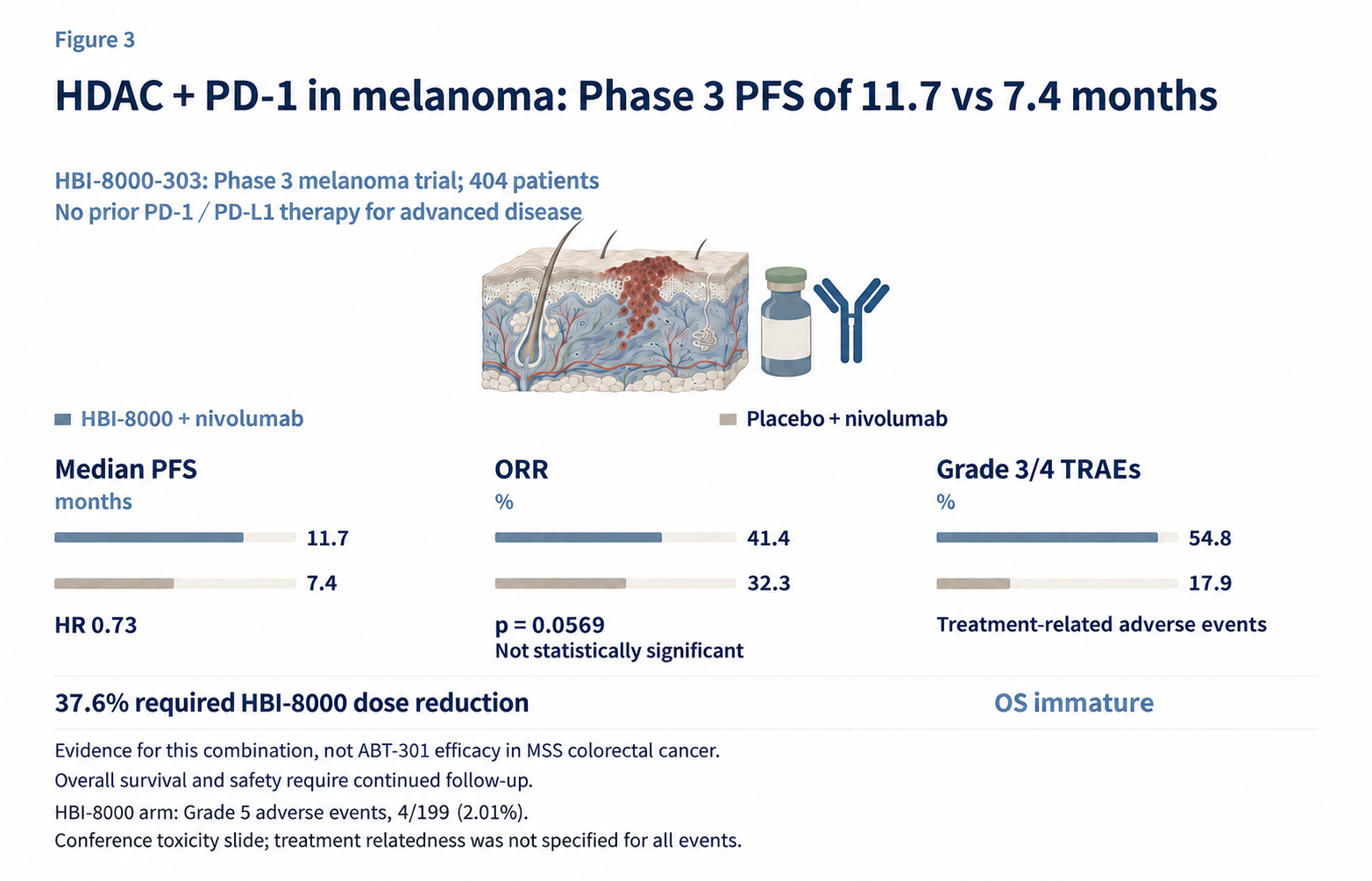
HBI-8000-303 was a randomized, double-blind, placebo-controlled Phase 3 trial in 404 patients with advanced melanoma. It compared HBI-8000 (tucidinostat/chidamide) plus nivolumab with placebo plus nivolumab. Enrollment primarily involved patients who had not received PD-1/PD-L1 inhibitors for advanced disease; this does not mean all patients were naive to every systemic therapy: [19,20]
• Median progression-free survival (PFS): 11.7 versus 7.4 months; hazard ratio 0.73 [8]
• Objective response rate (ORR): 41.4% (84/203) versus 32.3% (65/201), numerically higher but not statistically significant (p=0.0569) [19]
• Grade 3/4 treatment-related adverse events: 54.8% versus 17.9%
• A conference toxicity-discussion slide separately reported grade 5 adverse events (deaths) in 4/199 patients (2.01%) in the HBI-8000 arm. That line did not establish that all events were treatment-related or report the corresponding control-arm figure. [19,21]
• HBI-8000 dose reductions were required in 37.6% (approximately 38%) of patients in the combination arm [23]
• Overall survival data remain immature; durability of benefit and safety require further follow-up [23]
The PFS improvement provides randomized Phase 3 evidence that adding an HDAC inhibitor to PD-1 therapy can deliver incremental benefit in melanoma. The accompanying adverse events and dose reductions raise the next development question: once efficacy is added, can patients maintain a clinically useful treatment intensity?
Melanoma is already more responsive to immunotherapy, so the role of an HDAC inhibitor there may be to accelerate a vehicle that is already moving. MSS colorectal cancer first has to get the vehicle started. HBI-8000 increases the credibility of the strategy, but ABT-301's benefit in MSS disease must still be established in its own human trial.
04 Why Three Drugs Are Being Studied Together in a Cold Tumor
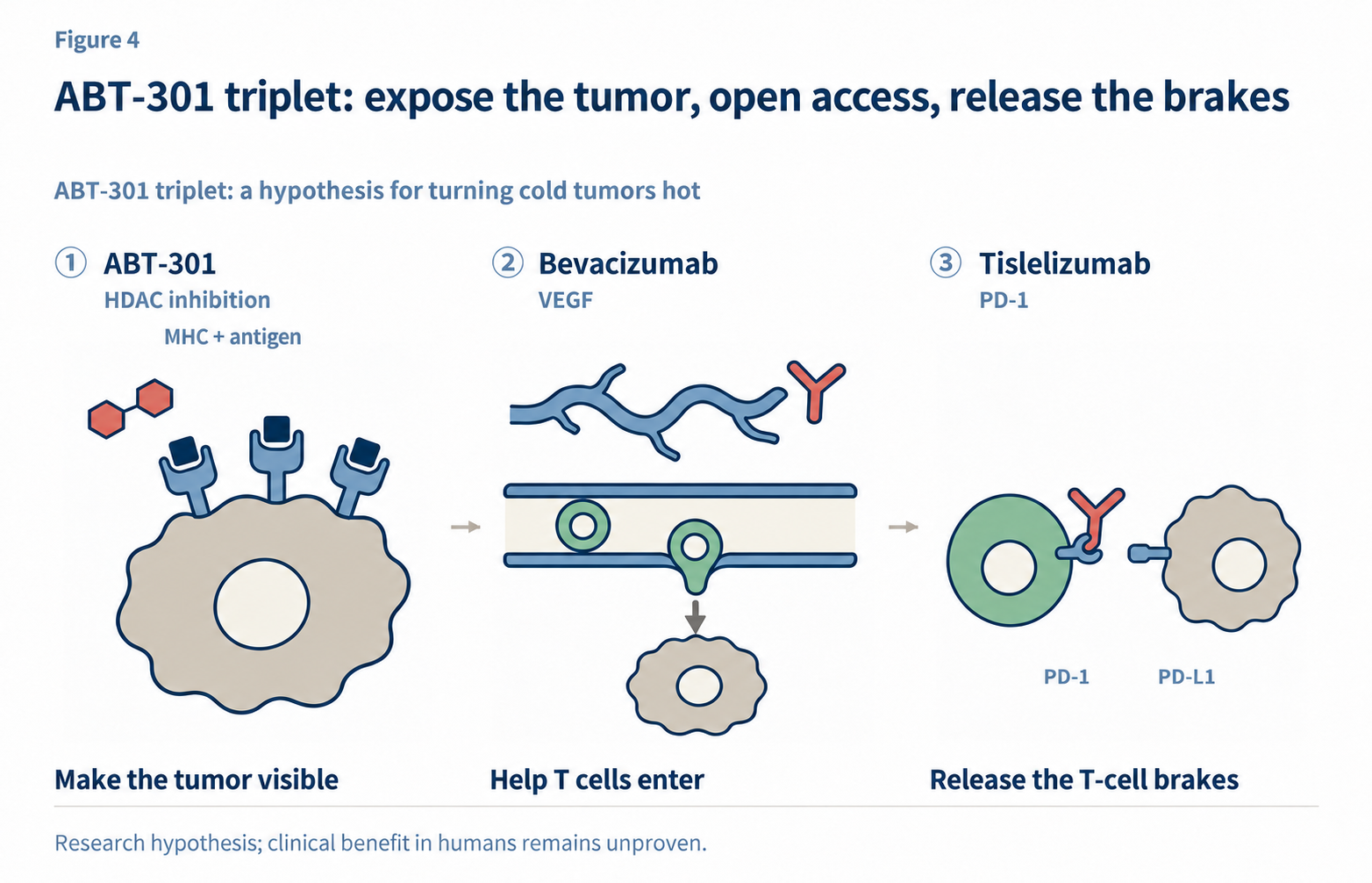
To turn a cold tumor hot, researchers aim to address three problems at once: make the tumor visible, help T cells enter, and keep them active once they are inside. The ABT-301 triplet assigns a different role to each agent:
1. ABT-301 (Imofinostat): an oral Class I/IIb HDAC inhibitor intended to increase tumor visibility and reduce immune suppression through epigenetic modulation.
2. Bevacizumab: a VEGF inhibitor intended to improve the conditions for immune-cell entry through vascular modulation.
3. Tislelizumab: a PD-1 antibody intended to release the T-cell brake.
A randomized Phase 2 study in MSS colorectal cancer has provided an early signal for the HDAC-plus-PD-1-plus-antiangiogenic approach. CAPability-01 enrolled 48 patients. ORR was 44% (11/25) with the chidamide, sintilimab, and bevacizumab triplet versus 13% (3/23) with the chidamide and sintilimab doublet. The study also reported two treatment-related deaths. Because both arms contained an HDAC inhibitor, the comparison primarily signals the effect of adding antiangiogenic therapy; it cannot isolate the independent contribution of HDAC inhibition. [12]
A mechanistic study in Cancer Discovery provides a further biological rationale for the triplet. While chidamide enhances CD8 T-cell activity, it may also induce tumor-associated macrophages to secrete VEGFA, creating a resistance pathway. That makes antiangiogenic therapy a rational combination partner. [13]
ABT-301 also has animal evidence: a CT26 mouse study disclosed in a public patent supports studying ABT-301 with the anti-PD-L1 antibody avelumab. These are patent-disclosed mouse results for a doublet, not evidence of human efficacy for the ABT-301, tislelizumab, and bevacizumab triplet. [16]
Together, the clinical and animal signals narrow Anbogen's task to two questions: at a dose patients can tolerate, can ABT-301 produce meaningful immune modulation, and can those effects translate into durable clinical benefit?
05 ABT-301 Focuses on Once Daily Dosing and Further Dose Optimization
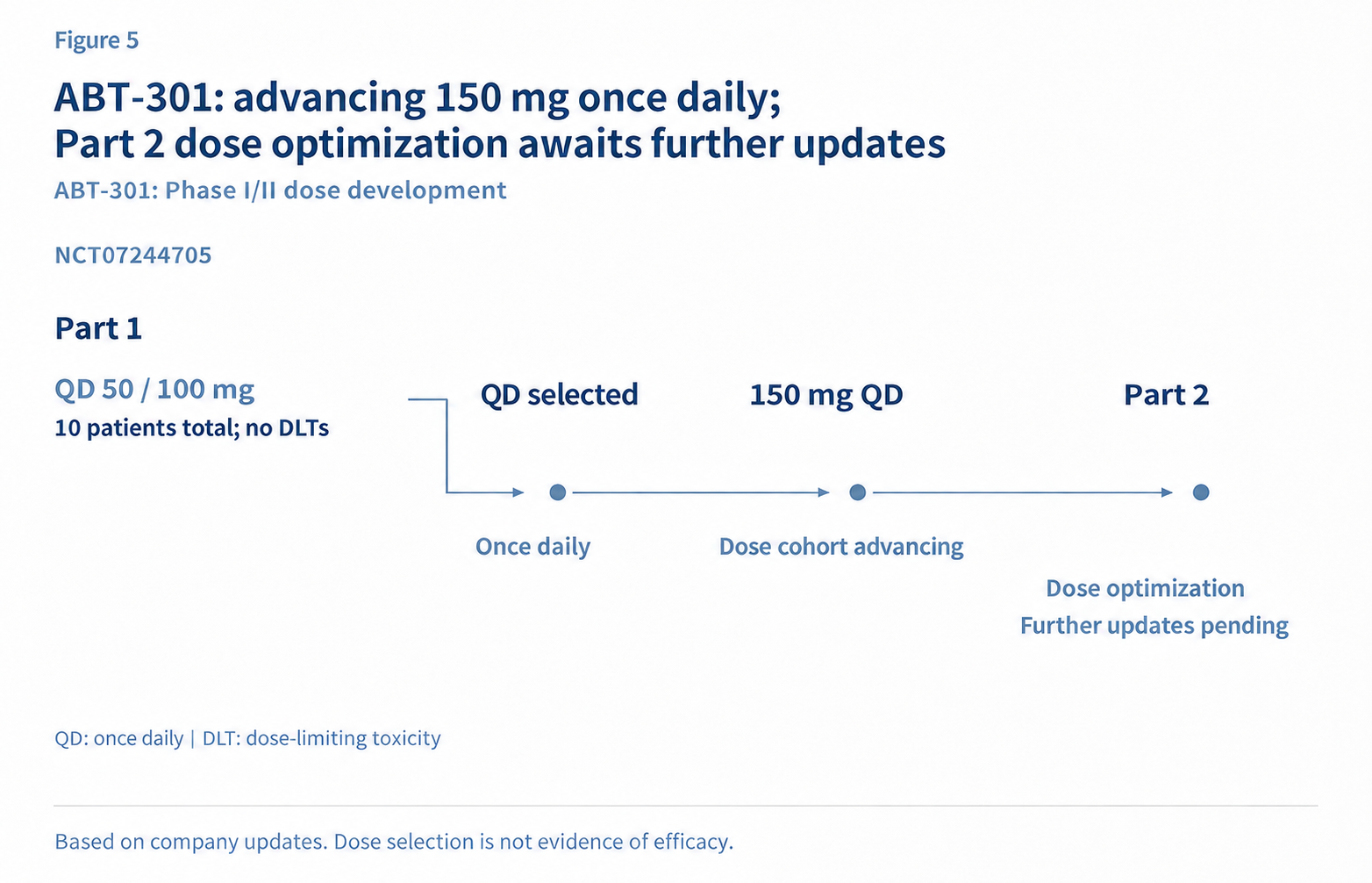
The Phase I/II trial of the ABT-301 triplet (NCT07244705) enrolls patients with locally advanced or metastatic pMMR/non-MSI-H colorectal cancer. The public registry specifies at least two prior lines of systemic therapy. Part 1 is designed to identify a safe dose; Part 2 will optimize dosing while evaluating preliminary activity. [14,15]
On October 5, Anbogen disclosed Part 1 progress through September 30: [14]
1. Across the 50 mg and 100 mg once-daily (QD) cohorts, 10 patients were treated and no dose-limiting toxicities (DLTs) were observed.
2. Based on safety and pharmacokinetics, the company selected QD dosing and advanced to a 150 mg QD cohort.
Safety and pharmacokinetic findings supported the company's decision to focus development on once-daily dosing. These were small, nonrandomized dose cohorts, and the DLT window primarily covered the first 21 days. The findings therefore cannot establish comparative long-term safety. The next challenge is to connect the exposure needed for immune modulation with a dose patients can sustain. [15]
According to the public trial registry, Part 2 will compare two doses or dosing regimens and assess activity and tolerability. The specific start date and progress at study sites remain subject to subsequent company announcements and registry updates. [15]
Part 2 will have to answer the same questions posed to every combination discussed in Section 2: can responses be reproduced in a clearly defined population, can disease control last long enough, and can patients maintain the dose? Data worth reviewing together will include the response-rate denominator, the proportion of patients with liver metastases, duration of response, and rates of dose reduction and discontinuation. Results also need to distinguish liver metastases at baseline from active liver metastases. The public registry does not categorically exclude liver metastases, but the actual proportion of enrolled patients with liver metastases must be confirmed from trial data. [15]
Jemperli gives eligible patients with stage II/III dMMR/MSI-H rectal cancer a chance to preserve the organ, while MSS/pMMR colorectal cancer still needs more options capable of changing outcomes. The Phase 3 melanoma result adds clinical support for combining HDAC inhibition with immunotherapy. In cold tumors, the next competition will be over durable benefit and a treatment intensity patients can maintain. Based on public updates, ABT-301 has focused development on QD dosing, advanced a 150 mg cohort, and planned further dose optimization. Its ability to generate reproducible human evidence will determine its position in the MSS combination landscape.
This article is an industry and company analysis. It does not constitute investment or medical advice.
References
1. FDA. Dostarlimab accelerated approval: locally advanced rectal cancer. 2026-10-19.
2. ClinicalTrials.gov. AZUR-4 (NCT06567782).
3. REGONIVO. Journal of Clinical Oncology. 2020.
4. Regorafenib plus nivolumab: U.S. Phase 2 study. 2023.
5. IMblaze370. The Lancet Oncology. 2019.
6. LEAP-017. Journal of Clinical Oncology. 2024.
7. Hecht JR, et al. STELLAR-303: zanzalintinib plus atezolizumab versus regorafenib. The Lancet. 2025.
8. HUYABIO International. HBI-8000-303 Phase 3 announcement. 2026-10-23.
10. Ivonescimab plus mFOLFOX6. ASCO 2026. Abstract 3576.
11. Telisotuzumab adizutecan plus bevacizumab. Annals of Oncology. 2026.
12. CAPability-01. Nature Medicine. 2024.
13. Vascular Normalization Augments the Anti-tumor… Cancer Discovery. 2025.
14. Anbogen Therapeutics. ABT-301 clinical update. 2026-10-05.
15. ClinicalTrials.gov. ABT-301 (NCT07244705).
17. Exelixis. STELLAR-303 trial update. 2026-06-22.
19. Khushalani NI. HBI-8000-303. ESMO 2026; LBA54. Slides reproduced by KOL Pulse.
20. National Cancer Institute. HBI-8000 + nivolumab trial (NCI-2022-06408).
21. Michielin O. LBA54 – RESULTS: TOXICITY. ESMO 2026. Slide photograph provided 2026-11-11.
22. FDA. Jemperli prescribing information. 2026.
23. ESMO Congress 2026. Melanoma session; LBA54.
Share this analysis
Send this article to readers who follow biotech, company strategy, and capital-market signals.
Cite this article
For decks, research notes, or media references, cite Drugnews with the canonical article URL.
Drugnews Editorial Team. "Unmet Needs in MSS Colorectal Cancer and the Potential Role of HDAC Inhibition." Drugnews, Nov 18, 2026. https://drugnews.com.tw/articles/2026-11-18-anbogen-abt301-mss-colorectal-hdac-en.html