
On November 26, a story spread among Chinese-speaking investors.
Anthropic, the AI company behind Claude, was going to buy the U.S. drugmaker Bristol Myers Squibb (BMS).
It’s a big idea, and there’s some logic to it. Anthropic has money, models, and a wet lab of its own. BMS has already moved to roll out Claude across the company.
We took the idea seriously and ran the numbers for Anthropic.
AI companies will eventually buy drug development capabilities. They’ll look for small companies that can speed up the cycle of prediction, experiment, and data feedback, rather than a large drugmaker like BMS.
By the end of 2027, neither Anthropic nor OpenAI will have bought a drugmaker with a market capitalization of $50 billion or more.
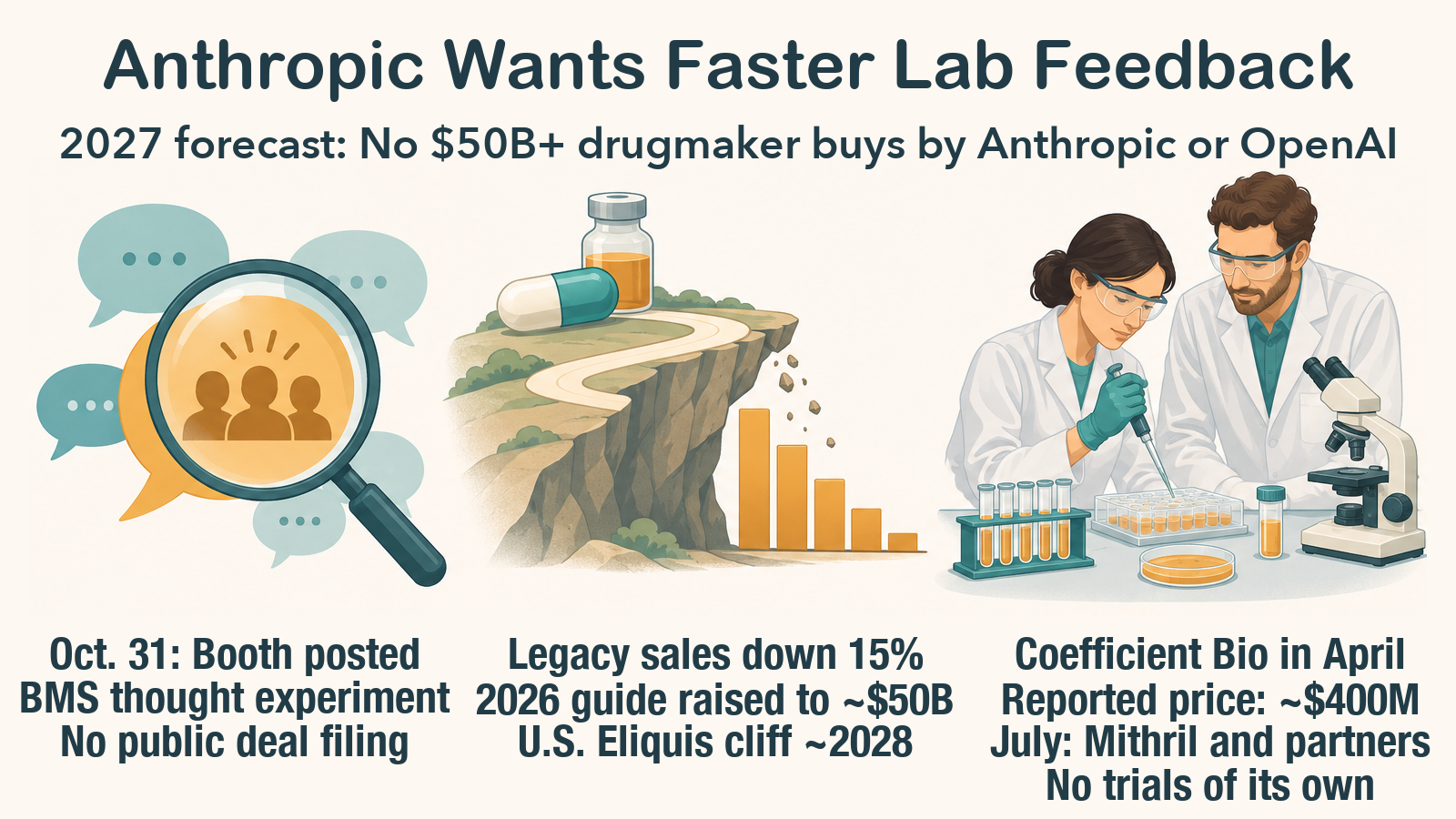
Booth’s Halloween thought experiment about BMS became a takeover rumor, BMS raised guidance ahead of the Eliquis exclusivity cliff, and Anthropic’s life sciences deals and partnerships show how it is adding research capabilities without buying a large established drugmaker.
01 · Where the rumor came from
The article that circulated attributed the story to a Halloween thought experiment by Bruce Booth, a partner at Atlas Venture.

We traced it back to the source. On October 31, Booth posted a thought experiment on X: Anthropic could afford to buy BMS.
He explicitly called it a thought experiment and gave no indication that either side was in talks.
We found no acquisition in announcements by Anthropic or BMS, or in filings BMS made with the U.S. Securities and Exchange Commission.
This was no deal leak. It was a veteran venture capitalist’s Halloween question that turned into a takeover rumor.
It’s easy to see why. Anthropic has been busy in the life sciences this year.
02 · Anthropic is in a position to buy
Put this year’s moves in order:
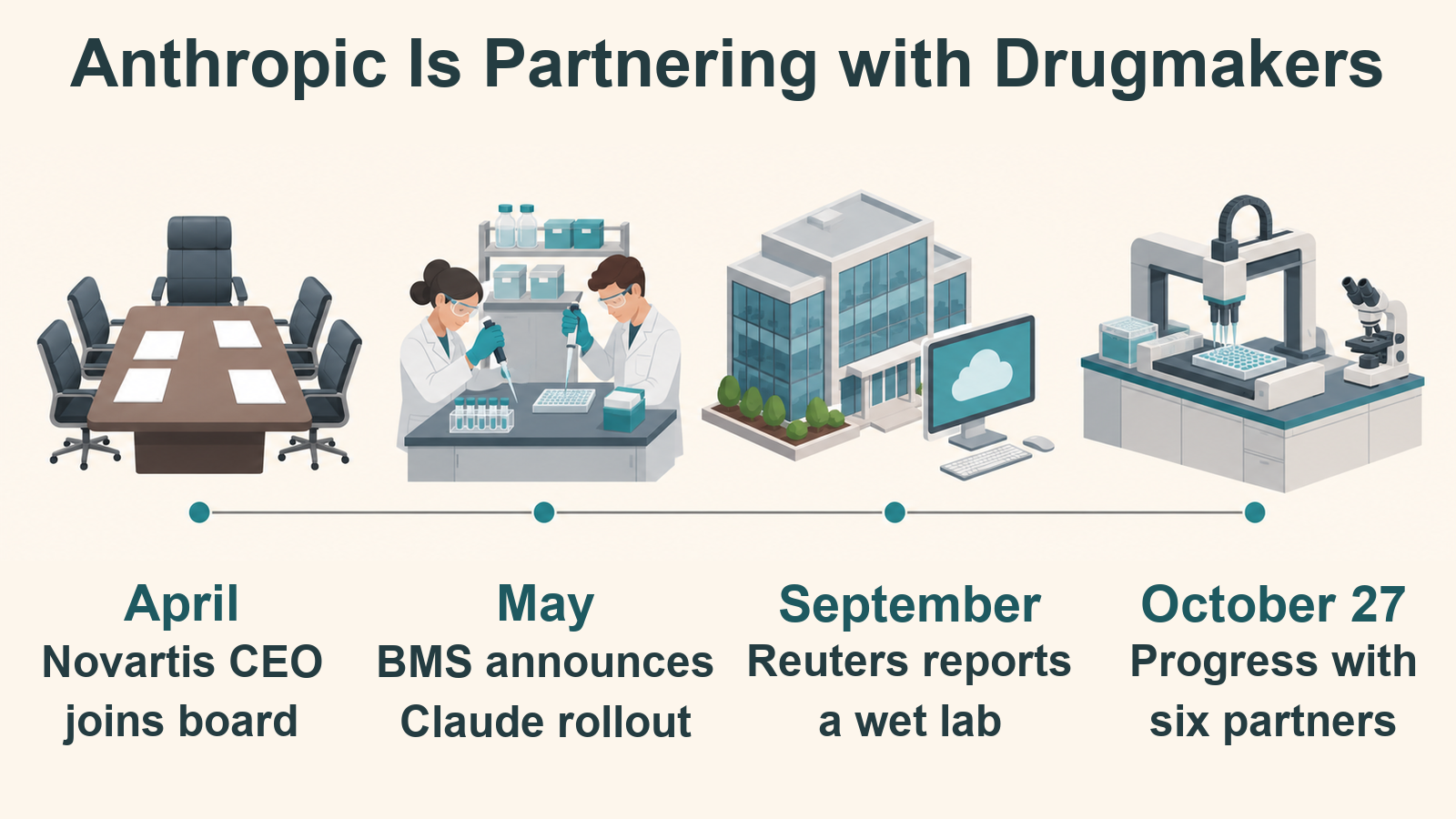
Novartis’s CEO joined the board in April and BMS said in May it would roll out Claude across its global operations, Reuters reported Anthropic’s wet lab in September, and Anthropic shared its work with six research partners on October 27.
- In April, Novartis CEO Vas Narasimhan joined the board.
- In April, Anthropic bought the small startup Coefficient Bio. The Information reported the price was about $400 million in stock.
- In May, BMS announced it would roll out Claude across its global operations, from research and clinical development to manufacturing.
- In September, Reuters reported that Anthropic had set up a wet lab in the San Francisco Bay Area.
- In July, Anthropic bought Mithril Medicine, which had one full-time employee before the acquisition. On October 27, Anthropic reported progress and disclosed drug R&D partnerships with six organizations, including BMS and Generate Biomedicines.
Anthropic has the people, the money, the lab, and the customers.
What it lacks are the clinical networks, regulatory expertise, and manufacturing capabilities a drugmaker builds up over decades.
Buying BMS looks like a way to get them all at once. The numbers tell a different story.
03 · The first cost is the patent cliff
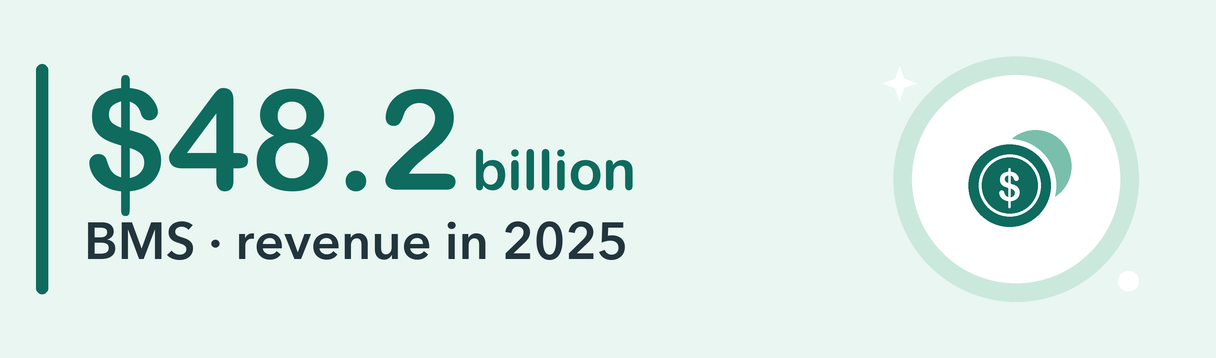
BMS reported $48.2 billion in revenue in 2025, roughly flat from the year before.
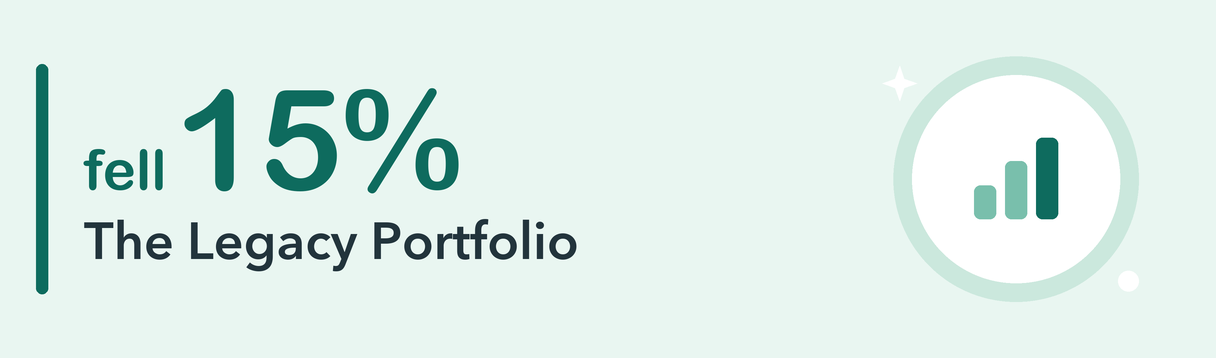
The two portfolios moved in opposite directions. The Growth Portfolio rose 17% to $26.4 billion. The Legacy Portfolio fell 15% to $21.8 billion.
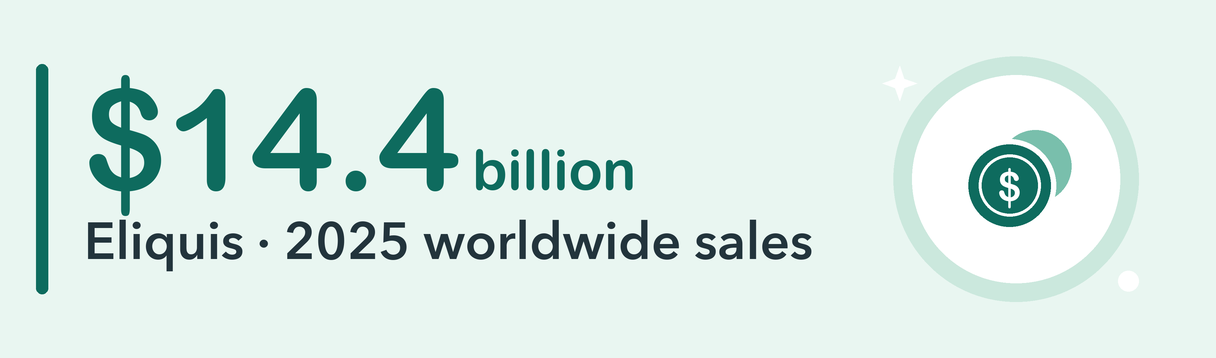
The largest legacy drug is Eliquis, an anticoagulant BMS markets with Pfizer. Its 2025 worldwide sales were $14.4 billion.
GlobalData estimates that U.S. exclusivity ends around 2028 and sales fall to about $200 million by 2031.
The cliff hasn’t arrived yet. In late October, BMS raised its 2026 revenue guidance to $49.75 billion to $50.25 billion, above its 2025 revenue.
That makes this the most expensive point to buy. Buying BMS today would mean getting in at the peak before the cliff.
Sales of Eliquis alone are set to fall by about $14 billion by 2031.
The first job after buying BMS would be closing that gap, before any attempt to rebuild R&D.
Closing it takes licensing, acquisitions, sales teams, and drug-price negotiations. Those are a drugmaker’s skills, not an AI company’s.
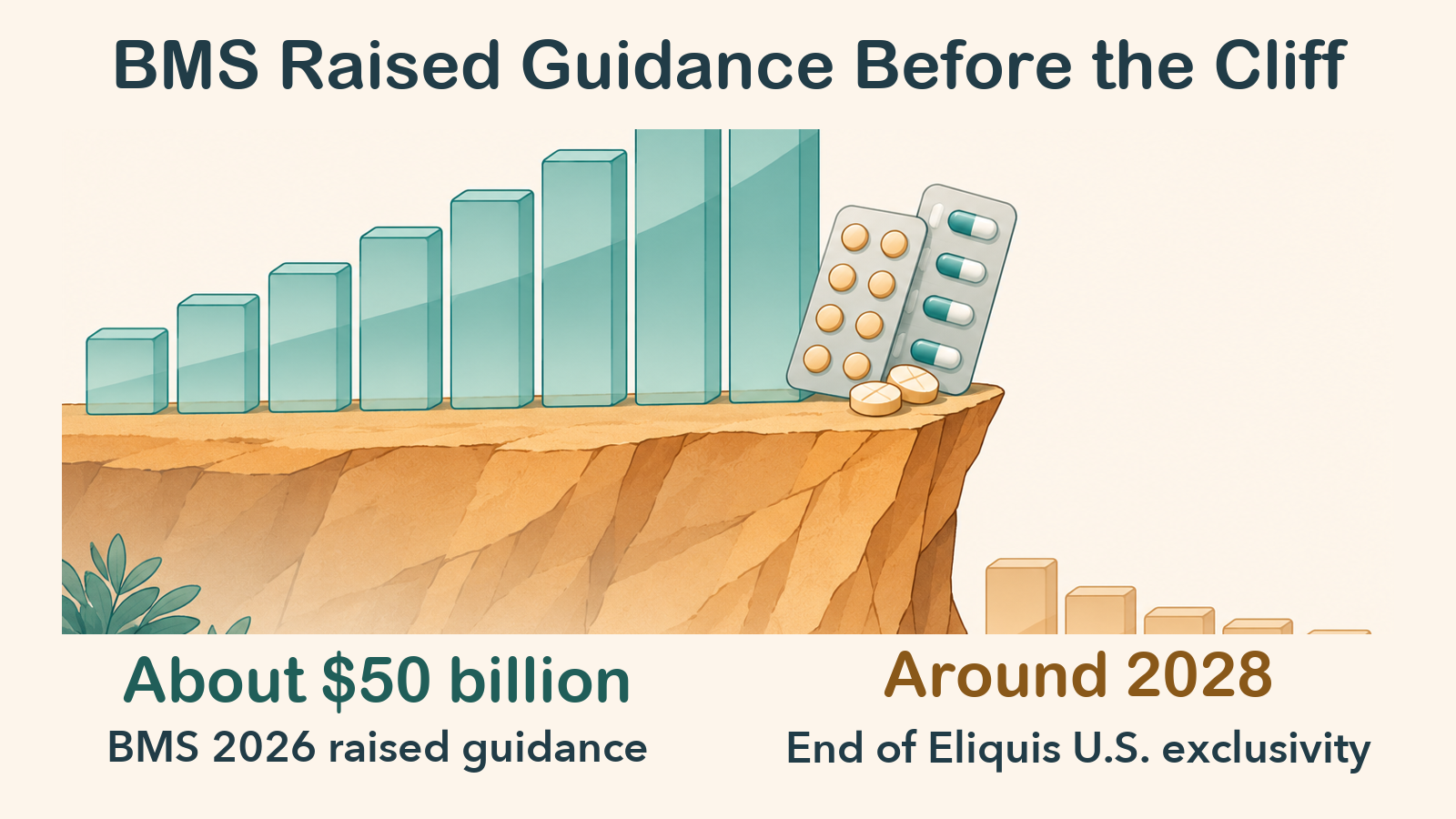
BMS raised its 2026 revenue guidance to about $50 billion, above its 2025 revenue, but the sales cliff for Eliquis comes after its U.S. exclusivity is expected to end around 2028, leaving a gap a buyer would have to fill.
04 · The costliest part is the customers
Anthropic’s business in medicine is to sell Claude to every drugmaker.
BMS is a customer. Genentech and Novo Nordisk, both named in the Reuters report, also use Anthropic’s tools. Novartis’s CEO sits on Anthropic’s board.
If Anthropic bought BMS, it would go from selling shovels to digging on the same ground as its customers.
Would Roche, Novo, and Novartis still put their R&D data into a model owned by their competitor’s parent company?
The cost of that would be far higher than the purchase price.
Eric Kauderer-Abrams, Anthropic’s head of life sciences, told Reuters that Anthropic does not compete with pharma and biotech companies whose business is bringing drugs to market.
It does not currently run its own clinical trials, and concerns about competing are part of the reason.
05 · The science depends on faster validation
A model can propose a molecule. Whether it works is a question for experiments in cells, in animals, and eventually in people.
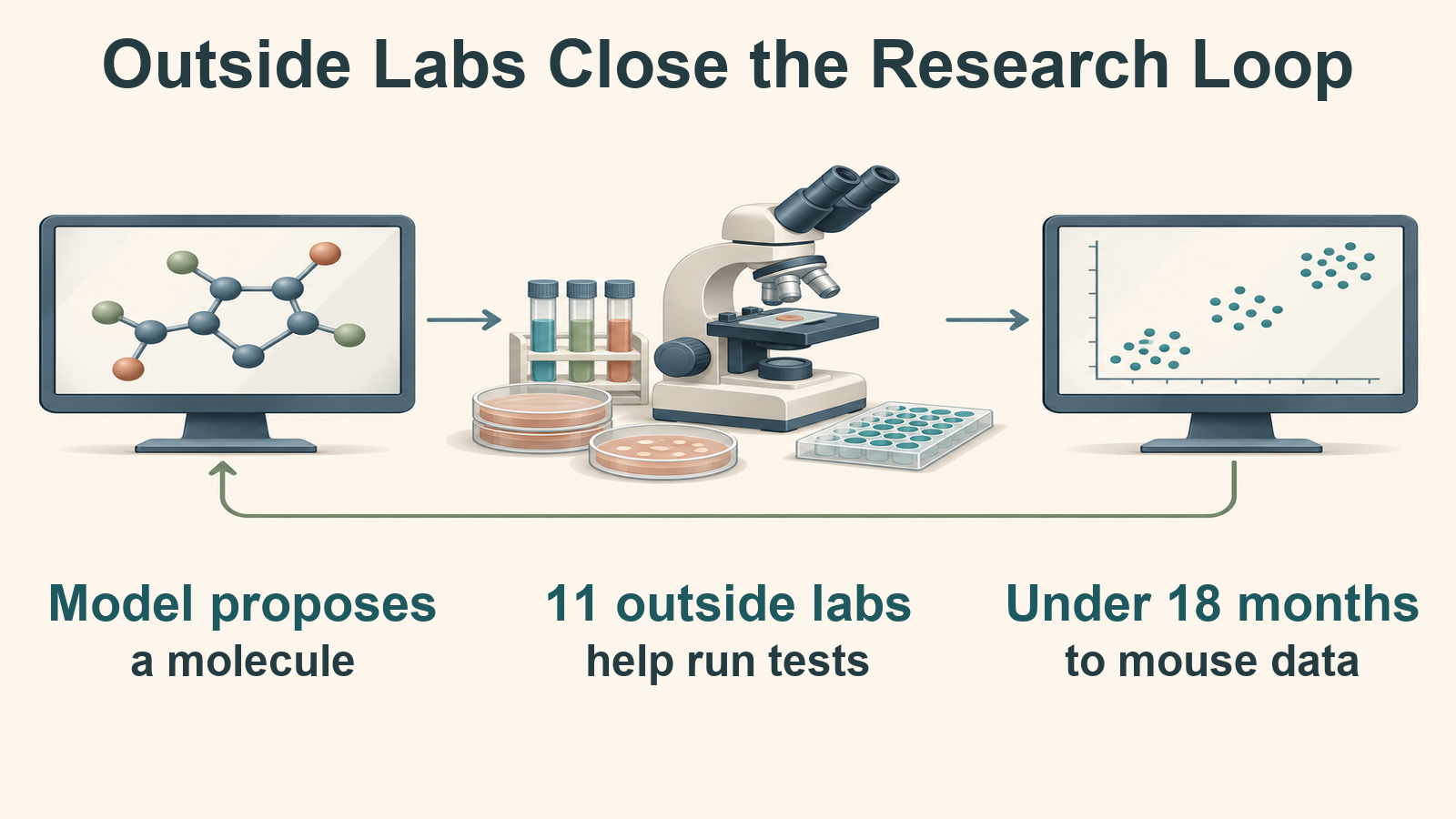
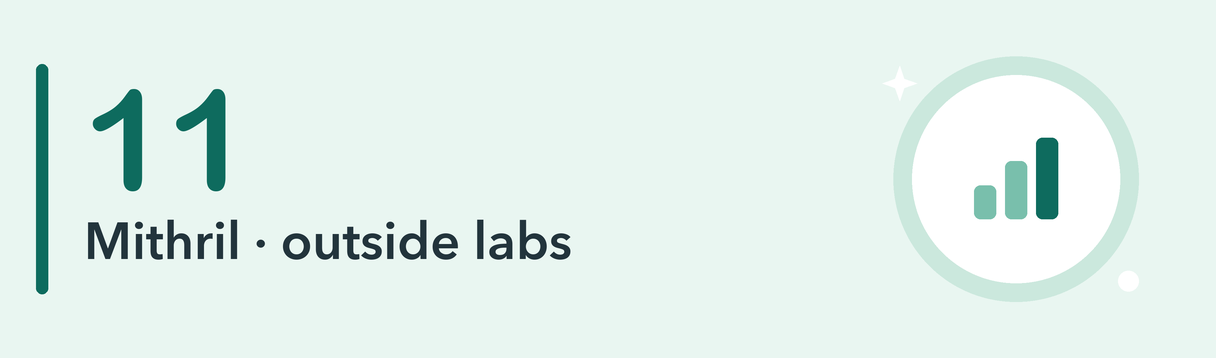
The model proposes a molecule for a wet lab and outside CROs to test, their results come back to inform the next prediction, and Mithril shows what that loop can do by coordinating 11 outside labs to generate mouse data in less than 18 months.
When testing is slow, the model learns slowly. That’s the biggest bottleneck in AI drug development.
Booth made the same point in his October 30 LifeSciVC post. So far, AI primarily helps teams design molecules faster for known targets.
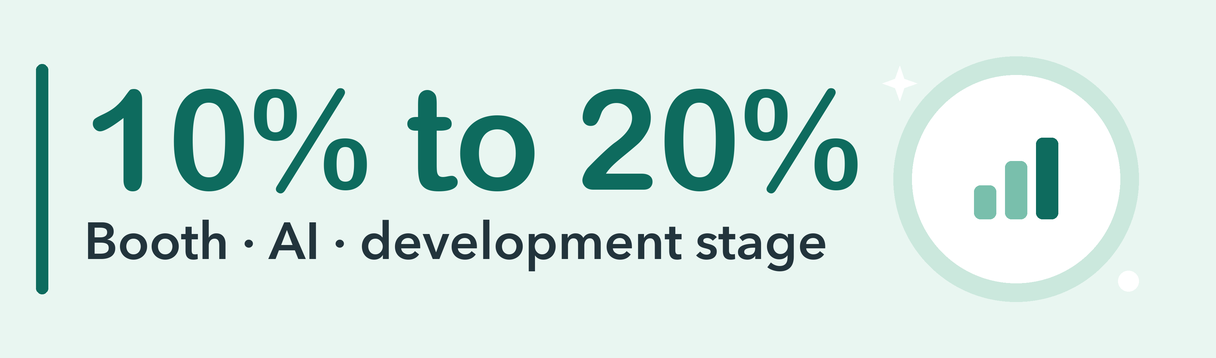
Each of the eight most popular targets already has more than 100 R&D projects. Booth estimates AI improves the development stage by just 10% to 20%.
What’s missing is new biology, and that only comes from experiments.
Mithril showed another way. Its founder used Claude to coordinate 11 outside labs and obtained mouse data for a muscular dystrophy drug in less than 18 months.
If all the conditions are met, it could be ready to begin human trials by late 2028 at the earliest.
That loop takes neither tens of thousands of employees nor factories and sales teams. Buying BMS would mostly get an AI company things it doesn’t need.
06 · What an AI company would actually buy
Take the thought experiment a step further.
If an AI company did spend serious money to acquire drug development capabilities, this is what its target would look like.
- Small and focused. Rare diseases and hard-to-drug targets, such as the rare muscle diseases Mithril works on.
- Comes with experimental data. It has its own high-throughput experiments or automation platform, with clean data the model can use directly.
- Validates quickly. It can go from a hypothesis to animal data in months, not years.
- Within a price range Anthropic has already paid. Coefficient Bio reportedly cost about $400 million, and Mithril’s price was not disclosed.
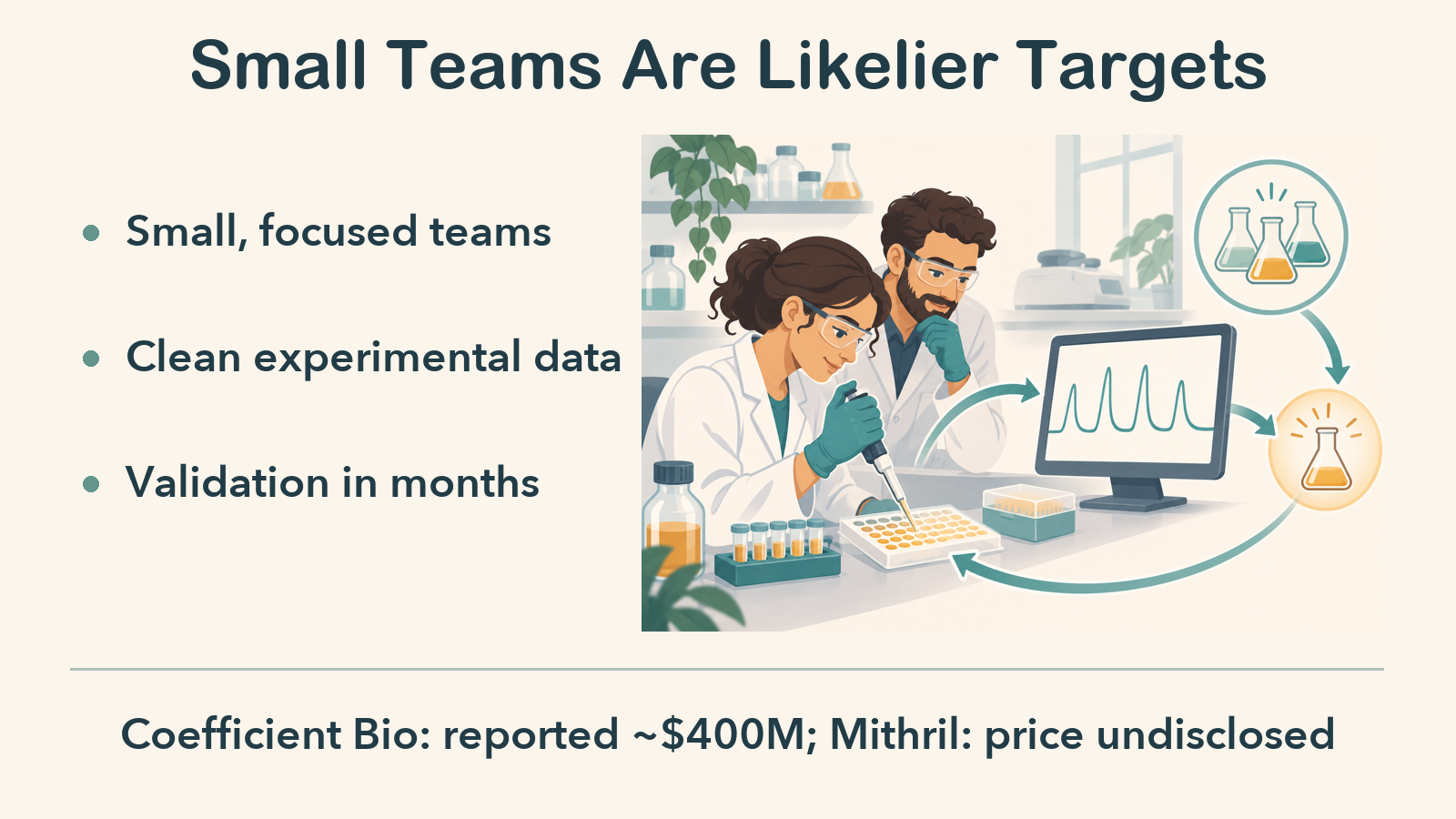
Likely targets bring clean experimental data and can move from a hypothesis to animal results in months, with Coefficient Bio reportedly costing about $400 million and the price of Anthropic’s deal for Mithril not disclosed in its public research update.
That list is good news for Taiwanese biotech.
Early-stage assets for rare diseases sit at one end of the loop. CROs and CDMOs that can deliver accurate experimental data quickly sit at the other.
Calls and how we’ll check them
- By December 31, 2027, neither Anthropic nor OpenAI will announce the acquisition of a drugmaker with a market capitalization above $50 billion. We’re 90% confident. If either company announces such a deal, we’re wrong.
- By February 26, 2027, Anthropic will announce at least one more drugmaker or biotech R&D partner. We’re 70% confident. If it hasn’t announced one by then, we’re wrong.
For anyone wondering what happens when an AI company buys a drugmaker, the answer lies in Anthropic’s one-person Mithril acquisition and not in BMS’s $48.2 billion in revenue.
This article analyzes the industry and the companies. It does not constitute investment or medical advice.
References
- Bruce Booth, DPhil · Atlas Venture · Undated · https://atlasventure.com/team/bruce-booth-dphil/
- The Fruits of AI Drug Abundance: Indigestion In The Near Term · Bruce Booth / LifeSciVC · 2026-10-30 · https://lifescivc.com/2026/10/the-fruits-of-ai-drug-abundance-indigestion-in-the-near-term/
- Anthropic’s Long-Term Benefit Trust appoints Vas Narasimhan to Board of Directors · Anthropic · 2026-04-14 · https://www.anthropic.com/news/narasimhan-board
- Anthropic quietly sets up biology lab as it ramps AI drug program · Reuters / The Korea Times · 2026-09-18 · https://www.koreatimes.co.kr/world/20260918/anthropic-quietly-sets-up-biology-lab-as-it-ramps-ai-drug-program
- Bristol Myers Squibb Announces Strategic Agreement with Anthropic · Bristol Myers Squibb · 2026-05-20 · https://news.bms.com/news/corporate-financial/2026/Bristol-Myers-Squibb-Announces-Strategic-Agreement-with-Anthropic-to-Position-Claude-Enterprise-as-the-Shared-Intelligence-Platform-Across-Its-Global-Operations/default.aspx
- Early progress on accelerating drug development with Claude · Anthropic · 2026-10-27 · https://www.anthropic.com/research/early-progress-drug-development
- Bristol Myers Squibb Reports Fourth Quarter and Full-Year Financial Results for 2025 (Exhibit 99.1) · Bristol Myers Squibb / SEC · 2026-02-05 · https://www.sec.gov/Archives/edgar/data/14272/000001427226000002/a2025q4ex991.htm
- Bristol-Myers Squibb Company 2025 Form 10-K · Bristol Myers Squibb / SEC · 2026-02-11 · https://www.sec.gov/Archives/edgar/data/14272/000001427226000004/bmy-20251231.htm
- Thinning revenues: inside the $14bn Eliquis patent cliff · GlobalData Healthcare / Pharmaceutical Technology · 2026-05-26 · https://www.pharmaceutical-technology.com/analyst-comment/inside-14bn-eliquis-patent-cliff/
- Bristol Myers Squibb Reports Fourth Quarter and Full-Year Financial Results for 2025 · Bristol Myers Squibb · 2026-02-05 · https://news.bms.com/news/corporate-financial/2026/Bristol-Myers-Squibb-Reports-Fourth-Quarter-and-Full-Year-Financial-Results-for-2025/default.aspx
- Halloween thought experiment on Anthropic and BMS · Bruce Booth / X · 2026-10-31 · https://x.com/LifeSciVC/status/2116604695800074576
- Bristol Myers Squibb Reports Third Quarter Financial Results for 2026 · Bristol Myers Squibb · 2026-10-29 · https://news.bms.com/news/details/2026/Bristol-Myers-Squibb-Reports-Third-Quarter-Financial-Results-for-2026/default.aspx
- Bristol Myers Squibb Q3 2026 Financial Results, Exhibit 99.1 · Bristol Myers Squibb / SEC · 2026-10-29 · https://www.sec.gov/Archives/edgar/data/14272/000001427226000022/a2026q3ex991-filing.htm
- Anthropic Acquires Startup Coefficient Bio for About $400 Million · The Information (media report) · 2026-04-03 UTC · https://www.theinformation.com/articles/anthropic-acquires-startup-coefficient-bio-400-million
Share this analysis
Send this article to readers who follow biotech, company strategy, and capital-market signals.
Cite this article
For decks, research notes, or media references, cite Drugnews with the canonical article URL.
Drugnews Editorial Team. "Is Anthropic Buying Bristol Myers Squibb?" Drugnews, Nov 28, 2026. https://drugnews.com.tw/articles/2026-11-28-anthropic-bms-rumor-ai-pharma-math-en.html