
In Taiwan, 1.89 million people carry the hepatitis B virus. Once they start an oral antiviral, most of them take one pill a day for years, often with no end date.
On October 20, the US Food and Drug Administration approved GSK's Hibsago (bepirovirsen). After six months of injections, roughly one patient in five was able to stop every hepatitis B drug, and the virus stayed under control.
It is the first US approval of a hepatitis B drug built around "functional cure."
The FDA will not approve a second functional-cure drug for hepatitis B before April 2028. Hibsago has at least 18 months to itself, and the closest challenger is GSK's own next regimen.
Last month we covered the Japanese approval on August 24. With the US decision in hand, the commercial clock has started.
01 | Ten years on pills, and the virus is still there
Today's oral drugs, such as Baraclude, Viread and Vemlidy, belong to a class called nucleos(t)ide analogues, or NAs.
They do one job very well. They block the virus from copying itself. Taken faithfully, they push viral DNA in the blood below detectable levels and cut the risk of cirrhosis and liver cancer.
The trouble sits inside the nucleus.
When hepatitis B infects a liver cell, it leaves behind a small loop of DNA called cccDNA. Think of it as a blueprint locked in a safe. Oral drugs cannot reach it.
The blueprint keeps printing RNA work orders, and the liver cell keeps making hepatitis B surface antigen (HBsAg). That protein floods the bloodstream and wears out the immune system, which loses track of the real enemy.
Stop the pills, and the virus usually comes roaring back.
The stakes are not small. GSK's announcement puts chronic hepatitis B behind about 1.1 million deaths a year worldwide, and cites the Hepatitis B Foundation's estimate that it accounts for roughly 56% of global liver cancer cases. For decades, the best medicine could offer was control on a leash: keep taking the pill, and the leash holds.
GSK's own figure is blunt. On standard oral therapy alone, fewer than 1% of patients reach functional cure after one year.
Functional cure has a strict definition: at least 24 weeks after stopping all treatment, neither HBsAg nor viral DNA can be detected in the blood. The blueprint is still there, but the immune system has the virus in check.
02 | Hibsago goes after the work orders
Hibsago is an antisense oligonucleotide (ASO). Ionis discovered it and licensed it to GSK in 2019.
It leaves the blueprint alone and binds the viral RNA instead. Once an RNA strand is tagged, the cell destroys it, and surface antigen production stalls.
Oral drugs block copying. Hibsago blocks production. Patients use both together.
As surface antigen falls, T cells get a chance to wake up and take over. That is why patients keep being watched for nearly a year after the last injection.
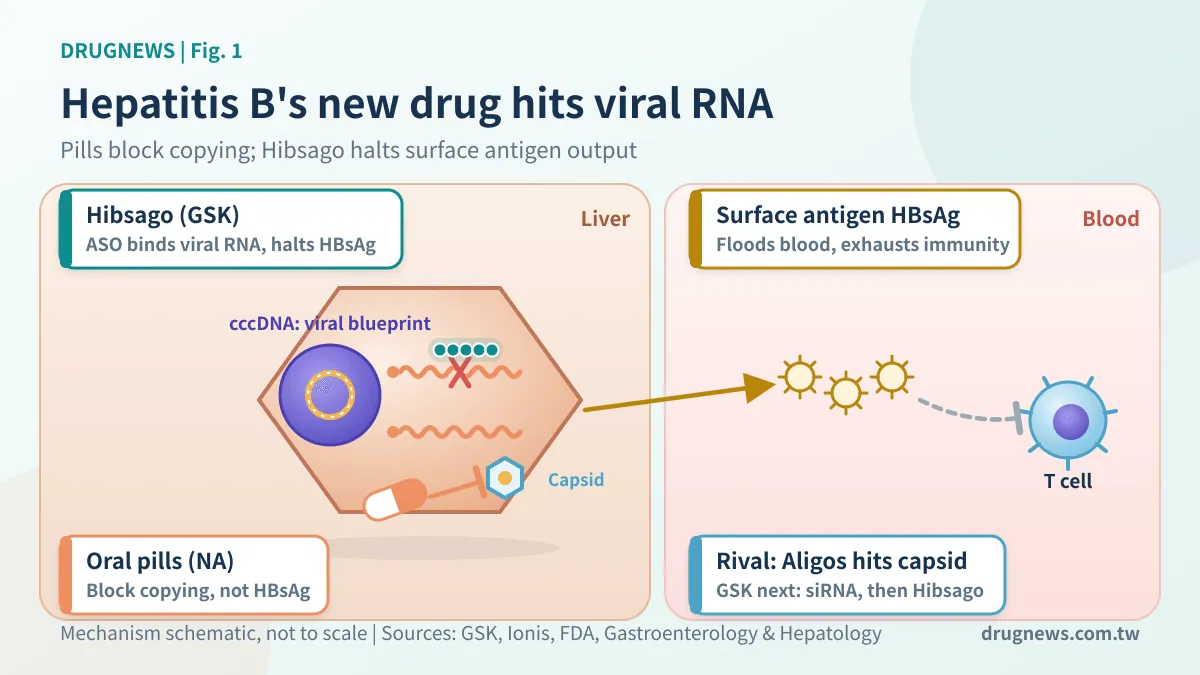
Figure 1 | Oral drugs stop the virus from copying; Hibsago binds viral RNA so surface antigen production stalls and the immune system can step back in.
03 | One in five succeeds. Is it worth the shots?
The two phase 3 trials, B-Well 1 and B-Well 2, enrolled 1,834 patients who were already on oral drugs and had no cirrhosis.
The treatment group received a 300 mg injection under the skin every week for 24 weeks while staying on their pills. At week 48, those who met preset criteria stopped their oral drug. The scorecard came at week 72.
Of 1,220 patients on Hibsago, 233 reached functional cure, or 19%. Of 614 on placebo, none did.
Patients who started with low surface antigen did better. Among the 768 with a baseline at or below 1,000 IU/mL, 200 got there, or 26%.
GSK estimates that about 45% of diagnosed chronic hepatitis B patients worldwide fall into that low-antigen band.
The numbers below the headline matter too. By week 72, 49% of all Hibsago patients (598 of 1,220) had pushed surface antigen down to 100 IU/mL or less, and 62% of the low-antigen group did. GSK labels these exploratory analyses, but they show that most patients moved a long way toward the finish line even if they did not cross it.
The FDA summary adds one more practical figure: 24% of Hibsago patients met the criteria to come off their existing antiviral, against none on placebo.
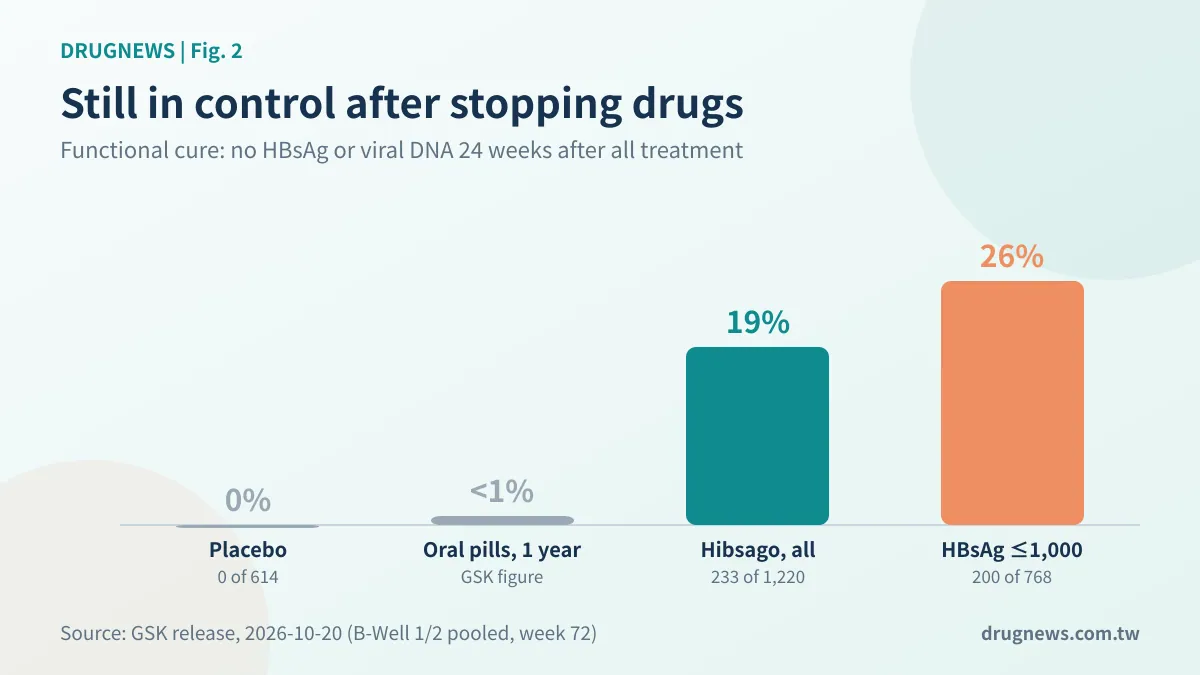
Figure 2 | One year on oral drugs alone yields functional cure in fewer than 1%; adding six months of Hibsago lifts it to 19% overall and 26% in low-antigen patients.
The price is printed on the label.
The FDA added a boxed warning for liver flares during treatment and for serious drops in platelets. Patients with platelet counts below 100,000 per microliter, and anyone with cirrhosis, are excluded.
Grade 3 or higher side effects hit 16% of the Hibsago group versus 3% on placebo. The most common was a rise in the liver enzyme ALT, the footprint of an immune system attacking the virus again, and the thing doctors must watch most closely.
Eligibility is narrow. Patients must have taken an oral drug for at least six months, have undetectable virus, and carry surface antigen at or below 3,000 IU/mL. The FDA also cleared a Roche quantitative HBsAg test as the companion diagnostic.
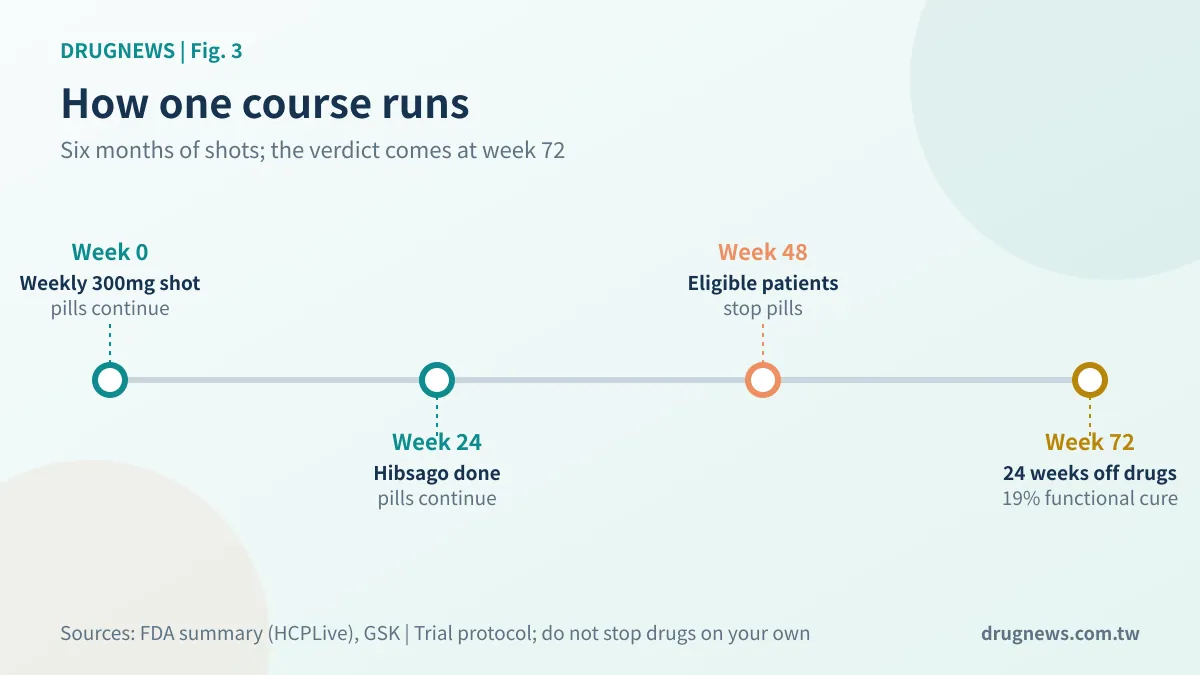
Figure 3 | Weekly shots for 24 weeks, oral drugs stopped at week 48 only for those who qualify, final check at week 72. This is the trial protocol; patients should not stop drugs on their own.
For someone who has swallowed a pill every day for years, the math is simple. Six months of shots and a bumpy stretch of liver enzymes buy a one-in-five chance of putting the pill box away.
04 | Who can catch up? Every rival is stuck in phase 2
The field is crowded, but only Hibsago has phase 3 data.
Vir Biotechnology tested an antibody plus an siRNA. Its phase 2 readout in May 2025 showed functional cure in 2 of 51 patients. The company said the rates were below what it was looking for, shelved the hepatitis B program, and turned to hepatitis D.
Aligos Therapeutics is developing pevifoscorvir, an oral drug that attacks the viral shell. Its phase 2 B-SUPREME trial pits it head to head against tenofovir in about 200 patients, with topline data due in 2027.
Aligos is trying to replace the pill, and its primary endpoint is viral DNA. That is still a long way from a cure you can stop treatment on.
The strongest rival lives inside GSK.
GSK also owns an siRNA pair, daplusiran/tomligisiran, formerly known as JNJ-3989. Its phase 2b trial, B-United, uses the siRNA to knock surface antigen down first and then hands off to Hibsago. Primary completion is scheduled for May 31, 2027.
Some argue that siRNAs lower surface antigen faster and will overtake Hibsago. A July 2026 review in Gastroenterology & Hepatology answers that: on their own, siRNAs drive antigen down to a plateau and rarely clear it.
So GSK's playbook is a relay, not a replacement.
That is why the window is so wide. A drug that is still in phase 2 in late 2026 cannot realistically complete phase 3, file and win approval within 18 months. Every rival with a credible shot at a functional-cure label is at that stage or earlier, and the one with the best odds belongs to the company that already owns the market.
Even if B-United delivers strong data in mid-2027, a phase 3 trial, a filing and a review still lie ahead. No second functional-cure application for hepatitis B will reach approval at the FDA before April 2028.
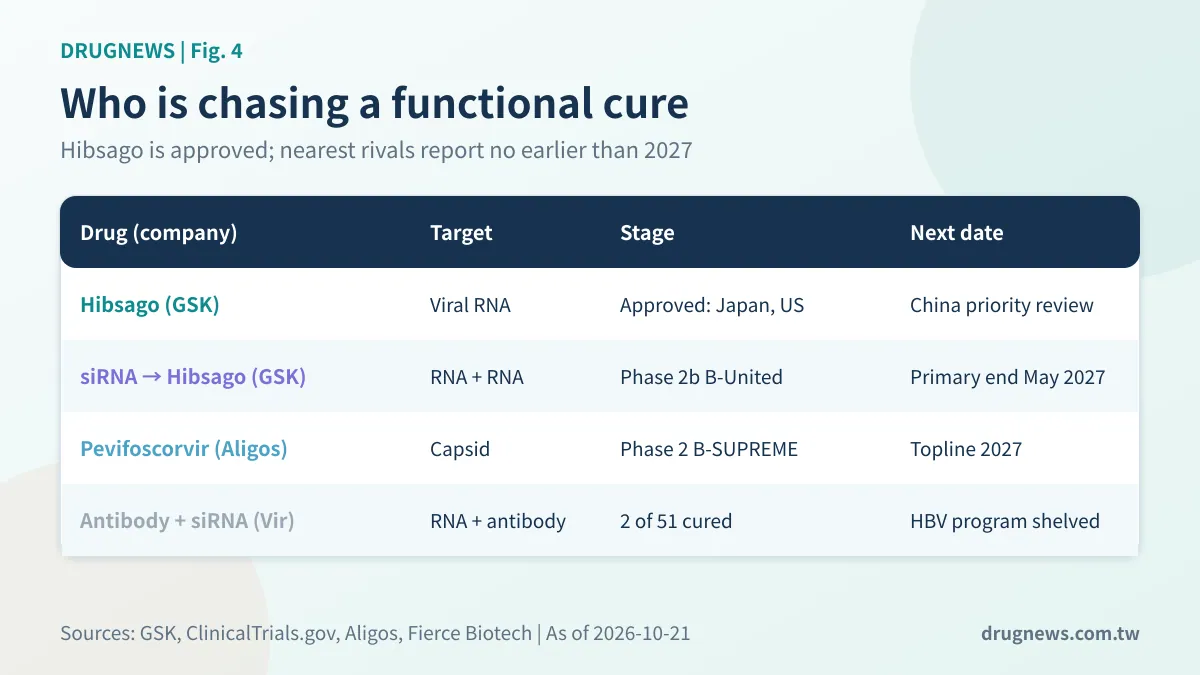
Figure 4 | Hibsago is approved in Japan and the US; the nearest rivals are in phase 2, with data no earlier than 2027.
GSK expects peak annual sales above £2 billion. Ionis collects tiered royalties of 10% to 12% on every dollar of net sales.
About 1.7 million Americans live with chronic hepatitis B, nearly 1 million Japanese, and more than 240 million people worldwide. The old business was a daily pill taken for life. Hibsago is the first product that lets a company put a price on the end of treatment.
05 | When can patients in Taiwan get it?
Taiwan is one of the world's hepatitis B heartlands. In July 2026, the United Daily News cited Global Alliance to Eliminate Hepatitis figures: 1.89 million carriers, a diagnosis rate of about 69%, and treatment coverage of just 35%.
At 35%, roughly 660,000 people are on treatment. That is exactly the group Hibsago is designed for: patients already on oral drugs with the virus suppressed.
Taiwan's liver doctors have been managing patients who stop hepatitis B drugs for more than two decades.
When Taiwan's National Health Insurance began paying for oral antivirals in 2003, it capped treatment for HBeAg-negative patients at three years; patients whose virus stayed undetectable could stop. A Chang Gung team led by Chien Rong-Nan and Liaw Yun-Fan followed them and found that, among those who stayed in control after stopping, about 6.3% a year lost surface antigen. Among patients who kept taking their pills, only 0.2% a year did.
Spotting flares after stopping and knowing when to restart treatment is routine work for Taiwanese hepatologists. That is precisely what Hibsago's boxed warning asks doctors to watch.
So far GSK has disclosed approvals in Japan and the US, plus breakthrough and priority review status in China. It has said nothing yet about a Taiwan filing or reimbursement.
Japan, with nearly 1 million patients, approved Hibsago two months before the US did. An Asian regulator moved first, and Asian hepatologists will be among the first to build real-world experience with the drug. Taiwan's clinics already run the kind of post-treatment follow-up the label demands.
In June, Taiwan's health insurance agency began studying wider coverage for oral antivirals, which could help 17,000 to 30,000 more patients. A cheap daily generic versus a six-month course of a new drug is the next calculation the insurer will face.
For someone who takes one pill a day, Hibsago offers a chance: six months of shots, and one in five gets to put the pill box away.
Taiwan stock link
Patients who stop treatment need regular viral DNA tests. As we noted in September, General Biologicals (4117) makes HBV RealQuant PCR, a kit for measuring and monitoring hepatitis B viral load.
This article is industry and company analysis, not investment or medical advice.
References
- Hibsago (bepirovirsen) approved in the US for the treatment of chronic hepatitis B|GSK (Business Wire via StockTitan)|2026-10-20|https://www.stocktitan.net/news/GSK/hibsago-bepirovirsen-approved-in-the-us-for-the-treatment-of-chronic-w34ityxphay0.html
- FDA Approves Bepirovirsen for Chronic Hepatitis B|HCPLive|2026-10-21|https://www.hcplive.com/view/fda-approves-bepirovirsen-for-chronic-hepatitis-b
- Ionis partner GSK announces Hibsago (bepirovirsen) approved in the U.S.|Ionis (via StockTitan)|2026-10-20|https://www.stocktitan.net/news/IONS/ionis-partner-gsk-announces-hibsago-bepirovirsen-approved-in-the-u-s-6ev464j8ex4t.html
- Hibsago (bepirovirsen) approved in Japan as first and only functional cure for chronic hepatitis B|GSK|2026-08-24|https://www.gsk.com/en-gb/media/press-releases/hibsago-bepirovirsen-approved-in-japan-as-first-and-only-functional-cure-for-chronic-hepatitis-b/
- GSK Wins Approval for New Hepatitis B Drug|EMJ Reviews|2026-08-24|https://www.emjreviews.com/emj-gold/news/gsk-wins-approval-for-new-hepatitis-b-drug-hibsago/
- Vir's 'functional cure' candidate for hepatitis B misses mark in phase 2|Fierce Biotech|2025-05-09|https://www.fiercebiotech.com/biotech/virs-functional-cure-candidate-hepatitis-b-misses-mark-ph-2
- Aligos Therapeutics Provides Phase 2 B-SUPREME Study Progress Updates|Aligos (via Nasdaq)|2026-01-21|https://www.nasdaq.com/press-release/aligos-therapeutics-provides-phase-2-b-supreme-study-progress-updates-2026-01-21
- B-UNITED: Sequential Therapy With Daplusiran/Tomligisiran Followed by Bepirovirsen (NCT06537414)|ClinicalTrials.gov|2026-07-07|https://clinicaltrials.gov/study/NCT06537414
- New Developments in the Treatment of Hepatitis B Virus Infection|Gastroenterology & Hepatology|2026-07-01|https://www.gastroenterologyandhepatology.net/archives/july-2026/new-developments-in-the-treatment-of-hepatitis-b-virus-infection/
- 1.89 million hepatitis B carriers in Taiwan (in Chinese)|United Daily News|2026-07-27|https://udn.com/news/story/7266/9653369
- Stopping oral antivirals in hepatitis B: Chang Gung study (in Chinese)|Chang Gung Medical Journal newsletter|2026-10-21|https://www.cgmh.org.tw/cgmn/cgmn_file/2310001.pdf
- NHIA studies wider hepatitis B drug coverage (in Chinese)|Liberty Times Health|2026-06-02|https://health.ltn.com.tw/article/breakingnews/5457686
- Hepatitis B drug approved in Japan (in Chinese)|Drugnews|2026-09-27|https://drugnews.com.tw/articles/2026-09-27-hibsago-finite-hbv-care.html
Share this analysis
Send this article to readers who follow biotech, company strategy, and capital-market signals.
Cite this article
For decks, research notes, or media references, cite Drugnews with the canonical article URL.
Drugnews Editorial Team. "Hepatitis B Pills Need Not Be for Life: FDA Clears GSK's Hibsago." Drugnews, Oct 25, 2026. https://drugnews.com.tw/articles/2026-10-25-gsk-hibsago-hepatitis-b-functional-cure-fda-en.html