
In 2024, a baby at Chung Shan Medical University Hospital in Taichung was diagnosed with spinal muscular atrophy (SMA) on day 10 of life and received Novartis's gene therapy Zolgensma on day 57. Taiwan's National Health Insurance paid NT$49 million for that single dose.
Two years later, families who chose the same therapy are reading about tumors.
On November 5, Novartis confirmed it has received nine reports of tumors in patients treated with Zolgensma since the 2019 approval. In two of them, tumor tissue contained the therapy's vector DNA integrated into the patient's genome. A day later, the US Food and Drug Administration was reported to be investigating the risk, and to have concluded that it also applies to Itvisma, the intrathecal version approved last year for patients aged two and older.
The infant product will stay on the market with a new long-term monitoring warning. What gets repriced is the older-child and adult market that Novartis has been opening with Itvisma.
01 · The "non-integrating" promise behind AAV just met patient evidence
Zolgensma is delivered by an adeno-associated virus (AAV) vector. For two decades, the standard reassurance about AAV has been that it mostly stays outside the human genome, unlike the older retroviral vectors that caused leukemia in early gene therapy trials.
Novartis's statement contained a line most coverage passed over: the potential risk of tumors from vector integration "is currently included in the Zolgensma prescribing information."
It reads like reassurance. It is actually a shift. The label described a theoretical risk. According to SMA News Today, Novartis told the patient community the risk is no longer theoretical.
Based on reporting of the FDA communication, three tumor cases involve the oncogene GLI1, and in two of them the Zolgensma promoter was found inserted near or within GLI1. The reported tumors occurred in the central and peripheral nervous system, the spinal and paraspinal region, and the kidney. The FDA also cited similar integration findings in two other AAV programs, FBX-101 and RGX-111.
There is a yardstick. bluebird bio's Skysona, a lentiviral gene therapy for cerebral adrenoleukodystrophy, produced blood cancers in 10 of 67 trial participants. In August 2025 the FDA limited it to patients without a matched stem cell donor.
Against that, the Zolgensma signal is small: two confirmed integration cases among more than 6,000 treated patients, roughly 0.03%, versus about 15% for Skysona. A gap of several hundred-fold will not get the same regulatory response.
02 · The infant market holds, because the comparator is time
Untreated SMA type 1 destroys motor neurons quickly. When the FDA approved Zolgensma in 2019, it called SMA the leading genetic cause of infant mortality.
For these parents, nine tumor reports are weighed against the cost of waiting. The FDA has reportedly taken the same view: for approved uses, the benefits still outweigh the risks.
Sarepta's Duchenne gene therapy Elevidys offers the second precedent. After deaths from acute liver failure in 2025, the FDA added a boxed warning that November rather than pulling the product.
Put the two cases together and the agency's logic is clear.
Where patients have alternatives, the label narrows. Where they do not, and the disease is severe, the label gains warnings and monitoring.
Infants with SMA can also receive Spinraza by lumbar injection or Evrysdi by mouth. But the value of a one-time therapy given early is hard for physicians to give up. Novartis keeps this segment.
03 · Itvisma is the growth engine, and it sits where the risk bites hardest
In the third quarter, the Zolgensma group generated $404 million, up 34%. US sales were $173 million, up 78%. Novartis attributed the growth to Itvisma's launch in the US, Japan, the EU and Gulf states.
Itvisma won FDA approval on November 24, 2025, for children, adolescents and adults aged two and older. Its phase 3 STEER trial enrolled 126 treatment-naive type 2 patients and showed a 2.39-point gain on the Hammersmith motor scale at 52 weeks, against 0.51 for sham.
That is a real effect, not a life-or-death margin. Scholar Rock's muscle-targeted Isembyld, approved in the US this September, gives older patients another option as well.
Consider a stable eight-year-old taking Evrysdi daily. The family used to compare a daily pill with a single injection. Now there is a new question: after the injection, how many years of tumor surveillance follow?
Timing also works against older patients. A parent posting in a patient community said the two confirmed cases appeared 18 to 60 months after dosing; Novartis has not confirmed that timeline. If it holds, younger patients with longer life expectancy face longer surveillance.
The FDA has received no tumor reports after Itvisma. The product has been on the US market for less than a year, which is too short to call it clean.
04 · How the business changes: one-time pricing now carries a lifetime of monitoring
Gene therapies justify extreme prices with a simple argument: one treatment replaces a lifetime of chronic drugs. Payers accept that because the treatment is supposed to end at the infusion.
Tumor risk breaks that premise. The infusion becomes the start of years of imaging and lab follow-up, a cost the original pricing models did not include.
In the US, that pushes insurers and Medicaid programs toward installment and outcomes-based contracts that bind monitoring obligations back to the manufacturer.
For the wider AAV field, this is harder to manage than the Elevidys liver problem. Liver toxicity appears within weeks and can be managed with patient selection and close monitoring. Insertional oncogenesis shows up years later, and only long-term registries can show it is rare.
FBX-101 and RGX-111 are both AAV products. Every AAV therapy under review now faces a new first question from regulators: where is your integration data?
05 · Taiwan: about eight infants a year, plus a monitoring bill
In June 2023, Taiwan's health insurer announced Zolgensma coverage from August for infants with symptom onset before six months and a confirmed mutation, estimating about eight eligible babies a year. In 2024 it widened coverage for the injected and oral SMA drugs, projecting total annual SMA drug spending of about NT$3.8 billion.
Taiwan has about 400 SMA patients, more than half of them adults. They are exactly the group Itvisma targets, and the group patient advocates have long pushed to cover.
The episode gives Taiwan two concrete tasks. Children already treated with Zolgensma need a national long-term follow-up registry run by medical centers and the insurer, not left to individual hospitals. And if Itvisma seeks approval and reimbursement in Taiwan, negotiators now have leverage to ask Novartis to fund long-term monitoring or tie part of the payment to safety data years out.
06 · What would prove this call wrong
The evidence is thin. There are nine reports, three detailed tissue analyses and two confirmed integration cases. Neither Novartis nor the FDA has released full case data.
The call: by the end of November 2027, the FDA will add tumor-risk language and long-term monitoring requirements to the Zolgensma and Itvisma labels without narrowing the infant indication, and quarterly growth for the Zolgensma group will fall from 34% to below 10%.
Two outcomes would prove it wrong. If the FDA restricts infant use, the risk is larger than current data show. If the Zolgensma group still grows more than 20% in the third quarter of 2027, physicians and families have not slowed Itvisma use in older patients.
On November 3 we wrote that generics are eating into Novartis's heart drug Entresto. The company needs new growth, and Itvisma was supposed to be part of it.
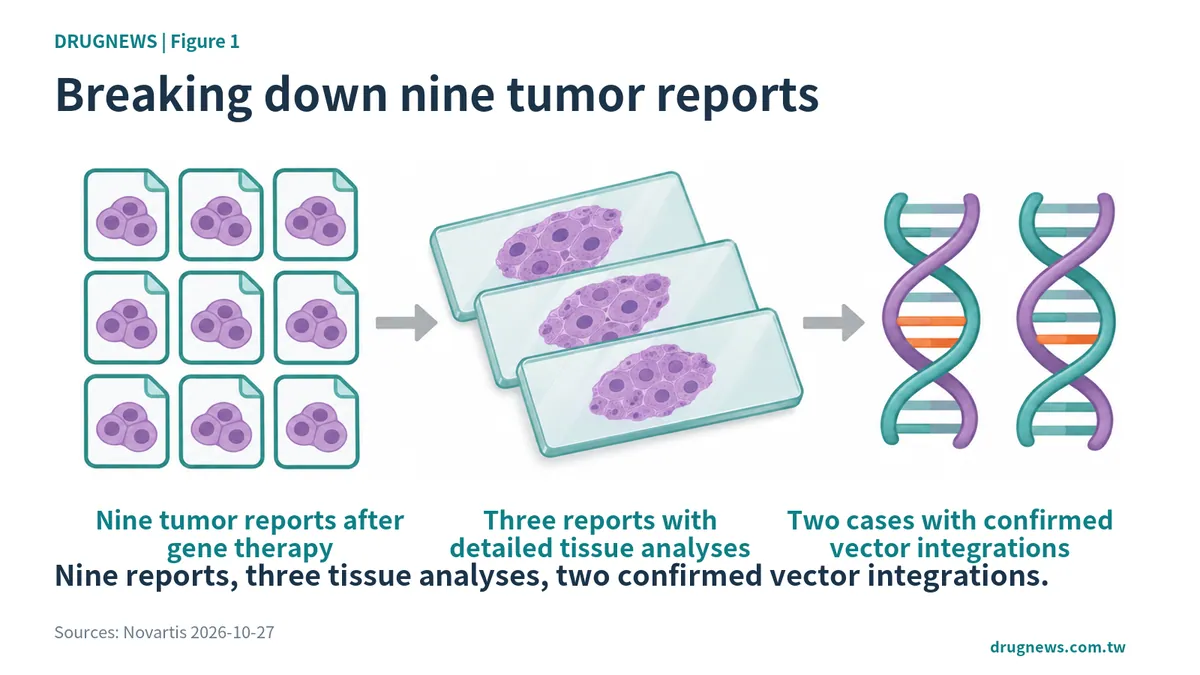
Fig. 1 · Nine reports, three tissue analyses, two confirmed vector integrations.
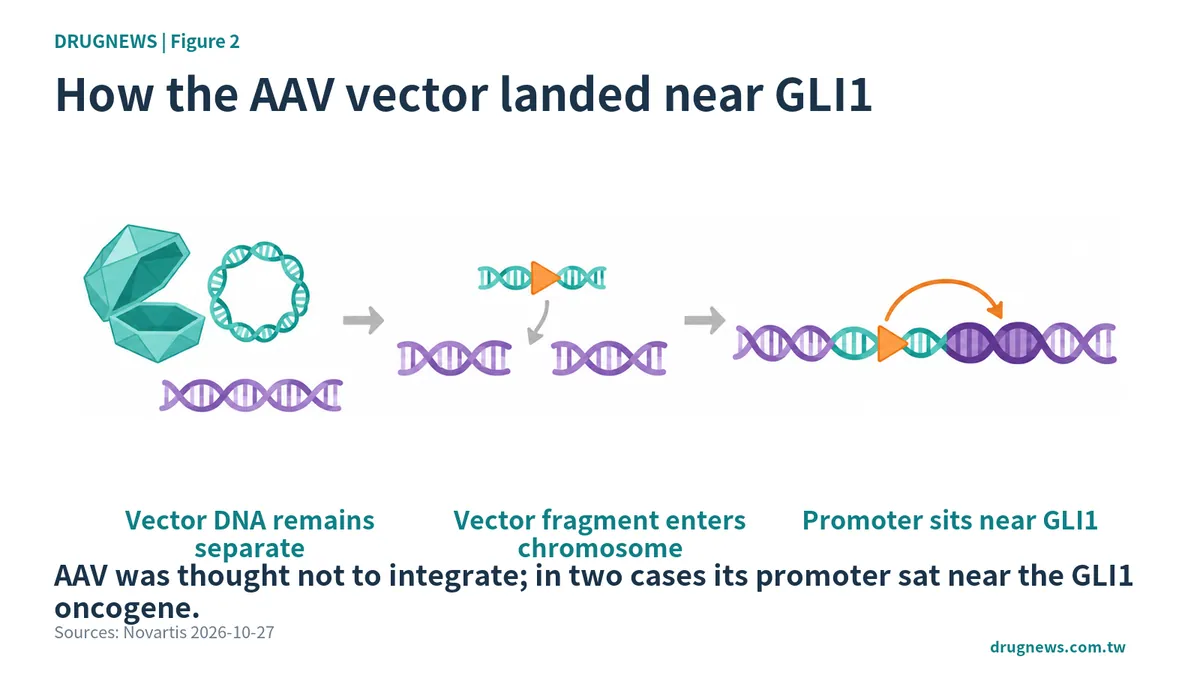
Fig. 2 · AAV was thought not to integrate; in two cases its promoter sat near the GLI1 oncogene.
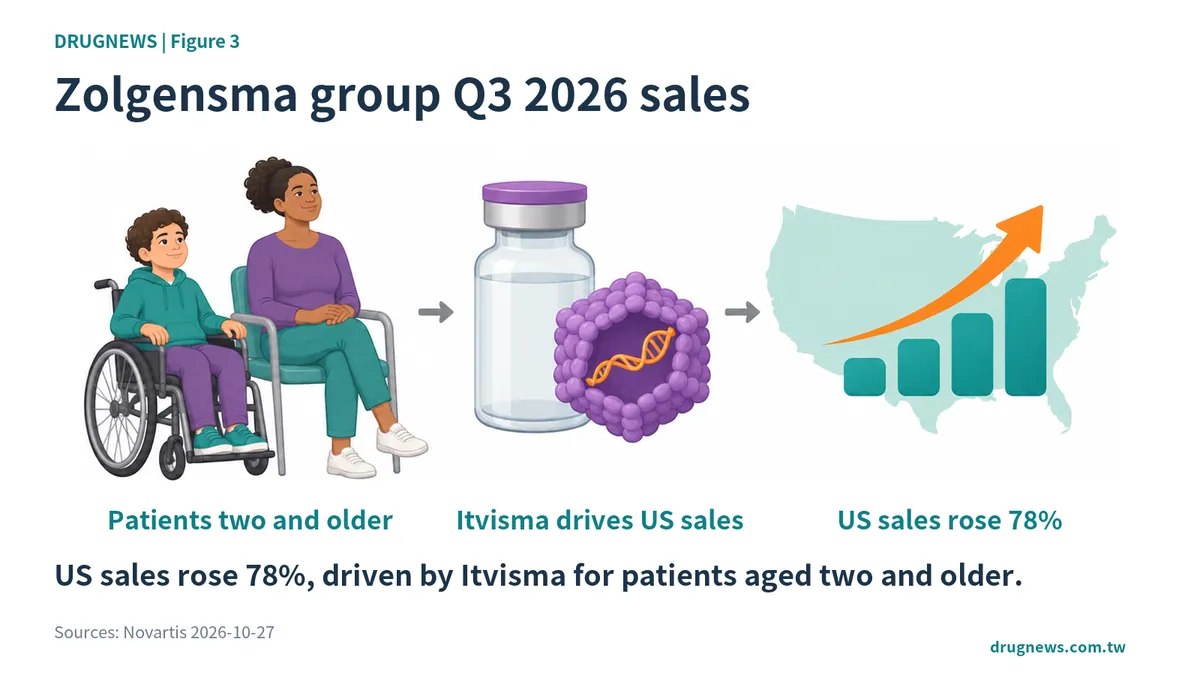
Fig. 3 · US sales rose 78%, driven by Itvisma for patients aged two and older.
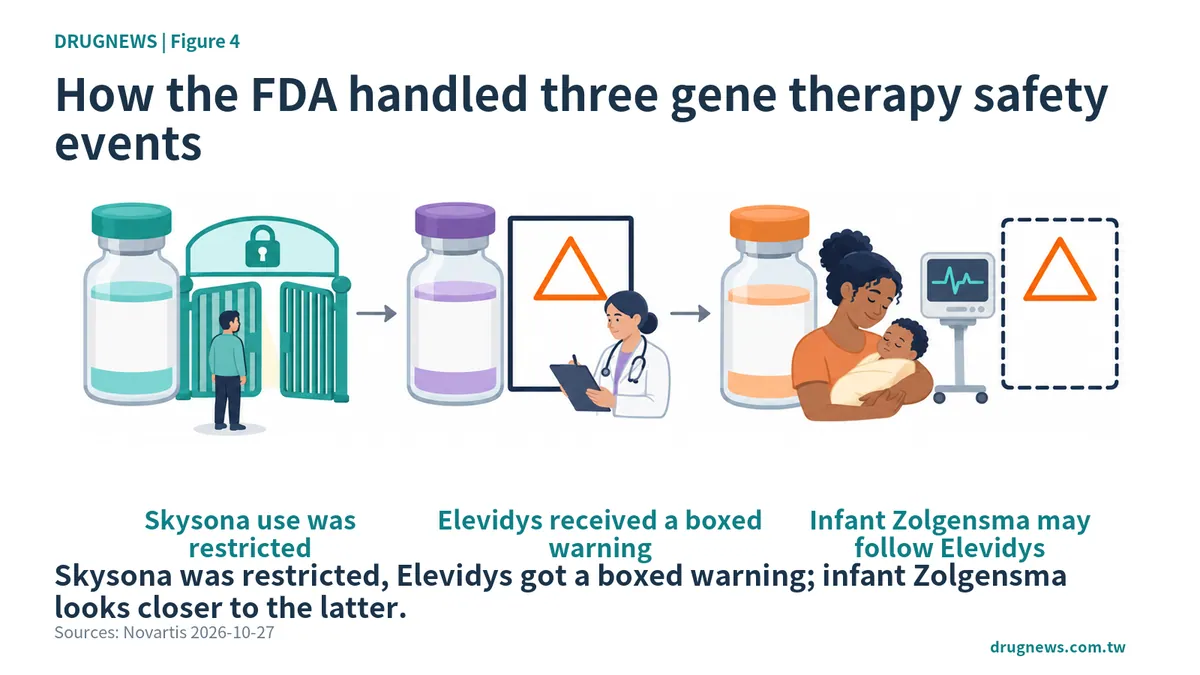
Fig. 4 · Skysona was restricted, Elevidys got a boxed warning; infant Zolgensma looks closer to the latter.
This article is industry and company analysis, not investment or medical advice.
References
- Novartis confirms 9 reported cases of tumors in patients treated with Zolgensma · BioSpace · 2026-11-05 · https://www.biospace.com/drug-development/novartis-confirms-9-reported-cases-of-tumors-in-patients-treated-with-zolgensma
- Novartis cites cases of previously unknown tumors possibly tied to its SMA gene therapy · STAT · 2026-11-05 · https://www.statnews.com/pharmalot/2026/11/05/novartis-sma-zolgensma-tumor-case-reports/
- Novartis confirms 2 tumor cases appear tied to SMA gene therapy · SMA News Today · 2026-11-06 · https://smanewstoday.com/news/novartis-confirms-2-tumor-cases-appear-tied-sma-gene-therapy/
- Novartis reports cases of tumours in children following treatment with Zolgensma · swissinfo.ch (Keystone-SDA) · 2026-11-06 · https://www.swissinfo.ch/eng/pharma-health/novartis-reports-cases-of-tumours-in-children-following-treatment-with-zolgensma/92340287
- FDA Investigating Serious Risk of Malignancy Linked to Zolgensma Gene Therapy · Newsroom America · 2026-11-06 · https://newsroomamerica.com/a/O32KlbFgO3X4OF1TzvGJhs0T3Cg/fda_says_postmarketing_reports_link_zolgensma_to_malignancies_including_confirmed_insertional_oncogenesis_involving_the_gli1_gene_and_warns_the_risk_applies_to_itvisma_as_well.html
- Novartis Says Tumors Found in Children Given SMA Gene Therapy · Bloomberg · 2026-11-06 · https://bloomberg.com/news/articles/2026-11-06/novartis-says-tumors-found-in-children-given-sma-gene-therapy
- Novartis Third Quarter and Nine Months 2026 Condensed Interim Financial Report · Novartis · 2026-10-27 · https://www.novartis.com/sites/novartis_com/files/q3-2026-interim-financial-report-en.pdf
- FDA approves new intrathecal administration route for SMA gene therapy (Itvisma) · NeurologyLive · 2025-11-24 · https://www.neurologylive.com/view/fda-approves-new-intrathecal-administration-route-spinal-muscular-atrophy-gene-therapy
- FDA Approves Gene Therapy for Treatment of Spinal Muscular Atrophy · US FDA · 2019-05-24 · https://www.fda.gov/news-events/press-announcements/fda-approves-gene-therapy-treatment-spinal-muscular-atrophy
- FDA restricts use of bluebird's Skysona gene therapy · pharmaphorum · 2025-08-11 · https://pharmaphorum.com/news/fda-restricts-use-bluebirds-skysona-gene-therapy
- FDA Adds Boxed Warning for Sarepta's DMD Gene Therapy · AABB · 2025-11-17 · https://www.aabb.org/news-resources/news/article/2025/11/17/fda-adds-boxed-warning-for-sarepta-s-dmd-gene-therapy
- Source
- Source
- Source
Share this analysis
Send this article to readers who follow biotech, company strategy, and capital-market signals.
Cite this article
For decks, research notes, or media references, cite Drugnews with the canonical article URL.
Drugnews Editorial Team. "Zolgensma tumors put Novartis's older-patient SMA growth at risk." Drugnews, Nov 11, 2026. https://drugnews.com.tw/articles/2026-11-11-novartis-zolgensma-tumor-gli1-itvisma-older-patients-en.html