
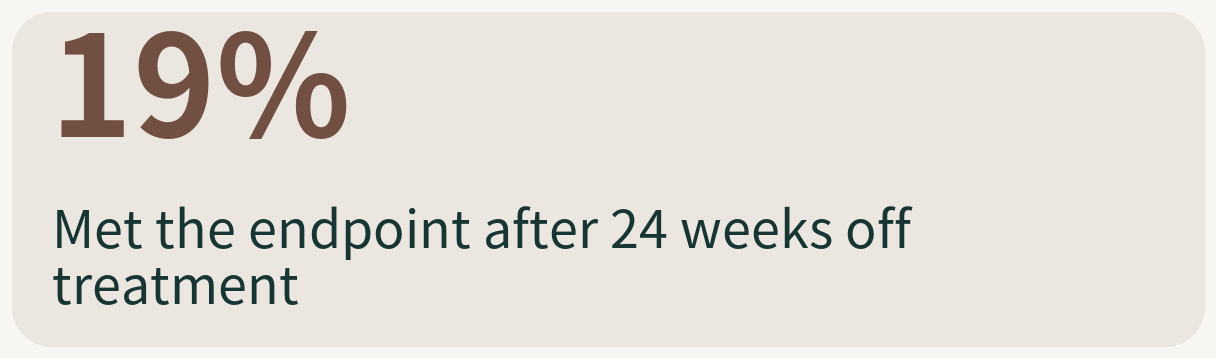
China approved Hibsago (bepirovirsen) from GSK (LSE: GSK) on 26 November 2026, following approvals in Japan on 24 August, the US on 20 October and Canada on 30 October. Across the two phase 3 B-Well trials, 233 of 1,220 bepirovirsen recipients (19%) met the functional-cure endpoint at week 72, after 24 weeks off all hepatitis B treatment, versus none of 614 on placebo. In April 2026, GSK estimated that the US and China together represented about two-thirds of the drug's potential global commercial opportunity. GSK estimates that 75 million people in China live with chronic hepatitis B, compared with the WHO's estimate of 240 million worldwide for 2024.
What China approved
In China, the approval covers adults without cirrhosis who have been on a nucleos(t)ide analogue (NA) for at least six months, have HBV DNA below 90 IU/mL and have hepatitis B surface antigen (HBsAg) of 3,000 IU/mL or less. Hibsago is given with the NA. The US label adds Hibsago to NA therapy in adults without cirrhosis who have taken an NA for at least six months, have suppressed HBV DNA and have HBsAg of 3,000 IU/mL or less on an FDA-authorised test.
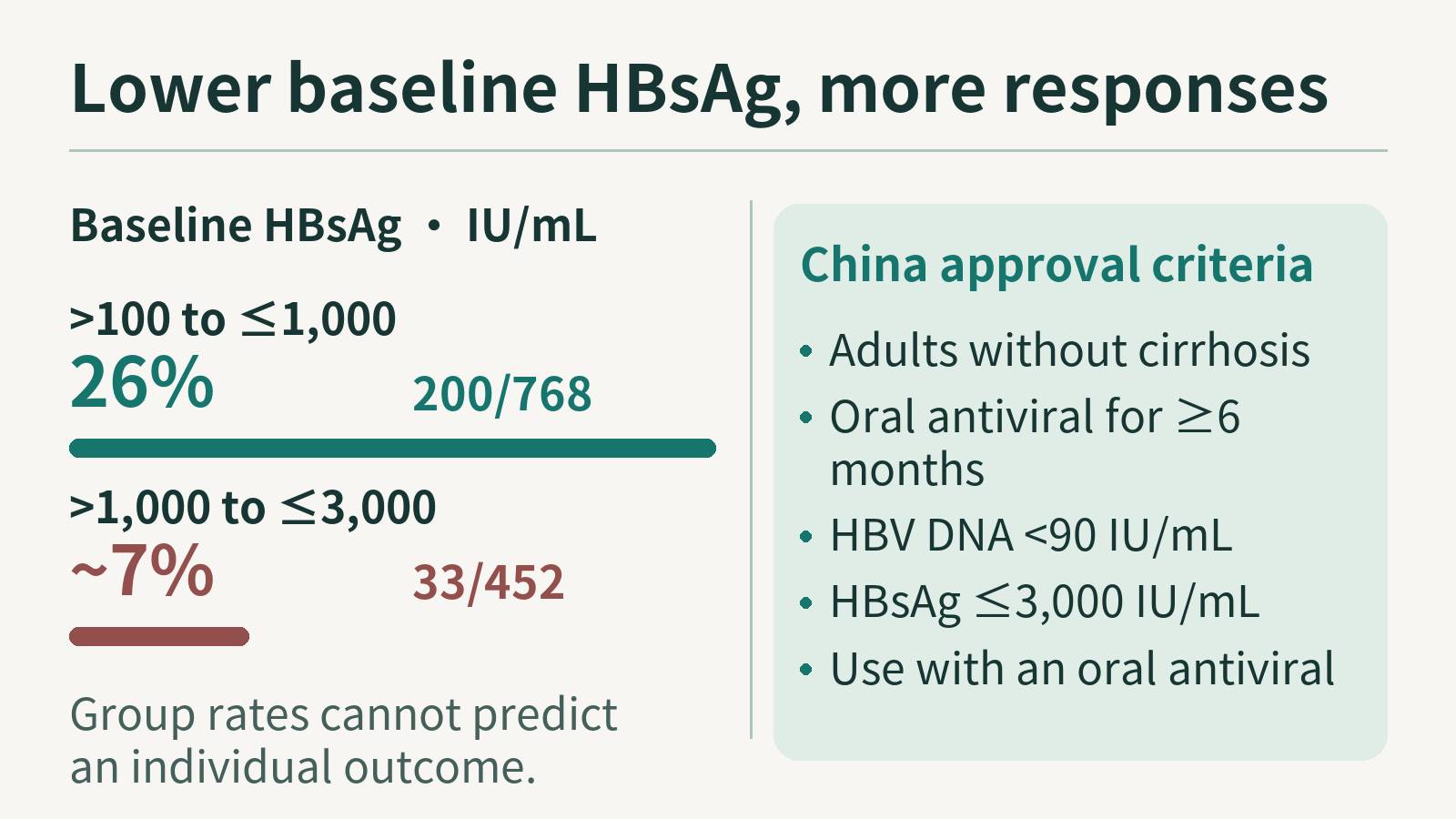
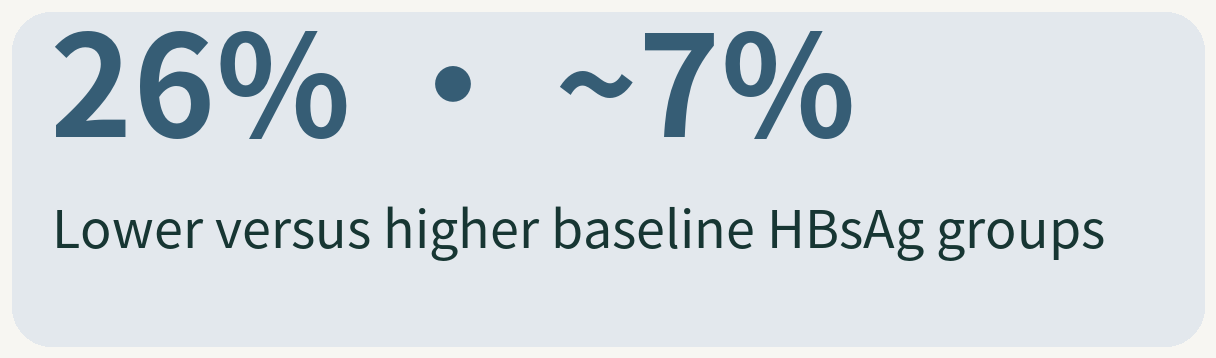
The week 72 endpoint was met by 26% in the lower-HBsAg group and about 7% in the higher group. China approved use alongside an oral antiviral in eligible adults.
GSK retains the marketing authorisation. Sino Biopharmaceutical (HKEX: 1177) will handle mainland China importation, distribution, hospital access and promotion through its subsidiary Chia Tai Tianqing (CTTQ). Under the deal announced on 11 May, CTTQ will buy bepirovirsen from GSK under an initial five-and-a-half-year supply term. CTTQ says its commercial network reaches more than 5,000 medical centres. GSK books sales of product supplied to CTTQ and may review selected early-stage Sino assets for possible collaborations outside China. No upfront or milestone payments were disclosed.
The evidence, in one table
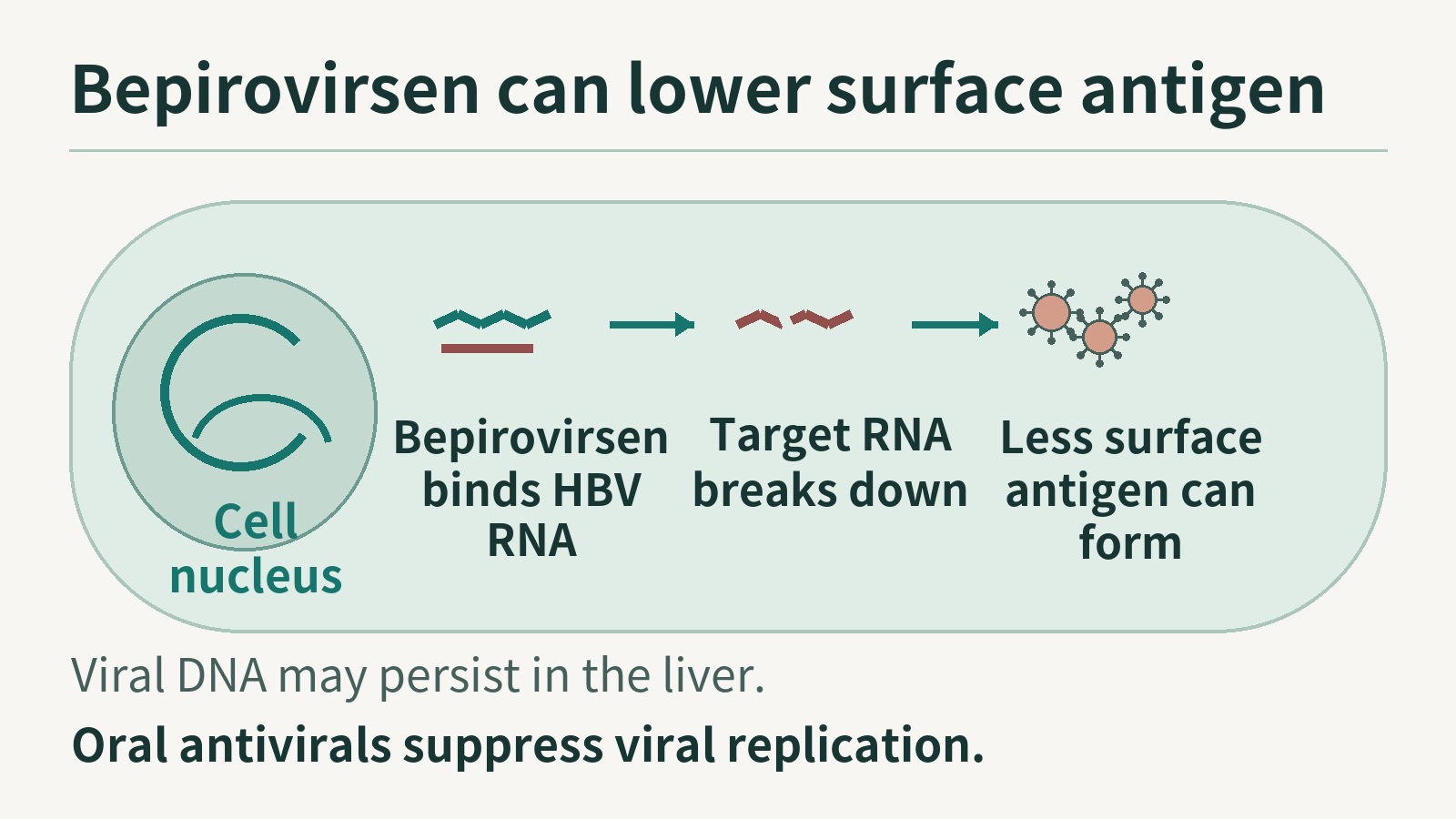
Oral antivirals suppress viral replication. Bepirovirsen binds HBV RNA, which is broken down and can therefore yield less surface antigen.
| Measure | B-Well 1 | B-Well 2 |
|---|---|---|
| Design | Subcutaneous bepirovirsen 300 mg or placebo, with background NA therapy. Doses were given twice weekly in weeks 1 and 2 and once weekly in weeks 3–24. | Same |
| Patients enrolled (both trials) | 1,838 adults in 29 countries, including Asia-Pacific | |
| Met the functional-cure endpoint at week 72, bepirovirsen | 127/650 (20%) | 106/570 (19%) |
| Met the endpoint at week 72, placebo | 0/328 | 0/286 |
| Met the endpoint, baseline HBsAg ≤1,000 IU/mL | 25% | 28% |
| Met the endpoint, baseline HBsAg >1,000 to ≤3,000 IU/mL (calculated from the published overall and lower-subgroup counts) | 10% | 5% |
| Stopped oral antiviral at week 48 (pooled) | 295/1,220 on bepirovirsen | |
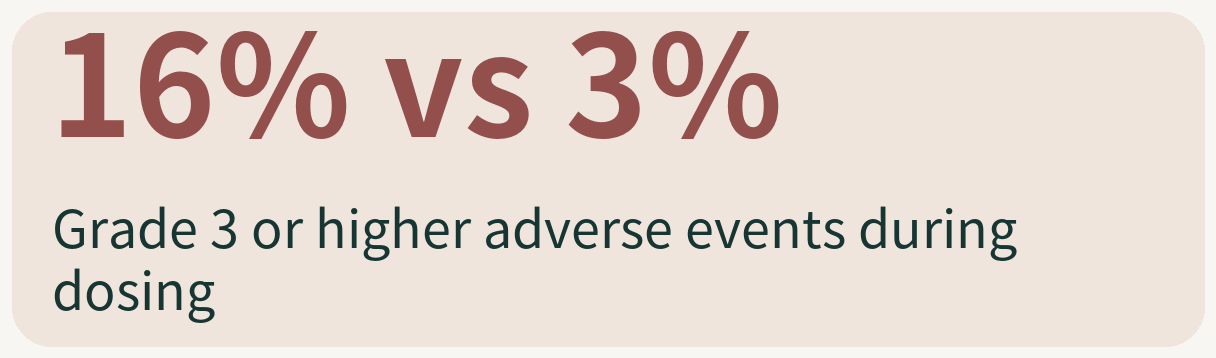
| Grade 3 or higher adverse events during the 24-week dosing period (pooled) | 16% vs 3% on placebo | |
| Permanent discontinuation for adverse events (pooled) | 3% vs less than 1% on placebo |
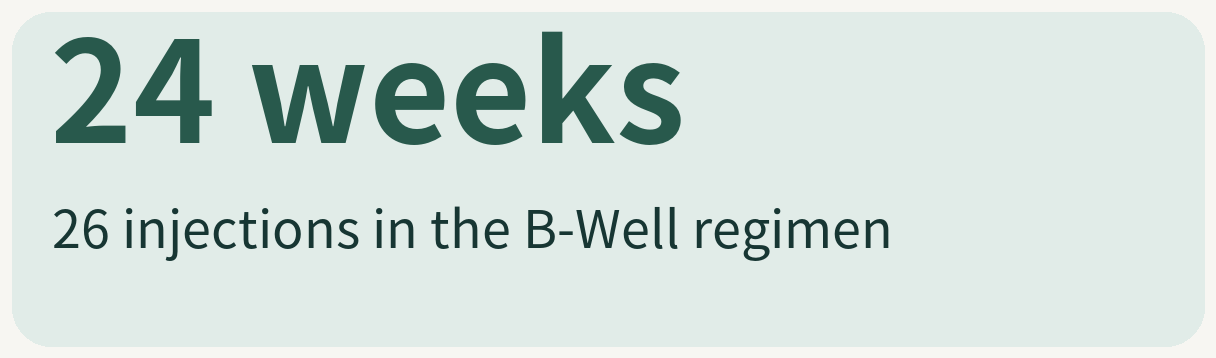
Injections ended at week 24 and oral antiviral treatment continued. At week 48, the trial team assessed participants against prespecified criteria, and those who stopped their oral antiviral were assessed again at week 72, after 24 weeks off all HBV treatment. In the bepirovirsen group, 295 of 1,220 (24%) stopped their oral antiviral at week 48, and 233 of those 295 (79%) met the endpoint 24 weeks later.
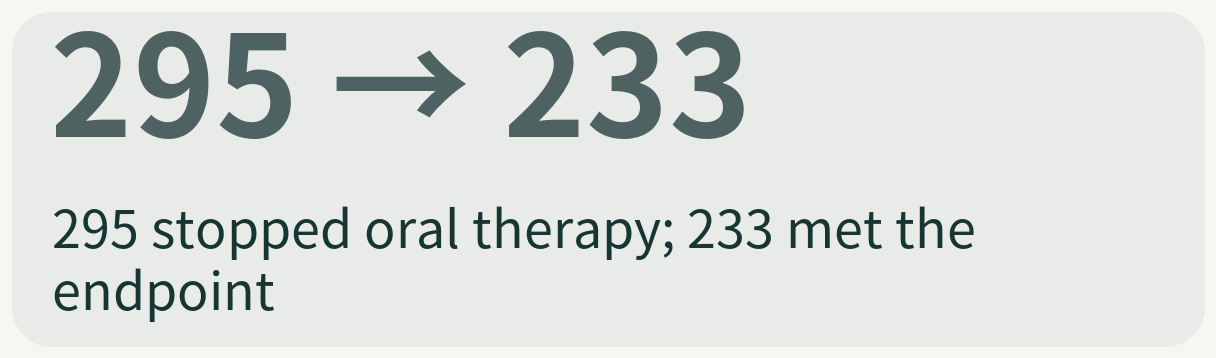
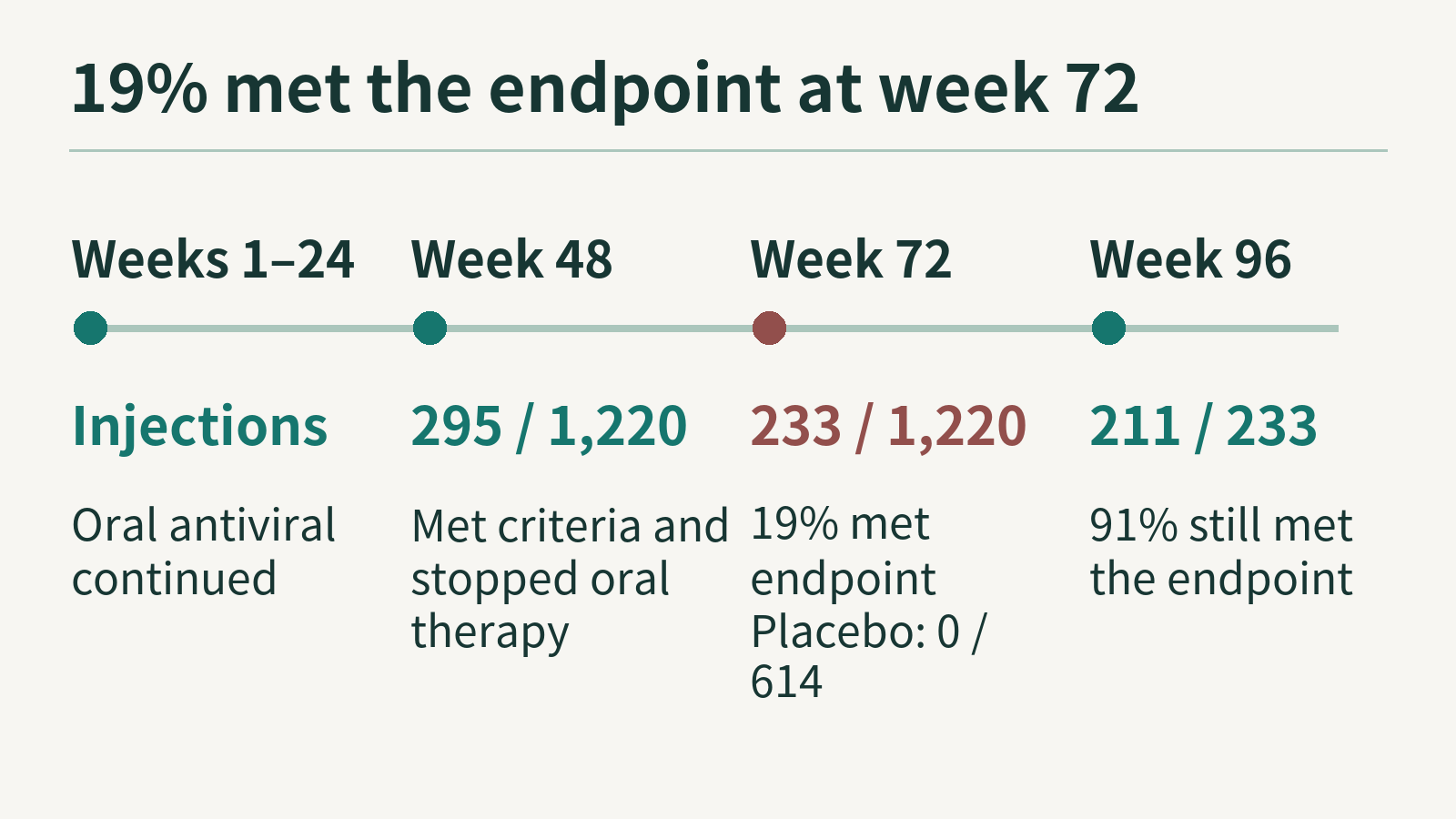
At week 48, 295 of 1,220 participants stopped oral antivirals. At week 72, 233 met the endpoint, and 211 of those still met it at week 96.
In B-Well, functional cure meant that HBsAg remained undetectable and HBV DNA stayed below the assay's lower limit of quantification for 24 weeks after all hepatitis B treatment stopped, without rescue therapy. The endpoint measures sustained viral control off treatment, and HBV can persist in the liver.
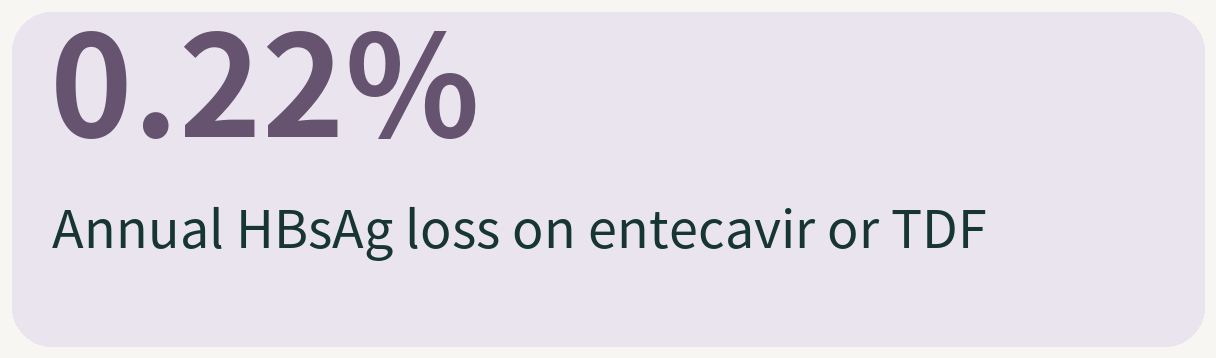
During the 24-week dosing period, grade 3 or higher adverse events occurred in 16% of bepirovirsen recipients and 3% of placebo recipients. An increase in alanine aminotransferase (ALT) was the most common grade 3 event in the bepirovirsen group (6%). Adverse events led to permanent discontinuation of study treatment in 3% of bepirovirsen recipients and less than 1% on placebo.
The US label carries a boxed warning for hepatitis flares and thrombocytopenia during treatment. Starting treatment is contraindicated when the baseline platelet count is below 100,000 per microlitre. The US label separately calls for close monitoring after oral antivirals are stopped because hepatitis can flare. GSK's Chinese approval announcement does not give the local label's full monitoring requirements.
Same yardstick: Japan and China
Japan and China offer two views of the same drug's rollout.
| Japan (MHLW) | China (NMPA) | |
|---|---|---|
| Approval | 24 August 2026, first approval worldwide | 26 November 2026 |
| Regulatory route | SENKU designation | Breakthrough Therapy designation and Priority Review; filing acceptance announced in March 2026, Priority Review in April |
| Population | Adults after at least six months on an NA, with HBV DNA <90 IU/mL and HBsAg ≤3,000 IU/mL. Cirrhosis is a contraindication. | Adults without cirrhosis, at least six months on an NA, HBV DNA <90 IU/mL, HBsAg ≤3,000 IU/mL |
| People with chronic hepatitis B (GSK estimates) | Nearly 1 million | 75 million |
| Commercial model | GSK Japan holds the marketing authorisation | GSK holds the marketing authorisation; CTTQ imports, distributes and promotes |
| Price | ¥183,015 per prefilled syringe, listed 14 October 2026 | Launch price not found in the public sources reviewed |
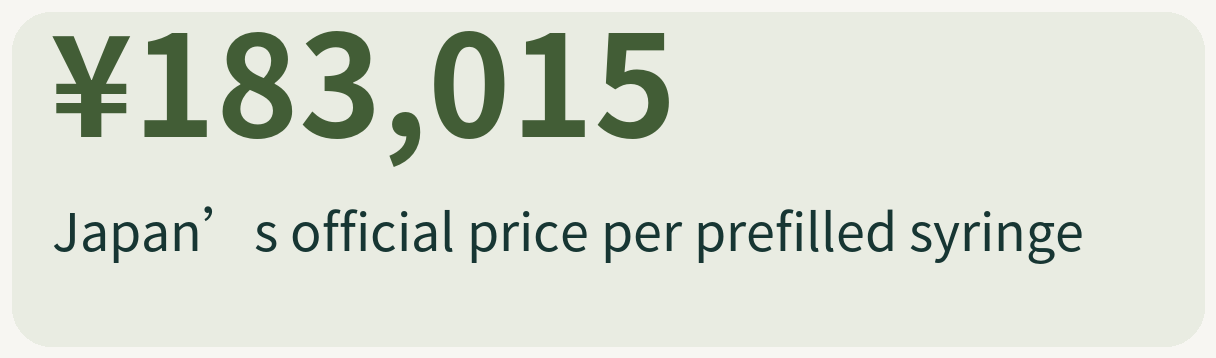
Japan listed Hibsago at ¥183,015 per prefilled syringe on 14 October. At 52 syringes for the full scheduled course, the drug alone would come to about ¥9.52 million at the official price, before coverage or other costs. The eligible market in each country depends on how many people are receiving oral antivirals and meet the local lab criteria.
GSK announced on 30 March that China had accepted the filing for review. The application entered Priority Review in April, and GSK announced its local partnership in May. China approved Hibsago about eight months after the filing acceptance announcement and just over five weeks after the FDA.
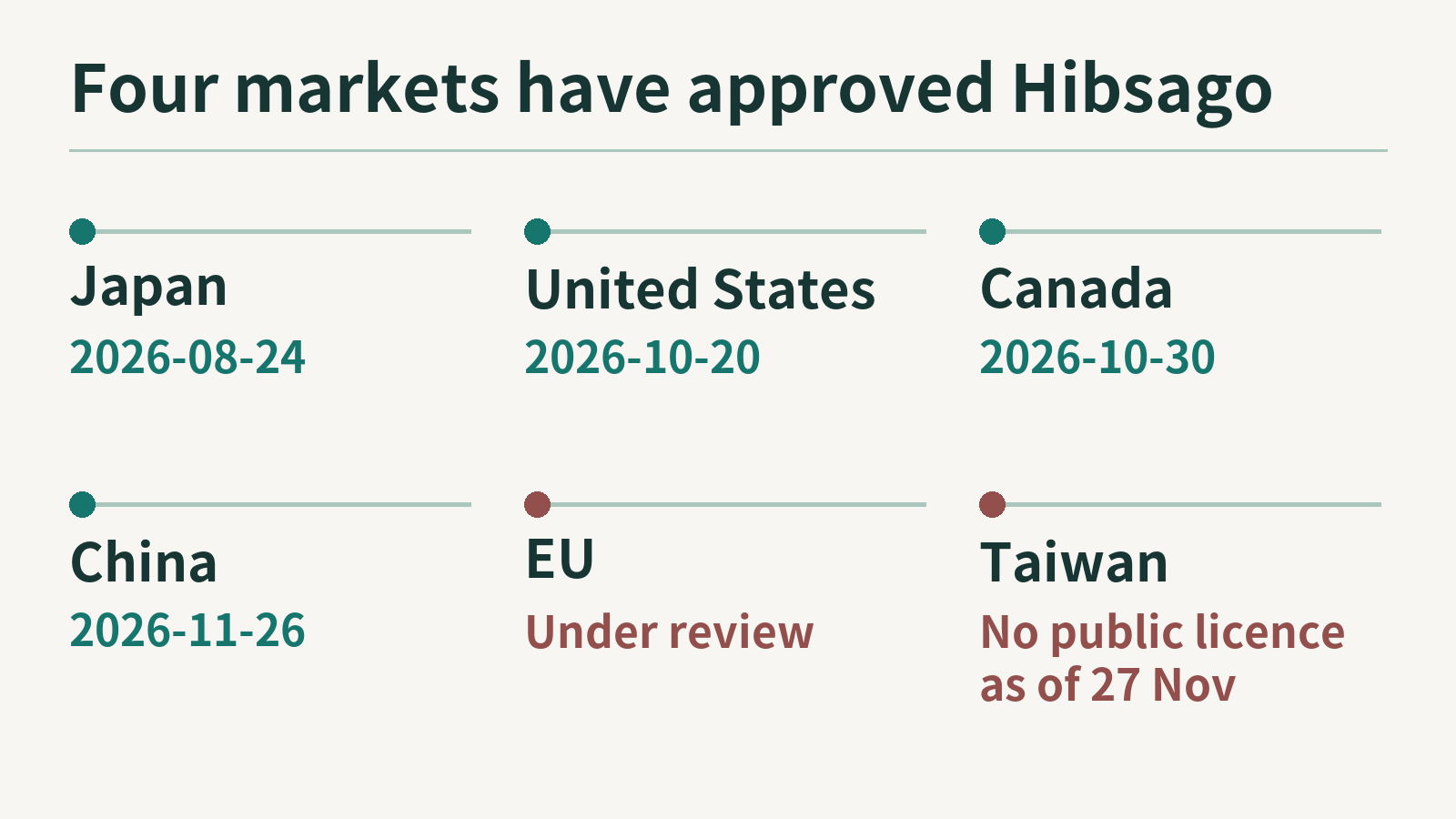
Japan, the US, Canada and China approved Hibsago. The EU is reviewing it and Taiwan's public licence database showed no entry as of 27 November.
Who is more likely to respond, and what shapes uptake in China
The trials screened for HBsAg above 100 and at or below 3,000 IU/mL. In the pooled baseline analysis, 200 of 768 bepirovirsen recipients (26%) with HBsAg of 1,000 IU/mL or less met the week 72 endpoint. Among those above 1,000 and at or below 3,000 IU/mL, 33 of 452 (7.3%) met it. These are group results, and individual outcomes may differ.
The pool of eligible patients depends on viral suppression, access to quantitative HBsAg testing and the number of patients already on oral antivirals. CTTQ has an established liver-disease business and hospital network. Launch pricing and reimbursement will also shape uptake.
Chinese clinical guidelines describe peginterferon-based treatment as an option for selected patients whose virus is already suppressed on an oral antiviral. The B-Well trials compared bepirovirsen plus an oral antiviral with placebo plus an oral antiviral. They did not compare it directly with peginterferon.
What evidence is still missing
- Regional results are descriptive. GSK has reported pooled week 72 subgroup results. In the China subgroup, 67 of 285 bepirovirsen recipients (24%) met the endpoint, compared with none of 132 on placebo. In the rest of the Asia-Pacific subgroup it was 68 of 456 (15%), versus none of 233 on placebo.
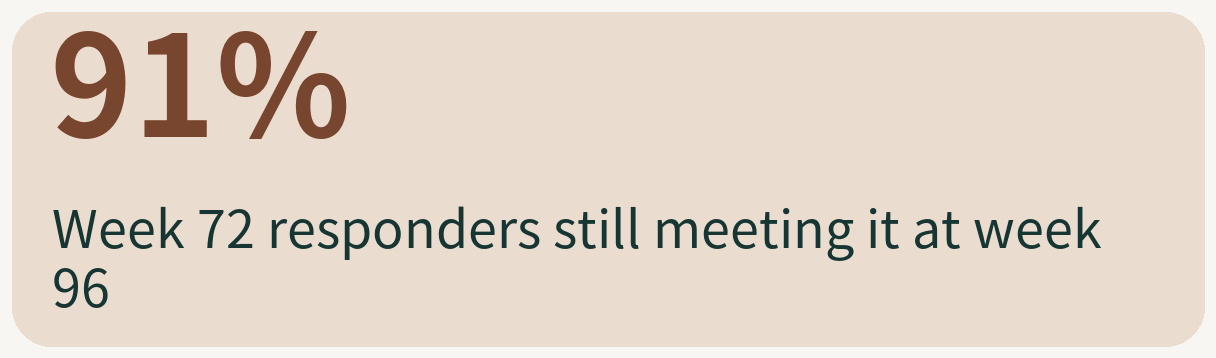
- Durability. Of the 233 bepirovirsen recipients who met the endpoint at week 72, 211 (91%) still met it at week 96, after 48 weeks off all hepatitis B treatment. Longer follow-up is needed to establish how long the response lasts. The trials did not establish an effect on liver cancer or mortality.
- Price and reimbursement in China. The sources reviewed did not give a mainland China launch price. The next signals for access will be hospital listings, the launch price and any national reimbursement terms.
- Retreatment. GSK has registered B-Possible to study a second course in people who relapsed or had a partial response. The study has yet to report results.
- Other programmes. One to watch is AusperBio's AHB-137, an antisense drug already in a phase 3 trial in China. Brii Biosciences (HKEX: 2137) licensed Greater China rights to elebsiran and tobevibart from Vir Biotechnology (NASDAQ: VIR). The studies differ in who enrolled, background therapy, how patients were counted and when they were assessed after stopping treatment, so their response rates cannot establish which treatment works better.
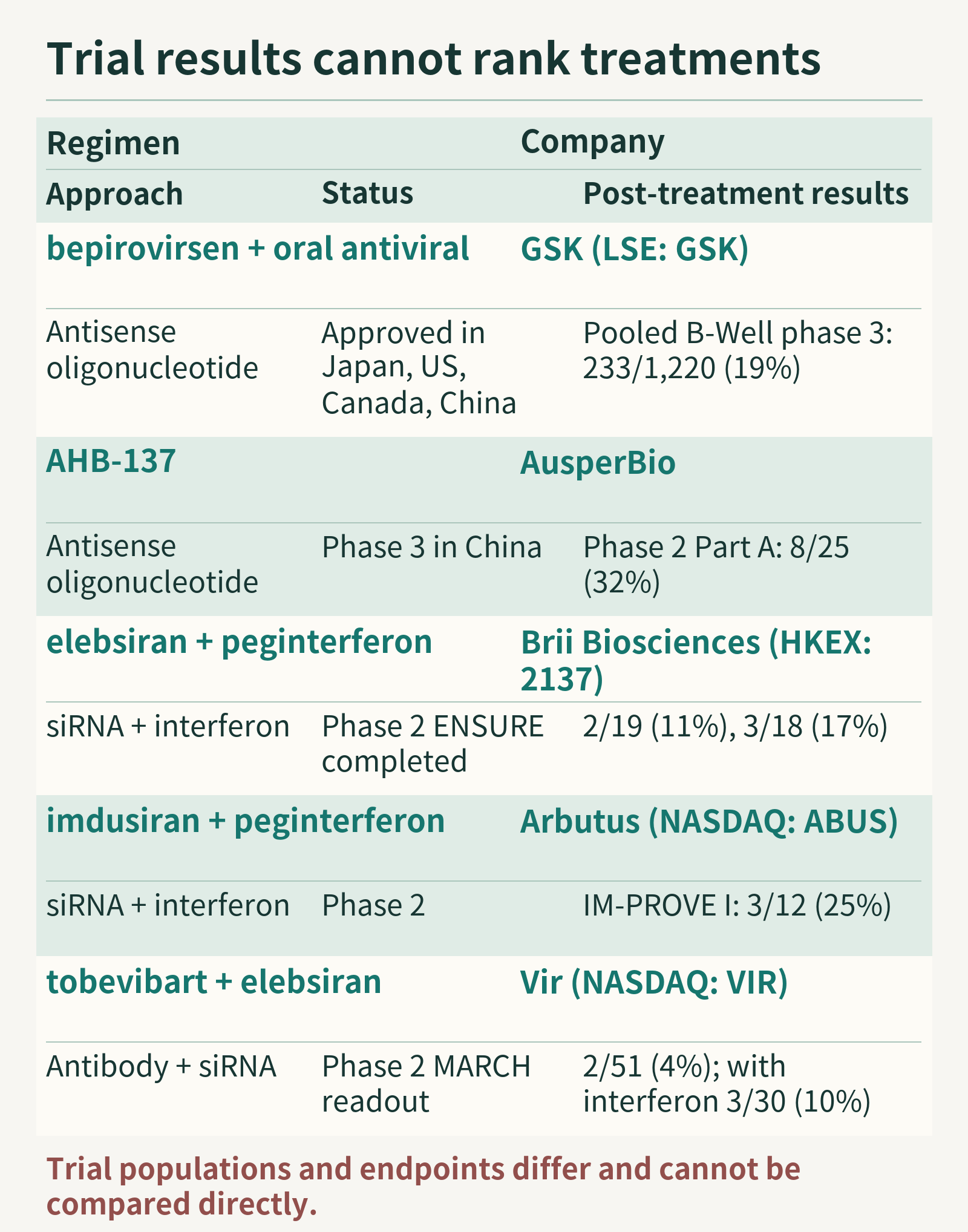
Five regimens are at different stages. Their patient groups, background therapies and post-treatment endpoints differ, limiting comparisons of the published results.
Taiwan
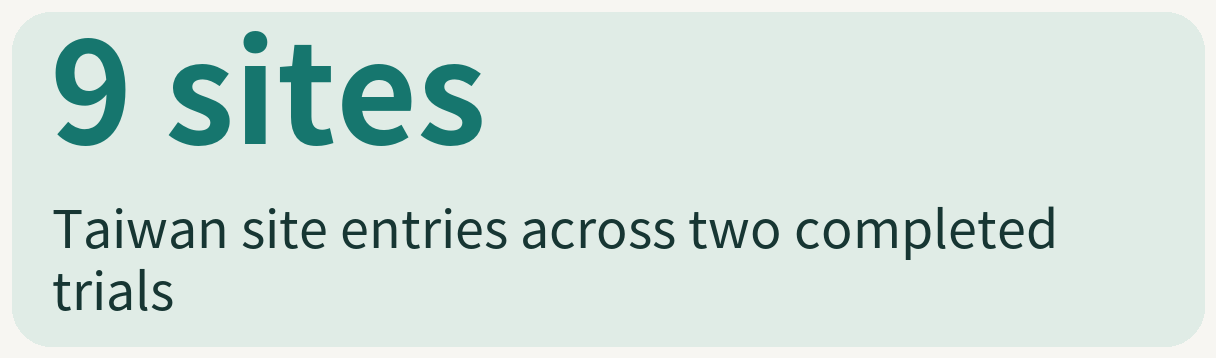
As of 27 November 2026, Taiwan's public drug licence database contained no entry for bepirovirsen. The filing and review status could not be confirmed from public records, and a timeline for routine access in Taiwan remains unknown. The two completed B-Well trials listed nine site entries in Taiwan. PharmaEssentia (TWSE: 6446) has completed an early safety study of a different regimen in hepatitis B or D.
Our calls
Three forecasts, each to be checked against a public record.
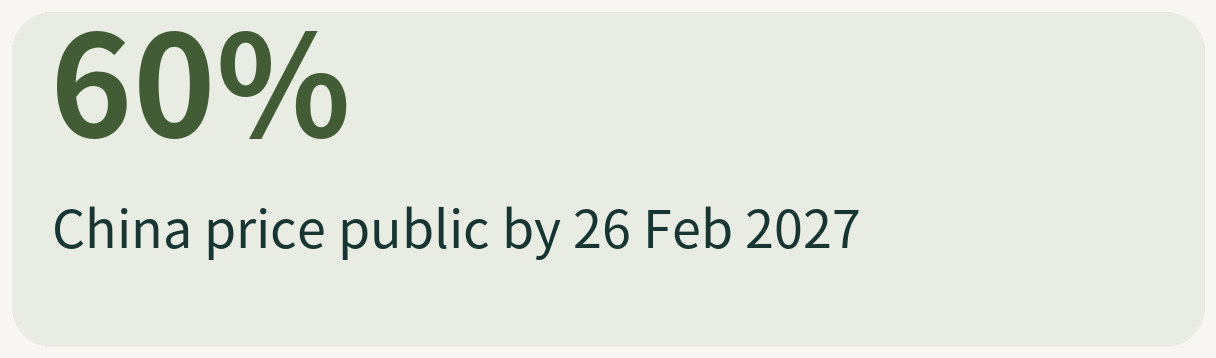
- A per-syringe price for Hibsago in mainland China will be publicly reported on or before 26 February 2027. We put the probability at about 60%. China approved the drug on 26 November, and GSK signed a local partner in May 2026 to speed up the launch; a price normally becomes visible once the first prescriptions are filled. We are wrong if no public price can be found by that date.
- The European Commission will grant marketing authorisation for bepirovirsen on or before 30 June 2027. We put the probability at about 65%. The application is under review, and the November 2026 PRAC agenda listed its pre-authorisation risk management plan. We are wrong if no authorisation has been granted by that date.
- Taiwan's Food and Drug Administration will not issue a licence for bepirovirsen on or before 31 December 2027. We put the probability at about 70%. We are wrong if a licence appears in the public database by that date.
Related: Anti-infective coverage · Gene and nucleic-acid drugs · Sino Biopharmaceutical
Sources
- GSK: Hibsago (bepirovirsen) approved in China (26 Nov 2026)
- GSK plc RNS 7207E: Hibsago approved in China for chronic hepatitis B (26 Nov 2026)
- GSK: Exclusive collaboration with SBP Group to accelerate bepirovirsen launch in China (11 May 2026)
- GSK: Bepirovirsen accepted for regulatory review in China (30 Mar 2026)
- B-Well phase 3 results, published online 28 May 2026 (PubMed)
- GSK: Hibsago approved in Japan (24 Aug 2026)
- FDA: approval announcement (20 Oct 2026)
- DailyMed: Hibsago US prescribing information
- Health Canada: Notice of Compliance (30 Oct 2026)
- GSK: EASL investor presentation, regional subgroups (28 May 2026)
- GSK: Q1 2026 results transcript (29 Apr 2026)
- MHLW: drug price listing (14 Oct 2026)
- GSK study register: B-Possible
- ClinicalTrials.gov: AHB-137 phase 3, NCT07246889
- Brii Biosciences corporate deck (Oct 2026)
- Taiwan FDA: public drug licence data
- ClinicalTrials.gov: B-Well 1, NCT05630807
- ClinicalTrials.gov: B-Well 2, NCT05630820
- ClinicalTrials.gov: PharmaEssentia phase 1b study, NCT04638439
This article is industry and company analysis, not investment or medical advice.
Share this analysis
Send this article to readers who follow biotech, company strategy, and capital-market signals.
Cite this article
For decks, research notes, or media references, cite Drugnews with the canonical article URL.
Drugnews Editorial Team. "GSK's hepatitis B drug Hibsago wins China approval, its fourth market since August." Drugnews, Nov 28, 2026. https://drugnews.com.tw/articles/2026-11-28-gsk-hibsago-china-approval-hbv-functional-cure-en.html